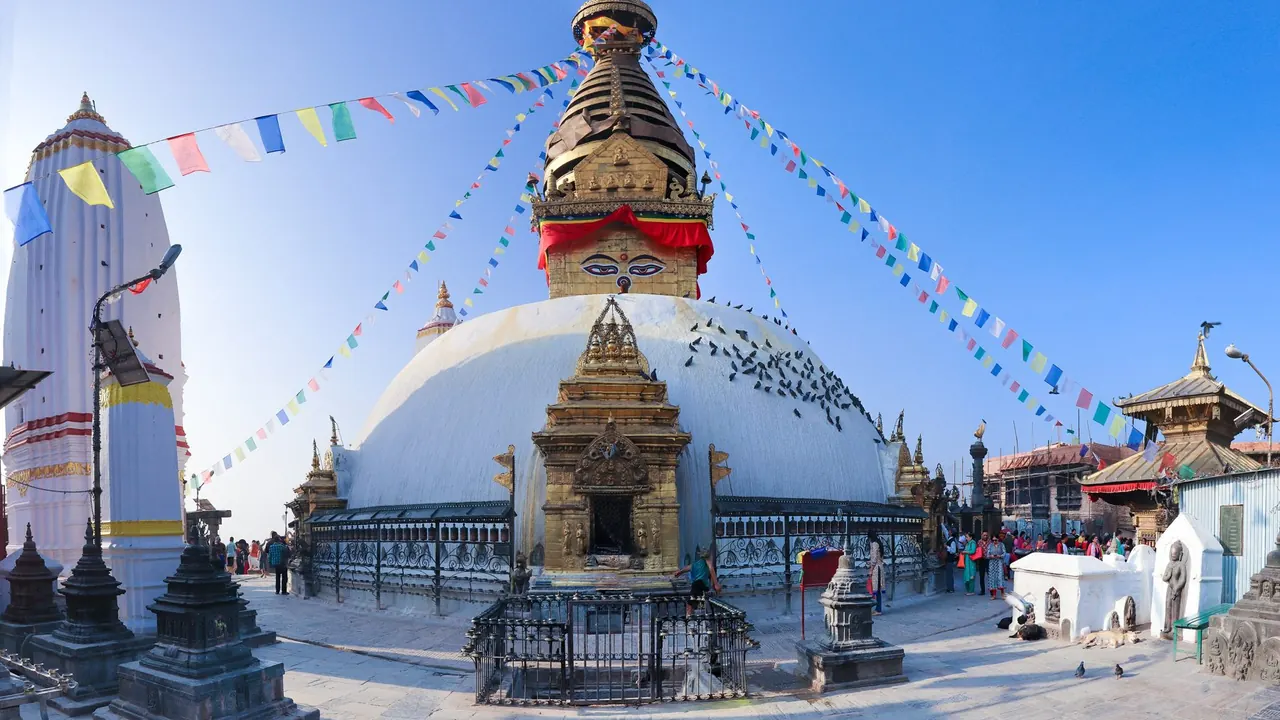
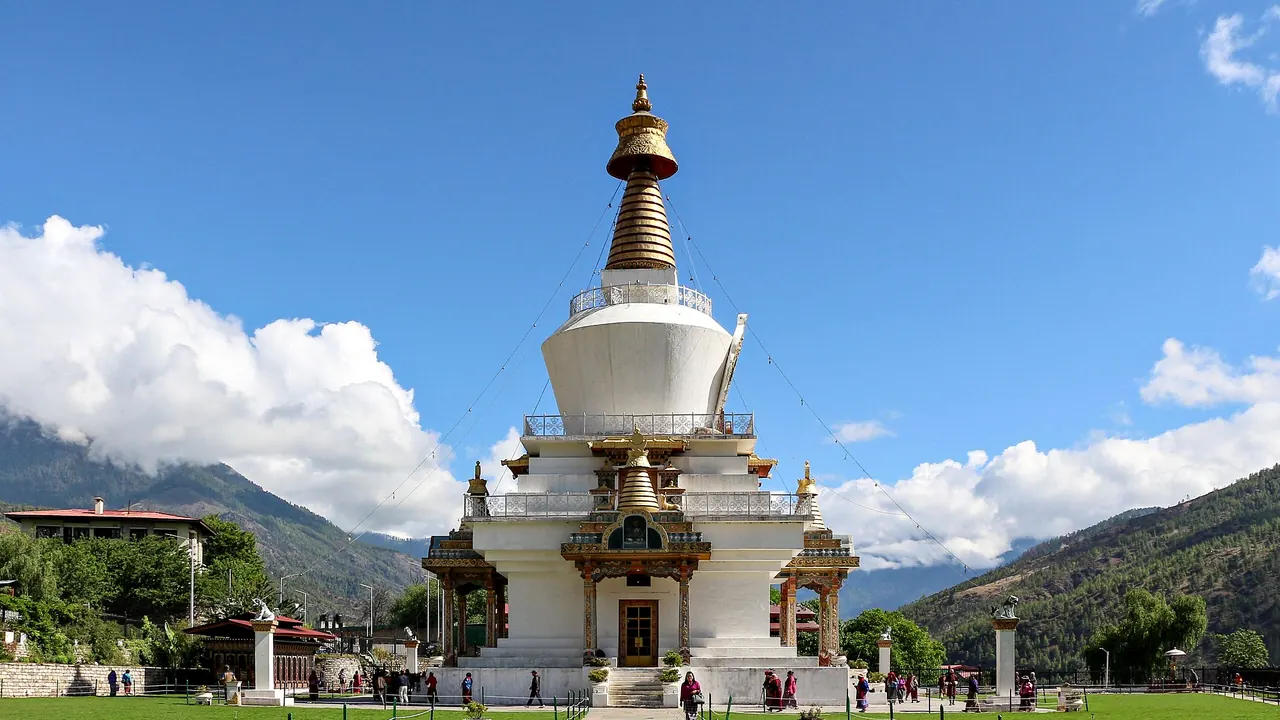
Photos: Kathmandu by Nabin K. Sapkota, CC BY-SA 4.0, cropped; Thimphu by Bernard Gagnon, CC BY-SA 4.0, cropped.
Kathmandu or Thimphu?
Our verdict in twelve categories, each scored against the same fixed benchmark cities, and the climate month by month, so you can choose for your trip.
Choose Kathmandu for
- prices
- culture and sights
- shopping
Kathmandu suits the traveller who wants a lot of heritage for little money and doesn't mind noise and dust. Its Durbar Squares, the great stupas, Pashupatinath and the old lanes of Asan give a week's worth of sights, and Newari food, craft bazaars and Thamel's bars fill the evenings. It is far cheaper than Bhutan, so you can stay longer, eat out freely and still have money for a mountain flight or a trek.
Choose Thimphu for
- getting around
- nature and the outdoors
- families
Thimphu is for someone who wants the pace and the landscape more than the sightseeing list. The capital is small, calm and steep, with monastery hikes starting at the edge of town, and the Tiger's Nest and the Dochula pass are close by. You pay heavily for the Bhutan trip, and you spend it with a guide and driver. In return you get quiet streets, early nights and forest that comes right down to the houses.
Scoreboard
Twelve categories on one fixed scale from 0 to 100. The shaded stretch is the gap between the two.
Your match
Pick a travel style or drag the sliders, and both match scores follow your weighting.
Wins on prices and culture and sights with your weighting.
Wins on getting around and nature and the outdoors with your weighting.
What matters to you?
Category by category
What the scores mean for a trip.
Beaches & swimming
Neither city has any swimming to plan around. Both sit in high valleys in landlocked countries, and their rivers are cold and fast. A swim in Kathmandu means a hotel pool. In Thimphu even that is uncertain, because few hotels have one.
Food & drink
Kathmandu is clearly the better place to eat. Newari cooking around the old bazaars and in Patan includes choila, bara pancakes, yomari dumplings and rice beer, and Boudhanath adds Tibetan thukpa and butter tea. Momos are everywhere, and Thamel has plenty of easy Western food when you need a break.
Bhutanese food is more striking than varied. Ema datshi, chillies in melted cheese, comes with almost every meal, and you often have to ask for the full heat. Thimphu has only a handful of restaurants, so its riverside farmers' market is the food highlight.
Culture & sights
Kathmandu has far more heritage. Durbar Square, with the Kumari's house, the hilltop stupa at Swayambhunath, the pilgrims circling Boudhanath and the open cremations at Pashupatinath could fill several days on their own. Patan's square and museum add Newari bronze and woodwork.
Thimphu has a shorter list but a quieter, more orderly feel. Tashichho Dzong still houses the government and the monk body, residents circle the Memorial Chorten at dawn, and the Zorig Chusum institute lets you watch students learning the traditional arts. Most visitors cover it in two or three days.
Nightlife
Kathmandu has more going on at night, though nearly all of it is in Thamel. Trekkers fill the rooftop bars, pool halls and a few dance clubs there until around midnight. Thimphu is quieter still. Evenings mean karaoke, a drayang where you can request folk songs, or a weekend club, and many guided visitors are back at the hotel after dinner.
Nature & outdoors
Thimphu wins because the outdoors starts at the end of the street. Pine forest climbs straight from town to Tango, Cheri and Phajoding monasteries, the takin preserve is close by, and the Dochula pass looks out over the eastern Himalaya about an hour away. Guided treks such as the Druk Path begin near the city.
Kathmandu's nature is spread around the valley rim. There are forest trails in Shivapuri Nagarjun National Park, sunrise over the peaks from Nagarkot and Dhulikhel, and the Chandragiri cable car. It is also the better base for Everest mountain flights and rafting rivers, but you reach all of these through slow traffic.
Day trips
Both cities have one excursion that matters and little beyond it. From Kathmandu it is Bhaktapur, a complete royal town of brick squares and potters, with Changu Narayan in the same day. Patan, Kirtipur and the carving villages add more Newari life on the same theme.
From Thimphu the trip is Paro, worth it for the Tiger's Nest climb and Rinpung Dzong, and many travellers stay a night there anyway. Dochula fits into half a day. Punakha is so far by winding road that it is better as an overnight stop than a day trip.
Good for families
Neither city is easy with small children, but Thimphu is the gentler of the two. It is safe and calm, and the takin, the prayer wheels and short forest walks hold children's attention. The long drives and altitude are its main drawbacks.
Kathmandu has monkeys at Swayambhunath and the prayer wheels at Boudhanath. Against that are lanes without pavements, motorbikes, dust, poor winter air and the care needed with food and water. Both suit older children better, especially ones heading off on a hike or trek.
Getting around
Thimphu is easier day to day. The centre around Norzin Lam is small and calm enough to walk, and a policeman directs traffic at the main junction instead of lights. For the hillside sights most visitors already have a car and driver, though that leaves little room for wandering on your own.
In Kathmandu you can walk around Thamel and the old city, but you share the lanes with motorbikes. Beyond them you rely on bargained taxis or ride-hailing apps. Crossing to Patan, Boudhanath or the airport through dust and traffic often takes much longer than the distance suggests.
Shopping & style
Kathmandu has much more to buy. Patan's workshops cast bronze statues, the shops around Boudhanath sell carpets and thangkas, and Thamel's stalls are stacked with pashmina, singing bowls and trekking gear, though much of the gear is copied. Expect to bargain everywhere.
Thimphu's shops are smaller and more focused. Handwoven kira cloth and yak-wool textiles are the real prize, sold through the government emporium and the craft bazaar. Neither city offers fashion or luxury shopping.
Affordability
This is where the two differ most. In Kathmandu, comfortable guesthouses, momos and taxis cost very little. Entry fees, imported drinks, trekking permits and mountain flights are where the money goes.
Everyday prices in Thimphu are modest too, but Bhutan's daily fee for foreign visitors applies to every night. Add the usual guide, car and tourist-standard hotel, and the same week costs many times more.
Live music & performing arts
Neither city has much of a stage, and the best performances in both follow the religious calendar. Kathmandu has more on a normal evening. Thamel bands play rock covers and Nepali folk, there are cultural dinner shows, and an autumn jazz festival runs each year, while Indra Jatra brings masked dances to the streets.
In Thimphu, almost everything centres on the Tshechu. For several autumn days, masked cham dancers perform in the courtyard of Tashichho Dzong, and it is worth planning a trip around. The rest of the year there are the Royal Academy's folk performances and the drayangs.
Wellness & relaxation
Thimphu is calmer to begin with. The slow pace, early nights and monks chanting at dusk do much of the work, and a dotsho hot-stone bath after a hike is a real local tradition. The upscale lodges add spas.
Kathmandu offers more structured inner work, including meditation and Buddhist philosophy courses at Kopan and other monasteries, plus yoga, Ayurveda and cheap massage on every Thamel lane. The city itself is loud, though, so for calm you have to go to a monastery, a garden or the stupa at dusk.
When should you go?
Pick your month. The climate figures are measured averages, not a forecast.
Kathmandu in July
Thimphu in July
Daytime high, °C
Rainfall in the month, mm
Where the figures come from
Thimphu has no weather station within reach, so its figures come from a gridded climate model rather than a measured record, and read a broad area rather than the city itself.
Temperature and rainfall are climate normals, averaged over the years shown. Kathmandu: 1991-2020 normals, Kathmandu Airport (4.7 km from centre). Thimphu: 1991-2020 normals, TerraClimate 4 km grid at the town, no weather station within 90 km.
Kathmandu lies lower and is the warmer of the two all year. Its winter afternoons are mild enough for walking, and from April to September highs sit around 29°C. Thimphu is a mountain town. Winter days peak near 12°C, with cold mornings and nights, and even midsummer stays fresh at about 23°C. That makes it comfortable for hiking when Kathmandu feels heavy. Neither city has a beach or a sea, so warmth matters only for time spent outdoors.
Both cities share the same monsoon, but it hits Kathmandu harder. July brings about 384mm there, against 248mm in Thimphu, and from June to September both valleys are wet and cloudy, with the peaks hidden. October and November are the best months for both. The rain stops, Kathmandu gets its sunniest weather, and the mountain views are clearest from both cities. March and April are a good second choice: Kathmandu is warm and dry, and Thimphu is mild but starting to get wetter.
Which traveller are you?
For a trip on a tight budget, Kathmandu is the obvious pick. It suits the independent traveller who wants to linger, change plans on a whim and eat out daily without counting the cost. Thimphu's prepaid guided travel leaves no room for that.
On a culture and arts trip, Kathmandu is the stronger choice for travellers who want religion as a daily spectacle: Hindu and Buddhist worship side by side, Newari craft and street festivals. Thimphu suits those who prefer a single tradition, seen calmly.
On an outdoors trip, Kathmandu works best as a launch pad for rafting, a mountain flight or a long trek elsewhere. Thimphu wins for walkers who want to hike every day, in cool mountain air, without first sitting in traffic.
Before you go
| Measure | Kathmandu | Thimphu |
|---|---|---|
| Official language | Nepali | Dzongkha |
| Currency | Nepalese Rupee (NPR) | Ngultrum (BTN) |
| Sockets | CM230 V, 50 Hz | CFGM230 V, 50 Hz |
| Driving side | Left | Left |
| Time zone | UTC+5:45 | UTC+6 |
| Emergency number | Police 100, ambulance 102, fire 101 | Police 113, ambulance 112, fire 110 |
| Elevation | 1,300 m | 2,321 m |
| Main airport | Tribhuvan International Airport (KTM)4 km from centre38 non-stop destinations | Paro International Airport (PBH)22 km from centre15 non-stop destinations |
By the numbers
| Measure | Kathmandu | Thimphu |
|---|---|---|
| City population | 845,767 | 114,551 |
| People per km² | 17,121 | 4,243 |
| Museums within 10 km | 9 | 1 |
| UNESCO World Heritage sites within 50 km | 1 | 0 |
Where else could you go?
Every comparison below shares a destination with this one, so you can follow Kathmandu or Thimphu somewhere new.
- Pokharavs Kathmandu
- Darjeelingvs Thimphu
- Lhasavs Thimphu
- Darjeelingvs Kathmandu
- Varanasivs Kathmandu
- Pokharavs Thimphu