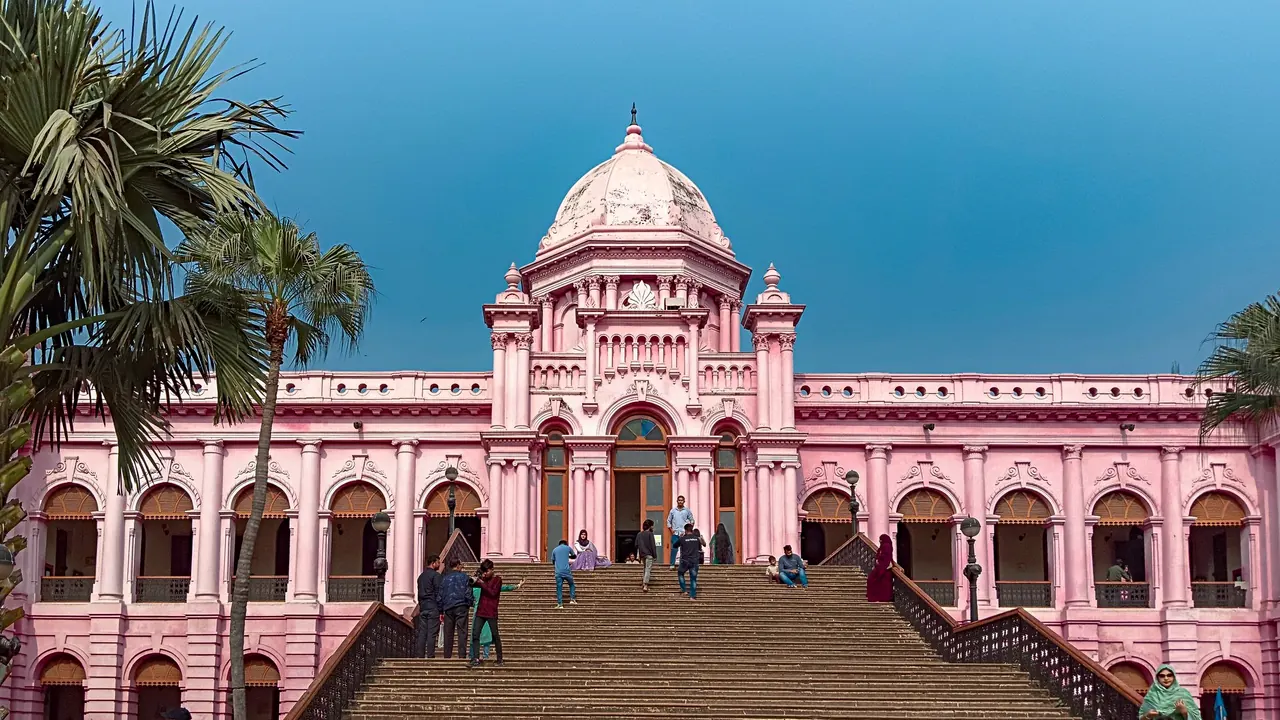
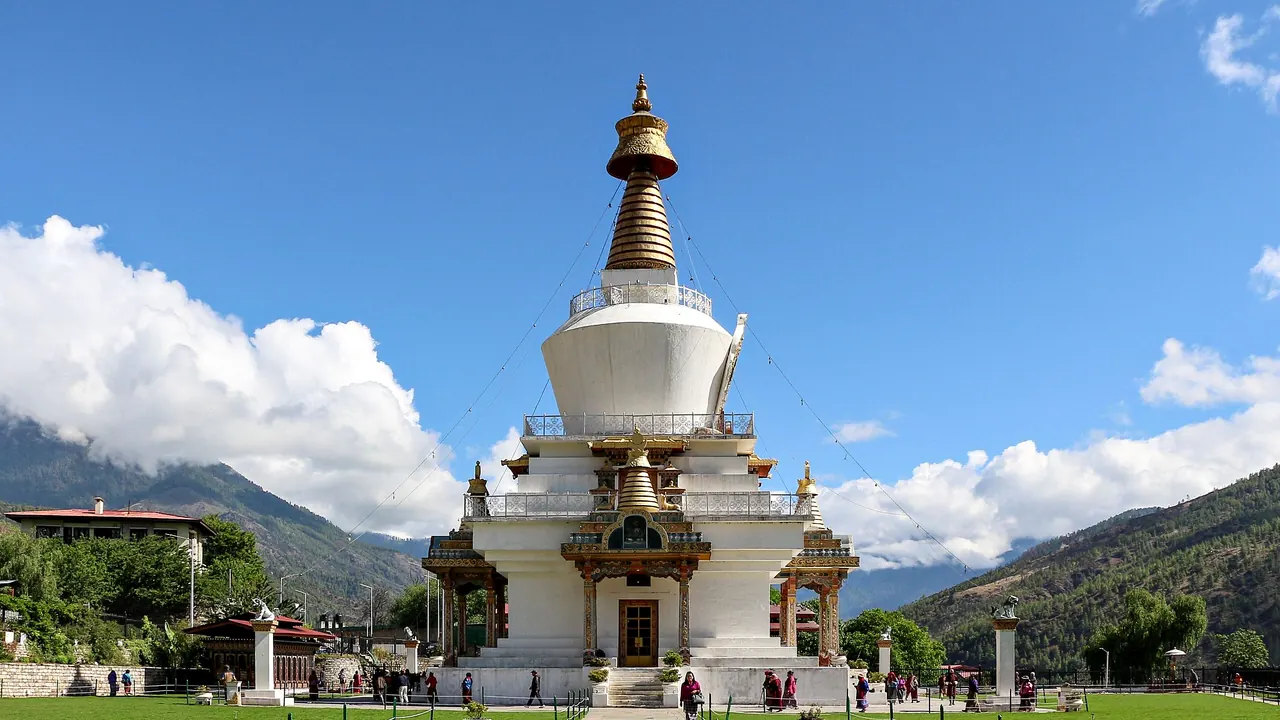
Photos: Dhaka by Riyad Hossain Hridoy, Pexels License; Thimphu by Bernard Gagnon, CC BY-SA 4.0, cropped.
Dhaka or Thimphu?
Our verdict in twelve categories, each scored against the same fixed benchmark cities, and the climate month by month, so you can choose for your trip.
Choose Dhaka for
- prices
- food and drink
- shopping
Dhaka is the choice for travellers who want a huge, demanding South Asian city and plan their days around eating. Kacchi biryani in the lanes of Old Dhaka, hilsa in mustard and the sweet shops are the main reasons to go, along with the Mughal fort, the river traffic at Sadarghat and Louis Kahn's Parliament. It is also very cheap, and the jamdani and other handwoven textiles make it a serious place to shop. You pay for all that in gridlock, pollution and heat, so it suits patient, curious adults better than anyone looking for rest.
Choose Thimphu for
- nature and the outdoors
- wellness
- getting around
Thimphu is the better pick for a calm, mountain-centred trip. The forested valley starts where the streets end, monastery hikes and the Tiger's Nest at Paro are within easy reach, and the evenings bring hot-stone baths and early nights. It is easier on families and on anyone who dislikes chaos. Its cuisine is narrow, though, and Bhutan's daily visitor fee and guided itineraries make it one of the costlier places in the region, so it suits travellers who value quiet and landscape more than their budget.
Scoreboard
Twelve categories on one fixed scale from 0 to 100. The shaded stretch is the gap between the two.
Your match
Pick a travel style or drag the sliders, and both match scores follow your weighting.
Wins on prices and food and drink with your weighting.
Wins on nature and the outdoors and wellness with your weighting.
What matters to you?
Category by category
What the scores mean for a trip.
Beaches & swimming
Neither city has a beach or anywhere to swim outdoors, so in practice the two are level and a pool is the only option in both. The difference lies in what is nearby. Bangladesh has its long sandy coast at Cox's Bazar, a flight away from Dhaka, so a beach leg can be added within the same country. Thimphu is in a landlocked Himalayan kingdom with a cold glacial river, and few of its hotels even have a pool.
Food & drink
Dhaka is far the stronger food city. Old Dhaka's Mughal-descended cooking, from kacchi biryani to bakarkhani and lane-side kebabs around Chawkbazar, gives it a cuisine worth travelling for. Add river fish and bhorta at home-style tables, fuchka stalls, sweet shops and endless cups of cha, and eating becomes the main event of each day.
Thimphu's food is memorable but narrow. Ema datshi and red rice turn up at almost every meal, momos fill the gaps, and tourist buffets tend to tone down the chilli. The weekend Centenary Farmers' Market is the highlight, but within a few days you will have tried most of what the town offers.
Culture & sights
Both capitals reward a curious visitor about equally, but the experience could hardly be more different. Dhaka's heritage is scattered and unpolished: Lalbagh Fort, the pink Ahsan Manzil and the Star Mosque in the old river quarter, then Kahn's National Parliament and the independence museums further north, all reached through heavy traffic.
Thimphu is compact and its heritage is still in daily use. Government and monks share Tashichho Dzong, and residents circle the Memorial Chorten at dawn. Museums of folk life, textiles and the thirteen traditional arts round out a visit that fits into two or three days.
Nightlife
Thimphu has the edge, modest as it is. There are a few bars and lounges in the centre, karaoke rooms, weekend dance clubs and drayangs where singers take requests. Dhaka has no public bar scene at all, and drinking is confined to a few hotels and members' clubs in Gulshan and Banani. Its evenings are about crowded restaurants, dessert shops and tea stalls rather than going out.
Nature & outdoors
This is Thimphu's great advantage. The city fills a pine-covered valley at about 2,300m, with trails to Tango, Cheri and Phajoding starting at its edges. Jigme Dorji National Park is nearby, Dochula looks out on Himalayan snow peaks, and guided treks such as the Druk Path leave from close by.
Dhaka offers little beyond city parks such as Ramna and the Dhanmondi lake, plus the botanical garden in Mirpur. Its best outdoor moment is a country boat past paddy fields on the delta. The Sundarbans and Sylhet's tea hills are separate trips of several days.
Day trips
Thimphu has the better day out by some distance. Paro, a little over an hour away, has Rinpung Dzong, the ancient Kyichu Lhakhang and the cliffside Tiger's Nest, though the steep walk up takes a full morning. Dochula fits into half a day, while Punakha is better treated as an overnight stop.
From Dhaka, the main outing is Sonargaon, with the decaying merchants' houses of Panam Nagar and a folk art museum. Dhamrai's brass workshops make a smaller trip. Traffic stretches every journey, so a hired driver is almost essential.
Good for families
Neither is an easy city for children, but Thimphu is clearly gentler. It is safe and unhurried, and the takin preserve, the prayer wheels and short forest walks give younger children something to do. Its drawbacks are the long winding drives and the altitude in the first days, which makes it better suited to older children who like to walk.
Dhaka's gridlock, missing pavements, pollution and heat make even short outings tiring. Beyond the zoo, the amusement parks and the play areas in shopping malls, there is little for children to do.
Getting around
Thimphu is much easier. Its centre around Norzin Lam is small and pleasant on foot, with a policeman directing traffic at the main junction instead of lights. Most travellers reach the hilltop and valley sights by car with a driver.
In Dhaka, simply moving around takes up a large part of the trip. A few kilometres can take an hour, and the single metro line helps only when it happens to run your way. Cycle rickshaws are fun in Old Dhaka, but broken pavements make walking any distance hard.
Shopping & style
Both cities are best for handwoven cloth, but Dhaka offers far more choice and scale. Its jamdani, nakshi kantha and cotton panjabis fill craft stores and bazaars, tailors can make clothes to measure quickly, and New Market and some of South Asia's largest malls cover everything else.
Thimphu has a smaller, craft-only offer. You will find kira fabric, yak-wool pieces, thangkas and carved masks at the handicraft emporium and along Norzin Lam, but almost nothing beyond them.
Affordability
The gap could hardly be wider. In Dhaka, meals, rickshaws, sights and mid-range hotels all cost very little. Only Gulshan's international hotels and the scarce alcohol bring in Western prices.
Daily life in Thimphu is cheap too, but you rarely get to live on those terms. Bhutan charges most foreigners a substantial fee for every night, and itineraries usually include a guide, a driver and tourist-standard hotels. Keeping the trip short is the only real way to save.
Live music & performing arts
The two are level, and in both the best performances follow the calendar more than a regular season. Dhaka's strengths are Bengali-language theatre on Bailey Road, the Shilpakala Academy, and Tagore songs and baul folk music, which are most public when singers greet the dawn at Ramna Park for Pohela Boishakh. Thimphu's great event is the autumn Tshechu, when masked cham dances fill the courtyard of Tashichho Dzong. For the rest of the year there are shows at the Royal Academy of Performing Arts and the drayangs.
Wellness & relaxation
Thimphu is far more restful. The whole trip moves slowly, with chanting at dusk and early nights. The dotsho bath of stone-heated river water and artemisia soothes legs after a hike, and meditation sessions at monasteries are easy to arrange.
Dhaka is loud and hazy, with no bathing tradition of its own. Relaxation there means a hotel spa or massage salon in Gulshan, or a quiet early morning by a lake.
When should you go?
Pick your month. The climate figures are measured averages, not a forecast.
Dhaka in July
Thimphu in July
Daytime high, °C
Rainfall in the month, mm
Where the figures come from
Thimphu has no weather station within reach, so its figures come from a gridded climate model rather than a measured record, and read a broad area rather than one spot.
Temperature and rainfall are climate normals, averaged over the years shown. Dhaka: 1945-2025, 18 years observed (sunshine 1991-2020, rainfall 1991-2020) normals, Dhaka (4.4 km from centre). Thimphu: 1991-2020 normals, TerraClimate 4 km grid at the town, no weather station within 90 km.
Dhaka is at its best from November to February, when the rains stop almost completely and the days are warm rather than oppressive, with January highs around 25°C. From March the heat builds to about 34°C, which makes long walks through Old Dhaka hard work. Then the monsoon sets in from May to September, peaking near 375mm in July, with grey skies and flooded streets. By March the sunshine is at its strongest, but so is the heat.
Thimphu shares the same monsoon rhythm but at mountain temperatures. Summer is mild yet wet, with July rainfall near 248mm, bringing cloud to the views and leeches to the trails. October and November are the classic months: dry, clear and pleasant for hiking, with the best views from Dochula. Winter days are cool, with highs of about 12°C in January, and spring from March to May is another good window before the rains. For a combined trip, late October to early December suits both cities.
Which traveller are you?
For a trip on a tight budget, Dhaka wins easily. Street food, rickshaws, the metro and entry to its sights cost very little, and even a car with a driver is affordable. Bhutan's daily visitor fee and guided itineraries rule out any genuinely cheap stay in Thimphu.
On an outdoors trip, Thimphu is the clear choice. Pine forest, monastery hikes to Tango and Cheri, the Dochula pass and multi-day treks begin close to town. Dhaka is flat, dense delta land where a boat on the river is the main escape.
For a relaxing and wellness trip, go to Thimphu, with its slow pace, temple incense, dotsho hot-stone baths and meditation at monasteries. In Dhaka you will be dealing with noise, crowds and haze, and rest mostly means a hotel spa or an early lakeside walk.
Before you go
| Measure | Dhaka | Thimphu |
|---|---|---|
| Official language | Bangla | Dzongkha |
| Currency | Taka (BDT) | Ngultrum (BTN) |
| Sockets | ACGK220 V, 50 Hz | CFGM230 V, 50 Hz |
| Driving side | Left | Left |
| Time zone | UTC+6 | UTC+6 |
| Emergency number | 999 | Police 113, ambulance 112, fire 110 |
| Elevation | 4 m | 2,321 m |
| Main airport | Hazrat Shahjalal International Airport (DAC)13 km from centre31 non-stop destinations | Paro International Airport (PBH)22 km from centre16 non-stop destinations |
| Public holidays this year | 7 days | - |
By the numbers
| Measure | Dhaka | Thimphu |
|---|---|---|
| Population | 16,800,000 | 114,551 |
| People per km² | 45,652 | 4,243 |
| Museums within 10 km | 17 | 1 |
| UNESCO World Heritage sites within 50 km | 0 | 0 |
Where else could you go?
Every comparison below shares a destination with this one, so you can follow Dhaka or Thimphu somewhere new.
- Darjeelingvs Thimphu
- Kolkatavs Dhaka
- Lhasavs Thimphu
- Cox's Bazarvs Dhaka
- Darjeelingvs Dhaka
- Kathmanduvs Thimphu