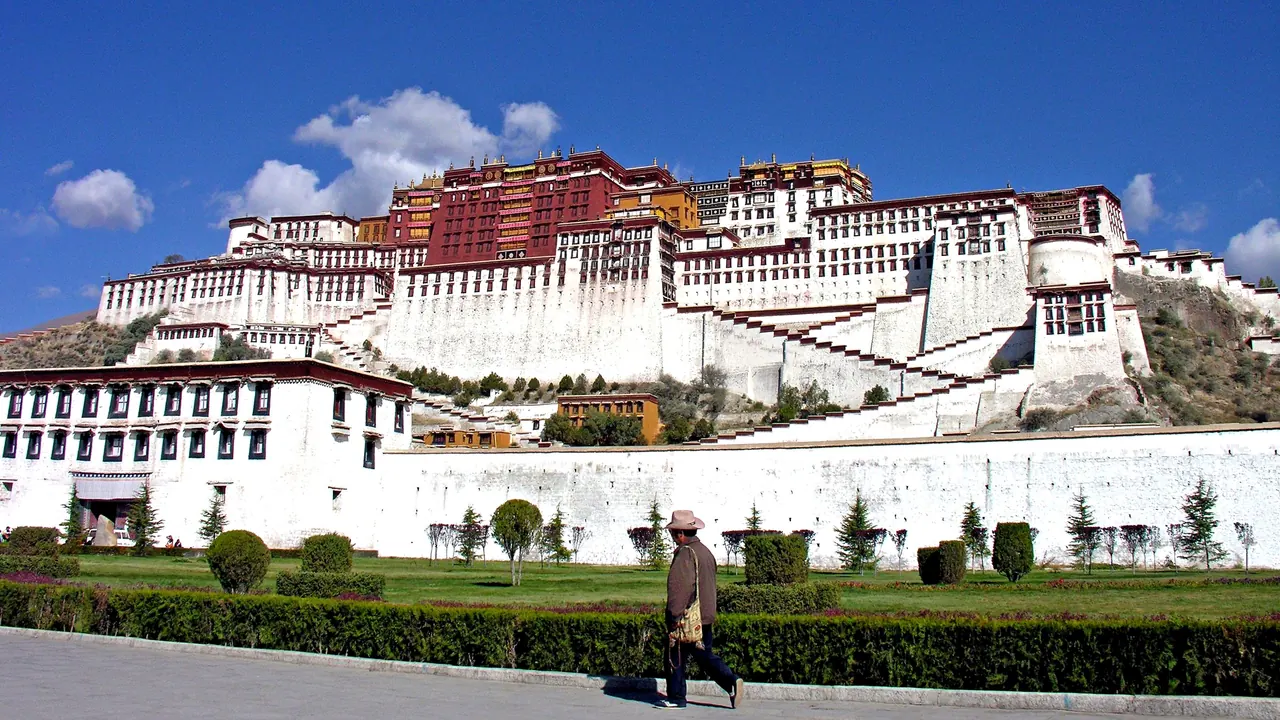
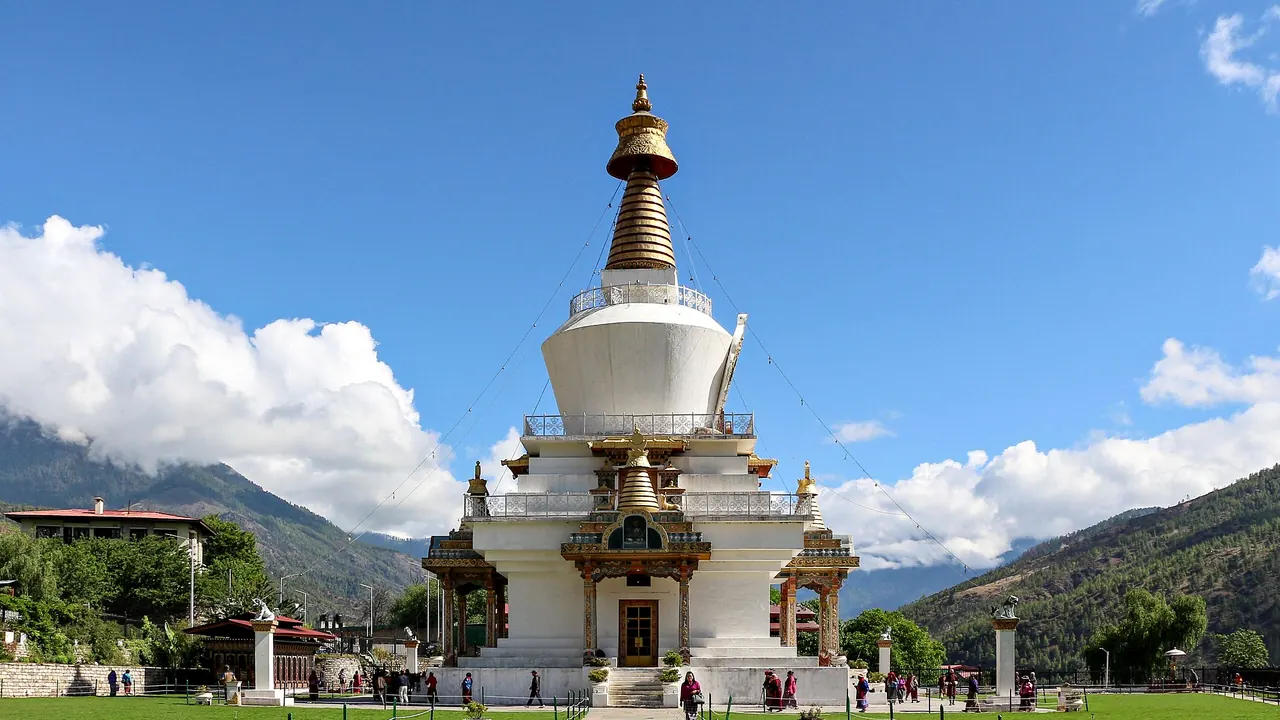
Photos: Lhasa by Dennis G. Jarvis, CC BY-SA 2.0, cropped; Thimphu by Bernard Gagnon, CC BY-SA 4.0, cropped.
Lhasa or Thimphu?
Our verdict in twelve categories, each scored against the same fixed benchmark cities, and the climate month by month, so you can choose for your trip.
Choose Lhasa for
- prices
- culture and sights
- shopping
Lhasa is for travellers who want one of Asia's great sacred cities at full strength. The Potala climbs its rock above the town, pilgrims circle the Jokhang through the Barkhor all day, and monks debate in the courtyard at Sera. Everyday costs stay low, the old quarter is easy to cover on foot, and the Barkhor stalls give you more to browse. The price is the altitude, which makes the first days hard and rules the city out for young children.
Choose Thimphu for
- wellness
- families
- nature and the outdoors
Choose Thimphu if mountain walking and a slow, gentle pace matter more to you than a list of monuments. Forest trails start where the streets end, a dotsho stone bath eases tired legs in the evening, and the lower valley is easier on the body and on families. Bhutan's daily visitor fee makes it a much costlier trip, so it suits a short, well-planned stay rather than a cheap one.
Scoreboard
Twelve categories on one fixed scale from 0 to 100. The shaded stretch is the gap between the two.
Your match
Pick a travel style or drag the sliders, and both match scores follow your weighting.
Too close to call, 2 points apart
Wins on prices and culture and sights with your weighting.
Wins on wellness and families with your weighting.
What matters to you?
Category by category
What the scores mean for a trip.
Beaches & swimming
Neither city has any swimming. Lhasa's turquoise lakes, Yamdrok and Namtso, are icy and sacred, places to look at rather than swim in, and Thimphu's Wang Chhu is a cold, fast mountain river. If you need time in the water, plan on a hotel pool in Lhasa. In Thimphu even that is uncertain, since few hotels have one.
Food & drink
Food is a modest draw in both, and the difference is mainly in flavour. Lhasa feeds you warming plateau staples like yak momos, thukpa, tsampa and salty butter tea. Its best experience is the sweet tea house, where locals spend hours over thermoses of milky tea, and the newer districts add plenty of Sichuan cooking.
Thimphu's cooking is fierier, built around ema datshi, chillies in soft cheese, with red rice and dried pork. Tourist buffets tend to tone it down, so ask for the real heat. The weekend Centenary Farmers' Market by the river is the place to see what the country actually eats.
Culture & sights
Lhasa is in a different league here. The Potala Palace and the Jokhang, the holiest temple in Tibetan Buddhism, are among the most powerful sights in Asia, and the pilgrims prostrating around the Barkhor make the old quarter feel like a living shrine. Add Drepung, Sera and the Norbulingka, and three or four days are well filled.
Thimphu's appeal is quieter. Tashichho Dzong still houses both the government and the monk body, elderly residents circle the Memorial Chorten from dawn, and students learn the thirteen traditional arts at the Zorig Chusum institute. It is charming but covered in two or three days.
Nightlife
Both cities go to bed early. In Lhasa the altitude makes most visitors glad to: an evening means a walk around the lit Barkhor and a beer in a traveller café, with nangma halls of Tibetan pop and group dancing for those who stay out. Thimphu has drayangs, where singers take requests, plus karaoke and a couple of small dance clubs that fill up at weekends, which is more than Lhasa offers in the way of clubs.
Nature & outdoors
Thimphu has the easier and greener outdoors. Pine forest climbs straight from the streets to Tango, Cheri and Phajoding monasteries, Jigme Dorji National Park lies close by, and the Druk Path trek starts near the city. Dochula, an hour away, looks out over the eastern Himalaya.
Lhasa's landscape is starker and in places grander: bare brown mountains, the pilgrim ridges behind Drepung and Sera, and the turquoise sweep of Yamdrok Lake beyond the Kamba La. The catch is the height. Acclimatising takes days, and serious walking needs a guide and planning.
Day trips
Both offer a handful of good outings, but they are shaped differently. From Lhasa you get a series of monasteries: Ganden in its mountain bowl, the cliff caves of Drak Yerpa, Tsurphu up its quiet valley and Samye, Tibet's first monastery, a full day to the south-east.
Thimphu has one outstanding trip rather than several. Paro, with its dzong and the Tiger's Nest clinging to a cliff, fills a whole demanding day. Dochula makes an easy half day, while Punakha is better kept for an overnight stop.
Good for families
Neither is an easy family destination, but Thimphu is clearly gentler. It sits much lower, the culture is warm towards children, and the Takin Preserve, the prayer wheels at the Memorial Chorten and short forest walks give younger ones something to enjoy, although the long winding drives test their patience.
At Lhasa's altitude, sickness is a real risk for children who cannot always say how they feel. The Potala's steep stairs and the hushed, smoky chapels are hard going for them, so it works only for robust teenagers with a real interest in Tibet.
Getting around
Lhasa is the easier city to manage on your own. The Potala, the Jokhang and the Barkhor are within walking distance of one another, pedicabs work the old town, and taxis and buses reach Drepung, Sera and the Norbulingka without trouble. The only real obstacle is how tiring the stairs are in the first days.
Thimphu's centre around Norzin Lam is pleasant to stroll, with a white-gloved policeman directing traffic at the main junction. Beyond it the city climbs steep slopes that are too far to walk, the buses are of little use, and most visitors depend on their car and driver.
Shopping & style
Lhasa gives you more to browse. The lanes around the Barkhor are lined with stalls selling turquoise and coral jewellery, Tibetan knives, yak-wool shawls, prayer wheels and thangkas, and some workshops still paint thangkas and weave carpets by hand, though much of the stock is mass-produced.
Thimphu's range is narrower but focused. Handwoven textiles, from kira fabric to patterned scarves, are the thing to buy, at the government handicraft emporium and the craft bazaar. Beyond crafts, neither city has much shopping.
Affordability
Lhasa costs far less. Both trips are built around a licensed guide and a hired car, but in Lhasa the entry fees for the big sights are what lift the bill to mid-range, while meals, taxis and guesthouses stay cheap.
Thimphu is much more expensive, because Bhutan charges most foreign visitors a substantial fee for every night in the country, on top of the guide, driver and tourist-standard hotels. Keeping the stay short is the only real way to save.
Live music & performing arts
Both cities centre their performance on a single religious festival, so the timing of your trip matters more than which city you pick. Lhasa's is Ache Lhamo, masked Tibetan opera staged at the Norbulingka during the Shoton festival in late summer. Thimphu's is the autumn Tshechu, several days of masked cham dances in the courtyard of Tashichho Dzong. Outside the festivals, Thimphu has a little more, thanks to performances by the Royal Academy of Performing Arts.
Wellness & relaxation
Thimphu is the more restful stay. The whole trip runs at a slow pace with early nights, and the dotsho, a wooden tub heated with fire-hot stones and artemisia leaves, is easy to find in farmhouses and hotels. Lodges add massage based on traditional medicine, and monasteries offer meditation.
In Lhasa the thin air disturbs sleep for the first days. The calm there comes from walking the kora at dawn or sitting in a tea house, and the nearest soak is at the Yangpachen hot springs, a couple of hours away.
When should you go?
Pick your month. The climate figures are measured averages, not a forecast.
Lhasa in July
Thimphu in July
Daytime high, °C
Rainfall in the month, mm
Where the figures come from
Thimphu has no weather station within reach, so its figures come from a gridded climate model rather than a measured record, and read a broad area rather than the city itself.
Temperature and rainfall are climate normals, averaged over the years shown. Lhasa: 1991-2020 normals, Lhasa (2.4 km from centre). Thimphu: 1991-2020 normals, TerraClimate 4 km grid at the town, no weather station within 90 km.
Neither city is a beach destination in any month, so the question is walking weather. Lhasa is dry and sunny almost all year, but its winters are cold and windy, with January highs near 8°C. From May to October the days are mild enough for long walks and monastery visits. Most of the year's rain falls in July and August, peaking around 141mm in July, so October is often the sweet spot: dry, bright and still comfortable.
Thimphu has milder winters, around 12°C in January, which makes November to February quite pleasant for sightseeing. Its summer monsoon is far heavier than Lhasa's, though, reaching about 248mm in July and bringing cloud to the views and leeches to the trails. Spring and October to December are its best seasons, and late autumn is when the Himalayan peaks are clearest from Dochula.
Which traveller are you?
On a culture and arts trip, Lhasa is the stronger choice. The Potala, the Jokhang and the Norbulingka make up a single World Heritage site, and Drepung and Sera add whole hillside monastery towns. Thimphu's dzongs and chortens are fine, but the list is shorter.
For a trip on a tight budget, Lhasa is the realistic option. Noodles, tea houses, taxis and guesthouses all cost little there, while Bhutan charges most foreign visitors a substantial daily fee, so there is no cheap way to see Thimphu.
On a relaxing and wellness trip, Thimphu wins. Its lower altitude means better sleep, the hot-stone dotsho bath is offered widely, and meditation sessions are easy to arrange. In Lhasa the thin air works against rest, and the nearest hot springs are hours away.
Before you go
| Measure | Lhasa | Thimphu |
|---|---|---|
| Official language | Putonghua | Dzongkha |
| Currency | Yuan Renminbi (CNY) | Ngultrum (BTN) |
| Sockets | ACI220 V, 50 Hz | CFGM230 V, 50 Hz |
| Driving side | Right | Left |
| Time zone | UTC+8 | UTC+6 |
| Emergency number | Police 110, ambulance 120, fire 119 | Police 113, ambulance 112, fire 110 |
| Elevation | 3,650 m | 2,321 m |
| Main airport | Lhasa Gonggar International Airport (LXA)45 km from centre49 non-stop destinations | Paro International Airport (PBH)22 km from centre15 non-stop destinations |
| Public holidays this year | 6 days | - |
By the numbers
| Measure | Lhasa | Thimphu |
|---|---|---|
| City population | 867,891 | 114,551 |
| People per km² | - | 4,243 |
| Museums within 10 km | 5 | 1 |
| UNESCO World Heritage sites within 50 km | 1 | 0 |
Where else could you go?
Every comparison below shares a destination with this one, so you can follow Lhasa or Thimphu somewhere new.
- Darjeelingvs Thimphu
- Darjeelingvs Lhasa
- Kathmanduvs Thimphu
- Pokharavs Thimphu
- Kathmanduvs Lhasa
- Lijiangvs Lhasa