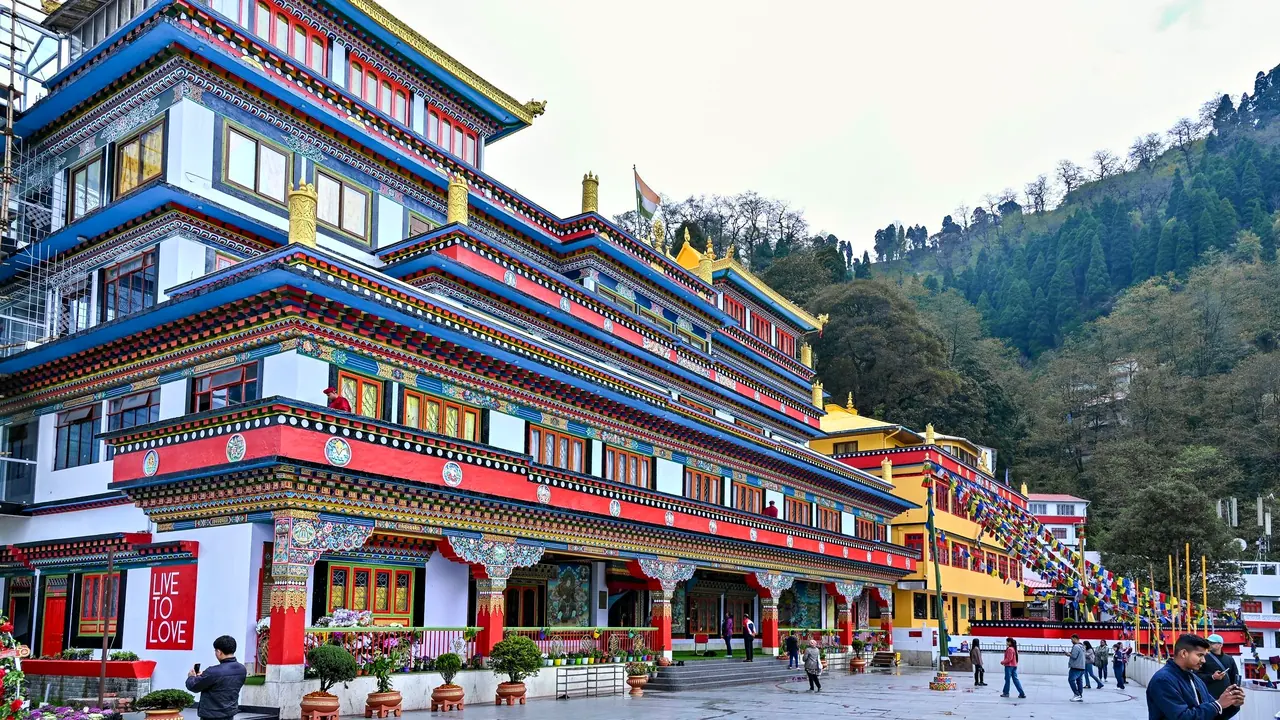
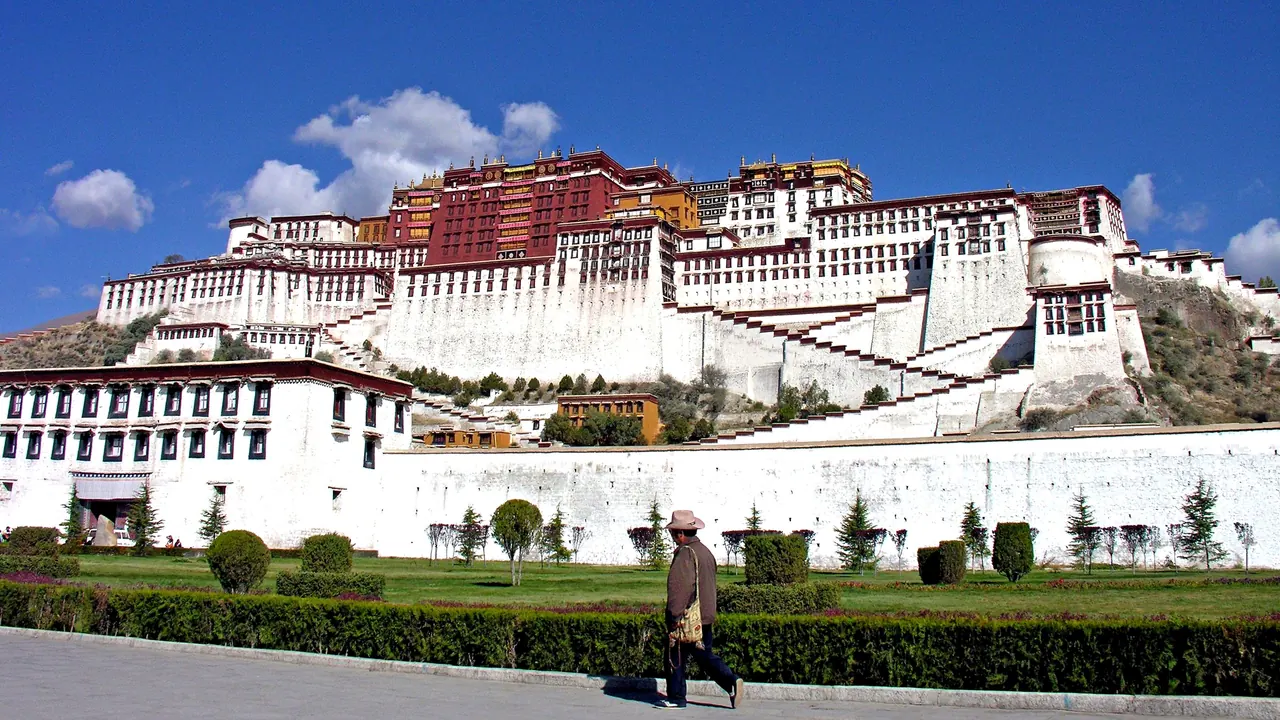
Photos: Darjeeling by Krishnendu Biswas, Pexels License; Lhasa by Dennis G. Jarvis, CC BY-SA 2.0, cropped.
Darjeeling or Lhasa?
Our verdict in twelve categories, each scored against the same fixed benchmark cities, and the climate month by month, so you can choose for your trip.
Choose Darjeeling for
- prices
- families
- nature and the outdoors
Darjeeling suits travellers who want mountain views, walking and tea without the strain of real altitude, and who would like their money to go a long way. Kangchenjunga from the ridge, the tea terraces below town and the Singalila Ridge trek make it the better outdoors base, and it is far easier with children.
Choose Lhasa for
- culture and sights
- day trips
- getting around
Lhasa is for the traveller drawn by Tibetan Buddhism itself. The Potala, the Jokhang and the pilgrims circling the Barkhor make it much the deeper cultural trip, and the great monasteries within a day's drive add to that. The cost is altitude, a guided itinerary that pushes the budget up, and a stay that is hard going for young children.
Scoreboard
Twelve categories on one fixed scale from 0 to 100. The shaded stretch is the gap between the two.
Your match
Pick a travel style or drag the sliders, and both match scores follow your weighting.
Too close to call, level with your weighting
Wins on prices and families with your weighting.
Wins on culture and sights and day trips with your weighting.
What matters to you?
Category by category
What the scores mean for a trip.
Beaches & swimming
Neither city is a place to swim. Darjeeling's valley rivers are cold and fast, so from there any time in the water means a separate leg of the trip. Yamdrok and Namtso near Lhasa are icy and sacred, lakes to look at rather than bathe in, which leaves a hotel pool as the only option.
Food & drink
Both cities serve a simple, cheap Himalayan kitchen of momos and thukpa, and neither is a place for fine dining. They differ in the drink and the setting. Darjeeling's draw is its own muscatel tea, tasted flush by flush in the tea rooms on the Mall or out on the estates, with colonial bakeries for long breakfasts and North Indian and Bengali cooking alongside.
Lhasa eats like the plateau: yak meat, tsampa, yak yoghurt and salty butter tea. Its sweet tea houses, where locals sit for hours over thermoses and noodles, are the meal to remember, and Sichuan kitchens widen the choice.
Culture & sights
Lhasa is in a different league here. The Potala rises above the city, the Jokhang draws pilgrims who prostrate themselves around the Barkhor, and Drepung and Sera hold monks' debates in the afternoons. Together they make three or four days of living religion rather than relics.
Darjeeling's heritage is gentler and more mixed: the steam toy train looping to the old monastery at Ghoom, Observatory Hill, St Andrew's Church and the Himalayan Mountaineering Institute with its Everest story. It is a pleasant two or three days, but it will not stop you in your tracks the way Lhasa does.
Nightlife
Neither is a place for a night out, but Lhasa has a little more going on after dark. Its nangma halls are part bar and part dance floor, with Tibetan pop and group dancing that run late, and there is karaoke too, although the altitude argues for going easy. In Darjeeling the evening ends with a drink by the fire in an old pub or hotel bar, and the streets are cold and empty by ten.
Nature & outdoors
Darjeeling has the mountains you can actually use. Kangchenjunga fills the sky above the town, Tiger Hill shows the snow peaks as far as Everest, and walks through tea terraces and rhododendron forest start at the edge of town. The Singalila Ridge trek to Sandakphu, with red pandas along the way, is a classic outside the monsoon.
Lhasa's landscape is starker and grand in its own way: bare brown ranges, the turquoise Yamdrok Lake beyond the Kamba La pass, and the vast Namtso. Days of acclimatisation and the need for a guide on any serious trek make it much harder to get out into.
Day trips
Lhasa's excursions are the more remarkable, though they are all of one kind. Ganden spreads across its mountain bowl, Drak Yerpa is a cliff of meditation caves, Tsurphu sits up its quiet valley and Samye was Tibet's first monastery. All are major pilgrimage sites, each reached by hired car with a guide.
From Darjeeling the outings are quieter versions of the town itself. There are Kurseong's old schools and tea estates, Mirik's lake among the pines, Kalimpong's monasteries and Sunday market at the end of a long winding drive, and homestays at Lamahatta and Takdah.
Good for families
With children, Darjeeling is the realistic choice. The toy train, the zoo with its red pandas and snow leopards, the ropeway and the pony rides on Chowrasta give them plenty to do. The steep steps and the cold pre-dawn start for Tiger Hill mean it works best once children are past the buggy stage.
Lhasa is much harder going. At about 3,650m altitude sickness is a real risk for children who cannot always say how they feel, and the sights mean steep stairs and smoky chapels where quiet is expected. Only robust teenagers with a real interest in Tibet are likely to get much from it.
Getting around
Once you have acclimatised, Lhasa is the easier city to get around. The Potala, the Jokhang and the Barkhor are within walking distance of one another, and taxis, buses and pedicabs reach Drepung, Sera and the Norbulingka. The catch is the breathless first few days.
Darjeeling's car-free ridge at Chowrasta and the Mall is lovely to stroll, but beyond it lie steep lanes, long staircases and shared jeeps crawling along the Hill Cart Road. Simply reaching the town takes three hours or more by road from the plains.
Shopping & style
Both sell much the same Himalayan goods, such as prayer wheels, jewellery, woollen shawls and thangkas, with plenty of repetition between the stalls. Neither has fashion streets. In Darjeeling the speciality is tea, tasted and bought loose by estate and flush on the Mall and Nehru Road, along with carpets made at the Tibetan Refugee Self Help Centre.
Lhasa's Barkhor stalls lean towards pilgrim goods: incense, butter lamps, Tibetan knives, and turquoise and coral jewellery. Hand-made thangkas and carpets sit among a lot of mass-produced stock, so it pays to look closely.
Affordability
Darjeeling is clearly the cheaper trip. Guesthouses, momos, tea, shared jeeps and entry fees cost very little, and only heritage hotels, tea-estate bungalows and private taxis to Tiger Hill raise the bill.
Daily life in Lhasa is also inexpensive, but the trip itself is not. Foreign visitors generally travel with a licensed guide, every outing needs a hired car and the main sights charge substantial fees, so a stay ends up mid-range rather than cheap.
Live music & performing arts
Lhasa has the one performance worth timing a trip around. Ache Lhamo, masked Tibetan opera, is staged at the Norbulingka during the Shoton festival in late summer, and the nangma halls offer song and dance for the rest of the year. Darjeeling's nearest equivalent is the masked cham dances at monastery festivals such as Losar, and neither city has a theatre or concert hall.
Wellness & relaxation
Darjeeling is the easier place to unwind. A few days in a tea-estate bungalow above the town, with mountain mornings, walks and pots of tea in the cool air, are genuinely restful, as long as you stay away from the crowds and jeep horns of the Mall.
Lhasa's calm is more contemplative: walking the dawn kora with pilgrims, sitting in a monastery courtyard, Tibetan medicine, and a soak at Yangpachen's hot springs a couple of hours away. Headaches and poor sleep in the first days at altitude get in the way of real rest.
When should you go?
Pick your month. The climate figures are measured averages, not a forecast.
Darjeeling in July
Lhasa in July
Daytime high, °C
Rainfall in the month, mm
Where the figures come from
Darjeeling has no weather station within reach, so its figures come from a gridded climate model rather than a measured record, and read a broad area rather than the city itself.
Temperature and rainfall are climate normals, averaged over the years shown. Darjeeling: 1991-2020 normals, TerraClimate 4 km grid at the town, no weather station within 90 km. Lhasa: 1991-2020 normals, Lhasa (2.4 km from centre).
The monsoon shapes Darjeeling's year. From June to September the rain is heavy, peaking at about 778mm in July, and cloud can hide the mountains for weeks. October is when the rains end. The early weeks can still be damp, but the skies clear into November, which is dry, mild and the surest month for the views. In spring, March is the driest of the good months. April is about as wet as October, and the rain climbs steeply into May. December and January stay dry but chilly, with highs of around 15°C.
Lhasa is far drier and sunnier all year. Even July, its wettest month, gets only about 141mm, and long bright days run through every season. Winters are cold and windy, with highs near 8°C, so the comfortable months for walking are May to September, when the passes are open. October stays dry and clear as it cools. Neither city has a beach season at any time of year.
Which traveller are you?
On a culture and arts trip, Lhasa is the stronger choice. The Potala, the Jokhang, the pilgrims of the Barkhor and the great monasteries of Drepung, Sera and Ganden add up to far more than Darjeeling's colonial ridge, and Ache Lhamo opera adds a performance.
On a family trip with children, choose Darjeeling. Its cool air is a relief from the heat of the plains, easy walks through the tea gardens begin at the edge of town, and the Himalayan animals are a rare sight. Lhasa has nothing made for children, and medical care there is basic.
For a trip on a tight budget, Darjeeling lets the days stretch further. You can plan it all yourself, walk the tea estates for nothing and stay longer for the same money. Lhasa's tea houses are cheap, but the way a visit there has to be arranged leaves little room to save.
Before you go
| Measure | Darjeeling | Lhasa |
|---|---|---|
| Official language | Hindi, English | Putonghua |
| Currency | Indian Rupee (INR) | Yuan Renminbi (CNY) |
| Sockets | CM230 V, 50 Hz | ACI220 V, 50 Hz |
| Driving side | Left | Right |
| Time zone | UTC+5:30 | UTC+8 |
| Emergency number | 108 or 112 | Police 110, ambulance 120, fire 119 |
| Elevation | 2,115 m | 3,650 m |
| Main airport | Bagdogra Airport (IXB)40 km from centre13 non-stop destinations | Lhasa Gonggar International Airport (LXA)45 km from centre49 non-stop destinations |
| Public holidays this year | - | 6 days |
By the numbers
| Measure | Darjeeling | Lhasa |
|---|---|---|
| City population | 118,805 | 867,891 |
| People per km² | 11,208 | - |
| Museums within 10 km | 7 | 5 |
| UNESCO World Heritage sites within 50 km | 1 | 1 |
Where else could you go?
Every comparison below shares a destination with this one, so you can follow Darjeeling or Lhasa somewhere new.
- Thimphuvs Darjeeling
- Thimphuvs Lhasa
- Kathmanduvs Darjeeling
- Pokharavs Darjeeling
- Kolkatavs Darjeeling
- Varanasivs Darjeeling