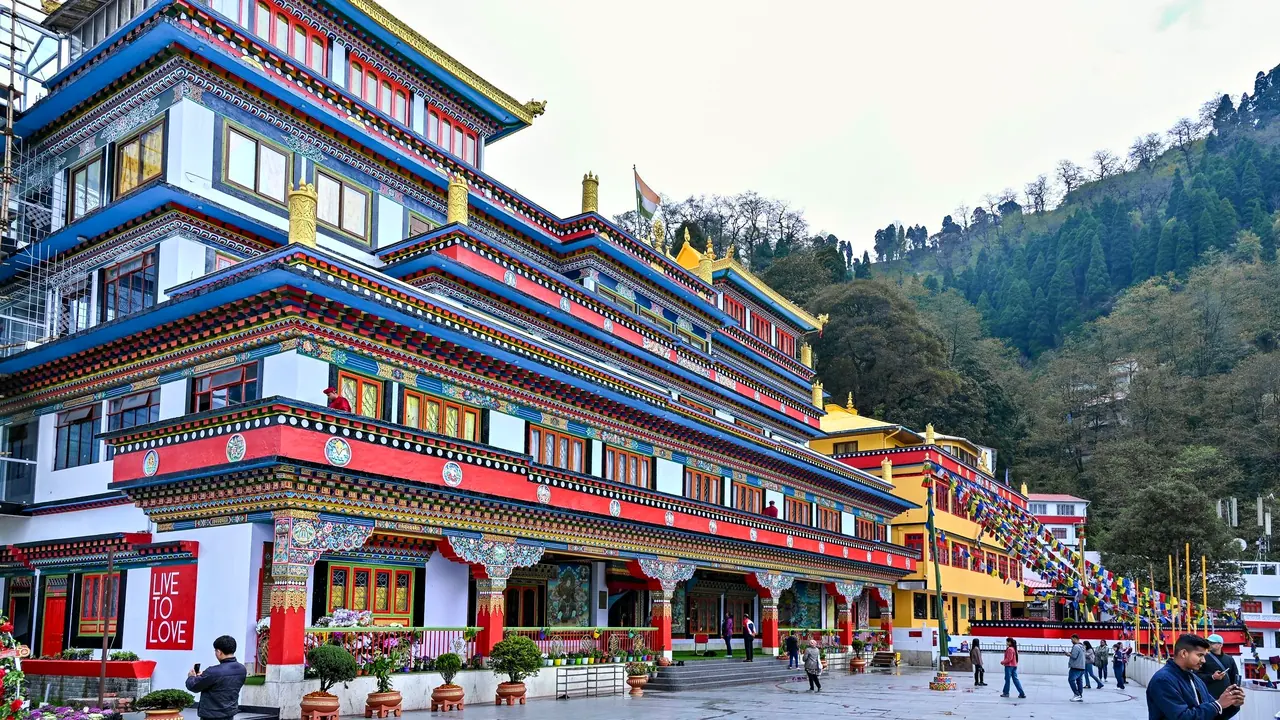
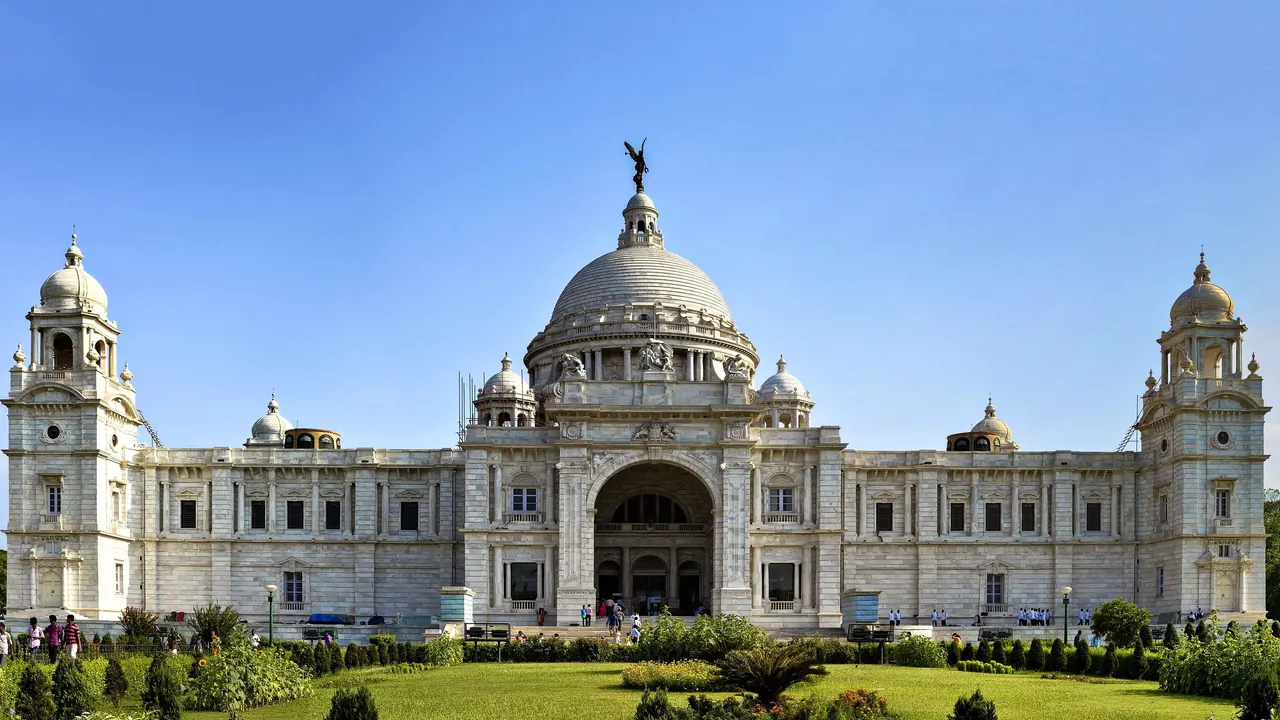
Photos: Darjeeling by Krishnendu Biswas, Pexels License; Kolkata by Subhrajyoti07, CC BY-SA 4.0, cropped.
Darjeeling or Kolkata?
Our verdict in twelve categories, each scored against the same fixed benchmark cities, and the climate month by month, so you can choose for your trip.
Choose Darjeeling for
- nature and the outdoors
- wellness
- families
Darjeeling suits travellers who want mountains and quiet. You get sunrise over Kangchenjunga, walks through tea terraces and oak forest, the Singalila Ridge if you have the stamina, and evenings that end early by a fire. It works best as a slower trip built around views, tea tasting and a few heritage sights, not a full programme of things to do.
Choose Kolkata for
- live music and the arts
- food and drink
- culture and sights
For a trip about people, food and history, Kolkata gives far more. Bengali kitchens and street corners, the colonial grandeur around the Maidan and BBD Bagh, and a serious theatre and classical music tradition fill the days and evenings in a way the hill town can't. The price is heat, noise and crowds.
Scoreboard
Twelve categories on one fixed scale from 0 to 100. The shaded stretch is the gap between the two.
Your match
Pick a travel style or drag the sliders, and both match scores follow your weighting.
Wins on nature and the outdoors and wellness with your weighting.
Wins on live music and the arts and food and drink with your weighting.
What matters to you?
Category by category
What the scores mean for a trip.
Beaches & swimming
Neither city is a place to swim. Darjeeling is a Himalayan ridge town with cold, fast rivers far below. In Kolkata nobody swims in the Hooghly, and the Bay of Bengal beaches at Digha and Mandarmani are four hours' drive or more away, so a hotel pool is the realistic option there, while in the hills the cool air means you miss the water less.
Food & drink
Darjeeling's food is a narrow pleasure but a real one. You can taste first and second flush tea where it is grown, then eat momos, thukpa and sel roti in small family kitchens around Chowk Bazaar, with long bakery breakfasts in between. After a few days the range runs out.
Kolkata is one of India's great food cities. River fish cooked in mustard oil, sweets from old family confectioners, biryani with potato and egg, Indo-Chinese food in Tangra and street snacks from Gariahat to Dalhousie give you far more to eat than one trip can cover.
Culture & sights
Darjeeling's heritage is compact and charming. The UNESCO-listed toy railway loops round Batasia to Ghoom's old monastery, and the town has Observatory Hill with its prayer flags, St Andrew's Church and the Himalayan Mountaineering Institute's Everest collection. Two or three days covers it.
Kolkata works on another scale. As the capital of British India it was left with the Victoria Memorial, the imperial buildings of BBD Bagh, the Indian Museum and the Georgian tombs of South Park Street. Bengali heritage runs alongside at Jorasanko, Kalighat, Belur Math and Kumartuli. Much of the old city is crumbling and easier to follow with a guide, but it rewards a week.
Nightlife
Darjeeling has a few pubs and hotel bars with a fire, and the streets are quiet and cold by ten. That suits people getting up for the Tiger Hill sunrise.
Kolkata gives you a proper evening out. It centres on Park Street's old bars and supper-club tradition, with rooftop and hotel bars across the south and Salt Lake. A night out means drinks and dinner rather than late clubbing, and during Durga Puja the whole city stays out until the small hours touring the pandals.
Nature & outdoors
Here Darjeeling is in a different league. Kangchenjunga fills the northern sky, tea terraces and rhododendron forest begin at the edge of town, and the Singalila Ridge leads through red panda country to a view of four of the five highest peaks.
Kolkata sits on the flat Ganges delta. It offers the Maidan, the lakes at Rabindra Sarovar, the great banyan in the Botanic Garden and sunset boat rides on the Hooghly. Its one big natural draw, the Sundarbans mangroves, needs two or three days by boat.
Day trips
Both cities have a modest choice of outings, but they differ in kind. From Darjeeling you go to other hill towns: Kurseong with its schools and tea estates, Mirik with its lake, and Kalimpong with its monasteries. All of them feel much like the town you left.
From Kolkata the best day follows the Hooghly upstream through the old Danish, French, Dutch and Portuguese settlements at Serampore, Chandannagar, Chinsurah and Bandel, easily linked by local train. Shantiniketan, Bishnupur and Murshidabad are more rewarding, but each really needs a night.
Good for families
Darjeeling is the easier sell to children. They get the toy train, red pandas and snow leopards at the zoo, and the ropeway and pony rides on Chowrasta, all in cool air. The steep steps and the winding drive up make it better for older children than for buggies.
Kolkata has Science City, Alipore Zoo, Nicco Park and the open lawns of the Maidan, and Bengali culture is genuinely warm towards children. Humid heat, crowded pavements and care with food make each day more tiring, though, so it suits families who already know India.
Getting around
Both are hard work, in different ways. Darjeeling's car-free ridge at Chowrasta and the Mall is a pleasure on foot, but almost everywhere else means steep steps or a shared jeep in congested lanes. Just getting there takes three hours or more by road from the plains.
Kolkata has India's oldest metro, cheap ferries across the Hooghly and plenty of taxis, so distance is less of a problem. Outside the heritage core, which you can walk in the cooler months, heat, traffic and broken pavements slow every journey.
Shopping & style
Darjeeling's best buy is tea, tasted and bought by weight in specialist shops on the Mall and Nehru Road. The Tibetan Refugee Self Help Centre sells carpets and thangkas, but the souvenir stalls soon start to repeat themselves. Kolkata gives you much more to browse, from Bengal handloom saris, kantha and Murshidabad silk in Gariahat and the Dakshinapan emporia to the Victorian maze of New Market and the book stalls of College Street.
Affordability
Both are very cheap, and Kolkata comes out slightly ahead. In Darjeeling, guesthouses, momos and shared jeeps cost little, but heritage hotels, tea-estate bungalows and private taxis to Tiger Hill add up, and rooms with a view cost more in the peak seasons. Kolkata keeps big-city comfort cheap as well: mid-range hotels, the metro, museum entry and sit-down Bengali meals are all modest, and only luxury hotels and imported alcohol reach Western levels.
Live music & performing arts
Darjeeling has little to plan an evening around beyond the masked cham dances at monastery festivals such as Losar and the occasional evening of Nepali and Lepcha music. Kolkata has a real stage: Bengali group theatre at the Academy of Fine Arts and Rabindra Sadan, the Dover Lane Music Conference for Hindustani classical music each winter, and Tagore's songs performed widely. The catch is language, because most of the drama is in Bengali and Western classical music is rare.
Wellness & relaxation
Darjeeling is the more restful of the two, as long as you stay outside the busy centre. A tea-estate bungalow with mountain mornings, long walks and quiet corners at the Ghoom monastery does more for you than any spa, though spa treatments themselves are few.
Kolkata is loud, humid and crowded, and you find calm only in snatches: the ghats at dawn, the lawns of Belur Math, or a hotel pool between days of sightseeing.
When should you go?
Pick your month. The climate figures are measured averages, not a forecast.
Darjeeling in July
Kolkata in July
Daytime high, °C
Rainfall in the month, mm
Where the figures come from
Darjeeling has no weather station within reach, so its figures come from a gridded climate model rather than a measured record, and read a broad area rather than the city itself.
Temperature and rainfall are climate normals, averaged over the years shown. Darjeeling: 1991-2020 normals, TerraClimate 4 km grid at the town, no weather station within 90 km. Kolkata: 1991-2020 normals, Calcutta / Alipore (5.4 km from centre).
Darjeeling is at its best in October and November, and again in March and April, when the air is dry, the days are mild and the mountains are most often clear. Winter is cold, with daytime highs around 15°C and chilly nights, though the skies are usually clear. From June to September the monsoon is severe, with rain peaking near 778mm in July, and cloud can hide the peaks for weeks.
Kolkata's good season is November to February. It is dry and sunny, with highs between 25°C and 30°C, so it is comfortable for walking the old city. October is still damp in the plains, and by April and May highs reach 36°C, which is too hot for long days on foot. The monsoon then brings heavy rain and dull skies from June to September. The two cities overlap in November, when both are dry and pleasant, and that is the easiest month to combine them. After that they part ways. In midwinter the plains are at their best while the hills turn cold, and in spring the hills are the escape from the heat building below.
Which traveller are you?
On an outdoors trip, Darjeeling is the clear choice. Tea-estate walks start at the edge of town, Tiger Hill gives you sunrise over the snow peaks, and the Singalila Ridge climbs to Sandakphu. Kolkata's flat delta offers parks, river boats and a Sundarbans trip.
For a food and nightlife trip, Kolkata wins easily. Hilsa in mustard sauce, Kolkata biryani, Tangra's Indo-Chinese cooking and phuchka on every corner outdo Darjeeling's momos and tea rooms. Park Street stays open until midnight, while the hills are asleep by ten.
On a culture and arts trip, choose Kolkata. The Victoria Memorial, the Indian Museum, Tagore's home at Jorasanko and Kumartuli's idol makers fill several days, and Bengali theatre and classical concerts fill the evenings. Darjeeling's railway, monasteries and mountaineering museum take two or three days.
Before you go
| Measure | Darjeeling | Kolkata |
|---|---|---|
| Official language | Hindi, English | Hindi, English |
| Currency | Indian Rupee (INR) | Indian Rupee (INR) |
| Sockets | CM230 V, 50 Hz | CM230 V, 50 Hz |
| Driving side | Left | Left |
| Time zone | UTC+5:30 | UTC+5:30 |
| Emergency number | 108 or 112 | 108 or 112 |
| Elevation | 2,115 m | 9 m |
| Main airport | Bagdogra Airport (IXB)40 km from centre13 non-stop destinations | Netaji Subhash Chandra Bose International Airport (CCU)12 km from centre64 non-stop destinations |
By the numbers
| Measure | Darjeeling | Kolkata |
|---|---|---|
| City population | 118,805 | 4,496,694 |
| People per km² | 11,208 | 21,818 |
| Museums within 10 km | 7 | 26 |
| UNESCO World Heritage sites within 50 km | 1 | 0 |
Where else could you go?
Every comparison below shares a destination with this one, so you can follow Darjeeling or Kolkata somewhere new.
- Thimphuvs Darjeeling
- Kathmanduvs Darjeeling
- Lhasavs Darjeeling
- Pokharavs Darjeeling
- Varanasivs Darjeeling
- Varanasivs Kolkata