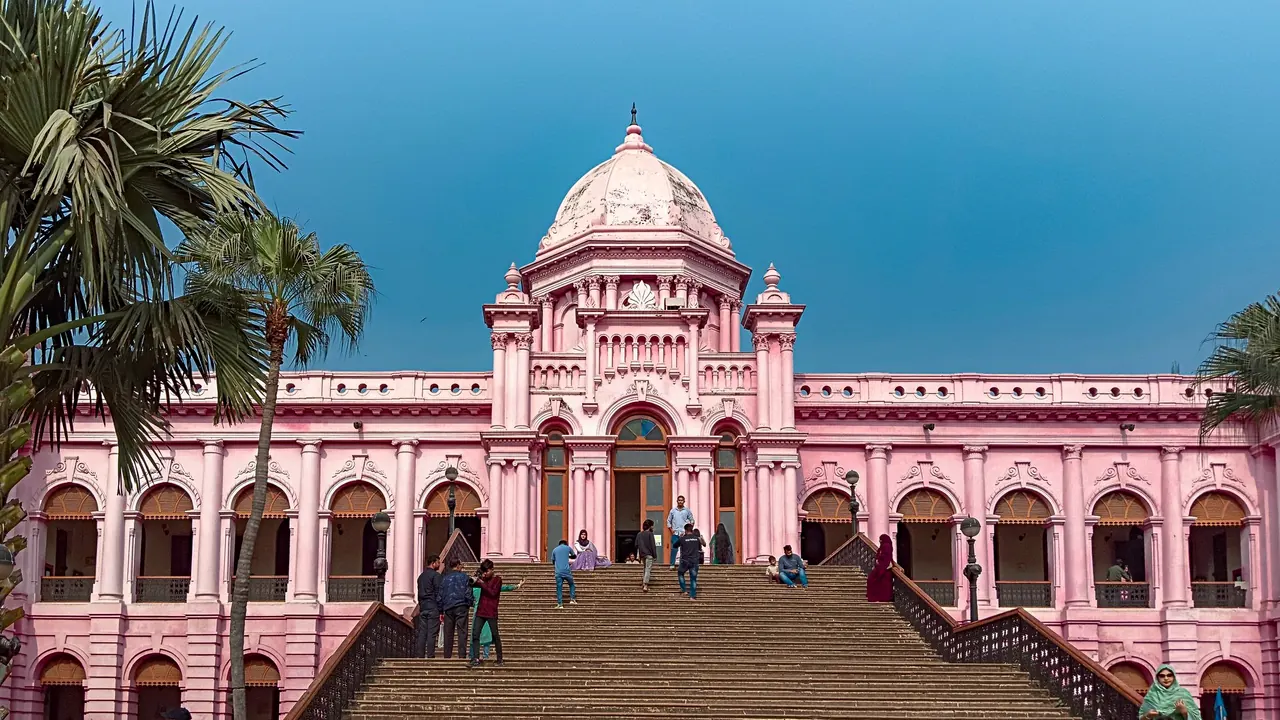
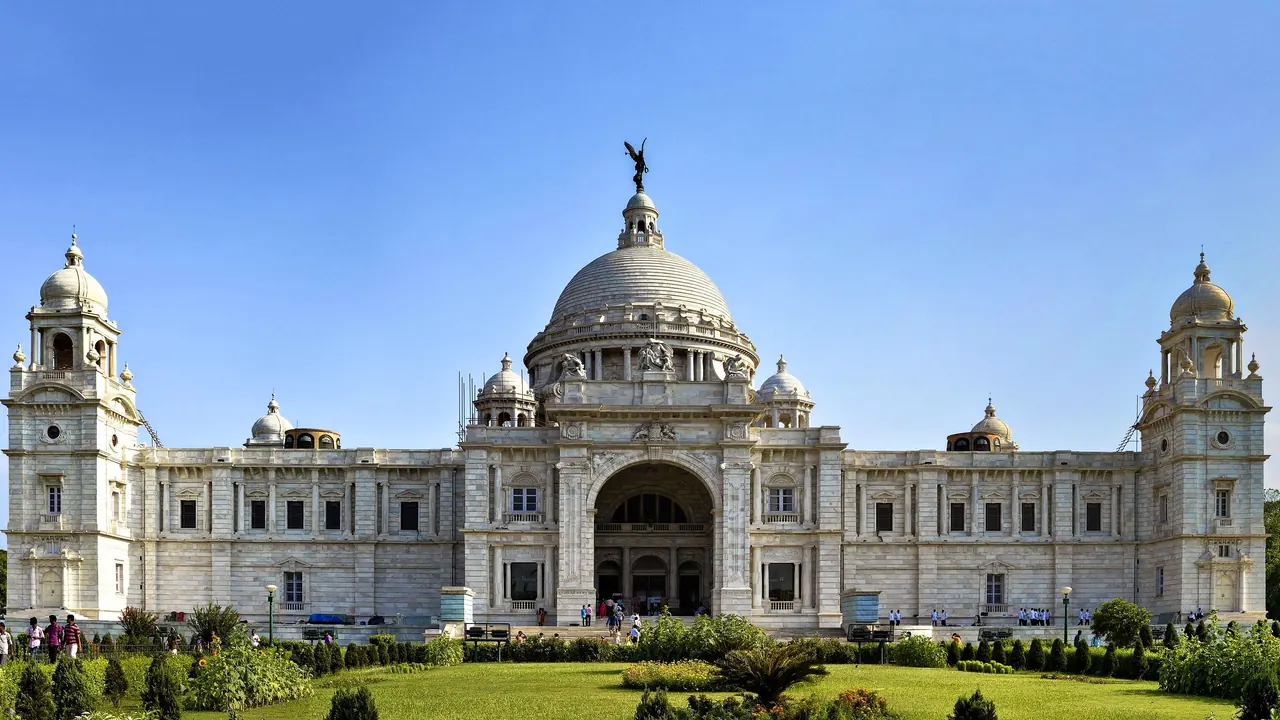
Photos: Dhaka by Riyad Hossain Hridoy, Pexels License; Kolkata by Subhrajyoti07, CC BY-SA 4.0, cropped.
Dhaka or Kolkata?
Our verdict in twelve categories, each scored against the same fixed benchmark cities, and the climate month by month, so you can choose for your trip.
Choose Dhaka for
Dhaka does not lead in any category we score.
Dhaka suits the traveller who wants a great South Asian city almost untouched by tourism and is happy to work for it. The rewards are Old Dhaka's Mughal forts, palaces and biryani lanes, the boat traffic at Sadarghat, Louis Kahn's parliament building and some of the finest handwoven textiles anywhere. Plan on a hired car and driver, evenings that end after dinner and tea, and sights you have to piece together yourself.
Choose Kolkata for
- nightlife
- live music and the arts
- families
Kolkata is the easier and fuller choice for most trips. Its colonial monuments, temples and museums give a richer list of sights, its food stretches from Bengali home cooking to Indo-Chinese and Anglo-Indian, and its theatre and classical music give your evenings a purpose. Park Street has bars, the metro and river ferries take much of the strain out of crossing the city, and families have more to do.
Scoreboard
Twelve categories on one fixed scale from 0 to 100. The shaded stretch is the gap between the two.
Your match
Pick a travel style or drag the sliders, and both match scores follow your weighting.
Has no clear advantage with the weighting you have chosen.
Wins on nightlife and live music and the arts with your weighting.
What matters to you?
Category by category
What the scores mean for a trip.
Beaches & swimming
Neither city is anywhere near a beach, and in both the river is for boats and ritual, not swimming, so a hotel pool is the only option. The difference lies in the coast beyond. From Dhaka the long sands of Cox's Bazar need a flight or most of a day on the road. From Kolkata the Bay of Bengal resorts of Digha and Mandarmani are a long drive, best done with one night away.
Food & drink
The two cities share a Bengali table of hilsa in mustard, fuchka from street stalls, mishti doi and sweet tea, but Kolkata takes it further. On top of the home cooking and the old family sweet shops it has Indo-Chinese food in Tangra and Tiretta Bazaar, Anglo-Indian grills on Park Street, kathi rolls, and its own biryani with potato and egg.
Dhaka's strength is narrower and deeper. Old Dhaka's Mughal cooking, with kacchi biryani, tehari, bakarkhani and the kebab lanes of Chawkbazar, is the reason food lovers make the trip, and the Ramadan iftar market there is a sight in itself. With almost no alcohol on offer, meals in Dhaka are about food and tea.
Culture & sights
Kolkata has more to see and it is easier to string together. The former capital of British India has the Victoria Memorial, a whole imperial quarter around BBD Bagh, the country's oldest museum and the eccentric Marble Palace. Bengali temples and Tagore's family home sit alongside, and the clay-idol workshops of Kumartuli are worth a visit in their own right.
Dhaka's heritage is concentrated in Old Dhaka by the Buriganga, with Lalbagh Fort, the pink Ahsan Manzil and the Star Mosque. Its single standout is Kahn's National Parliament House, a pilgrimage for anyone who cares about architecture. Expect less interpretation and more effort for each sight than in Kolkata.
Nightlife
Kolkata at least has a night out to offer. Park Street's long-standing bars and supper-club tradition, plus rooftop bars and clubs across the south and Salt Lake, make for drinks and dinner until about midnight. During Durga Puja the whole city stays out touring pandals.
Dhaka has nothing comparable. Drinking happens in a few hotels and private clubs in Gulshan and Banani that are often closed to the public, so evenings there mean crowded restaurants, dessert shops and late markets.
Nature & outdoors
Both are flat, crowded delta cities where the outdoors means parks and river trips, so neither gives much here. Dhaka's best outing is a country boat beyond the city to villages where the paddy fields meet the water. Kolkata's green space is more central, with the Maidan's lawns and the giant banyan at the Shibpur Botanic Garden, and the Sundarbans mangroves are closer, within reach of a short boat trip of two or three days.
Day trips
Kolkata has the more convenient classic outing. The old Danish, French, Dutch and Portuguese towns along the Hooghly can be linked in one day by local train, though longer trips such as Shantiniketan or Murshidabad need a night away.
From Dhaka, Sonargaon's Panam Nagar mansions and folk art museum and the brass foundries of Dhamrai are rewarding, but traffic decides everything and a car with a driver is the usual way to go.
Good for families
Neither city is easy with small children, but Kolkata gives them more. Science City is a proper hands-on day out, the Birla Planetarium and an old zoo add more, and the Maidan and the Victoria Memorial gardens give room to run.
In Dhaka the choice shrinks to the zoo in Mirpur, amusement parks on the city edge and mall play areas. Pollution in the dry months and slow car journeys make each outing tiring. Both cities are warm towards children.
Getting around
Kolkata is far easier to move around. Its metro network runs under the centre and out to Salt Lake and Howrah, and ferries cut across the Hooghly. You can walk the heritage core around BBD Bagh in the cooler months, so you never need a car.
Dhaka's single elevated metro line helps only if it happens to follow your route. Beyond it, notorious jams make a few kilometres take an hour, and most visitors hire a driver and keep cycle rickshaws for Old Dhaka's lanes.
Shopping & style
Both are textile cities without luxury labels, but Kolkata has more interesting places to browse. Gariahat's handloom saris and the Dakshinapan craft emporia sit alongside the Victorian hall of New Market and the book stalls of College Street. Dhaka is the place for jamdani muslin and quick made-to-measure tailoring, and its giant malls outsize anything in Kolkata.
Affordability
Both cities are very cheap, and street food, sweets, rickshaws and museum entry cost very little in either. What differs is where the money goes. In Dhaka, hiring a car and driver is often worth it and the expat restaurants of Gulshan and Banani charge international prices. Kolkata's cheap metro, ferries and taxis make a driver unnecessary, and the only real expense is imported drink in the luxury hotels.
Live music & performing arts
Kolkata gives a visitor far more to go and see. Its group-theatre companies play the Academy of Fine Arts and Rabindra Sadan most evenings, and the Dover Lane Music Conference brings the great Hindustani musicians every winter. Tagore's dance dramas and the jazz past of Park Street add to the mix.
Dhaka shares the Bengali tradition of Tagore songs, baul and stage drama at the Shilpakala Academy and on Bailey Road, but it is harder to find. The best time to see it is the Pohela Boishakh dawn singing at Ramna Park. In both cities most theatre is in Bengali.
Wellness & relaxation
Dhaka's dry-season haze makes it the harder of the two on the lungs, and its calm comes mostly from early mornings by the lakes of Dhanmondi and Gulshan or a slow boat on the river. Kolkata's quiet moments have more character: dawn on the river ghats as the city wakes, the lawns of Belur Math and a few Ayurvedic massage centres. In both, a hotel pool or spa is the surest way to recover between days of sightseeing.
When should you go?
Pick your month. The climate figures are measured averages, not a forecast.
Dhaka in July
Kolkata in July
Daytime high, °C
Rainfall in the month, mm
Temperature and rainfall are climate normals, averaged over the years shown. Dhaka: 1945-2025, 18 years observed (sunshine 1991-2020, rainfall 1991-2020) normals, Dhaka (4.4 km from centre). Kolkata: 1991-2020 normals, Calcutta / Alipore (5.4 km from centre).
Both cities are at their best from November to February, when days are warm rather than hot, the air is dry and skies are mostly clear. January is the coolest month in each, around 25°C, and comfortable for long days on foot. Neither city has a beach season worth planning around, and from March the heat builds quickly.
In Dhaka the rains build from April, which already brings about 135mm, and by May the city is deep in its wet season. Kolkata stays drier through April but runs hotter, near 36°C in April and May, and its rains start properly in May. From June to September both cities are soaked, with July the wettest month, and Kolkata's heavy rain lasts longer into September. October is damp in both but easing towards the dry season.
Which traveller are you?
On a culture and arts trip, Kolkata is the stronger pick. It pairs the Victoria Memorial, the Indian Museum and Jorasanko with a group-theatre scene and the Dover Lane music conference in winter. Dhaka's Mughal heritage and Kahn's parliament are superb, but there is less of it.
For a food and nightlife trip, Kolkata wins comfortably. Its street food, sweets, Indo-Chinese cooking in Tangra and Park Street's old bars make a full evening. In Dhaka, Old Dhaka's biryani is a match for anything, but alcohol is barely available and nights end early.
On a family trip with children, Kolkata is the more manageable city. Science City, the planetarium and the open lawns of the Maidan give children space, and the metro cuts out hours of traffic. Dhaka's choices are mostly a zoo and some malls, reached by car through gridlock.
Before you go
| Measure | Dhaka | Kolkata |
|---|---|---|
| Official language | Bangla | Hindi, English |
| Currency | Taka (BDT) | Indian Rupee (INR) |
| Sockets | ACGK220 V, 50 Hz | CM230 V, 50 Hz |
| Driving side | Left | Left |
| Time zone | UTC+6 | UTC+5:30 |
| Emergency number | 999 | 108 or 112 |
| Elevation | 4 m | 9 m |
| Main airport | Hazrat Shahjalal International Airport (DAC)13 km from centre31 non-stop destinations | Netaji Subhash Chandra Bose International Airport (CCU)12 km from centre65 non-stop destinations |
| Public holidays this year | 7 days | - |
By the numbers
| Measure | Dhaka | Kolkata |
|---|---|---|
| Population | 16,800,000 | 4,496,694 |
| People per km² | 45,652 | 21,818 |
| Museums within 10 km | 17 | 26 |
| UNESCO World Heritage sites within 50 km | 0 | 0 |
Where else could you go?
Every comparison below shares a destination with this one, so you can follow Dhaka or Kolkata somewhere new.
- Cox's Bazarvs Dhaka
- Cox's Bazarvs Kolkata
- Thimphuvs Dhaka
- Darjeelingvs Dhaka
- Darjeelingvs Kolkata
- Varanasivs Kolkata