Photos: Kolkata by Subhrajyoti07, CC BY-SA 4.0, cropped; Varanasi by Dennis G. Jarvis, CC BY-SA 2.0, cropped.
Kolkata or Varanasi?
Our verdict in twelve categories, each scored against the same fixed benchmark cities, and the climate month by month, so you can choose for your trip.
Choose Kolkata for
- families
- nightlife
- food and drink
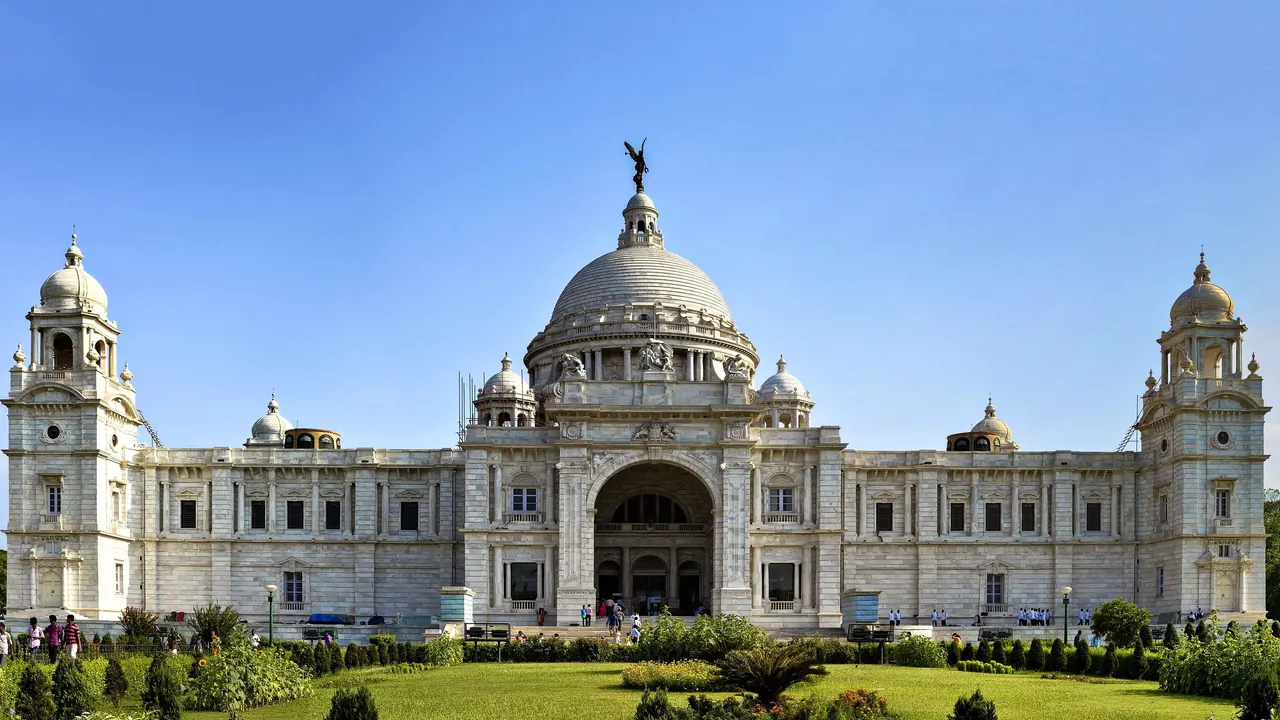
Kolkata suits travellers who want a big Indian city with plenty to eat and some variety in the day. It offers Bengali fish curries and sweets, Indo-Chinese food in Tangra, evenings on Park Street, the imperial streets around BBD Bagh and the Victoria Memorial, and a metro that ties it all together. It is also the more manageable of the two with children, thanks to Science City, the zoo and the open lawns of the Maidan.
Choose Varanasi for
- wellness
- culture and sights
- day trips
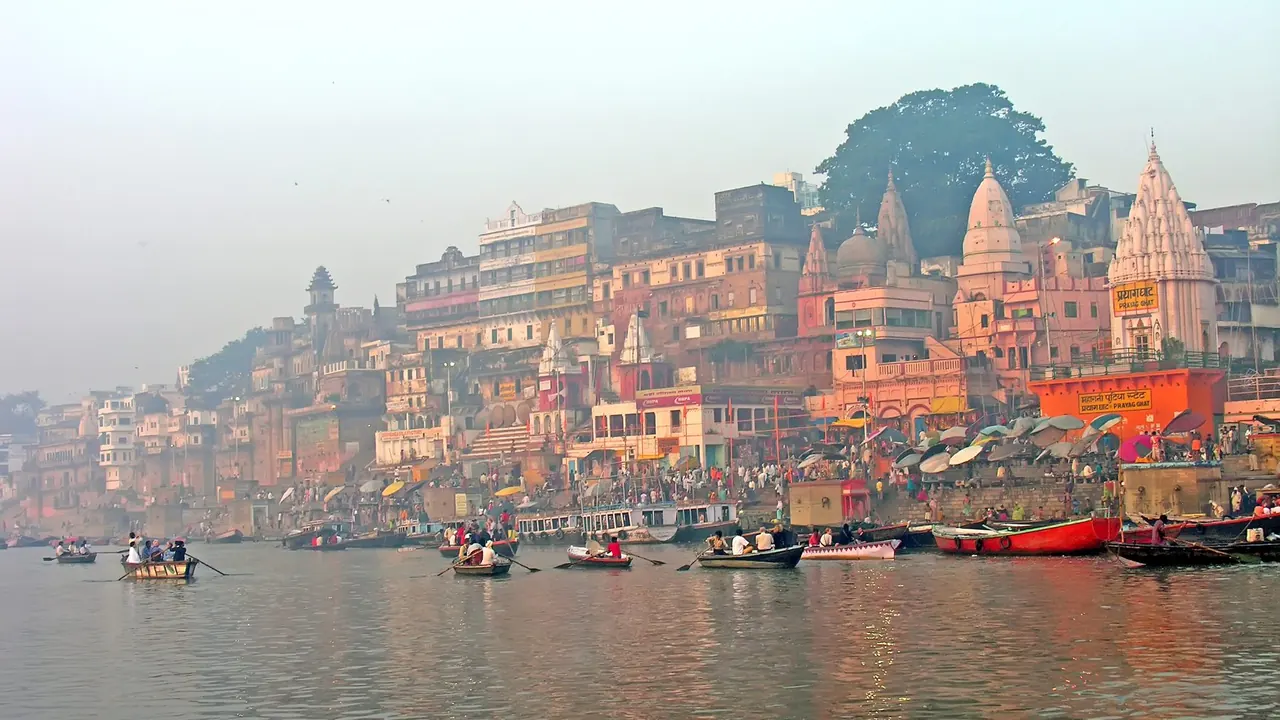
Choose Varanasi if you are going for the river and its rituals. The ghats, the dawn boat rides, the cremation fires and the evening aarti make it the more intense cultural experience, and the yoga and classical music around Assi Ghat give it a quieter, more reflective side. It is best for adults who don't mind crowds and early starts, with Sarnath close by. It is less suited to anyone who wants late nights or much choice of food.
Scoreboard
Twelve categories on one fixed scale from 0 to 100. The shaded stretch is the gap between the two.
Your match
Pick a travel style or drag the sliders, and both match scores follow your weighting.
Wins on families and nightlife with your weighting.
Wins on wellness and culture and sights with your weighting.
What matters to you?
Category by category
What the scores mean for a trip.
Beaches & swimming
Neither city has a beach, and nobody should swim in either river, so in both the only realistic swim is in a hotel pool. Even pools are scarcer in Varanasi, where only a few larger hotels away from the old city have one. Kolkata can at least reach the Bay of Bengal sands at Digha or Mandarmani as an overnight trip, while Varanasi is hundreds of kilometres from any coast.
Food & drink
Kolkata is the far richer place to eat. Bengali cooking gives you hilsa in mustard sauce, prawn malai curry and kosha mangsho, and the city has a whole culture of sweets as well as Kolkata biryani with potato and egg. Indo-Chinese food in Tangra and Tiretta Bazaar and the Anglo-Indian grills of Park Street add a range that few Indian cities can match.
Varanasi eats well but narrowly. Breakfast is kachori and jalebi, then there is tamatar chaat, lassi in clay cups, malaiyo at winter dawns and paan rolled to order around Godowlia. Near the ghats almost everything is vegetarian and alcohol is hard to find, so a few days of snacks may be enough.
Culture & sights
Varanasi has the more powerful experience. More than eighty ghats line the Ganges, and bathing, rites and the cremations at Manikarnika go on in full view. Behind them, the lanes lead to the gold spire of Kashi Vishwanath. What you see is living ritual rather than monuments, and museums play a minor part.
Kolkata's appeal lies in buildings and collections: the Victoria Memorial, the imperial district around BBD Bagh, the Indian Museum and the odd treasures of the Marble Palace, alongside Tagore's home at Jorasanko, Kalighat and the idol makers of Kumartuli. It rewards anyone who enjoys colonial history and faded grandeur, but nothing in it matches the intensity of Varanasi's riverfront.
Nightlife
Kolkata at least offers a night out. Park Street has old bars and a long supper-club tradition, and there are hotel lounges and rooftop bars in the south and in Salt Lake, although most close around midnight and dry days shut them altogether. During Durga Puja the whole city stays out until the small hours touring the pandals.
In Varanasi, evenings end with the aarti, dinner on a rooftop and an early night, because alcohol is scarce near the ghats and the city wakes before dawn. Chai and music in the Assi Ghat cafés is about as late as it gets.
Nature & outdoors
Both cities sit on the flat Gangetic plain, where heat limits time outdoors, so neither is a destination for the outdoors. Kolkata has more green space within the city, from the Maidan to the great banyan in the Shibpur Botanic Garden, and the tiger country of the Sundarbans mangroves is within reach on a boat trip of two or three days.
In Varanasi, the outdoors means the river itself: a sunrise row past the ghats and a walk on the wide sandbank opposite. For hills, the Vindhyas and the seasonal waterfalls of Chandraprabha are about two hours to the south.
Day trips
Varanasi has the stronger single outing in Sarnath, half an hour away, where the Buddha gave his first sermon beside the Dhamek Stupa. Chunar Fort and the fifteenth-century mosques of Jaunpur make easy extra outings.
Kolkata's classic day out follows a string of old European trading towns up the Hooghly, linked by local train: Danish Serampore, French Chandannagar, Dutch Chinsurah and Portuguese Bandel. In both cases the bigger names lie further out and need a night away, Shantiniketan and Murshidabad from Kolkata, Bodh Gaya and Khajuraho from Varanasi.
Good for families
Kolkata is clearly the better choice with children. Science City, Alipore Zoo, Nicco Park and the Birla Planetarium give them real things to do, and the Maidan and the Victoria Memorial gardens have room to run, though heat and traffic still make it better suited to families who already know India.
Varanasi has nothing made for children. Its narrow lanes are shared with cows and motorbikes, and cremations burn openly on the ghats. Families who do come usually keep it short: a dawn boat ride, Sarnath and a calm hotel away from the river.
Getting around
Kolkata is easier to cover. India's oldest metro runs north to south through the centre to Park Street and Kalighat, ferries cross the Hooghly to Howrah, and yellow taxis and app cabs fill the gaps, though every journey takes longer than the map suggests.
Varanasi has no metro. The best way to get about is on foot or by boat along the ghats from Assi to Raj Ghat. Away from the river you rely on rickshaws and autos in heavy traffic, and the old city's lanes are too narrow for cars and easy to get lost in.
Shopping & style
Both cities shop best for textiles, but they differ in range. Kolkata covers more ground: Bengal handloom, Baluchari silk and kantha embroidery in Gariahat, the Victorian maze of New Market, and the book stalls of College Street. Varanasi has one great product, Banarasi brocade woven with gold and silver thread and bought straight from the weavers' quarters, plus brassware and ritual goods. Watch out for touts steering you to particular silk shops.
Affordability
Both are among the cheapest places to travel anywhere, and the difference is in where the money goes. In Varanasi most of the great sights cost nothing, since the ghats and the aarti are free, and the main temptation is silk. In Kolkata the metro, ferries and museum entry are cheap, and imported alcohol and the international hotel bars are what push a bill up.
Live music & performing arts
Varanasi has the edge for a visitor because its music needs no translation. Banaras has its own gharanas of vocal music, tabla and dance, recitals take place in music schools, and the Sankat Mochan festival runs through the night in a temple courtyard. The Ganga aarti is staged every evening at Dashashwamedh, and the month-long Ramlila at Ramnagar is remarkable.
Kolkata has more going on most evenings, with Bengali group theatre at the Academy of Fine Arts and Rabindra Sadan, the Dover Lane Music Conference each winter, and Tagore's songs, but much of it is in Bengali.
Wellness & relaxation
Varanasi gives you more ways to slow down. Yoga, meditation teachers and Ayurvedic massage are easy to find around Assi Ghat, and a quiet ghat at dawn can be deeply calming, although the rest of the city is emotionally draining.
Kolkata has little to offer beyond hotel spas and a few massage centres. Its calm comes in found moments, such as the lawns of Belur Math or a long afternoon of tea and talk, and a hotel pool between sightseeing days.
When should you go?
Pick your month. The climate figures are measured averages, not a forecast.
Kolkata in July
Varanasi in July
Daytime high, °C
Rainfall in the month, mm
Where the figures come from
Varanasi has no weather station within reach, so its figures come from a gridded climate model rather than a measured record, and read a broad area rather than the city itself.
Temperature and rainfall are climate normals, averaged over the years shown. Kolkata: 1991-2020 normals, Calcutta / Alipore (5.4 km from centre). Varanasi: 2001-2020 normals, NASA POWER reanalysis grid, no weather station within 90 km.
Both cities are at their best from November to February, when days are dry and warm rather than hot. Late spring is where they part. Kolkata peaks at about 36°C in April and May, with heavy humidity. Varanasi climbs to 43°C in May, too hot for anything except early mornings on the ghats. Winter is cooler in Varanasi, with highs of 24°C in December and January, so it is pleasant for walking the lanes but can feel chilly at dawn on the river.
The monsoon runs from June to September in both cities but hits Kolkata much harder: about 384mm of rain falls in July and sunshine drops to around half its spring level. Varanasi gets about 249mm in the same month. October is still wet in Kolkata but already fairly dry in Varanasi, so autumn arrives earlier there. Neither city is a beach destination at any time of year.
Which traveller are you?
On a family trip with children, Kolkata is the clear choice. It has proper attractions for young visitors and open space to let off steam, which counts for a lot in the heat. Varanasi is best left out, or kept to a short stop.
For a food and nightlife trip, go to Kolkata. You can eat fish, meat, sweets and Chinese-style dishes in a single day and still find a bar afterwards. Varanasi is worth a morning of snacking, but it is quiet and mostly dry after dark.
On a culture and arts trip, Kolkata suits travellers who would rather see architecture, museums and colonial history, but Varanasi is the stronger choice overall. In Varanasi the daily ritual is the main sight, and its classical recitals and festivals are easy for an outsider to enjoy.
Before you go
| Measure | Kolkata | Varanasi |
|---|---|---|
| Official language | Hindi, English | Hindi, English |
| Currency | Indian Rupee (INR) | Indian Rupee (INR) |
| Sockets | CM230 V, 50 Hz | CM230 V, 50 Hz |
| Driving side | Left | Left |
| Time zone | UTC+5:30 | UTC+5:30 |
| Emergency number | 108 or 112 | 108 or 112 |
| Elevation | 9 m | 76 m |
| Main airport | Netaji Subhash Chandra Bose International Airport (CCU)12 km from centre64 non-stop destinations | Lal Bahadur Shastri International Airport (VNS)21 km from centre16 non-stop destinations |
By the numbers
| Measure | Kolkata | Varanasi |
|---|---|---|
| City population | 4,496,694 | 1,198,491 |
| People per km² | 21,818 | 14,598 |
| Museums within 10 km | 26 | 2 |
| UNESCO World Heritage sites within 50 km | 0 | 1 |
Where else could you go?
Every comparison below shares a destination with this one, so you can follow Kolkata or Varanasi somewhere new.
- Pokharavs Varanasi
- Kathmanduvs Varanasi
- Darjeelingvs Kolkata
- Agravs Varanasi
- Darjeelingvs Varanasi
- Kathmanduvs Kolkata