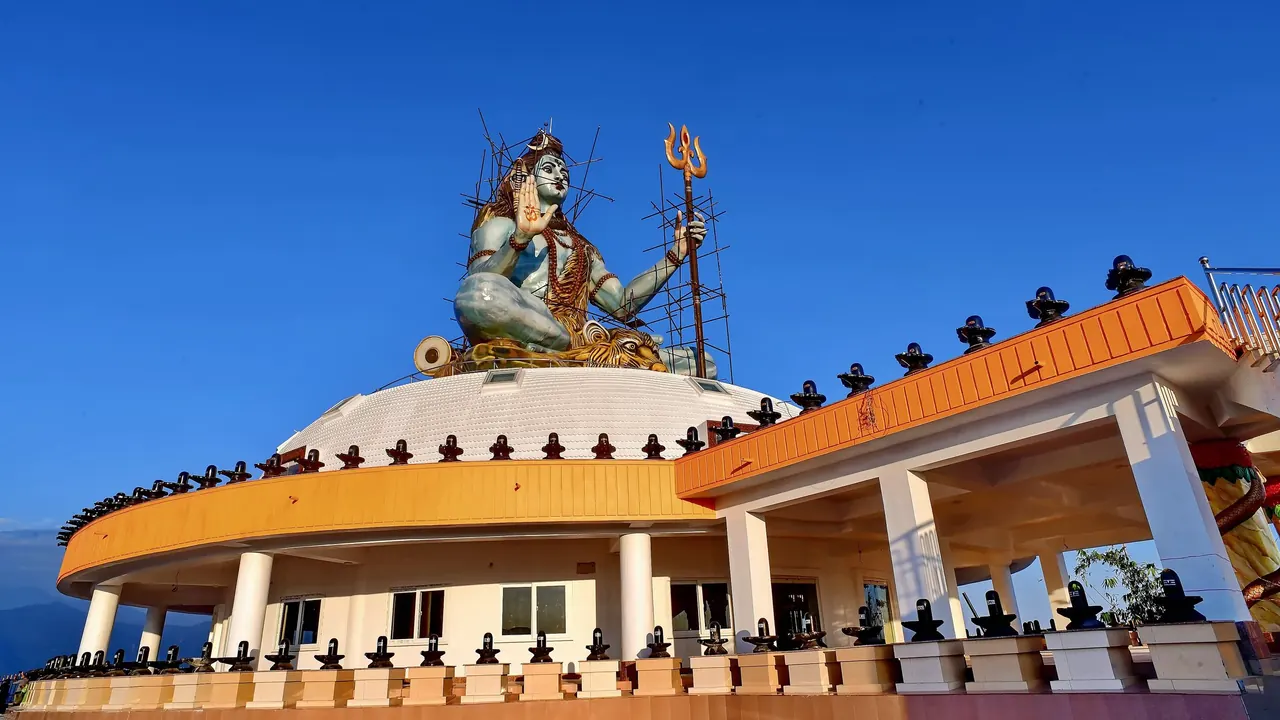
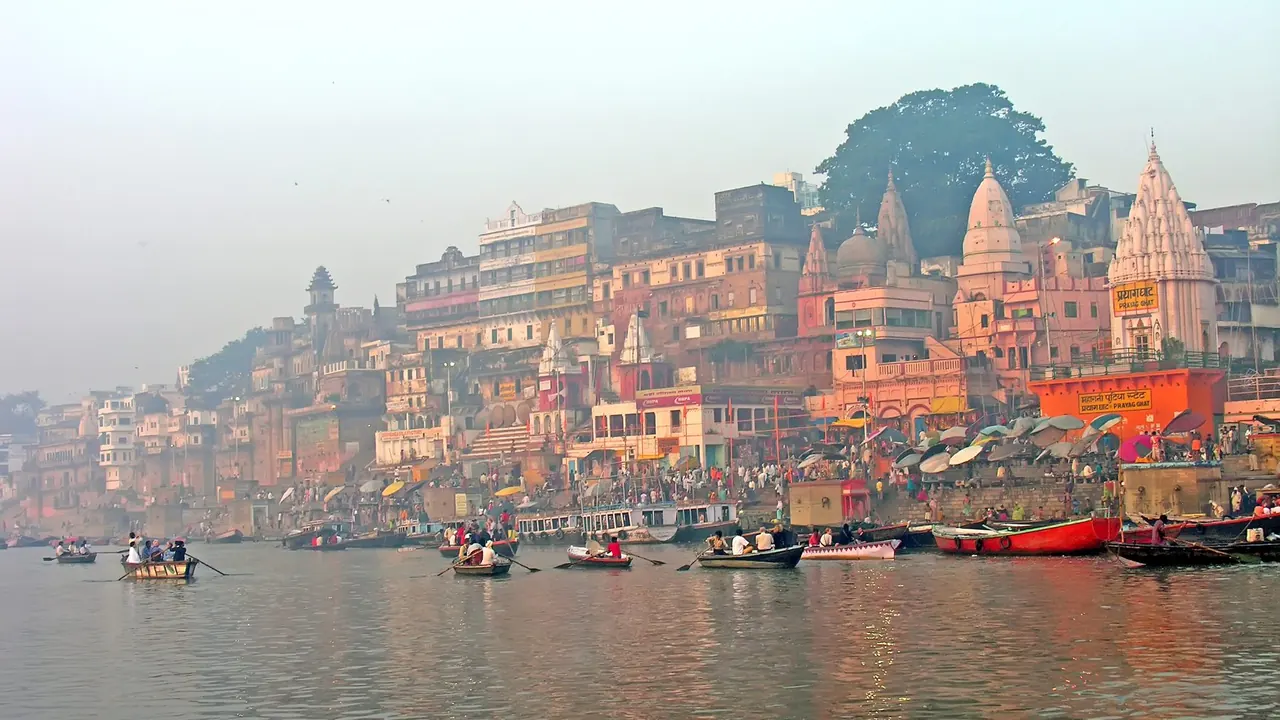
Photos: Pokhara by Rajesh Dhungana, CC BY-SA 4.0, cropped; Varanasi by Dennis G. Jarvis, CC BY-SA 2.0, cropped.
Pokhara or Varanasi?
Our verdict in twelve categories, each scored against the same fixed benchmark cities, and the climate month by month, so you can choose for your trip.
Choose Pokhara for
- nature and the outdoors
- families
- wellness
Pokhara is the choice for anyone who wants mountains, fresh air and an easy pace. The Annapurna range rises straight above Phewa Lake, treks and paragliding start from the edge of town, and the lakeside strip is gentle enough for families and for winding down after a hard week on the trail.
Choose Varanasi for
- culture and sights
- live music and the arts
- shopping
Varanasi suits travellers who come for the spectacle of living faith and are ready for intensity. The ghats, the cremation grounds, the old city lanes and the evening aarti make it one of the most powerful cultural experiences in Asia, backed by classical music, Banarasi silk and serious street food. It is a city for adults, though, and a tiring one.
Scoreboard
Twelve categories on one fixed scale from 0 to 100. The shaded stretch is the gap between the two.
Your match
Pick a travel style or drag the sliders, and both match scores follow your weighting.
Too close to call, 1 point apart
Wins on nature and the outdoors and families with your weighting.
Wins on culture and sights and live music and the arts with your weighting.
What matters to you?
Category by category
What the scores mean for a trip.
Beaches & swimming
Neither city is a place to swim. Pokhara at least has a lake you can float on in a painted boat and, on its quieter shores or at Begnas Lake, an occasional dip, while the Ganges at Varanasi is polluted and fast-flowing and should be left to pilgrims. In both, a hotel pool is the only real option, and Varanasi has fewer of them.
Food & drink
Varanasi is the better city to eat in, provided you like vegetarian street food. Its mornings of kachori and jalebi, lassi in clay cups, tamatar chaat, winter malaiyo and rolled-to-order paan give a real reason to explore the lanes around Godowlia and the Chowk, even if alcohol is scarce and the range is narrow.
Pokhara's food is built around trekkers, with long international menus along Lakeside. The rewarding meals are Thakali dal bhat, momos and charcoal-grilled buffalo sekuwa in simpler places away from the lake, plus a slow bakery breakfast facing the mountains.
Culture & sights
This is where Varanasi is in another league. The curve of more than eighty ghats, the cremations at Manikarnika, the old city's shrine-packed lanes leading to Kashi Vishwanath, and sights such as Ramnagar Fort and Bharat Kala Bhavan make it a place you could spend days simply watching.
Pokhara's sights are pleasant extras rather than reasons to come: the island temple of Tal Barahi, the World Peace Pagoda, the old bazaar and the International Mountain Museum fill a couple of days at most.
Nightlife
Pokhara has the livelier evenings. Lakeside's rooftop bars, cover bands and a couple of small dance bars give trekkers somewhere sociable to celebrate, though things wind down around midnight. Varanasi, as a holy city, barely drinks at all: evenings mean the aarti, a rooftop dinner, chai at Assi Ghat and an early night before the dawn boats.
Nature & outdoors
Pokhara is one of the great mountain bases of the world. Machhapuchhre and the Annapurnas tower over Phewa Lake, Sarangkot draws sunrise watchers and paragliders, and Poon Hill, Ghandruk, Mardi Himal and Annapurna Base Camp all begin a short drive away.
Varanasi's outdoors is the river itself: a sunrise row along the ghats and a walk on the sandbank opposite. Beyond that lies flat farmland, with the Vindhya hills and Chandraprabha's waterfalls a couple of hours south.
Day trips
Varanasi has the stronger outings, led by Sarnath, half an hour away, where the Buddha first preached and the Dhamek Stupa still stands. Chunar Fort above the Ganges and the fifteenth-century mosques of Jaunpur make further easy days.
From Pokhara, slow mountain roads limit the choice. Bandipur, a car-free Newar hill town about two hours away, is the one true day trip. The Gurung villages are better reached on a trek.
Good for families
Pokhara is much the kinder place for children. The lakeshore has little traffic, boats are easy to hire, and older children enjoy the pagoda walk, the caves, the mountain museum and, when old enough, tandem paragliding. Teenagers who like the outdoors get the most from it.
Varanasi is very difficult with children, with crowded lanes, cows and open drains, cremations in full view and fierce summer heat. Families who go usually keep it to a dawn boat ride and Sarnath.
Getting around
Pokhara is the simpler place to find your way around. Lakeside is compact and level, so daily life there runs on foot or by bicycle along the shore. A taxi, scooter or hired driver is only needed for set outings such as Sarangkot, the caves or the trailheads, and those roads are bumpy and slow.
Varanasi's best route is the river itself, a walk of several kilometres from ghat to ghat or the same view from a boat. Step back from the water and it gets much harder: the old city is a disorienting warren on foot, and the newer town is loud and congested. In Pokhara you hire a ride now and then, but in Varanasi almost every trip away from the ghats means agreeing a fare with a rickshaw or auto driver, or booking one through an app.
Shopping & style
Varanasi has one of India's great crafts in Banarasi silk brocade, bought from weavers' workshops or the silk houses around Godowlia, along with brassware, wooden toys and musical instruments. Expect touts steering you to particular shops.
Pokhara's shopping is mainly practical: trekking gear to buy or rent along Lakeside, plus pashmina, singing bowls, thangkas and carpets from the Tibetan settlements on the edge of town.
Affordability
Both are among the cheapest places anywhere to travel, so money goes a long way in either. What differs is where it goes: in Pokhara the bigger costs are paragliding, guided treks and Annapurna permits, while in Varanasi the main sights are free and the temptation is silk or a restored palace hotel on the river.
Live music & performing arts
Varanasi is a true home of Hindustani classical music, with its own gharanas, intimate evening recitals and festivals such as the all-night Sankat Mochan Sangeet Samaroh and the Dhrupad Mela on Tulsi Ghat. The nightly aarti and the month-long Ramlila at Ramnagar add performance on a grand scale.
Pokhara offers little beyond Lakeside cover bands and dinner shows of Gurung and Magar dance staged for visitors.
Wellness & relaxation
Pokhara is the more restful stay. Slow mornings watching cloud lift off the Annapurnas, yoga and meditation retreats on the quiet hillsides and the far shore, and massage for sore trekking legs make it a natural place to unwind.
Varanasi has yoga, meditation and Ayurvedic massage around Assi Ghat, and dawn on the river can be deeply calming. The rest of the city is loud and emotionally intense, though, so rest is something you have to plan for.
When should you go?
Pick your month. The climate figures are measured averages, not a forecast.
Pokhara in July
Varanasi in July
Daytime high, °C
Rainfall in the month, mm
Where the figures come from
Pokhara has no weather station within reach, so its figures come from a gridded climate model rather than a measured record, and read a broad area rather than the city itself.
Varanasi has no weather station within reach, so its figures come from a gridded climate model rather than a measured record, and read a broad area rather than the city itself.
Temperature and rainfall are climate normals, averaged over the years shown. Pokhara: 1991-2020 normals, TerraClimate 4 km grid at the town, no weather station within 90 km. Varanasi: 2001-2020 normals, NASA POWER reanalysis grid, no weather station within 90 km.
Pokhara is at its best from October to March. October and November bring the clearest mountain views and are the classic trekking months. December to February stay dry, with mild days around 19°C in January and cool mornings. Spring gets warmer and hazier, reaching about 30°C by April, and the rain starts to build. The monsoon sets in from May to September, with around 674mm in July, when cloud can hide the peaks for days and the trails turn wet.
Varanasi has a much harsher summer. From April to June it is too hot to walk the ghats in the middle of the day, with highs near 43°C in May, and the monsoon follows from late June to September. The comfortable season is November to February, with warm, dry days around 24°C in midwinter that make early mornings on the river a pleasure. Late autumn and winter suit both cities, so that is the natural time to combine them.
Which traveller are you?
On an outdoors trip, Pokhara is the clear pick. Sunrise from Sarangkot, paragliding over Phewa Lake, kayaking and treks into the Annapurna region all start close by, while Varanasi offers little beyond boat rides and the sandbank opposite the ghats.
For a culture and arts trip, Varanasi wins easily. Its ghats, temples and daily rituals are among the most remarkable sights in India, and its classical music festivals and the Ramlila add a living tradition that Pokhara's few temples and museums cannot match.
On a family trip with children, Pokhara is far easier. Lakeside is calm, rowing boats and short walks keep older children busy, whereas Varanasi's crowded lanes, open cremations, heat and traffic make it very hard going with young ones.
Before you go
| Measure | Pokhara | Varanasi |
|---|---|---|
| Official language | Nepali | Hindi, English |
| Currency | Nepalese Rupee (NPR) | Indian Rupee (INR) |
| Sockets | CM230 V, 50 Hz | CM230 V, 50 Hz |
| Driving side | Left | Left |
| Time zone | UTC+5:45 | UTC+5:30 |
| Emergency number | Police 100, ambulance 102, fire 101 | 108 or 112 |
| Elevation | 900 m | 76 m |
| Main airport | Pokhara International Airport (PHH)4 km from centre9 non-stop destinations | Lal Bahadur Shastri International Airport (VNS)21 km from centre16 non-stop destinations |
By the numbers
| Measure | Pokhara | Varanasi |
|---|---|---|
| City population | 353,841 | 1,198,491 |
| People per km² | 762 | 14,598 |
| Museums within 10 km | 2 | 2 |
| UNESCO World Heritage sites within 50 km | 0 | 1 |
Where else could you go?
Every comparison below shares a destination with this one, so you can follow Pokhara or Varanasi somewhere new.
- Kathmanduvs Pokhara
- Kathmanduvs Varanasi
- Agravs Varanasi
- Delhivs Varanasi
- Jaipurvs Varanasi
- Udaipurvs Varanasi