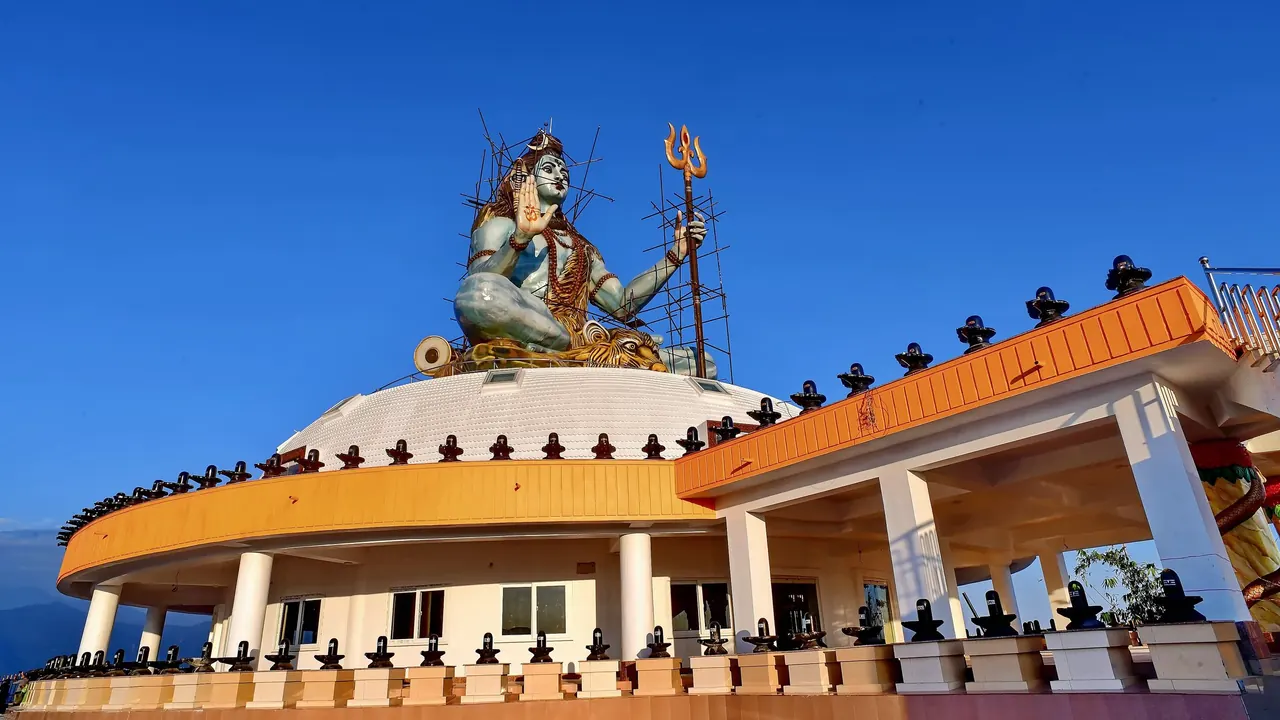
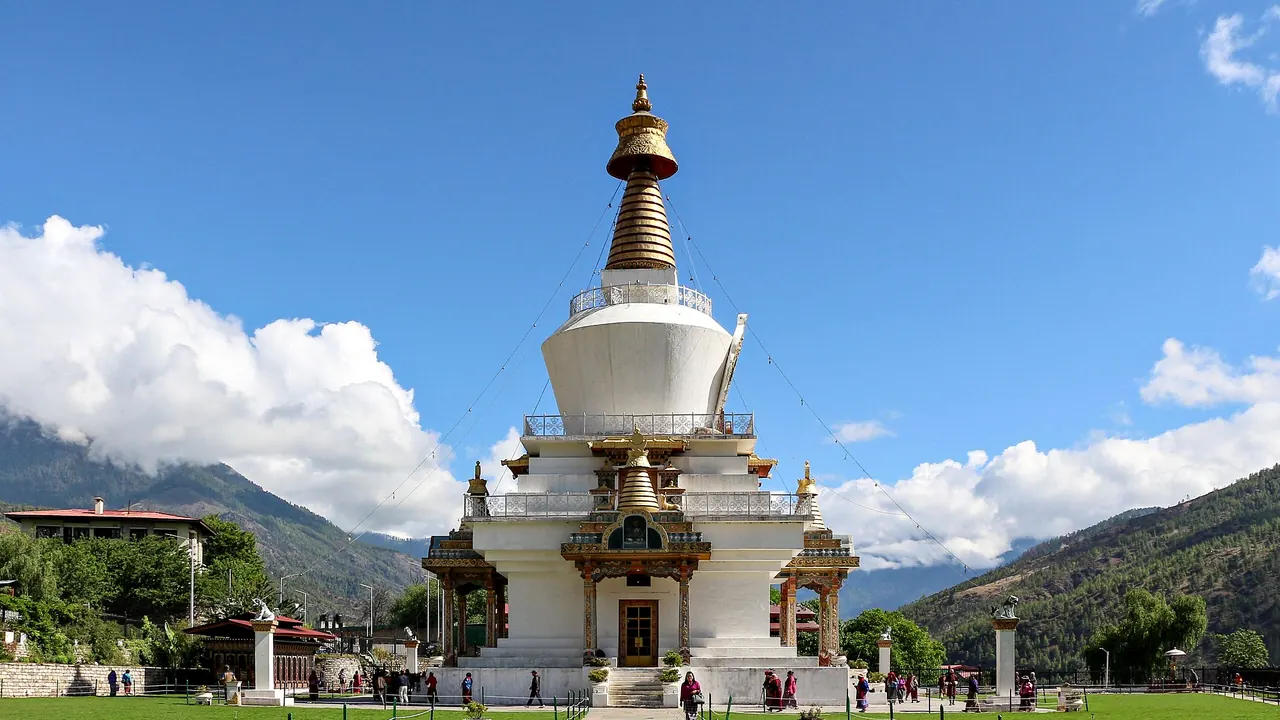
Photos: Pokhara by Rajesh Dhungana, CC BY-SA 4.0, cropped; Thimphu by Bernard Gagnon, CC BY-SA 4.0, cropped.
Pokhara or Thimphu?
Our verdict in twelve categories, each scored against the same fixed benchmark cities, and the climate month by month, so you can choose for your trip.
Choose Pokhara for
- prices
- nature and the outdoors
- nightlife
Pokhara suits travellers who want the Himalaya close up without a large bill. Machhapuchhre and the Annapurnas stand over the lake, and the Annapurna treks start a short drive away. Paragliding, kayaking and sociable evenings on the Lakeside strip fill the other days. It costs very little and is easy to do on your own, though the town itself has few sights.
Choose Thimphu for
- culture and sights
- day trips
- live music and the arts
Thimphu is the pick for a living Buddhist culture. It has Tashichho Dzong, the prayer-wheel circuit at the Memorial Chorten, the school of traditional arts and, in autumn, the masked dances of the Tshechu. Paro and the Tiger's Nest lie within an easy day. Bhutan's daily visitor fee and guided travel make it expensive, so it rewards those who prefer a slower, carefully arranged trip to freedom and economy.
Scoreboard
Twelve categories on one fixed scale from 0 to 100. The shaded stretch is the gap between the two.
Your match
Pick a travel style or drag the sliders, and both match scores follow your weighting.
Wins on prices and nature and the outdoors with your weighting.
Wins on culture and sights and day trips with your weighting.
What matters to you?
Category by category
What the scores mean for a trip.
Beaches & swimming
Neither city is a place to swim. Pokhara at least has a lake to be on: Phewa Lake is for painted rowing boats, and the occasional dip happens at Begnas Lake or on quieter shores. Thimphu has only the cold, fast Wang Chhu, and few of its hotels even have a pool.
Food & drink
Both run on momos and neither has much fine dining, but the food tastes very different. Pokhara's Lakeside feeds hungry trekkers pizza, curries and apple pie. The better meals are Thakali dal bhat and buffalo sekuwa grilled over charcoal away from the lake, and breakfast with a mountain view is a daily pleasure.
Thimphu's cooking is hotter and less familiar to most visitors: ema datshi, red rice and dried pork with radish, though tourist buffets tone it down. It also has something Pokhara lacks, a real market. The Centenary Farmers' Market by the river is piled with chillies and cheese at weekends.
Culture & sights
Thimphu is clearly the stronger choice here because its heritage is still in use. Tashichho Dzong houses both the government and the monk body, residents circle the Memorial Chorten from dawn, and students learn the thirteen traditional arts at Zorig Chusum. Even ordinary buildings follow traditional design.
Pokhara has enough for a day or two: the island temple of Tal Barahi, the Peace Pagoda, the old bazaar and the International Mountain Museum. It is mostly a modern town, and its sights are something to do between mountain days rather than a reason to come.
Nightlife
Pokhara has the more sociable evenings. Lakeside's rooftop bars fill with trekkers celebrating a finished circuit, cover bands play rock standards, and a couple of dance bars carry on until around midnight.
Thimphu is quieter again. It has a few lounges, small clubs busy at weekends, karaoke taken seriously and drayangs where singers take requests, but many guided visitors are back at the hotel after dinner.
Nature & outdoors
Both are mountain bases, but Pokhara has the grander setting. Machhapuchhre and the Annapurna range rise straight above Phewa Lake, and Sarangkot is the place for sunrise and for some of the world's best paragliding. The classic treks, from Poon Hill to Annapurna Base Camp, start a short drive away.
Thimphu's outdoors is closer and greener. It offers pine forest, walks to Tango, Cheri and Phajoding monasteries, and the takin preserve. For snow peaks you drive up to Dochula, and on the longer routes such as the Druk Path a guide is required.
Day trips
Thimphu has the better day out by a wide margin. Paro is about an hour and a quarter away, with its dzong, the National Museum, the ancient Kyichu Lhakhang and the morning climb to the Tiger's Nest. Dochula fits easily into half a day as well.
From Pokhara the choice is thinner. Bandipur, a car-free Newar hill town about two hours away, is the one easy outing. The Gurung villages are better reached on a trek.
Good for families
Neither city is built around children, though people in both are warm towards them. Pokhara has more for children to do, with rowing boats, the caves and waterfall, and tandem paragliding for those who meet the limits. In Thimphu the takin preserve, the prayer wheels and the market amuse younger children for a while, but itineraries lean on temples, long drives and altitude.
Getting around
In both cities the centre is easy on foot and almost everything beyond it needs wheels. Pokhara's flat Lakeside suits a rented bicycle or scooter, so you can roam on your own. Thimphu's compact Norzin Lam, where a white-gloved policeman stands in for traffic lights, is pleasant to walk, but its hillside sights mean a car and driver, usually as part of a guided itinerary.
Shopping & style
Both are places for crafts, with no fashion streets. Pokhara's shopping is practical: trekking gear to buy or rent, pashminas and singing bowls, and carpets from the Tibetan settlements, whose workshops you can visit. Thimphu's real prize is handwoven textiles, from kira fabric to yak-wool pieces, sold at the government handicraft emporium and along Norzin Lam alongside masks and wooden bowls.
Affordability
This is the sharpest difference between the two. Pokhara is very cheap. Rooms with a view, dal bhat lunches and taxis cost little, and the only real expenses are paragliding, guided treks and permits.
Everyday prices in Thimphu are modest too. But most foreign visitors pay Bhutan's daily fee, and the usual guide, driver and tourist-standard hotels come on top, so a stay is costly however simply you live. A shorter trip lowers the bill, but there is no budget way to do it.
Live music & performing arts
Thimphu has a performance worth travelling for: the autumn Tshechu, when masked cham dances fill the courtyard of Tashichho Dzong for several days. The rest of the year, the Royal Academy of Performing Arts and the drayangs keep folk music and dance alive. Pokhara has only Lakeside cover bands and dinner shows of Gurung and Magar dances staged for visitors.
Wellness & relaxation
Pokhara eases sore bodies with yoga and massage, Thimphu with a hot-stone bath. Around Pokhara, retreats on the quieter hillsides and the far shore of Phewa Lake range from drop-in classes to residential courses, and Nepali and Ayurvedic massage is offered on almost every Lakeside street, much of it aimed at trekkers' legs. Outside a few resort hotels the spas are simple, and the real cure is the unhurried pace after Kathmandu.
Thimphu's speciality is the dotsho, a wooden tub of river water warmed with stones from the fire and scented with artemisia, which farmhouses and many hotels will prepare after a hike. Meditation sessions at a monastery are easy to arrange, and upscale lodges add full spas. Neither town has hot springs of its own. Pokhara's nearest, at Jhinu Danda, lie far up the Annapurna trails.
When should you go?
Pick your month. The climate figures are measured averages, not a forecast.
Pokhara in July
Thimphu in July
Daytime high, °C
Rainfall in the month, mm
Where the figures come from
Pokhara has no weather station within reach, so its figures come from a gridded climate model rather than a measured record, and read a broad area rather than the city itself.
Thimphu has no weather station within reach, so its figures come from a gridded climate model rather than a measured record, and read a broad area rather than the city itself.
Temperature and rainfall are climate normals, averaged over the years shown. Pokhara: 1991-2020 normals, TerraClimate 4 km grid at the town, no weather station within 90 km. Thimphu: 1991-2020 normals, TerraClimate 4 km grid at the town, no weather station within 90 km.
Both cities are at their best in October and November, once the monsoon has passed and the mountain views are clearest. Pokhara is the warmer of the two all year. Its winter days are pleasant, and the heat builds to about 31°C in May and June, just as the rains arrive. Its monsoon is very heavy, around 670mm in July, and cloud can hide the peaks for days.
Thimphu sits much higher and stays mild. Summer highs barely pass 23°C and winter days drop to about 12°C, which is crisp but still fine for walking the streets. Its monsoon is real but far lighter than Pokhara's. December to February is dry in both, so a winter trip means warm days in Pokhara or cool, clear ones in Thimphu.
Which traveller are you?
On a trip on a tight budget, Pokhara is the obvious choice. Lakeside guesthouses with mountain views, dal bhat with refills and cheap taxis keep daily costs very low. In Thimphu, Bhutan's daily visitor fee and the usual guide keep costs high however simply you travel.
For a culture and arts trip, Thimphu gives far more. Tashichho Dzong, the Memorial Chorten, the Zorig Chusum craft school and the autumn Tshechu dances show a heritage still in daily use. Pokhara's temples and museums barely fill two days.
On an outdoors trip, Pokhara comes out ahead. The Annapurna treks begin an hour or two away, paragliders launch from Sarangkot over the lake, and kayaking and biking fill the rest days. Thimphu's forest walks to its valley monasteries are lovely but on a smaller scale.
Before you go
| Measure | Pokhara | Thimphu |
|---|---|---|
| Official language | Nepali | Dzongkha |
| Currency | Nepalese Rupee (NPR) | Ngultrum (BTN) |
| Sockets | CM230 V, 50 Hz | CFGM230 V, 50 Hz |
| Driving side | Left | Left |
| Time zone | UTC+5:45 | UTC+6 |
| Emergency number | Police 100, ambulance 102, fire 101 | Police 113, ambulance 112, fire 110 |
| Elevation | 900 m | 2,321 m |
| Main airport | Pokhara International Airport (PHH)4 km from centre9 non-stop destinations | Paro International Airport (PBH)22 km from centre15 non-stop destinations |
By the numbers
| Measure | Pokhara | Thimphu |
|---|---|---|
| City population | 353,841 | 114,551 |
| People per km² | 762 | 4,243 |
| Museums within 10 km | 2 | 1 |
| UNESCO World Heritage sites within 50 km | 0 | 0 |
Where else could you go?
Every comparison below shares a destination with this one, so you can follow Pokhara or Thimphu somewhere new.
- Kathmanduvs Pokhara
- Darjeelingvs Thimphu
- Lhasavs Thimphu
- Varanasivs Pokhara
- Kathmanduvs Thimphu
- Darjeelingvs Pokhara