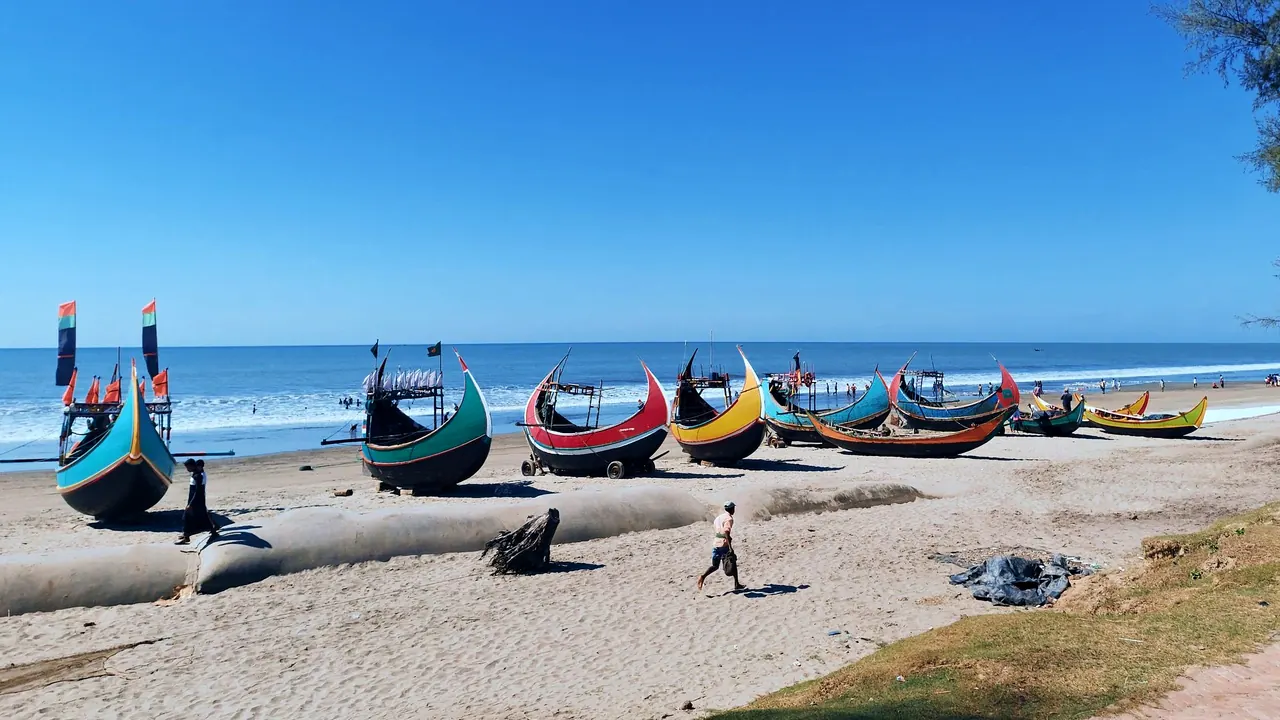
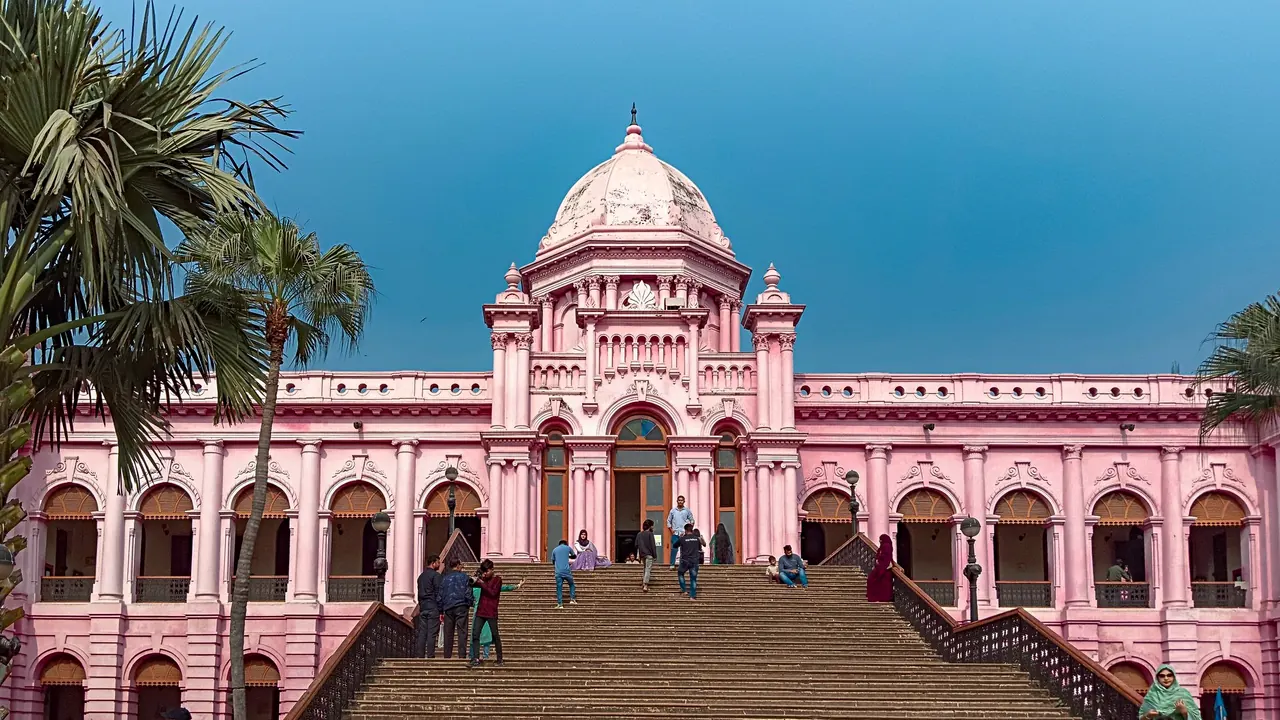
Photos: Cox's Bazar by Jubayer Ahmed, Pexels License; Dhaka by Riyad Hossain Hridoy, Pexels License.
Cox's Bazar or Dhaka?
Our verdict in twelve categories, each scored against the same fixed benchmark cities, and the climate month by month, so you can choose for your trip.
Choose Cox's Bazar for
- beaches
- nature and the outdoors
- families
Cox's Bazar is the choice if you want sand, sea air and an easy pace. It suits travellers who are happy to spend their days on a very long beach and their evenings watching the sunset, with drives along the Marine Drive, forest walks in Himchari and boat trips to the islands for variety. Don't expect much in the way of sights, shopping or entertainment, but it is gentler on families and far easier to relax in than the capital.
Choose Dhaka for
- culture and sights
- food and drink
- live music and the arts
Dhaka is for travellers who are curious about the country's history and its cooking, and who can put up with traffic and crowds to get to them. Old Dhaka's Mughal forts, palaces and lanes, Louis Kahn's Parliament House and the museums of independence give a trip real depth. Biryani and street food make every day a pleasure, and the textile markets reward shoppers. You come here to learn and to eat, not to rest, and there is no beach anywhere near the city.
Scoreboard
Twelve categories on one fixed scale from 0 to 100. The shaded stretch is the gap between the two.
Your match
Pick a travel style or drag the sliders, and both match scores follow your weighting.
Too close to call, 1 point apart
Wins on beaches and nature and the outdoors with your weighting.
Wins on culture and sights and food and drink with your weighting.
What matters to you?
Category by category
What the scores mean for a trip.
Beaches & swimming
This is the clearest difference between the two. Cox's Bazar has about 120km of firm sand running south towards Teknaf. The town beaches at Laboni, Sugandha and Kolatoli are where people gather at sunset, and Inani and the Marine Drive have quieter stretches. Swimming is only safe between the lifeguard flags because of the surf, and bathing dress is modest.
Dhaka is an inland river city, and you can't swim in its working waterways. Anyone in the capital who wants sea and sand has to fly or make the long road journey to Cox's Bazar.
Food & drink
Dhaka is the place to eat well. Old Dhaka's Mughal cooking includes kacchi biryani, tehari, bakarkhani and the kebab lanes of Chawkbazar. Add hilsa in mustard, fuchka stalls and sweet shops selling roshogolla and mishti doi, and there is far more variety than on the coast.
Cox's Bazar has fewer dishes but very fresh seafood. Pomfret, prawns and lobster are fried to order on the beachfront, and Rakhine eateries add noodles and fiery fish paste. Outside those, the choice soon comes down to hotel menus.
Culture & sights
Dhaka has a great deal more to see. In Old Dhaka by the Buriganga you'll find Lalbagh Fort, the pink Ahsan Manzil and the Armenian Church, along with Sadarghat's crowds of boats. Kahn's Parliament House and the museums tell the modern story of language and independence. None of it is laid out neatly for visitors, but there is enough to fill several days.
In Cox's Bazar, the wooden Aggmeda Khyang and a few small pagodas near the bazaar make up most of the sights in town. The more important Buddhist heritage is out at Ramu and on Maheshkhali.
Nightlife
Neither city has bars or clubs, and in both alcohol is limited to a few hotels. Cox's Bazar's evenings are a sunset walk on the sand, snacks from the beach stalls and the lit-up markets, and the town goes quiet soon after dinner. Dhaka stays busier for longer, with families in restaurants and dessert shops and tea stalls open late. Its hotel bars and private clubs in Gulshan and Banani are often open only to members or foreign passport holders.
Nature & outdoors
Cox's Bazar has the better outdoors. The Marine Drive runs for more than 80km between the beach and forested hills, and Himchari has viewpoint climbs and paragliding. Further south, wild elephants still live in the Teknaf sanctuary, and boats cross to mangrove islands full of birds. The trails are short and become muddy in the monsoon.
Dhaka is flat and crowded, with few green spaces. Ramna Park, the Botanical Garden and the Dhanmondi lakes are about all there is in town, and a country-boat ride into the paddy-lined delta is the most memorable outing.
Day trips
The choice of day trips is similar in size but different in kind. From Cox's Bazar, the outings are about religion and the coast. You can visit the monasteries and reclining Buddha at Ramu, take a boat to the Adinath temple on Maheshkhali or make the long drive to Teknaf facing Myanmar.
Dhaka's trips are about the history of Bengal. Sonargaon has the crumbling mansions of Panam Nagar and a folk art museum, and Dhamrai has brass-casting workshops. Traffic makes even nearby places slow to reach.
Good for families
Cox's Bazar is easier with children, mainly because the beach is a ready-made playground of kites, pony rides and paddling. It works best from a resort with a pool on the Marine Drive, since the surf is dangerous and the beaches are packed during the Eid breaks.
In Dhaka, a day out with children means fighting traffic, missing pavements, heat and polluted air. The zoo in Mirpur and the indoor play areas in the malls are about all there is for them, so plans need to be kept short.
Getting around
Cox's Bazar is easier to get around, simply because it is small. You can walk along the sand between Laboni and Kolatoli, and battery or CNG rickshaws cover the rest. You need a hired car or CNG for the Marine Drive or Ramu.
Dhaka has notorious gridlock, and a few kilometres can take an hour. The elevated metro is a fast, calm way across the city if it goes where you need. Otherwise you rely on ride-hailing, rickshaws or a car and driver.
Shopping & style
Dhaka is the better place to shop, especially for textiles. Fine handwoven jamdani, nakshi kantha embroidery and saris fill the craft stores of Dhanmondi and Gulshan, and tailors will make clothes to measure quickly. New Market is a maze of fabric stalls, and the conch-shell carvers still work in Shankhari Bazar.
Cox's Bazar mostly sells souvenirs. You'll find Myanmar sandals and lacquerware in the Burmese markets, shell crafts on the beach road and sacks of dried fish in the bazaar.
Affordability
Both cities are very cheap for a foreign visitor. Dhaka has the edge for day-to-day costs, with biryani, street tea, metro rides and entry to the sights all costing little. Cox's Bazar's seafood and guesthouses are just as cheap, but its comfortable beach resorts charge more than most hotels in the country, and rates climb sharply in the winter peak and over Eid. In Dhaka, only the international hotels and restaurants of Gulshan and Banani charge international prices.
Live music & performing arts
Dhaka has a real performing culture for those willing to look for it. The Shilpakala Academy stages drama, dance and music, and the Bailey Road theatre groups perform Bengali plays, almost all of them in Bangla. Tagore songs and baul singers fill Ramna Park at dawn on Pohela Boishakh.
Cox's Bazar has almost none of this. The occasional resort programme and Rakhine dances at the Buddhist new year are about all you will see.
Wellness & relaxation
Neither city has a bathing or spa tradition, so wellness means hotel spas and pools. Cox's Bazar is still the easier place to slow down. The resorts along the Marine Drive sit in gardens below the hills, away from the noisy beach road, and the town is sleepy outside the winter season.
Dhaka's noise and haze rarely let up. A lakeside park early in the morning or a slow boat on the river are the calmest times you'll find there.
When should you go?
Pick your month. The climate figures are measured averages, not a forecast.
Cox's Bazar in July
Dhaka in July
Daytime high, °C
Rainfall in the month, mm
Temperature and rainfall are climate normals, averaged over the years shown. Cox's Bazar: 1982-2025, 17 years observed (sunshine 1991-2020, rainfall 1991-2020) normals, Cox's Bazar (4.1 km from centre). Dhaka: 1945-2025, 18 years observed (sunshine 1991-2020, rainfall 1991-2020) normals, Dhaka (4.4 km from centre).
Cox's Bazar is at its best from November to February. The rain has stopped, the days are long and sunny, and highs run from 27 to 31°C. The sea stays warm enough to swim, though it is a little fresher in January and February. March and April are still good beach months, only hotter. Dhaka's best months for walking the streets fall in the same dry season, and December and January are the coolest. From March it heats up, reaching about 34°C in April and May, which makes the lanes of Old Dhaka tiring by midday.
The monsoon hits the coast much harder. From May to October Cox's Bazar is very wet, with about 913mm of rain in July alone. The sea turns rough and unsafe, and the forest trails become mud. Dhaka is wet over much the same months, with about 375mm at the July peak, well under half the coast's rainfall. The heat and humidity still make the capital hard going. By November both cities are dry again.
Which traveller are you?
For a beach and sun trip, Cox's Bazar is the obvious choice. It has the long sandy shore, the warm Bay of Bengal in the dry season and quieter beaches at Inani. Dhaka has no coast at all, so a swim there means a hotel pool.
On a culture and arts trip, Dhaka is far richer. Lalbagh Fort, Ahsan Manzil, the Star Mosque, the Parliament House and the National Museum are all there, along with Bengali theatre and music. Cox's Bazar has little more than a Rakhine monastery and its pagodas.
For a food and nightlife trip, Dhaka wins on the food. It has Old Dhaka's biryani and kebabs, river fish, sweet shops and the Ramadan iftar market. Neither city has any real nightlife, so evenings in both revolve around long dinners, tea and the late markets.
Before you go
| Measure | Cox's Bazar | Dhaka |
|---|---|---|
| Official language | Bangla | Bangla |
| Currency | Taka (BDT) | Taka (BDT) |
| Sockets | ACGK220 V, 50 Hz | ACGK220 V, 50 Hz |
| Driving side | Left | Left |
| Time zone | UTC+6 | UTC+6 |
| Emergency number | 999 | 999 |
| Elevation | 3 m | 4 m |
| Main airport | Cox's Bazar Airport (CXB)6 km from centre1 non-stop destination | Hazrat Shahjalal International Airport (DAC)13 km from centre31 non-stop destinations |
| Public holidays this year | 7 days | 7 days |
By the numbers
| Measure | Cox's Bazar | Dhaka |
|---|---|---|
| Population | 196,374 | 16,800,000 |
| People per km² | 303 | 45,652 |
| Museums within 10 km | 0 | 17 |
| UNESCO World Heritage sites within 50 km | 0 | 0 |
| Swim season, months above 21 °C | 12 months | - |
Where else could you go?
Every comparison below shares a destination with this one, so you can follow Cox's Bazar or Dhaka somewhere new.
- Kolkatavs Dhaka
- Baganvs Cox's Bazar
- Kolkatavs Cox's Bazar
- Thimphuvs Dhaka
- Darjeelingvs Dhaka
- Kathmanduvs Dhaka