Photos: Bagan by Vyacheslav Argenberg, CC BY 4.0, cropped; Cox's Bazar by Jubayer Ahmed, Pexels License.
Bagan or Cox's Bazar?
Our verdict in twelve categories, each scored against the same fixed benchmark cities, and the climate month by month, so you can choose for your trip.
Choose Bagan for
- culture and sights
- wellness
- live music and the arts
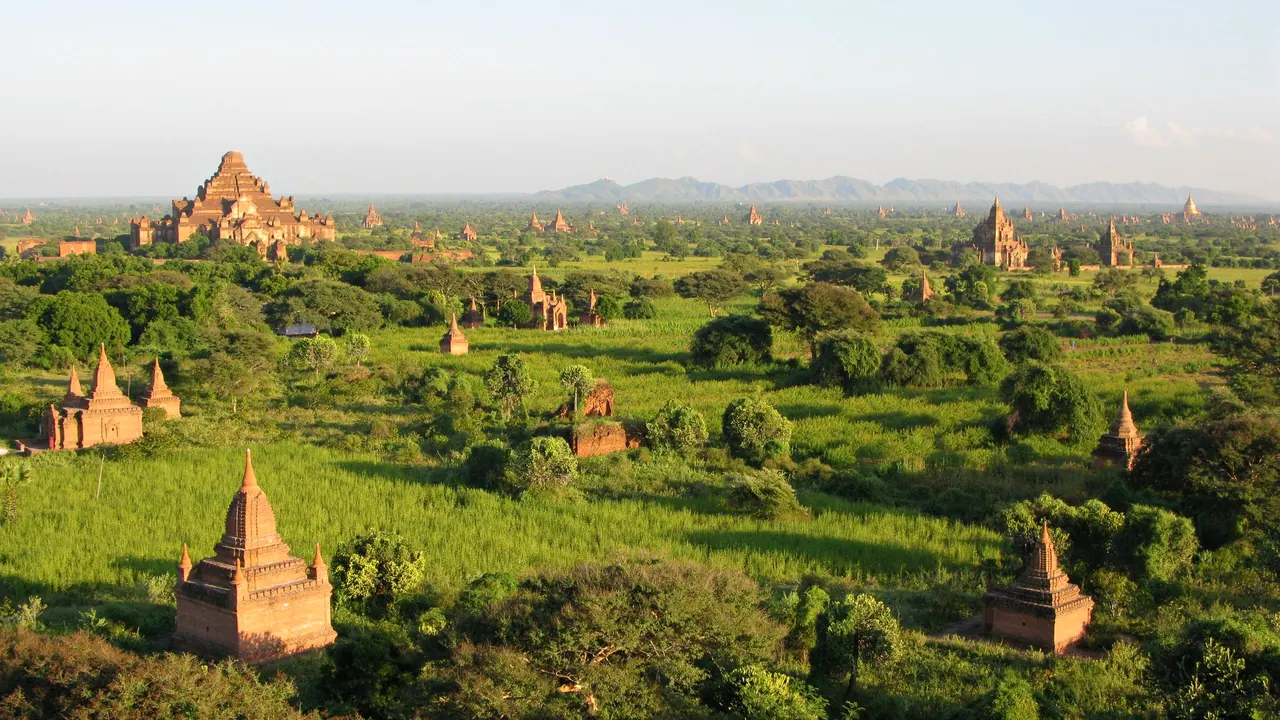
Choose Bagan if you want to see one of the great sights of Asia. The temple plain rewards travellers who are curious and patient, happy to ride an e-bike between brick shrines from dawn to dusk, eat simply, go to bed early and spend the hot afternoons quietly by a pool.
Choose Cox's Bazar for
- beaches
- nature and the outdoors
- families
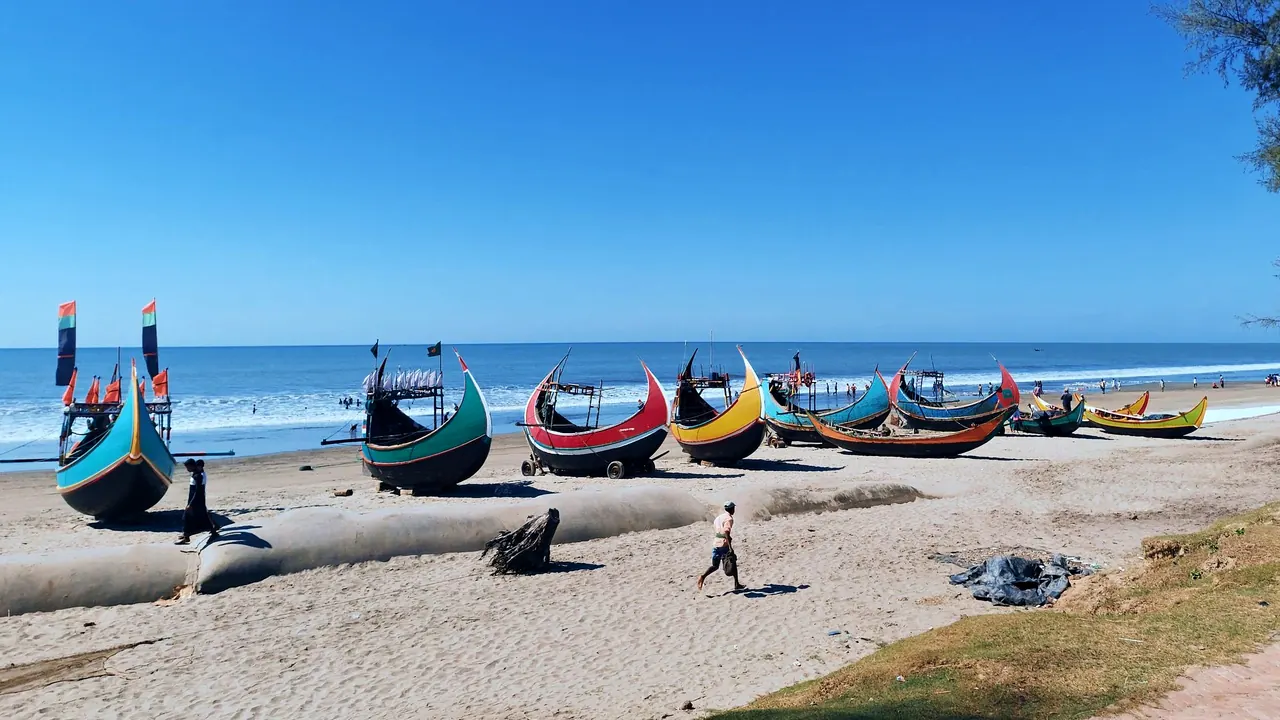
Cox's Bazar is the better pick for a sea-and-sand break: a beach that seems to go on forever, seafood fried on the shore and a coast road south between the surf and forested hills. In return you need to put up with crowds, noise and modest beach dress, and expect little history.
Scoreboard
Twelve categories on one fixed scale from 0 to 100. The shaded stretch is the gap between the two.
Your match
Pick a travel style or drag the sliders, and both match scores follow your weighting.
Too close to call, 1 point apart
Wins on culture and sights and wellness with your weighting.
Wins on beaches and nature and the outdoors with your weighting.
What matters to you?
Category by category
What the scores mean for a trip.
Beaches & swimming
Only one of these is a beach destination. Bagan lies inland on the plains of central Myanmar, the Irrawaddy is for boat trips rather than swimming, and the only place to cool off is a hotel pool.
Cox's Bazar is built around about 120km of firm sand running south towards Teknaf. Laboni, Sugandha and Kolatoli fill up at sunset, while Inani and the stretches along the Marine Drive are quieter. The sea is warm but cloudy, with strong rip currents, so swim between the lifeguard flags. Local visitors wade in their clothes, so expect stares in swimwear on the town beaches.
Food & drink
Neither is a place to travel for food. Bagan's best meals are Burmese curry spreads with many small side dishes, tea-leaf salad and mohinga at breakfast, along with tea-shop snacks and palm sugar sweets. Away from those, the restaurants of Nyaung U and New Bagan mostly cook the same tourist menu.
Cox's Bazar comes out a little ahead because of the sea. Pomfret, prawns, crab and lobster are fried to order on the beachfront, Bengali places serve fish curries and bhorta, and Rakhine eateries add noodles and fiery fish paste. Hygiene at the stalls varies, so choose busy ones.
Culture & sights
On culture the gap is enormous. Bagan has more than two thousand temples, stupas and monasteries from the Pagan empire spread across its plain. The highlights run from the gilded Shwezigon and the four standing Buddhas of Ananda to brick shrines with faded murals along dirt tracks. The 2016 earthquake and some heavy restoration have left marks, and almost everything comes from one era, but it can easily fill several days.
Cox's Bazar is a resort strip of concrete hotels. The wooden Aggmeda Khyang monastery of the Rakhine community is its most rewarding sight, and the richer Buddhist heritage lies out of town at Ramu and on Maheshkhali.
Nightlife
Neither town offers a night out. In Bagan the pre-dawn starts for sunrise mean evenings end with dinner and a cold beer on Nyaung U's restaurant strip, and the town is dark by ten. Cox's Bazar stays a little livelier after its sunset walk, with lit-up markets and beach stalls, but with no clubs and alcohol limited to a few licensed hotels, evenings there are for strolling and snacking rather than drinking.
Nature & outdoors
Bagan's landscape is a dry, flat plain of palms, scrub and peanut fields, and its beauty comes from the temples scattered across it. You see it best from a dawn balloon, a sunset boat or an e-bike. Mount Popa adds forested volcanic slopes, but otherwise there is little walking, and the spring heat rules out effort at midday.
Cox's Bazar has much more to do outdoors. The Marine Drive runs for more than 80km between the sand and forested hills. Himchari has viewpoints, a seasonal waterfall and paragliding, and the town beaches have surf. Boats wind through bird-filled mangroves to Maheshkhali and Sonadia, and wild elephants still roam the Teknaf hill forest.
Day trips
Each has a short list of outings, and they differ in character. From Bagan the main draw is Mount Popa, where the Taung Kalat monastery sits on a volcanic plug, reached barefoot up several hundred steps past shrines to the nats. Salay's carved teak monastery and the market town of Pakokku across the river are quieter alternatives.
From Cox's Bazar the trips are gentler and closer. Ramu's Rakhine monasteries and reclining Buddha are half an hour inland, a boat crosses to the hilltop Adinath temple on Maheshkhali, and Teknaf facing Myanmar makes a long day out. From both, the bigger prizes need a night away: Mandalay from Bagan, Saint Martin's Island and Bandarban from the coast.
Good for families
Bagan is best kept for older children who enjoy history and a bit of adventure, such as horse carts, cycling and perhaps a balloon flight. For young children it is a long, hot run of brick temples across a dusty plain, with only basic medical care.
Cox's Bazar is easier with children. The beach itself keeps them busy with kites, pony rides and paddling, and the safari park at Dulahazara fills a day. The surf is dangerous for young swimmers, the beaches are packed at Eid and traffic is chaotic, so families do best in a Marine Drive resort with a pool.
Getting around
Bagan's three settlements lie several kilometres apart with temples scattered between them, so almost everyone hires an electric scooter and copes with the sandy tracks, or takes a horse cart or a driver for the day.
Cox's Bazar is somewhat easier. You can walk the hotel strip from Laboni to Kolatoli along the sand, and battery rickshaws are everywhere for short hops, with the fare agreed first. The roads have few pavements, though, and anything further, such as the Marine Drive or Ramu, means hiring a car or CNG with a driver.
Shopping & style
Both are places for crafts rather than shops, and Bagan gives you the better reason to buy. It is the centre of Burmese lacquerware, and in the Myinkaba and New Bagan workshops you can watch bowls being built up layer by layer. Sand paintings copied from temple murals and the longyi cloth and thanaka at Nyaung U market add to the choice.
The Burmese markets of Cox's Bazar sell Myanmar sandals and lacquerware too, alongside shell craft, cultured pearls and sacks of dried fish, but this is a souvenir trade rather than a craft centre.
Affordability
Both are very cheap for a foreign visitor, so cost should not decide between them. What differs is the extras. In Bagan the splurges are the archaeological zone fee charged to foreigners, the better hotels in Old Bagan and a dawn balloon flight, and staying in Nyaung U keeps costs lowest.
In Cox's Bazar seafood, rickshaws and drivers cost little, but the comfortable beach resorts are expensive by Bangladeshi standards, and rates rise sharply in the winter peak and around Eid.
Live music & performing arts
Bagan's live performance is modest and not worth planning a trip around, but it is more than Cox's Bazar can offer. Restaurants stage marionette shows and traditional dance over dinner, and if your dates fall on a pagoda festival, such as the long-established one at Ananda, you may catch an all-night zat pwe of music, dance and comedy.
Cox's Bazar has no theatre or regular live music, only the occasional cultural evening at a resort and Rakhine dances at the Buddhist new year.
Wellness & relaxation
Bagan is the calmer of the two. Rest is built into the day: after an early sunrise, the hot middle hours are spent by the pool or in the spa of a riverside resort in Old or New Bagan, and massage in Nyaung U is cheap and relaxed. Dust and touts at the busiest temples are the main interruptions.
Cox's Bazar town is noisy in season, with hotels packed close together and horns on the beach road until late. For quiet there, stay at a garden resort out on the Marine Drive, or come outside the winter season, when the town slows down.
When should you go?
Pick your month. The climate figures are measured averages, not a forecast.
Bagan in July
Cox's Bazar in July
Daytime high, °C
Rainfall in the month, mm
Where the figures come from
Bagan has no weather station within reach, so its figures come from a gridded climate model rather than a measured record, and read a broad area rather than one spot.
Temperature and rainfall are climate normals, averaged over the years shown. Bagan: 2001-2020 normals, NASA POWER reanalysis grid, no weather station within 90 km. Cox's Bazar: 1982-2025, 17 years observed (sunshine 1991-2020, rainfall 1991-2020) normals, Cox's Bazar (4.1 km from centre).
Both are at their best in roughly the same months, November to February. Bagan is dry then, with highs around 30°C, which is ideal for cycling between temples. From March the heat builds to about 39°C in April and makes exploring at midday punishing. Rain is light all year, with some showers from May to October, so in Bagan it is the heat rather than the weather that limits a trip.
Cox's Bazar is milder in winter, with long sunny days. The sea is cooler at about 24°C in January and warms to around 28°C by April and again in November. The big difference is the monsoon. From May to September the rain is torrential, over 900mm in July alone, sunshine drops sharply, the sea becomes unsafe and the trails turn to mud. Over the same months Bagan stays mostly dry.
Which traveller are you?
On a beach and sun trip, Cox's Bazar is the only real choice. It has a very long strand of firm sand, warm sea and sunset walks at Laboni and Kolatoli, while inland Bagan has no beach at all. Swim between the flags and come in the dry months.
For a culture and arts trip, Bagan wins outright. Its plain of Pagan-era temples, from the white Ananda to small shrines with murals inside, is among Asia's great sights, with marionette shows in the evening. Cox's Bazar offers little beyond one wooden monastery.
On an outdoors trip, Cox's Bazar has far more range: the Marine Drive between sea and forested hills, viewpoints in Himchari, paragliding, surf and boat trips through mangroves to the islands. Bagan has e-bike rides across the plain, a dawn balloon flight and Mount Popa.
Before you go
| Measure | Bagan | Cox's Bazar |
|---|---|---|
| Official language | Burmese | Bangla |
| Currency | Kyat (MMK) | Taka (BDT) |
| Sockets | CFG230 V, 50 Hz | ACGK220 V, 50 Hz |
| Driving side | Right | Left |
| Time zone | UTC+6:30 | UTC+6 |
| Emergency number | Police 199, ambulance 192, fire 191 | 999 |
| Elevation | 75 m | 3 m |
| Main airport | Bagan Airport (NYU)7 km from centre | Cox's Bazar Airport (CXB)6 km from centre1 non-stop destination |
| Public holidays this year | - | 7 days |
By the numbers
| Measure | Bagan | Cox's Bazar |
|---|---|---|
| Population | 22,000 | 196,374 |
| People per km² | - | 303 |
| Museums within 10 km | 1 | 0 |
| UNESCO World Heritage sites within 50 km | 1 | 0 |
| Swim season, months above 21 °C | - | 12 months |
Where else could you go?
Every comparison below shares a destination with this one, so you can follow Bagan or Cox's Bazar somewhere new.
- Inle Lakevs Bagan
- Dhakavs Cox's Bazar
- Kolkatavs Cox's Bazar
- Paivs Bagan
- Yangonvs Bagan
- Chiang Maivs Bagan