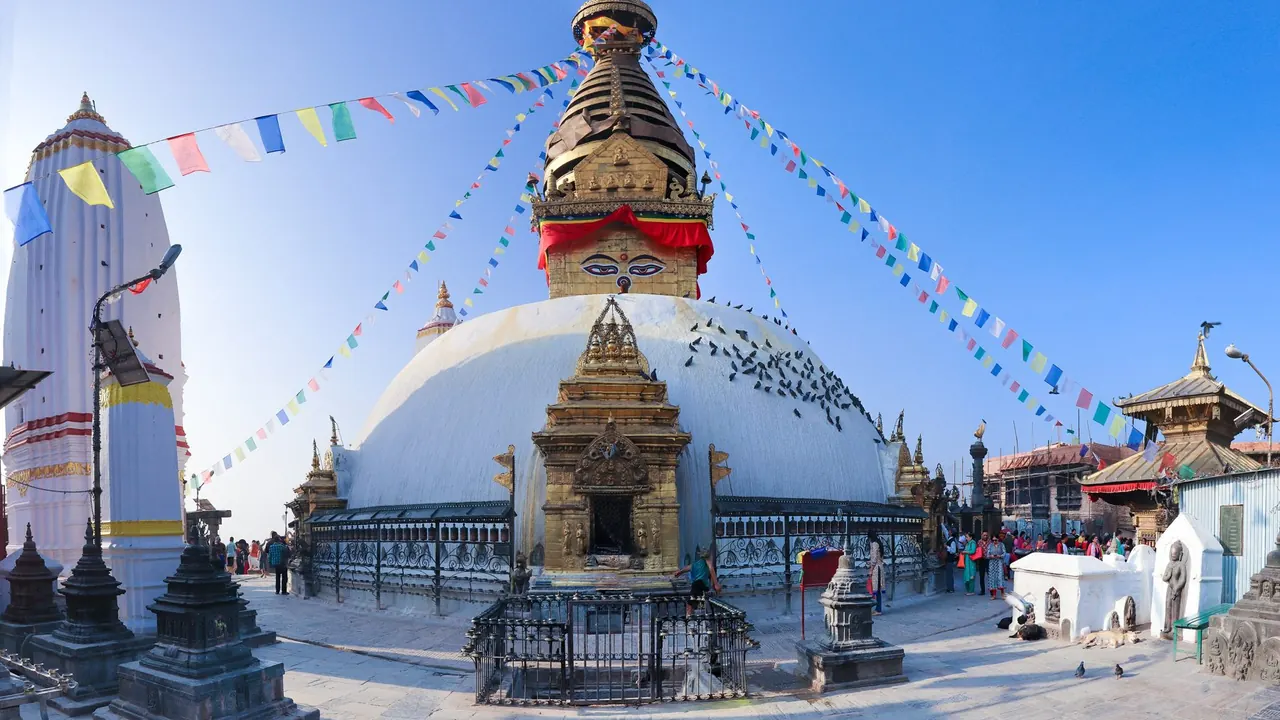
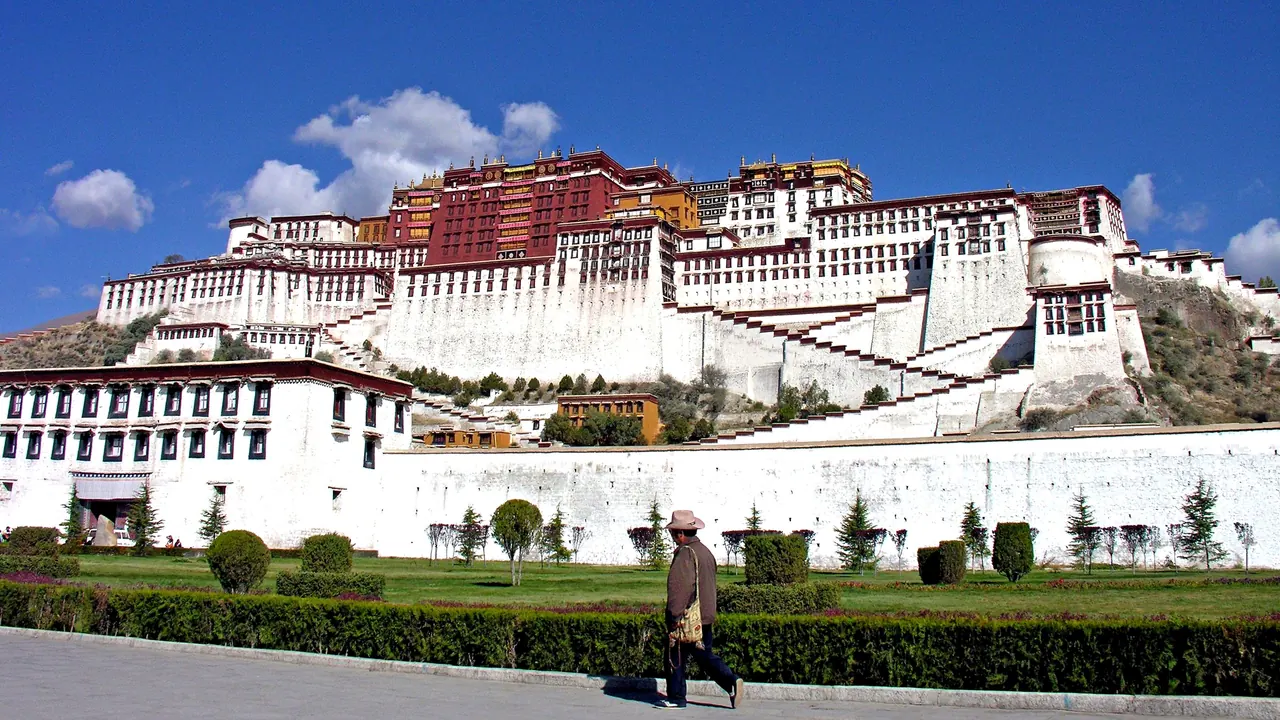
Photos: Kathmandu by Nabin K. Sapkota, CC BY-SA 4.0, cropped; Lhasa by Dennis G. Jarvis, CC BY-SA 2.0, cropped.
Kathmandu or Lhasa?
Our verdict in twelve categories, each scored against the same fixed benchmark cities, and the climate month by month, so you can choose for your trip.
Choose Kathmandu for
- prices
- nightlife
- food and drink
Kathmandu suits the traveller who wants a long, cheap and varied stay: Newari cooking in the old bazaars, the Durbar Squares of Kathmandu and Patan, an evening in Thamel, a meditation course at a hillside monastery, and the Himalaya as a backdrop or the start of a trek. It is noisy, dusty and slow to cross, but it is easy on the body and very easy on the wallet.
Choose Lhasa for
- getting around
Lhasa is for one concentrated encounter with Tibetan Buddhism: the Potala above the city, pilgrims circling the Jokhang, debating monks at Sera and the turquoise sweep of Yamdrok Lake. Its centre is easier to walk than Kathmandu's lanes, but the altitude, the guided way a visit is arranged and the early nights make it a trip of devotion and landscape rather than of food, shopping or comfort.
Scoreboard
Twelve categories on one fixed scale from 0 to 100. The shaded stretch is the gap between the two.
Your match
Pick a travel style or drag the sliders, and both match scores follow your weighting.
Wins on prices and nightlife with your weighting.
Wins on getting around with your weighting.
What matters to you?
Category by category
What the scores mean for a trip.
Beaches & swimming
Neither city offers anywhere to swim. Kathmandu's valley rivers are unfit for bathing, and Lhasa's great lakes are icy, high and sacred. The water you will remember is the white water for rafting about three hours from Kathmandu, or the turquoise of Yamdrok seen from the Kamba La. In either city, a swim means a hotel pool.
Food & drink
Kathmandu eats much better. Beyond dal bhat and momos, it has Newari cooking (buffalo choila, bara pancakes, yomari dumplings and rice beer) in small places around the bazaars, Patan and Kirtipur. The Tibetan quarter at Boudhanath also serves the thukpa and butter tea you would go to Lhasa for.
Lhasa's table is honest but narrow: yak momos, tsampa, yoghurt and salty butter tea, with few fresh vegetables. Its one real highlight is the sweet tea house, where locals spend hours over milky tea and noodles. It is good for a few days, but not a reason to come.
Culture & sights
Both are outstanding, but in different ways. Kathmandu's heritage is spread across the valley. You get three things in sequence: the temple crowd of Durbar Square, the Kumari's house and the courtyard shrines of Asan, then the stupas of Swayambhunath and Boudhanath, the open cremations at Pashupatinath, and Patan with the finest square and the best museum for Newari craft.
Lhasa is more concentrated and more overwhelming. The Potala, the Jokhang with pilgrims prostrating on the Barkhor, and the hillside monastery towns of Drepung and Sera can be seen in three or four days. Kathmandu rewards slow wandering, while Lhasa is about a few monumental places and the devotion around them.
Nightlife
Kathmandu has a real night out, although it all happens in Thamel: rooftop bars, pool halls and a few dance clubs full of trekkers marking the end of a route, mostly winding down around midnight. Elsewhere in the city, evenings are quiet.
Lhasa is quieter still, partly because alcohol hits harder at altitude. A usual evening is a walk around the lit Barkhor and a beer in a traveller café. Its own local form of going out is the nangma hall, part bar and part dance floor, where Tibetan pop and group dancing run late.
Nature & outdoors
The two are close, but the landscapes could hardly be more different. Kathmandu is green: there is oak and rhododendron forest in Shivapuri Nagarjun, and snow peaks at sunrise from Nagarkot or Dhulikhel. You can also fly to Everest and back in about an hour, raft rivers and start treks to Langtang. It also asks nothing of your lungs.
Lhasa is the bare, brown, high plateau under an intense blue sky. Its prize sights are Yamdrok Lake and the even higher Namtso. Kathmandu has the slight edge because days of acclimatising and the need for guides limit how much of Lhasa's landscape you can actually use.
Day trips
From Kathmandu you go out to towns, and from Lhasa to monasteries. The trip that matters from Kathmandu is Bhaktapur, a whole royal town of brick squares and potters, which you can combine with the carvings of Changu Narayan. After that, Kirtipur, Bungamati and Panauti are gentler variations on Newari village life, and traffic slows every outing.
Lhasa's outings are religious sites rather than places where people simply live: Ganden in its mountain bowl, the cliff caves of Drak Yerpa, Tsurphu up its quiet valley and Samye in sandy country to the south-east. Each one is striking, and all are reached by hired car with a guide.
Good for families
Neither city is easy with young children, but Kathmandu is the gentler of the two. The monkeys at Swayambhunath, the prayer wheels at Boudhanath, the small zoo in Patan and the Garden of Dreams give children something to enjoy, even if traffic, dust and care with food make days tiring.
In Lhasa the problem is altitude sickness, which small children may not be able to describe. On top of that come the Potala's steep stairs, dim chapels where quiet is expected and basic medical care. Both suit older children best, in Lhasa's case robust teenagers with a real interest in Tibet.
Getting around
Lhasa is the easier city to move around in. The Potala, Jokhang and Barkhor are a short walk apart, taxis and buses reach Drepung, Sera and the Norbulingka without trouble, and pedicabs work the old town. The only real effort is the thin air, which makes stairs hard for the first days.
Kathmandu's old city and Thamel are walkable, but you share the lanes with motorbikes, there is no metro and the minibuses are hard to work out. Visitors depend on taxis and ride-hailing, and crossing to Patan or Boudhanath can drag on in heavy, dusty traffic.
Shopping & style
Kathmandu has more to buy, and it is spread across distinct districts. Thamel has pashmina, felt goods, singing bowls and trekking gear, Boudhanath has Tibetan carpets and thangkas, and Patan sells bronze and copper statues cast in its own workshops. You bargain everywhere.
Lhasa's shopping centres on the Barkhor and is more devotional: prayer wheels, butter lamps, incense, turquoise and coral jewellery, and Tibetan knives. Much of it is mass-produced, so look closely. Beyond the old quarter there are only ordinary malls.
Affordability
Kathmandu is about as cheap as travel gets. Guesthouses, meals and taxis cost very little. Within the city, the noticeable costs are the entry fees foreigners pay at the Durbar Squares, Pashupatinath and Bhaktapur, and imported drinks. The large sums go on what lies beyond it: trekking permits and mountain flights.
Day-to-day spending in Lhasa is low as well, but the way a trip is put together changes the total. A licensed guide, a hired car for every excursion and steep fees at the main sights put the overall cost of a stay in the middle range. Summer hotel prices add to it.
Live music & performing arts
In both cities stage life is thin, and the best performances follow the religious calendar. Kathmandu has a little more on most nights: bands playing rock and Nepali folk in Thamel, dance dinner shows, Indra Jatra's masked dances and an autumn jazz festival.
Lhasa's distinctive art is Ache Lhamo, masked Tibetan opera, staged most famously at the Norbulingka during the Shoton festival in late summer. Outside that season there are nangma halls and the chanting of monks at morning prayers.
Wellness & relaxation
Kathmandu is the better place to slow down. Kopan and the other monasteries above Boudhanath run meditation and Buddhist philosophy courses for foreigners. Yoga, Ayurveda and singing-bowl sessions are easy to find, and massage is offered on every Thamel lane. Calm means stepping out of the noise into a monastery or garden.
Lhasa's quiet is real, but the altitude disturbs sleep and rest in the first days. It is found in a dawn kora with pilgrims, a monastery courtyard or a slow afternoon in a tea house. It does have one thing Kathmandu lacks: the hot springs at Yangpachen, a couple of hours away.
When should you go?
Pick your month. The climate figures are measured averages, not a forecast.
Kathmandu in July
Lhasa in July
Daytime high, °C
Rainfall in the month, mm
Temperature and rainfall are climate normals, averaged over the years shown. Kathmandu: 1991-2020 normals, Kathmandu Airport (4.7 km from centre). Lhasa: 1991-2020 normals, Lhasa (2.4 km from centre).
Kathmandu is the warmer of the two all year. Its winters are mild, dry and sunny, and spring days climb to just under 29°C. The monsoon runs from June to September and is heavy, peaking at 384mm in July, with fewer sunny hours and cloud hiding the mountains. October and November are the best months: dry, bright and pleasant for walking, with the clearest Himalayan views. March and April are a good second choice.
Lhasa is far cooler and much sunnier, with clear skies even in its wettest months. Winter is properly dry, but highs sit around 8°C, which makes it cold for long days outdoors. The warmest stretch runs from May to September, peaking at about 24°C in June, when the grass is green and the passes are open. This is also when Lhasa's rain falls, though far less of it than in Kathmandu, with the most, 141mm, in July. October is the one month that is both dry and still mild, and it lines up with Kathmandu's best season. In winter the two part ways: Kathmandu stays comfortable while Lhasa turns bitter.
Which traveller are you?
On a trip on a tight budget, Kathmandu is the clear choice. Guesthouses, dal bhat and taxis cost very little, and you can explore without a guide. In Lhasa the meals are cheap too, but a licensed guide, hired cars and entry fees push the total up.
For a food and nightlife trip, go to Kathmandu. Newari dishes, momos everywhere and Tibetan noodle soups around Boudhanath give far more range than Lhasa's narrow Tibetan menu, and Thamel's rooftop bars stay open after Lhasa's early-to-bed evenings have ended.
On a relaxing and wellness trip, Kathmandu is the better base. It has meditation courses at Kopan, yoga, Ayurveda and cheap massage, at an altitude where you sleep well. In Lhasa, headaches and poor sleep in the first days work against rest, though the hot springs at Yangpachen are a draw.
Before you go
| Measure | Kathmandu | Lhasa |
|---|---|---|
| Official language | Nepali | Putonghua |
| Currency | Nepalese Rupee (NPR) | Yuan Renminbi (CNY) |
| Sockets | CM230 V, 50 Hz | ACI220 V, 50 Hz |
| Driving side | Left | Right |
| Time zone | UTC+5:45 | UTC+8 |
| Emergency number | Police 100, ambulance 102, fire 101 | Police 110, ambulance 120, fire 119 |
| Elevation | 1,300 m | 3,650 m |
| Main airport | Tribhuvan International Airport (KTM)4 km from centre38 non-stop destinations | Lhasa Gonggar International Airport (LXA)45 km from centre49 non-stop destinations |
| Public holidays this year | - | 6 days |
By the numbers
| Measure | Kathmandu | Lhasa |
|---|---|---|
| City population | 845,767 | 867,891 |
| People per km² | 17,121 | - |
| Museums within 10 km | 9 | 5 |
| UNESCO World Heritage sites within 50 km | 1 | 1 |
Where else could you go?
Every comparison below shares a destination with this one, so you can follow Kathmandu or Lhasa somewhere new.
- Pokharavs Kathmandu
- Thimphuvs Lhasa
- Darjeelingvs Kathmandu
- Varanasivs Kathmandu
- Darjeelingvs Lhasa
- Thimphuvs Kathmandu