Photos: Leh by Rayan Naqash, CC BY-SA 3.0, cropped; Varanasi by Dennis G. Jarvis, CC BY-SA 2.0, cropped.
Leh or Varanasi?
Our verdict in twelve categories, each scored against the same fixed benchmark cities, and the climate month by month, so you can choose for your trip.
Choose Leh for
- nature and the outdoors
- day trips
- families
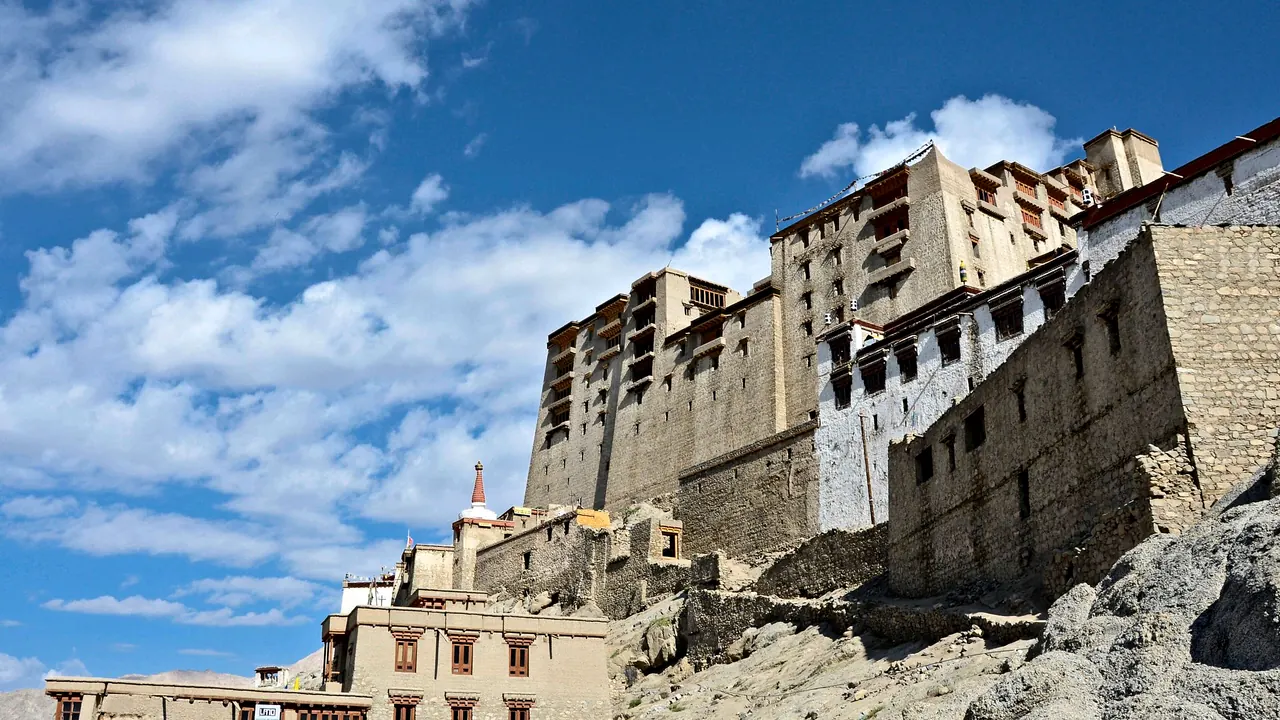
Leh is for travellers who want mountains. Trekking into Hemis National Park, the road up to Khardung La, rafting on the Indus and Zanskar and a valley lined with painted monasteries such as Thiksey, Hemis and Alchi make it one of Asia's great high-altitude bases. It suits fit, patient adults who can spend their first days acclimatising and don't mind long drives. It is a summer place.
Choose Varanasi for
- live music and the arts
- culture and sights
- shopping
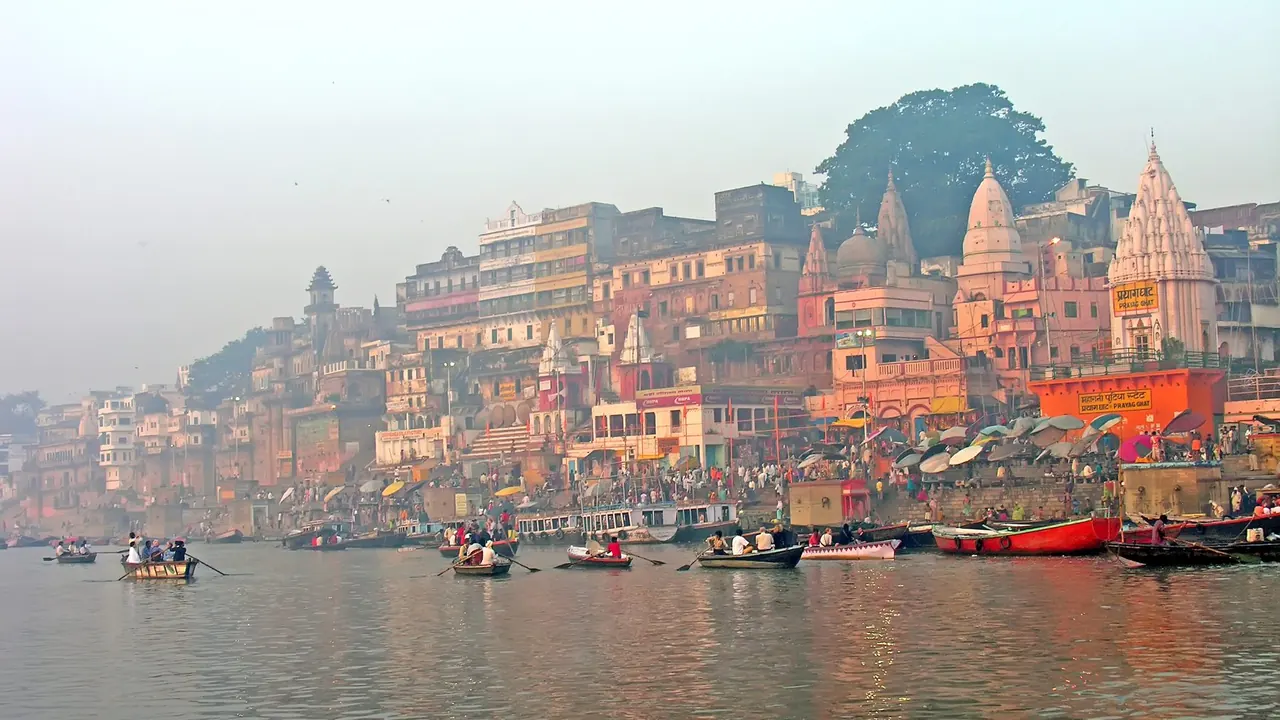
For a trip about people, ritual and the senses, Varanasi goes much further. The ghats, the cremation fires, the evening aarti and the lanes around Kashi Vishwanath make it one of India's most intense experiences, and it adds classical music, good street food and Banarasi silk. It is cheaper again and needs no acclimatisation, but it is loud and tiring, and it is at its best in the cooler winter months.
Scoreboard
Twelve categories on one fixed scale from 0 to 100. The shaded stretch is the gap between the two.
Your match
Pick a travel style or drag the sliders, and both match scores follow your weighting.
Wins on nature and the outdoors and day trips with your weighting.
Wins on live music and the arts and culture and sights with your weighting.
What matters to you?
Category by category
What the scores mean for a trip.
Beaches & swimming
You can't swim in either city. Leh's Indus and high lakes are bitterly cold snowmelt, used for rafting and for the view. At Varanasi the Ganges is for pilgrims' ritual dips at dawn and is polluted and fast-flowing. The one practical difference is that a few of Varanasi's larger hotels away from the old city have pools, which you will be glad of in its heat.
Food & drink
Varanasi gives food lovers more to look for. Breakfast is kachori and jalebi in the old city lanes, followed later by tamatar chaat, lassi in clay cups that are smashed after use, malaiyo at winter dawns and paan rolled to order around Godowlia. It is a city of street snacks and sweet shops, almost entirely vegetarian and nearly dry.
Leh eats more plainly: momos, thukpa, skyu and salty butter tea from Tibetan and Ladakhi kitchens, with apricots and sea buckthorn juice as the local pride. The rooftop cafés around Changspa and Fort Road are comfortable and international, but much of the scene shuts outside summer.
Culture & sights
Varanasi offers far more culture. Its kilometres of ghats, the cremation fires at Manikarnika, the maze of shrines leading to Kashi Vishwanath and the miniatures at Bharat Kala Bhavan give you days of looking. Above all there is daily ritual on a scale found almost nowhere else.
Leh's heritage is smaller and quieter: the nine-storey palace built after the Potala, Namgyal Tsemo on the ridge, the mud-brick old town, Sankar gompa and the Shanti Stupa at sunset. It is striking, but you can see it in a day or two, and the great monastery art lies outside town.
Nightlife
Both towns go to bed early, so neither suits a night out. The difference is in how you spend the evening. In Leh it is a late rooftop dinner with perhaps a beer, and the cold and the dawn departures send everyone to bed. In Varanasi there is the riverside aarti and chai and music at the Assi Ghat cafés, while drinking is mostly limited to hotel bars in the cantonment.
Nature & outdoors
This is where Leh leaves Varanasi far behind. You can trek the Markha valley through Hemis National Park, ride a mountain bike down from Khardung La above 5,000m, raft the Zanskar gorges, or go overnight to the Nubra dunes and Pangong Tso. Winter brings the Chadar trek and snow leopard tracking. You need a few days to acclimatise before any of it.
In Varanasi the outdoors is the river: a rowing boat at sunrise and a walk on the sandbank opposite. The land around is flat farmed plain. The Vindhya hills and Chandraprabha's waterfalls are two hours away and are best after the monsoon.
Day trips
In Leh, day trips are the heart of a stay. Thiksey and Shey are within half an hour and Hemis about an hour, while Alchi's thousand-year-old painted temples make a full day to the west. Nearly everything is a monastery or a palace, but the quality is exceptional.
Varanasi has one essential outing, Sarnath, with the Dhamek Stupa and the Ashokan lion capital. After that come Chunar Fort and Jaunpur's fifteenth-century mosques, and then the list thins quickly, since Bodh Gaya and Khajuraho are too far for a day.
Good for families
Neither city suits young children, but for different reasons. In Leh the risk is altitude, reached in a single flight, along with long drives on mountain roads. In Varanasi it is the crowded lanes, hygiene, traffic, summer heat and cremations in plain view. Leh does open up for robust teenagers who want to trek or raft, while families in Varanasi usually keep to a short stay built around a dawn boat ride and Sarnath.
Getting around
Varanasi is somewhat easier to get around. The ghats form a walking route of several kilometres from Assi to Raj Ghat, boats run the same stretch, and e-rickshaws, autos and app bookings cover the rest. The catch is heavy traffic and old city lanes that are easy to get lost in.
Leh's centre is small enough to walk, though steep in the thin air, but almost everything worth seeing lies along mountain roads. Buses are sparse, so you rely on fixed-rate union taxis, hired motorbikes or shared jeeps, and some passes close in winter.
Shopping & style
Varanasi has a real reason to shop: Banarasi silk brocade, bought from workshops in the weavers' quarters or from the silk houses around Godowlia and the Chowk. Brassware, painted wooden toys and musical instruments come alongside it. Expect touts who steer you towards particular shops.
Leh's Main Bazaar sells pashmina, thangkas, turquoise jewellery and singing bowls, but much of it repeats from stall to stall. It is most useful for trekking gear and dried apricots.
Affordability
Both are cheap, and Varanasi is cheaper still. The ghats and the aarti are free, and guesthouses, chai, rickshaws and boat rides cost very little. Silk is the main thing that tempts people to spend.
Leh is cheap for beds and meals, but transport adds up. Union taxi fares are fixed, most days out mean hiring a car, and the outer valleys need permits. Comfortable hotels also charge more in the short summer.
Live music & performing arts
Varanasi is one of the homes of Hindustani classical music, with its own gharanas of vocal, tabla and dance. You can hear it at evening recitals in music schools, at the all-night Sankat Mochan concerts in spring, at the Dhrupad Mela on Tulsi Ghat and at the Ramnagar Ramlila. Even the daily Ganga aarti is a staged performance.
Leh's tradition is the masked cham dance at monastery festivals, above all Hemis in summer, along with the Losar celebrations. They are worth planning a trip around, but outside those days there is little to see.
Wellness & relaxation
Neither city does pampering, and both suit a reflective visitor more than a spa-goer. Leh's calm is spacious and quiet, with meditation courses and amchi Tibetan medicine, but thin air and broken sleep get in the way of rest for the first days. Varanasi has more yoga, meditation and Ayurvedic massage around Assi Ghat and calming dawn boat rides, set against a city that is loud and emotionally draining.
When should you go?
Pick your month. The climate figures are measured averages, not a forecast.
Leh in July
Varanasi in July
Daytime high, °C
Rainfall in the month, mm
Where the figures come from
Leh has no weather station within reach, so its figures come from a gridded climate model rather than a measured record, and read a broad area rather than the city itself.
Varanasi has no weather station within reach, so its figures come from a gridded climate model rather than a measured record, and read a broad area rather than the city itself.
Temperature and rainfall are climate normals, averaged over the years shown. Leh: 1991-2020 normals, TerraClimate 4 km grid at the town, no weather station within 90 km. Varanasi: 2001-2020 normals, NASA POWER reanalysis grid, no weather station within 90 km.
Leh is best from June to September. Daytime highs reach about 25°C, warm enough for trekking, rafting and long drives over the passes, and the rain shadow keeps every month of the year almost dry. April, May and October are cool but still workable, while November is already cold. From December to February days stay around freezing, with highs of -3°C in January, and that season really suits only the Chadar trek and snow leopard tracking.
Varanasi's best months are the opposite. November to February is the comfortable time for walking the ghats, with highs around 24°C in midwinter. October is mostly dry again, though still warm. From March the heat builds to 43°C in May, far too hot for the streets in the middle of the day. The monsoon follows from June to September, bringing about 249mm in July. So the two cities suit opposite halves of the year: Leh in summer and Varanasi in winter.
Which traveller are you?
For an outdoors trip, Leh is the clear choice. You can trek through Hemis National Park, ride down from Khardung La, raft the Zanskar gorges and drive out to Pangong Tso. Being outdoors in Varanasi mostly means a boat on the river.
On a culture and arts trip, Varanasi gives far more. The ghats, the daily rites, Kashi Vishwanath and evenings of Hindustani classical music fill a week. Leh's own sights take a day or two, though its monasteries reward the drive.
On a shopping trip, Varanasi has the stronger draw: Banarasi silk brocade bought straight from the weavers, plus brassware and musical instruments. Leh's bazaar has pashmina and thangkas, but much of the stock repeats from stall to stall, and it is better for trekking gear.
Before you go
| Measure | Leh | Varanasi |
|---|---|---|
| Official language | Hindi, English | Hindi, English |
| Currency | Indian Rupee (INR) | Indian Rupee (INR) |
| Sockets | CM230 V, 50 Hz | CM230 V, 50 Hz |
| Driving side | Left | Left |
| Time zone | UTC+5:30 | UTC+5:30 |
| Emergency number | 108 or 112 | 108 or 112 |
| Elevation | 3,500 m | 76 m |
| Main airport | Leh Kushok Bakula Rimpochee Airport (IXL)5 km from centre5 non-stop destinations | Lal Bahadur Shastri International Airport (VNS)21 km from centre16 non-stop destinations |
By the numbers
| Measure | Leh | Varanasi |
|---|---|---|
| City population | 30,870 | 1,198,491 |
| People per km² | - | 14,598 |
| Museums within 10 km | 2 | 2 |
| UNESCO World Heritage sites within 50 km | 0 | 1 |
Where else could you go?
Every comparison below shares a destination with this one, so you can follow Leh or Varanasi somewhere new.
- Pokharavs Varanasi
- Kathmanduvs Varanasi
- Amritsarvs Leh
- Rishikeshvs Leh
- Agravs Varanasi
- Darjeelingvs Varanasi