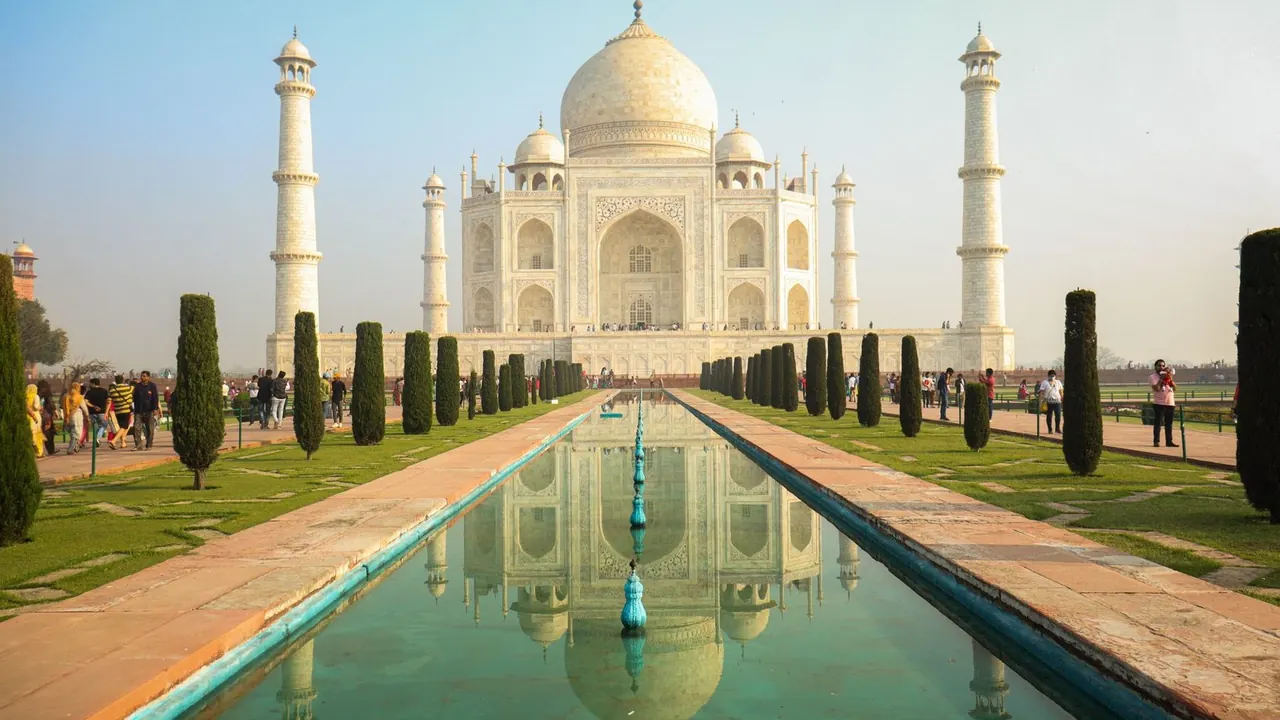
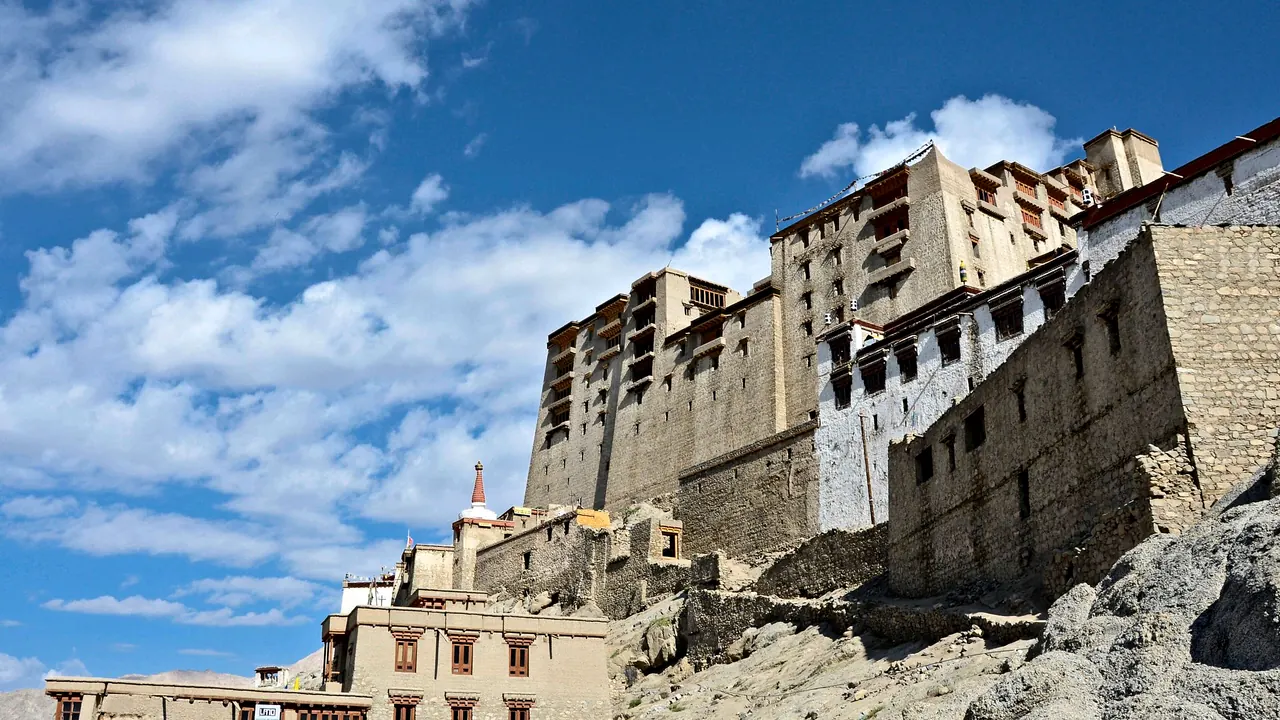
Photos: Agra by Sanket Sawale, Pexels License; Leh by Rayan Naqash, CC BY-SA 3.0, cropped.
Agra or Leh?
Our verdict in twelve categories, each scored against the same fixed benchmark cities, and the climate month by month, so you can choose for your trip.
Choose Agra for
- culture and sights
- food and drink
- families
Agra suits a traveller who wants one of the world's great monuments and the Mughal history around it, seen in two well-planned days. The Taj Mahal, Agra Fort, the Baby Taj and Fatehpur Sikri add up to a far richer run of buildings than Leh can offer. The city is also cheaper, easier to reach by train and better for a curious eater. Expect heat, traffic and touts, and very little to do once the sightseeing is over.
Choose Leh for
- nature and the outdoors
- wellness
- live music and the arts
Leh is the choice for someone who wants mountains rather than marble. It is a high desert town in the Indus valley, with treks, passes, rafting rivers and Buddhist monasteries all close by, and a slow, quiet pace in between. It asks more of you: days set aside to acclimatise, long drives on mountain roads and a summer-focused season. For walkers, riders and anyone drawn to Himalayan Buddhism, that effort is the whole point.
Scoreboard
Twelve categories on one fixed scale from 0 to 100. The shaded stretch is the gap between the two.
Your match
Pick a travel style or drag the sliders, and both match scores follow your weighting.
Too close to call, 1 point apart
Wins on culture and sights and food and drink with your weighting.
Wins on nature and the outdoors and wellness with your weighting.
What matters to you?
Category by category
What the scores mean for a trip.
Beaches & swimming
Neither city has a beach or anywhere to swim outdoors. Agra's Yamuna is a river for views of the Taj, while Leh's Indus and the high lakes are fed by snowmelt and far too cold.
The real difference is the hotel pool. In Agra's heat, a hotel pool is a genuine afternoon refuge. In Leh, the water is for rafting rather than swimming.
Food & drink
Agra gives the more rewarding table. Its Mughlai cooking of kormas, biryani and tandoor breads is richer, and the old bazaars have their own rituals, with bedai and jalebi at breakfast around Kinari Bazaar and chaat in Sadar Bazaar in the evening. Still, a day or two covers most of it.
Leh eats more simply: momos, thukpa and skyu, salty butter tea and the famous apricots. Its rooftop cafés in Changspa and around the Main Bazaar serve trekkers well, but they are filling rather than memorable, and many close out of season.
Culture & sights
Agra is far ahead here. The Taj Mahal alone would justify a visit, and Agra Fort, the fine inlay of Itimad-ud-Daulah and the deer park around Sikandra make it a whole Mughal landscape rather than a single sight.
Leh's heritage is smaller but has real character: the hulking nine-storey palace, the Namgyal Tsemo ridge, the mud-brick lanes of the old town and the working monastery at Sankar. Its greatest art lies out of town, along the Indus valley, rather than in the town itself.
Nightlife
Both towns go quiet after dinner, and neither has clubs or a bar district. In Agra the evening might end with a drink in a hotel bar under a view of the dome. In Leh it is more likely a beer on a rooftop before the cold, the altitude and an early start for the passes send everyone to bed.
Nature & outdoors
Agra's outdoor appeal is wildlife rather than scenery. The plain around it is flat, with no hills or trails, and its best nature needs a drive out of town: Keoladeo's winter birds at Bharatpur, or gharials and river dolphins on the Chambal.
In Leh the landscape is the main reason to come. Mountains rise straight from the valley floor, multi-day treks and river gorges begin close by, and the high lakes and dunes of the outer valleys reward a longer journey. Even winter has its draw, with snow leopards in Hemis and the frozen Chadar trek.
Day trips
Both make excellent bases, but the outings are of different kinds. From Agra the variety is wider. There is the abandoned sandstone capital of Fatehpur Sikri, the pilgrim towns of Mathura and Vrindavan, Gwalior's hilltop fort and Deeg's water palaces, plus birdwatching at Bharatpur.
Leh's day trips run almost entirely to monasteries and palaces, but at a very high standard. Thiksey and Hemis lie to the east, and the thousand-year-old painted temples at Alchi make a full day to the west.
Good for families
Neither city is easy with children, but Agra is the more manageable. The visit can be kept short, older children usually enjoy the Taj and the fort ramparts, and the bear rescue centre near Mathura is a treat. A hotel pool takes care of the hot afternoons.
Leh adds a risk Agra does not have. Flying straight to about 3,500m can cause altitude sickness, and the outings are long mountain drives. It really works only with robust teenagers who want to trek or raft.
Getting around
Agra is slightly the easier of the two to get around, mainly because of arrival. Agra Cantt station links it by fast train to Delhi, and app taxis, auto-rickshaws and a day's car and driver cover the scattered sights, although walking between them is out of the question.
Leh's small centre can be walked, slowly, on its steep slopes. Everything beyond it depends on taxi-union cars, hired motorbikes or shared jeeps along long mountain roads, and some passes close in winter.
Shopping & style
Agra has the stronger crafts. Local artisan families still practise pietra dura, the inlay of semi-precious stone seen on the Taj, and the city also sells leather, carpets and petha sweets. Kinari and Sadar bazaars are good for browsing, as long as you resist the drivers who steer visitors to commission showrooms.
Leh's Main Bazaar has less range, and the same goods turn up from stall to stall: pashmina, thangkas, turquoise jewellery and singing bowls. Its useful extras are trekking gear and the dried apricots that Ladakhi women sell on the street.
Affordability
Both are inexpensive places to stay, and Agra stretches a budget further. Its costs are concentrated in the high monument entry fees for foreigners, while rickshaws and a car for the day stay cheap.
In Leh, guesthouses and noodle soups cost little, but getting about does not. Fixed taxi-union fares, multi-day car hire and permits for Nubra or Pangong add up quickly, and comfortable rooms cost more in the short summer season.
Live music & performing arts
Agra's performances are put on for visitors, while Leh's belong to the monasteries. In Agra that means musicals about Shah Jahan, dance evenings in the larger hotels and the spring Taj Mahotsav at Shilpgram, with its folk dance and crafts.
In Leh, masked cham dances fill monastery courtyards at festivals such as Hemis in summer and around Losar. They are worth timing a trip around, but on other days, as in Agra, there is no theatre or regular live music.
Wellness & relaxation
Leh offers more genuine calm, though not luxury. There are slow mornings on guesthouse roofs, meditation courses at Buddhist centres and consultations with amchi healers, set against the drawbacks of thin air and poor sleep in the first days.
In Agra, relaxation means staying inside the hotel: Ayurvedic massage, a lawn and a pool after a dawn start. Outside, the quiet corners are the walled gardens at Itimad-ud-Daulah and Sikandra late in the day.
When should you go?
Pick your month. The climate figures are measured averages, not a forecast.
Agra in July
Leh in July
Daytime high, °C
Rainfall in the month, mm
Where the figures come from
Leh has no weather station within reach, so its figures come from a gridded climate model rather than a measured record, and read a broad area rather than the city itself.
Temperature and rainfall are climate normals, averaged over the years shown. Agra: 1942-2025, 10 years observed (rainfall 1971-2000) normals, Agra (6.2 km from centre). Leh: 1991-2020 normals, TerraClimate 4 km grid at the town, no weather station within 90 km.
The two cities have almost opposite seasons. Agra is at its best from October to March, when days are warm and dry and a January high of around 20°C makes long walks round the monuments comfortable, though winter mornings can be hazy. From April the plains bake, with highs near 40°C in May, and the monsoon follows, with July and August each bringing well over 200mm of rain.
Leh is a summer destination. From June to September the days are mild and pleasant for trekking and long drives, peaking at about 25°C in July, and the rain-shadow climate keeps every month almost dry. Winter is severe, with daytime highs below freezing in January and some passes closed, so it is really only for snow leopard tracking or the frozen-river trek. A trip combining both works only at the edges of the seasons, such as Leh in September and Agra in October.
Which traveller are you?
On a culture and arts trip, Agra is the clear pick. The Taj Mahal, Agra Fort, Itimad-ud-Daulah and Akbar's tomb make up a concentrated Mughal heritage that Leh's palace and old town cannot match, although Leh's painted monasteries reward those who drive out to them.
For an outdoors trip, choose Leh. Treks into Hemis National Park, the road up Khardung La, rafting on the Indus and Zanskar and the lakes beyond are on a different level from Agra's flat plain, where the outdoor highlights are mainly birds at Bharatpur.
On a trip with a tight budget, Agra goes further. Rooms, street food and rickshaw rides all cost very little, and only the monument entry fees bite. Leh's guesthouses are cheap too, but fixed taxi fares, car hire and permits for the outer valleys soon add up.
Before you go
| Measure | Agra | Leh |
|---|---|---|
| Official language | Hindi, English | Hindi, English |
| Currency | Indian Rupee (INR) | Indian Rupee (INR) |
| Sockets | CM230 V, 50 Hz | CM230 V, 50 Hz |
| Driving side | Left | Left |
| Time zone | UTC+5:30 | UTC+5:30 |
| Emergency number | 108 or 112 | 108 or 112 |
| Elevation | 171 m | 3,500 m |
| Main airport | Agra Airport / Agra Air Force Station (AGR)6 km from centre2 non-stop destinations | Leh Kushok Bakula Rimpochee Airport (IXL)5 km from centre5 non-stop destinations |
By the numbers
| Measure | Agra | Leh |
|---|---|---|
| City population | 1,585,705 | 30,870 |
| People per km² | 8,417 | - |
| Museums within 10 km | 0 | 2 |
| UNESCO World Heritage sites within 50 km | 4 | 0 |
Where else could you go?
Every comparison below shares a destination with this one, so you can follow Agra or Leh somewhere new.