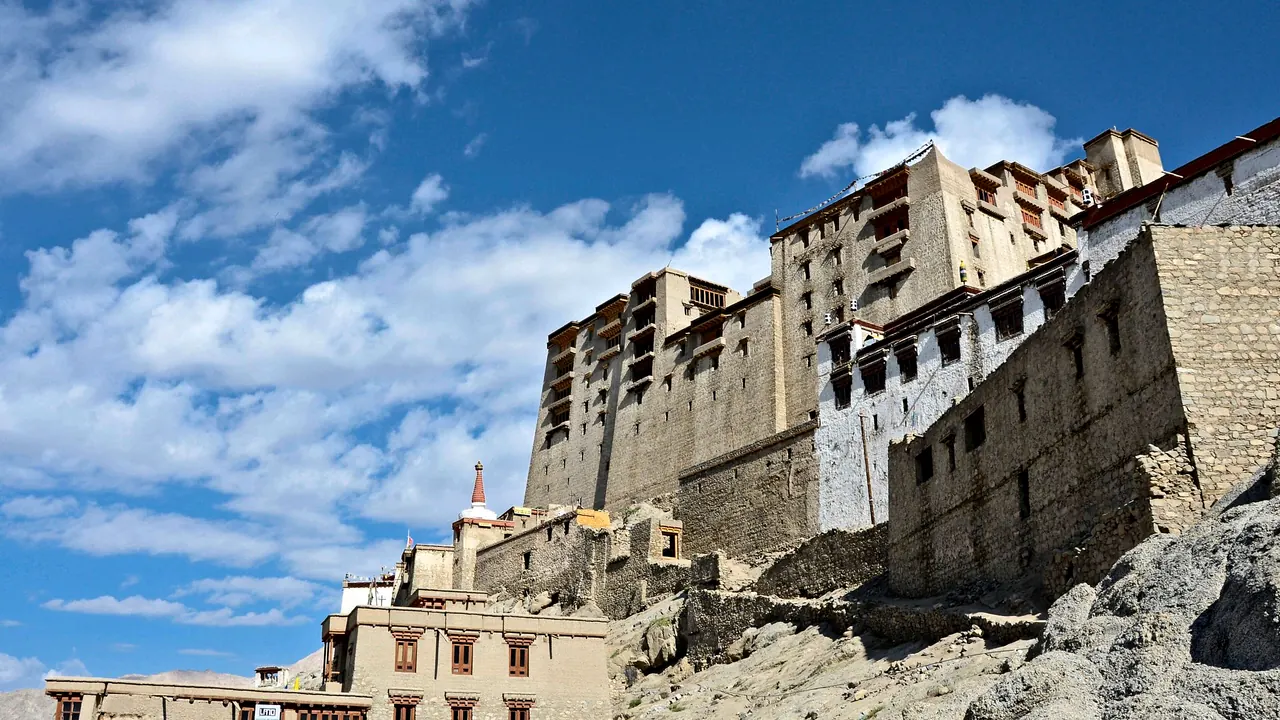
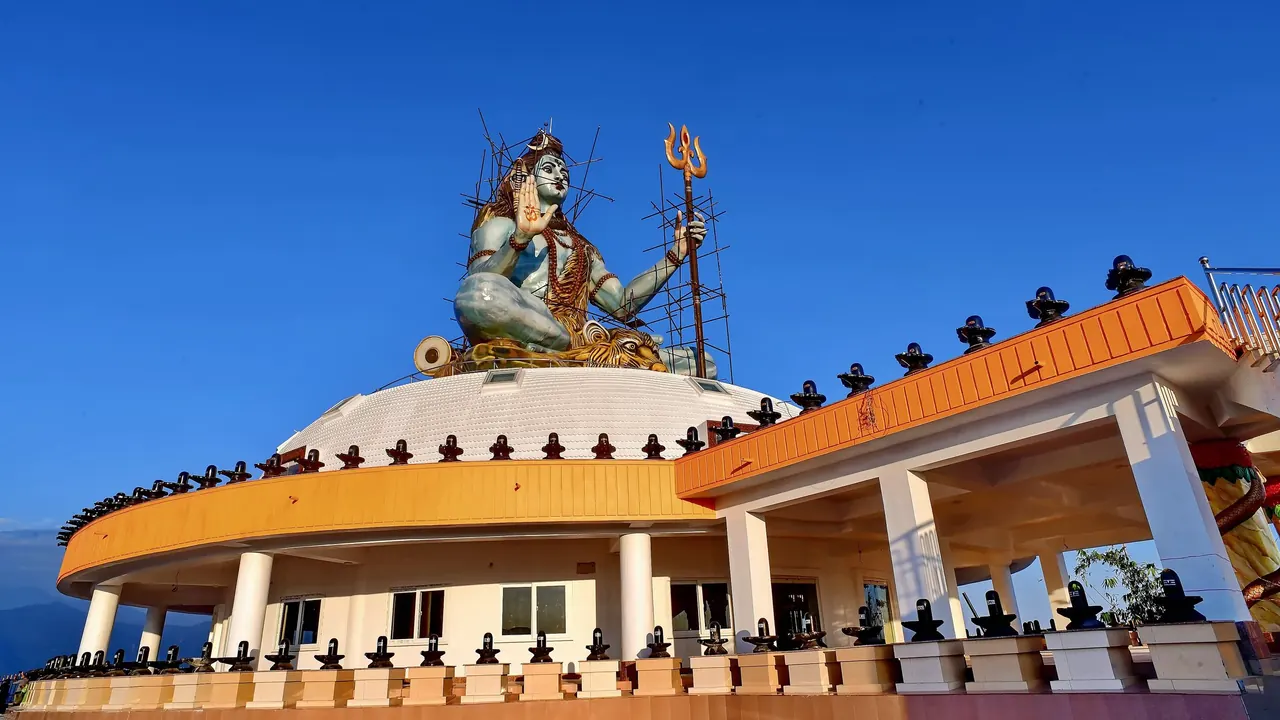
Photos: Leh by Rayan Naqash, CC BY-SA 3.0, cropped; Pokhara by Rajesh Dhungana, CC BY-SA 4.0, cropped.
Leh or Pokhara?
Our verdict in twelve categories, each scored against the same fixed benchmark cities, and the climate month by month, so you can choose for your trip.
Choose Leh for
- day trips
- culture and sights
Leh is the pick for travellers who want Buddhist heritage set in a stark high desert. The palace and old town come first, then a chain of painted monasteries along the Indus, and above them passes, gorges and remote lakes. It asks a lot in return. You need days to acclimatise, the outings are long drives on mountain roads, and evenings end early. It suits fit adults with time to spare who care more about what they see than about comfort.
Choose Pokhara for
- wellness
- nightlife
- families
Pokhara is the easier and softer choice. It is a flat lakeside town under the Annapurnas where short treks, paragliding and boating sit alongside yoga retreats, massage, a sociable bar strip and very low costs. There is little history to see and few day trips worth making. For families, for anyone who wants to rest between outings and for travellers on a tight budget, it is the more forgiving of the two.
Scoreboard
Twelve categories on one fixed scale from 0 to 100. The shaded stretch is the gap between the two.
Your match
Pick a travel style or drag the sliders, and both match scores follow your weighting.
Wins on day trips and culture and sights with your weighting.
Wins on wellness and nightlife with your weighting.
What matters to you?
Category by category
What the scores mean for a trip.
Beaches & swimming
Neither place is for swimming. In Leh the Indus and the high lakes are snowmelt-cold all year, so the water is for rafting and for looking at. Pokhara gives you a little more. Rowing out on Phewa Lake in a painted boat is a pleasant part of the day, Begnas Lake allows an occasional dip, and a hotel pool is easy to find in the warm months.
Food & drink
Both towns feed trekkers on similar mixed menus of pizza, Israeli plates and Indian dishes, so the difference is in the local cooking. In Leh it means Tibetan noodle soups, skyu stew, salty butter tea and the famous apricots, eaten in homestays and family kitchens. Pokhara's local food is Nepali: Thakali dal bhat with refills and buffalo sekuwa grilled over charcoal. It also has lakeside bakeries serving Nepali-grown coffee, which stay open all year rather than closing with the season.
Culture & sights
Leh has far more to see in the town itself. The nine-storey palace, built in the manner of Lhasa's Potala, rises over a maze of mud-brick lanes and chortens, with the Namgyal Tsemo gompa on the ridge above. Sankar still has a working monastic life, and the Central Asian Museum explains the old trade routes. Allow a day or two for the town before heading out to the monasteries along the valley.
Pokhara is mostly a modern town. It has the island temple of Tal Barahi, the Peace Pagoda on the ridge, a few Newar shopfronts in the old bazaar, and the Mountain and Gurkha museums, with Gupteshwor Cave and Davis Falls taking up a further half day. Two days covers all of it, and none of it is a reason to come on its own.
Nightlife
Pokhara has an evening scene and Leh does not. Along Lakeside, trekkers celebrate a finished circuit in rooftop bars with cover bands and long happy hours, and there are a couple of small dance bars, though it winds down around midnight. In Leh, an evening usually means a late dinner on a rooftop and maybe a beer. The cold, the altitude and the dawn starts send everyone to bed early.
Nature & outdoors
Both are among the great mountain bases, but the landscapes are very different. Leh is high, dry desert. Bare, multicoloured ridges surround the Indus valley, the road climbs over Khardung La, and there are rafting gorges, the Markha valley trek, the Nubra dunes and Pangong Tso. Visitors need several days to adjust to the altitude before doing anything hard.
Pokhara is green and much lower, with the white Annapurna peaks and Machhapuchhre standing right above the lake. The outdoor days here are about paragliding off Sarangkot, kayaking on the lake and short treks to Poon Hill or Australian Camp. The catch is the monsoon, which can hide the mountains for days.
Day trips
This is where Leh is far ahead. Thiksey and Shey are under half an hour away, Hemis about an hour. A longer day to the west takes in Likir, Basgo's ruined citadel and the painted temples of Alchi. Almost every trip is to a monastery or a palace, but they are of outstanding quality.
From Pokhara, the slow roads leave little within easy reach. Bandipur, the car-free Newar hill town about two hours away, is the one real day trip. Gurung villages such as Ghandruk are better seen on a trek.
Good for families
Pokhara is the far safer bet with children. Lakeside has little traffic, boats to row and local people who are warm towards children. Older children can manage the caves, the waterfall, the pagoda walk and tandem paragliding if they meet the age and weight limits.
Leh is hard on young children. Altitude sickness is a real risk after the flight in, and nearly every outing is a long mountain drive. It only really works with tough teenagers who want to trek or raft.
Getting around
Leh is the harder of the two to get around, because of the thin air and the distances. The Main Bazaar, the old town and Changspa are close together, but every slope is tiring at this height. Beyond town, buses are sparse and slow, so it falls to the fixed-fare taxi union, shared jeeps or a hired motorbike to cover long mountain drives, and some of those passes close in winter.
Pokhara is easier. Lakeside is flat, guesthouses and boat jetties are a short walk apart, and the shore road is good for cycling. Getting to Sarangkot, the caves or the trailheads still means a taxi, a rented scooter or a driver on rough roads, but the trips are short by Ladakhi standards.
Shopping & style
The craft stock is much the same in both: pashmina, thangkas, singing bowls and prayer flags. Leh's Main Bazaar adds turquoise and coral jewellery and Ladakhi women selling dried apricots on the street. Pokhara is better for renting trekking gear cheaply for one trek, and its Tibetan settlements let you watch carpets being made in the workshops.
Affordability
Both are inexpensive, but Pokhara costs less overall. Guesthouses with mountain views, dal bhat lunches, taxis and boat hire all cost very little. The main expenses are paragliding, guided treks and Annapurna permits.
Rooms and meals in Leh are cheap too. Transport is what pushes the cost up: union taxi fares, hired cars for every day out and permits for the outer valleys, plus higher hotel prices in the short summer season.
Live music & performing arts
Neither town has a theatre or a concert season, but the performances they do have are very different. Leh's are religious. The masked cham dances in monastery courtyards, especially at the summer Hemis festival and around Losar, are worth planning a trip around. In Pokhara you will find cover bands in the bars and Gurung and Magar dance dinner shows put on for visitors, which are pleasant but staged.
Wellness & relaxation
Pokhara is much better for rest. It is slow after Kathmandu, with yoga and meditation retreats on the quiet far shore, Nepali and Ayurvedic massage for tired legs, and afternoons on the water. The nearest hot springs, though, are a long way out on the trails.
Leh suits a more contemplative visitor. It offers meditation courses at Buddhist centres and consultations with amchi practitioners of Tibetan medicine. The thin, dry air and broken sleep of the first days make it hard to relax.
When should you go?
Pick your month. The climate figures are measured averages, not a forecast.
Leh in July
Pokhara in July
Daytime high, °C
Rainfall in the month, mm
Where the figures come from
Leh has no weather station within reach, so its figures come from a gridded climate model rather than a measured record, and read a broad area rather than the city itself.
Pokhara has no weather station within reach, so its figures come from a gridded climate model rather than a measured record, and read a broad area rather than the city itself.
Temperature and rainfall are climate normals, averaged over the years shown. Leh: 1991-2020 normals, TerraClimate 4 km grid at the town, no weather station within 90 km. Pokhara: 1991-2020 normals, TerraClimate 4 km grid at the town, no weather station within 90 km.
Their seasons hardly overlap. Leh is a summer destination. From June to September days reach about 25°C in the sun, and the rain shadow keeps it almost completely dry. Nights at this height are still cold, though. Spring and autumn are crisp, and winter is fierce, with daytime highs around -3°C in January, some passes closed and much of the town shut. Only the frozen-river trek and snow leopard trips bring visitors then.
Pokhara is at its worst in exactly those summer months. The monsoon brings about 674mm of rain in July and hides the mountains for days at a time. The best months are October and November, which are warm and dry with the clearest views, followed by December to March, when it is mild and sunny for walking. By April and May it reaches about 31°C and the haze builds. So for a single trip, choose Leh in midsummer and Pokhara in autumn.
Which traveller are you?
For a culture and arts trip, Leh is the clear choice. It has the Potala-style palace and the mud-brick old town, and Thiksey, Hemis and Alchi's thousand-year-old murals are close by. Pokhara has a lake temple and two museums, and you will see them all in a couple of days.
On a family trip with children, Pokhara is far easier. The lakeshore is flat and quiet, rowing boats are easy to hire, and the walks are short. Leh means reaching high altitude in a single flight, with real risk of altitude sickness, followed by long mountain drives that young children struggle with.
For a relaxing and wellness trip, choose Pokhara. You get unhurried lakeside mornings, yoga and meditation retreats on the far shore, and massage on almost every corner. Leh offers meditation and Tibetan medicine, but thin air and broken sleep make real rest hard there.
Before you go
| Measure | Leh | Pokhara |
|---|---|---|
| Official language | Hindi, English | Nepali |
| Currency | Indian Rupee (INR) | Nepalese Rupee (NPR) |
| Sockets | CM230 V, 50 Hz | CM230 V, 50 Hz |
| Driving side | Left | Left |
| Time zone | UTC+5:30 | UTC+5:45 |
| Emergency number | 108 or 112 | Police 100, ambulance 102, fire 101 |
| Elevation | 3,500 m | 900 m |
| Main airport | Leh Kushok Bakula Rimpochee Airport (IXL)5 km from centre5 non-stop destinations | Pokhara International Airport (PHH)4 km from centre9 non-stop destinations |
By the numbers
| Measure | Leh | Pokhara |
|---|---|---|
| City population | 30,870 | 353,841 |
| People per km² | - | 762 |
| Museums within 10 km | 2 | 2 |
| UNESCO World Heritage sites within 50 km | 0 | 0 |
Where else could you go?
Every comparison below shares a destination with this one, so you can follow Leh or Pokhara somewhere new.
- Kathmanduvs Pokhara
- Varanasivs Pokhara
- Amritsarvs Leh
- Darjeelingvs Pokhara
- Rishikeshvs Leh
- Rishikeshvs Pokhara