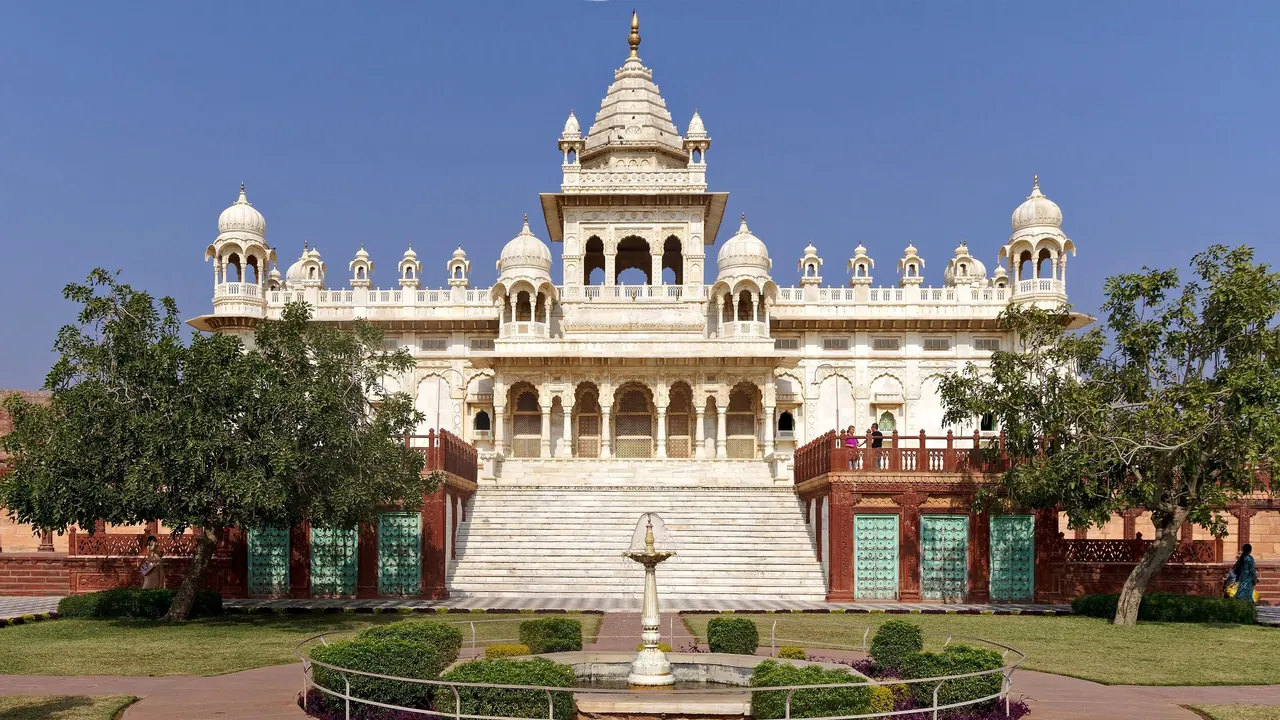
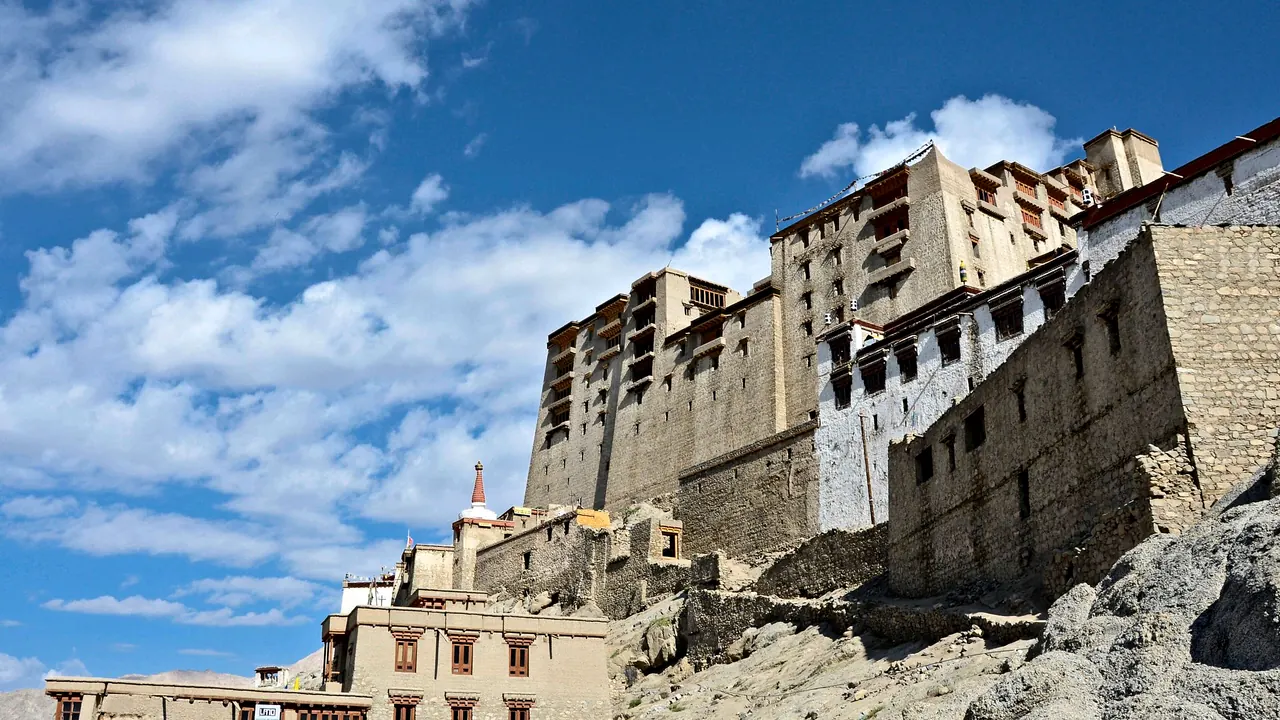
Photos: Jodhpur by Jakub Hałun, CC BY-SA 4.0, cropped; Leh by Rayan Naqash, CC BY-SA 3.0, cropped.
Jodhpur or Leh?
Our verdict in twelve categories, each scored against the same fixed benchmark cities, and the climate month by month, so you can choose for your trip.
Choose Jodhpur for
- food and drink
- shopping
- culture and sights
Jodhpur suits a traveller who wants a city to explore on foot and through its markets: Mehrangarh and its museum, the indigo lanes of the old city, Marwari breakfasts by the Clock Tower and evenings of Manganiyar music. It is the easier choice for a mixed group or a family with older children, because it asks nothing of your lungs, and it is the one to pick for a winter trip.
Choose Leh for
- nature and the outdoors
- day trips
Choose Leh if the landscape is the point. The town itself is seen quickly, but it is a base for treks into Hemis National Park, the road over Khardung La, rafting on the Indus and Zanskar, and the painted monasteries from Thiksey to Alchi. It asks more in return: days of acclimatising at altitude, long drives on mountain roads, and a summer-only window for most visitors.
Scoreboard
Twelve categories on one fixed scale from 0 to 100. The shaded stretch is the gap between the two.
Your match
Pick a travel style or drag the sliders, and both match scores follow your weighting.
Wins on food and drink and shopping with your weighting.
Wins on nature and the outdoors and day trips with your weighting.
What matters to you?
Category by category
What the scores mean for a trip.
Beaches & swimming
Neither city is a place to swim. Jodhpur's lakes, such as Kaylana, are reservoirs to look at, but many heritage hotels have courtyard pools, which matter in the desert heat. In Leh the Indus and the high lakes are fed by snowmelt and stay icy, so water there means rafting or the view, not a swim.
Food & drink
Jodhpur has the more distinctive food. Its Marwari cooking runs from mirchi vada and pyaaz kachori at breakfast to saffron makhaniya lassi, ker sangri on a thali and fiery laal maas. Beyond that the range narrows to rooftop tourist menus and formal palace dining.
Leh eats more simply: momos, thukpa and thenthuk, skyu and butter tea in homestays, then apricots and sea buckthorn juice. The trekkers' cafés of Changspa and Fort Road add pizza and good coffee, but much of the scene shuts outside summer. Drink plays only a small part in either city.
Culture & sights
Jodhpur's sights are grander and sit in the city itself. Mehrangarh rises from its ridge with one of Rajasthan's best museums inside. Below it are Jaswant Thada, the blue old city, the carved Toorji ka Jhalra stepwell and the Art Deco bulk of Umaid Bhawan, enough for two full days.
Leh Palace, built in the manner of the Potala, and the Namgyal Tsemo ridge give the town a striking skyline, and the mud-brick old town and the sunset view from Shanti Stupa reward an unhurried walk. The museums are modest, though, and the major art lies outside town.
Nightlife
Neither is a night-out destination, but Jodhpur offers a little more: a rooftop dinner facing the floodlit fort and perhaps a drink in a heritage hotel bar. In Leh even that thins out, with beer in only a few places, and the altitude, cold nights and dawn starts send most people to bed early.
Nature & outdoors
Here Leh is in another league. The Indus valley is ringed by bare, many-coloured mountains with the snowy Stok range on the skyline. The Markha valley trek starts within a couple of hours, Khardung La rises above 5,000m and the Zanskar gorges carry rafting. Nubra's dunes, Pangong Tso and winter snow leopard tracking take it further still.
Jodhpur's outdoors is rocky desert scrub: trails through the Rao Jodha Desert Rock Park, ziplines over the ramparts, blackbuck and chinkara in Bishnoi country, and camel rides into the Thar. It makes for pleasant winter mornings, but there are no mountains or forests.
Day trips
Leh has the richer ring of outings, almost all of them monasteries. Thiksey and Shey are within half an hour, Hemis is about an hour away, and a full day west takes in Likir, Basgo and the thousand-year-old paintings at Alchi. The variety is narrow but the quality is exceptional.
From Jodhpur, the carved temples and dunes of Osian are the main day out, with the Bishnoi villages and the Salawas rug weavers closer in. Ranakpur and Kumbhalgarh are three hours or more away and are better seen on the road to Udaipur.
Good for families
Jodhpur is the more workable choice with children, especially in winter. Older children love the fort's cannons, armour and howdahs, and the ziplines, camel rides and a blackbuck safari add to it, while a hotel pool fills the gaps. The narrow lanes full of rickshaws and cows call for care.
Leh is hard going with young children, because a single flight lands them at altitude and acclimatising needs real rest. Robust teenagers who are keen on trekking or rafting are the ones who get the most out of it.
Getting around
Jodhpur is the easier of the two to get around. The Clock Tower market, the blue old city and the Toorji ka Jhalra stepwell are a short walk apart, with Mehrangarh directly above them, and auto-rickshaws wait on almost every corner for the ride out to Umaid Bhawan or Mandore once a fare is agreed. The difficulty is underfoot: few pavements, lanes shared with motorbikes and cows, and heat that makes walking hard going after mid-morning.
Leh's own centre, from the Main Bazaar up to the old town and out to Changspa, is small enough to walk, though the slopes are tiring at altitude. Beyond it everything is harder. The buses are sparse and slow, so you depend on the union taxis and their steep fixed fares, hired motorbikes or shared jeeps. Every outing means a long drive on mountain roads, and in winter some passes close.
Shopping & style
Jodhpur is the better place to shop. Sardar Market and the lanes around the Clock Tower sell bandhani and leheriya textiles, mojari slippers, silver and lacquerwork. Warehouses on the outskirts sell antiques and furniture and will ship them abroad, and jodhpurs can still be tailored. Touts make bargaining essential.
Leh's Main Bazaar is smaller and more repetitive: pashmina, thangkas, turquoise jewellery and singing bowls, plus useful trekking gear and the dried apricots that Ladakhi women sell on the street.
Affordability
Both are cheap places to stay and eat, and Jodhpur goes a little further. Its guesthouses, thalis and rickshaw rides cost little, and a car and driver is good value. Only the palace hotels are expensive.
In Leh the homestays and momos are cheap too, but transport adds up. Union taxi fares are high by Indian standards, days out mean hiring a car, and the outer valleys need permits.
Live music & performing arts
Jodhpur has the music you can actually go and hear. In the evenings, Manganiyar and Langa musicians play kamaicha and khartal in Mehrangarh's courtyards and on hotel terraces, often with Kalbeliya dancers, and each autumn a folk festival at the fort draws players from across the desert.
In Leh, performance is religious and tied to particular dates: the masked cham dances at monastery festivals such as Hemis in summer, and the celebrations around Losar. Time a stay to one of these and it is deeply moving. Otherwise there is little beyond cultural evenings put on for tourists.
Wellness & relaxation
Neither has a bathing culture, and in both the calm lies away from the street, but the kind of calm differs. Jodhpur's is comfort: Ayurvedic massage, palace hotel spas and shaded courtyards that shut out the horns and heat. Leh's is contemplative: meditation courses, amchi Tibetan medicine and quiet guesthouse roofs, though the thin air and poor sleep take the edge off it in the first days.
When should you go?
Pick your month. The climate figures are measured averages, not a forecast.
Jodhpur in July
Leh in July
Daytime high, °C
Rainfall in the month, mm
Where the figures come from
Leh has no weather station within reach, so its figures come from a gridded climate model rather than a measured record, and read a broad area rather than the city itself.
Temperature and rainfall are climate normals, averaged over the years shown. Jodhpur: 1991-2020 normals, Jodhpur (1.3 km from centre). Leh: 1991-2020 normals, TerraClimate 4 km grid at the town, no weather station within 90 km.
Jodhpur is a winter destination. From November to February the days are dry, clear and warm without being oppressive, which is ideal for the climb to the fort and walks through the old city. By April the heat builds to a peak of 41°C in May. The monsoon then brings most of the year's rain in July and August, around 119mm in each month, and it stays hot throughout.
Leh runs the other way. In January the daytime high stays below freezing at -3°C and some passes close, so winter suits only those coming for snow leopards or the Chadar trek. June to September is the time to go, with mild highs reaching 25°C in July. It is dry all year, because the town lies in the rain shadow. The two hardly overlap: go to Jodhpur from late autumn to early spring and to Leh in high summer.
Which traveller are you?
On an outdoors trip, Leh is the clear choice. Trekking the Markha valley, rafting through the Indus gorges, riding a mountain bike down from Khardung La and spending a night at Pangong Tso all far outstrip Jodhpur's rock park, ziplines and blackbuck drives, though acclimatisation comes first.
For a culture and arts trip, Jodhpur gives more within the city: Mehrangarh's museum of miniatures and howdahs, Jaswant Thada, the stepwell and Umaid Bhawan, with Manganiyar musicians in the evenings. Leh's great art is spread around the valley's monasteries rather than in town.
On a shopping trip, Jodhpur is far better stocked. Bandhani textiles, mojari slippers and lacquerwork fill the lanes around Sardar Market, and warehouses of carved doors and furniture will ship home. Leh's bazaar has pashmina and thangkas, but the same stock repeats from stall to stall.
Before you go
| Measure | Jodhpur | Leh |
|---|---|---|
| Official language | Hindi, English | Hindi, English |
| Currency | Indian Rupee (INR) | Indian Rupee (INR) |
| Sockets | CM230 V, 50 Hz | CM230 V, 50 Hz |
| Driving side | Left | Left |
| Time zone | UTC+5:30 | UTC+5:30 |
| Emergency number | 108 or 112 | 108 or 112 |
| Elevation | 231 m | 3,500 m |
| Main airport | Jodhpur Airport (JDH)5 km from centre7 non-stop destinations | Leh Kushok Bakula Rimpochee Airport (IXL)5 km from centre5 non-stop destinations |
By the numbers
| Measure | Jodhpur | Leh |
|---|---|---|
| City population | 1,033,918 | 30,870 |
| People per km² | 4,437 | - |
| Museums within 10 km | 1 | 2 |
| UNESCO World Heritage sites within 50 km | 0 | 0 |
Where else could you go?
Every comparison below shares a destination with this one, so you can follow Jodhpur or Leh somewhere new.