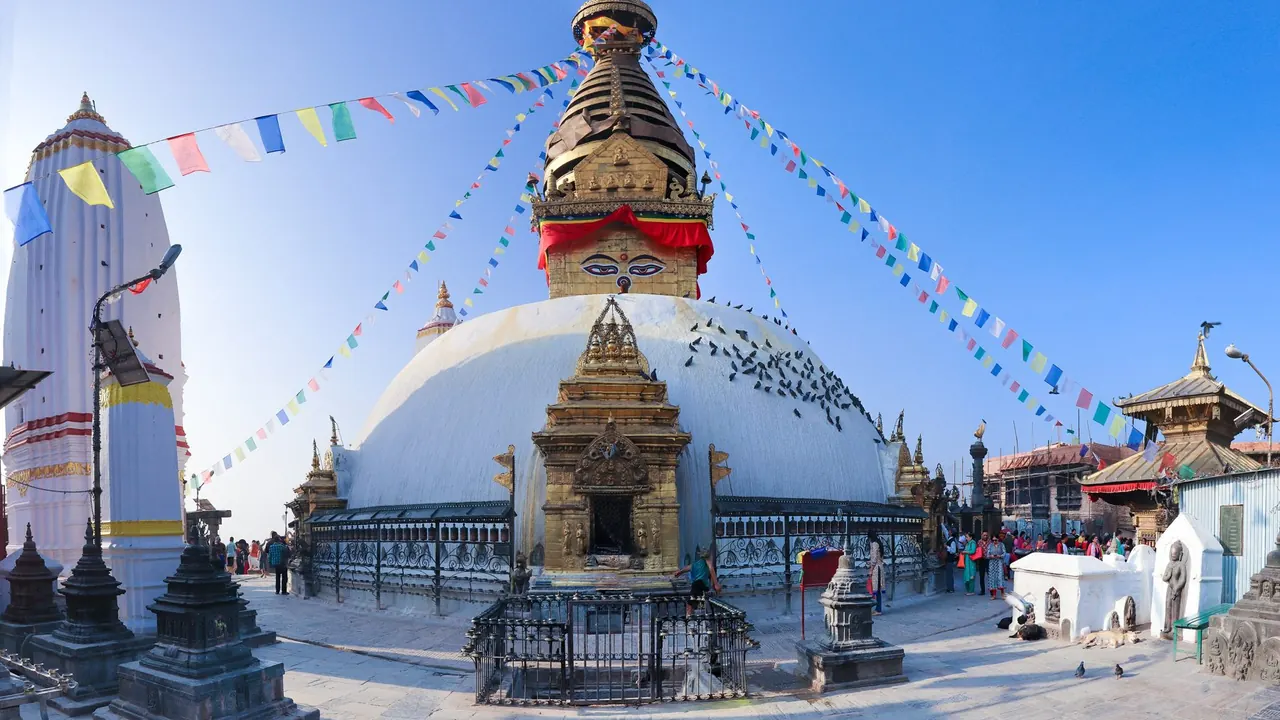
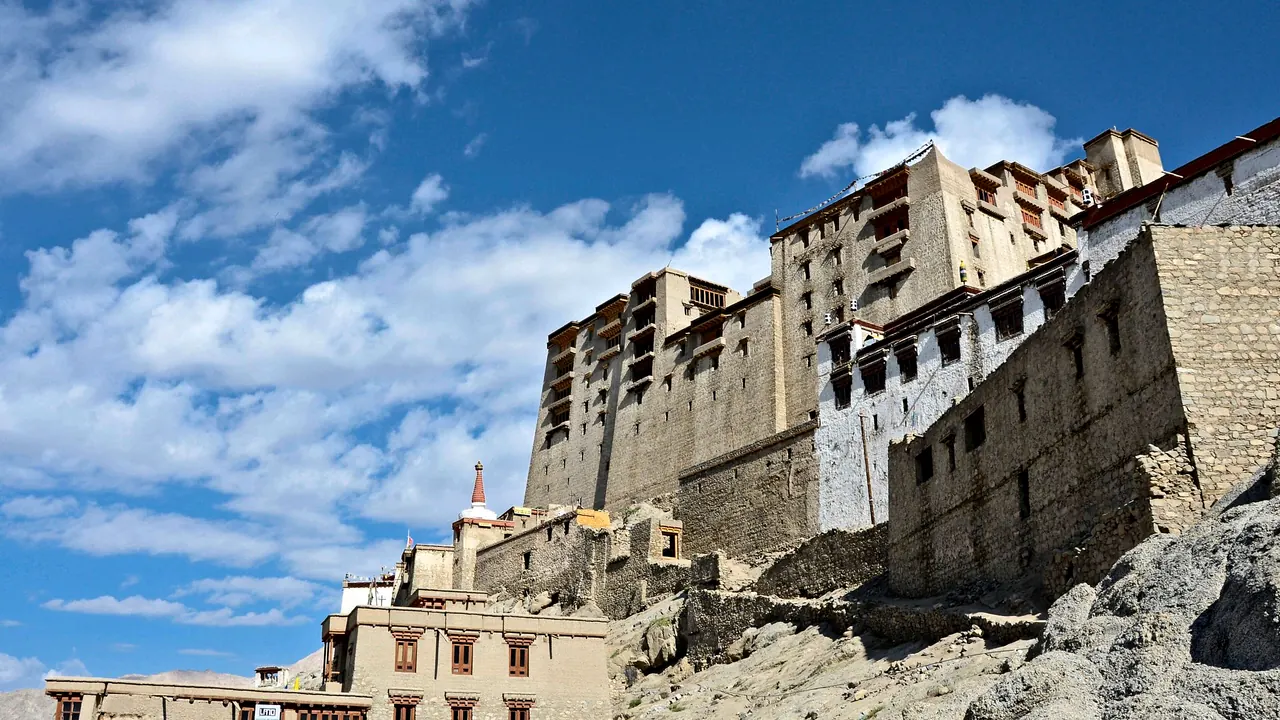
Photos: Kathmandu by Nabin K. Sapkota, CC BY-SA 4.0, cropped; Leh by Rayan Naqash, CC BY-SA 3.0, cropped.
Kathmandu or Leh?
Our verdict in twelve categories, each scored against the same fixed benchmark cities, and the climate month by month, so you can choose for your trip.
Choose Kathmandu for
- culture and sights
- nightlife
- shopping
Kathmandu suits the traveller who wants a city to explore as well as mountains to look at. It has the denser heritage: living temple squares, great stupas and the Newari towns of the valley, along with more varied food and craft shopping, and enough evening life in Thamel to round off a day. It is also the cheaper and easier place to spend a week without a fixed plan, and it is a natural start for a trek.
Choose Leh for
- nature and the outdoors
- day trips
Leh is for the traveller who comes for the landscape itself. The town is small and soon seen, but from it you reach high passes, treks through Hemis, rafting gorges and a line of painted monasteries along the Indus that justify the trip on their own. Choose it if you are fit, patient with altitude and happy to trade restaurants and nightlife for early nights and very big views.
Scoreboard
Twelve categories on one fixed scale from 0 to 100. The shaded stretch is the gap between the two.
Your match
Pick a travel style or drag the sliders, and both match scores follow your weighting.
Wins on culture and sights and nightlife with your weighting.
Wins on nature and the outdoors and day trips with your weighting.
What matters to you?
Category by category
What the scores mean for a trip.
Beaches & swimming
Neither city is a place to swim. Both are high and landlocked, and their rivers are for rafting. What differs is the setting. In Kathmandu a hotel pool is the realistic option, while Leh's snowmelt lakes such as Pangong Tso are for looking at, not wading into.
Food & drink
Kathmandu eats noticeably better. Newari cooking, with choila, bara, yomari and rice beer in the old bazaars and in Patan, gives you something you will not find elsewhere, and the Tibetan streets around Boudhanath add thukpa and butter tea on top of the momos that are everywhere.
Leh shares the Tibetan staples and adds skyu, apricots and sea buckthorn juice, but most meals come from rooftop cafés serving trekkers. They are pleasant and filling but rarely distinctive, and many close outside the summer.
Culture & sights
Here Kathmandu is clearly ahead. Its heritage fills whole districts: the temple crowd of Durbar Square, pilgrims circling Boudhanath at dusk, open cremations at Pashupatinath and the courtyard shrines of Asan, with Patan's square and museum just across the river.
Leh's heritage is striking but small. The Potala-style palace, Namgyal Tsemo, the mud-brick old town and the Shanti Stupa at sunset fill a day or two, and its best monasteries lie outside town.
Nightlife
Kathmandu at least has nightlife: Thamel's rooftop bars, pool halls and a few dance clubs full of trekkers celebrating the end of a route, though it closes around midnight. Leh has nothing comparable. You get a late dinner on a terrace, maybe a beer, and an early night before a dawn start.
Nature & outdoors
Leh is the bigger mountain experience. You are inside a high desert of coloured ranges with the Stok peaks overhead, treks through Hemis begin close by, and passes above 5,000m, the Nubra dunes and Pangong Tso are all within reach. In winter there is snow leopard tracking and the frozen Chadar trek.
Kathmandu offers a gentler kind of outdoors: forest trails in Shivapuri, the Chandragiri cable car and sunrise over the snow from Nagarkot or Dhulikhel. The real heights there mean a mountain flight or a trek setting out from the city.
Day trips
Leh has the better ring of outings. Thiksey, Shey and Hemis are close by along the Indus, and Alchi's thousand-year-old painted temples are some of the finest early Buddhist art anywhere. The range is narrow, almost all monasteries and palaces, but the standard is consistently high.
Kathmandu has one excellent day out in Bhaktapur, best combined with Changu Narayan. After that come smaller Newari villages and shrines such as Bungamati, Kirtipur and Pharping, and slow traffic makes all of them take longer than they should.
Good for families
Neither is easy with children, but Kathmandu is the more workable of the two. Monkeys at Swayambhunath, prayer wheels at Boudhanath and the Garden of Dreams hold young children's attention, even if traffic, dust and care with food make for tiring days.
Leh adds a more serious problem: you fly straight to altitude, and children need careful acclimatisation. Outings are long mountain drives, so it really suits only robust teenagers who want to trek or raft.
Getting around
Both have small centres you can walk and no public transport a visitor can rely on. The difficulty is different in each. In Kathmandu it is traffic: motorbikes in the lanes and slow taxi rides to Patan or Boudhanath. In Leh it is distance and altitude, with steep streets that leave you breathless, fixed-fare union taxis or hired jeeps for every outing, and passes that close in winter.
Shopping & style
Kathmandu is the better place to buy craft. Patan's bronzes are cast in the town's own workshops, Tibetan carpets and thangkas fill the shops around Boudhanath, and Thamel has endless felt, pashmina and trekking gear. The Asan bazaar is worth a look even if you buy nothing.
Leh's Main Bazaar sells the same kinds of shawls, thangkas and turquoise jewellery, but the stock is smaller and repeats from stall to stall. The dried apricots that Ladakhi women sell along the street make the more unusual souvenir.
Affordability
Kathmandu is the cheaper of the two, and here the spending goes on extras rather than basics. Foreigners pay entry fees at the Durbar Squares, Pashupatinath and Bhaktapur, and imported drinks cost far more than local ones. If you are planning a trek or a mountain flight, the permits and the flight are where your budget goes, not daily life in the city.
In Leh a bed and a bowl of thukpa are cheap too, but the sights are spread along the valley, so getting to them is where the money goes. Comfortable hotels also put up their rates in the short summer season, which is when most visitors come.
Live music & performing arts
Kathmandu has more to see: cover and folk bands in Thamel most nights, dinner shows of regional dance, evening devotional singing at temples, masked dances at Indra Jatra and an autumn jazz festival. Leh has no regular stage at all. Its moment is the masked cham dancing in monastery courtyards at festivals such as Hemis, which is unforgettable but only if your dates line up.
Wellness & relaxation
Kathmandu is better set up for retreat and treatment. Kopan and the other monasteries near Boudhanath run meditation and philosophy courses, and yoga, Ayurveda and cheap massage are easy to find, even though the city outside is loud and dusty.
Leh is quieter but less restful than it looks. There are meditation centres and amchi doctors of Tibetan medicine, but thin air, dry skin and broken sleep make the first days hard. It suits contemplation more than pampering.
When should you go?
Pick your month. The climate figures are measured averages, not a forecast.
Kathmandu in July
Leh in July
Daytime high, °C
Rainfall in the month, mm
Where the figures come from
Leh has no weather station within reach, so its figures come from a gridded climate model rather than a measured record, and read a broad area rather than the city itself.
Temperature and rainfall are climate normals, averaged over the years shown. Kathmandu: 1991-2020 normals, Kathmandu Airport (4.7 km from centre). Leh: 1991-2020 normals, TerraClimate 4 km grid at the town, no weather station within 90 km.
Kathmandu is mild for most of the year, and the season that matters is the monsoon. From June to September the rain is heavy, peaking at around 384mm in July, and cloud hides the mountains. October and November are the best months: dry, warm by day and sunny, with the clearest Himalayan views. Winter is still pleasant for walking, at around 19°C by day and with plenty of sun, although haze often dulls the skyline. Spring is warm and bright until the rain builds in May.
Leh's year runs almost the other way round. It is dry in every month, so rain is never the problem, but cold is. January highs stay below freezing, at about -3°C, December and February barely get above zero, and some passes close. In practice a visit means June to September, when afternoons reach about 25°C and the high roads are open. May and October are possible but cool. To see both, go to Leh in summer and Kathmandu in autumn.
Which traveller are you?
On an outdoors trip, Leh is the stronger choice. Treks through Hemis, the road over Khardung La, rafting on the Zanskar and overnight trips to Pangong Tso put you deep inside high mountain country. Kathmandu mostly shows the snow peaks from its valley rim.
For a culture and arts trip, Kathmandu has far more to offer. It has three Durbar Squares, Boudhanath, Swayambhunath, Pashupatinath and the Patan Museum, set in streets where worship goes on daily. Leh has a palace and an old town that take a day or two.
On a trip on a tight budget, Kathmandu goes further. Rooms, meals and taxis all cost very little and the city can be seen on foot. Leh is cheap to sleep and eat in, but the fixed taxi fares, car hire and permits add up quickly.
Before you go
| Measure | Kathmandu | Leh |
|---|---|---|
| Official language | Nepali | Hindi, English |
| Currency | Nepalese Rupee (NPR) | Indian Rupee (INR) |
| Sockets | CM230 V, 50 Hz | CM230 V, 50 Hz |
| Driving side | Left | Left |
| Time zone | UTC+5:45 | UTC+5:30 |
| Emergency number | Police 100, ambulance 102, fire 101 | 108 or 112 |
| Elevation | 1,300 m | 3,500 m |
| Main airport | Tribhuvan International Airport (KTM)4 km from centre38 non-stop destinations | Leh Kushok Bakula Rimpochee Airport (IXL)5 km from centre5 non-stop destinations |
By the numbers
| Measure | Kathmandu | Leh |
|---|---|---|
| City population | 845,767 | 30,870 |
| People per km² | 17,121 | - |
| Museums within 10 km | 9 | 2 |
| UNESCO World Heritage sites within 50 km | 1 | 0 |
Where else could you go?
Every comparison below shares a destination with this one, so you can follow Kathmandu or Leh somewhere new.
- Pokharavs Kathmandu
- Darjeelingvs Kathmandu
- Varanasivs Kathmandu
- Amritsarvs Leh
- Rishikeshvs Leh
- Delhivs Leh