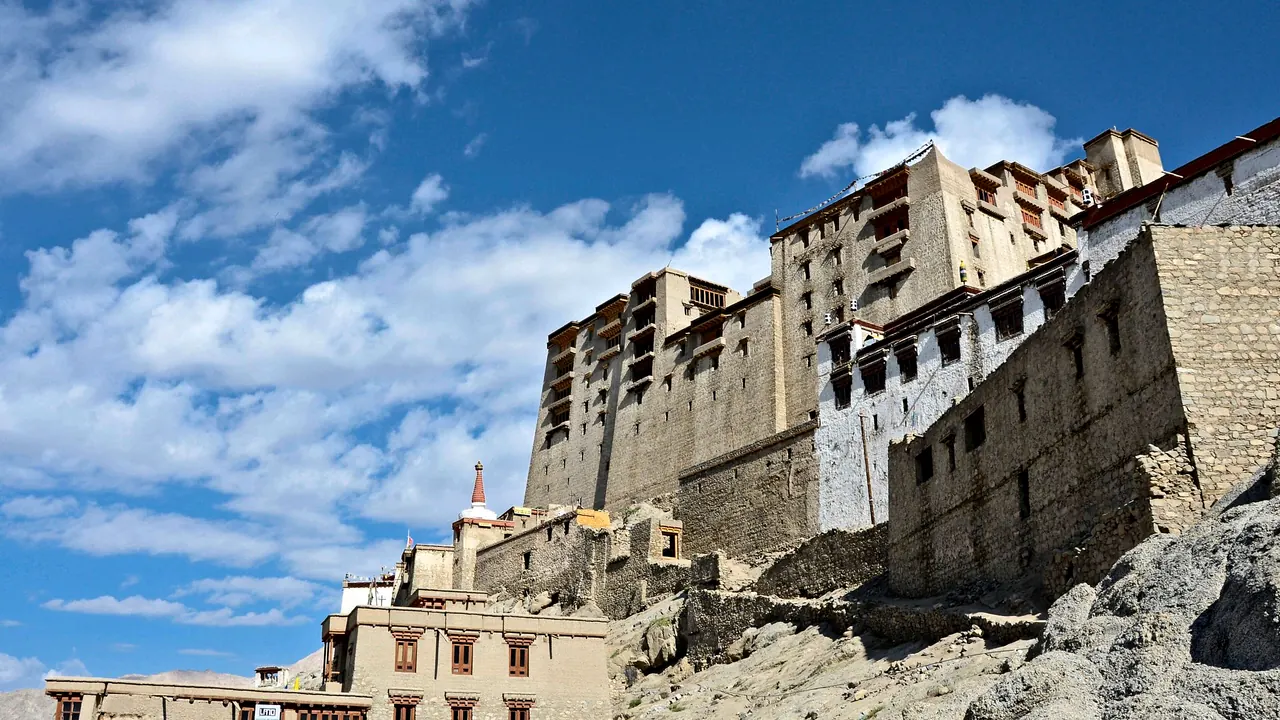
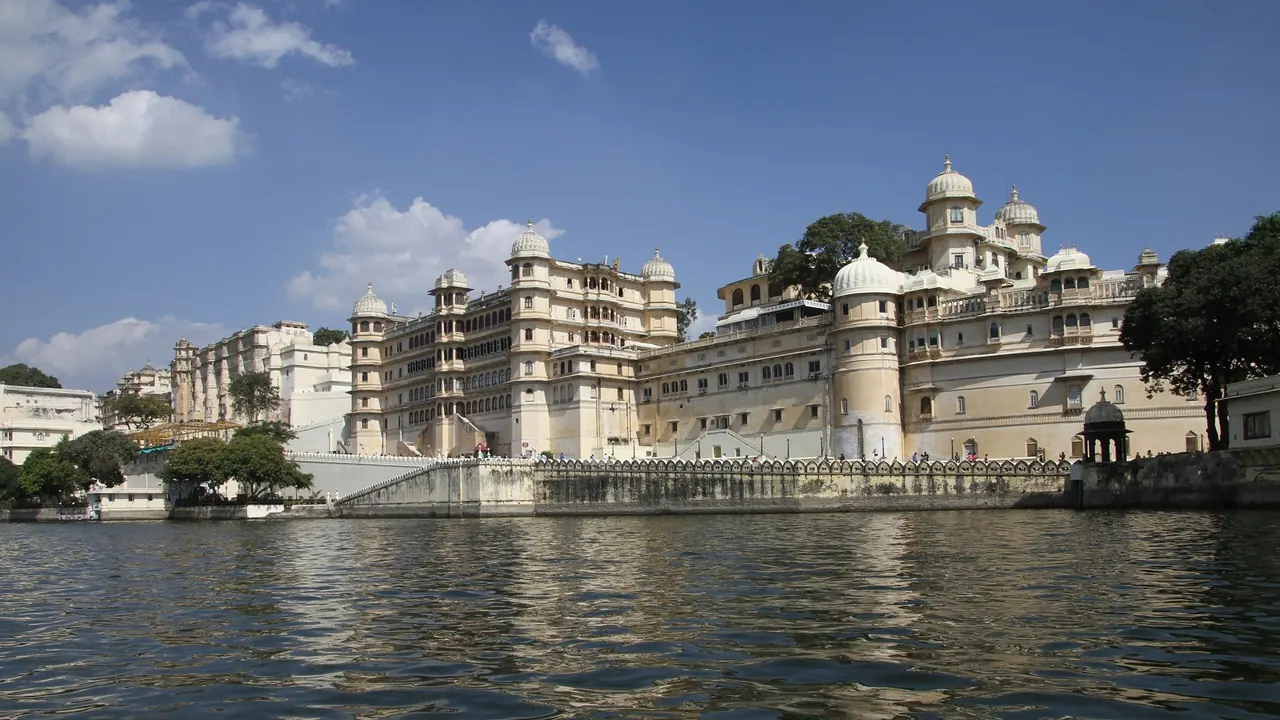
Photos: Leh by Rayan Naqash, CC BY-SA 3.0, cropped; Udaipur by Gerd Eichmann, CC BY-SA 4.0, cropped.
Leh or Udaipur?
Our verdict in twelve categories, each scored against the same fixed benchmark cities, and the climate month by month, so you can choose for your trip.
Choose Leh for
- nature and the outdoors
Leh is for the traveller who wants mountains first and towns second. It is a high-altitude base for trekking, rafting, mountain passes and remote lakes, with a ring of painted monasteries along the Indus. You have to give it a few days of acclimatisation, accept long drives and quiet evenings, and come in the short summer window.
Choose Udaipur for
- families
- shopping
- culture and sights
Udaipur suits someone who wants a gentler, more varied trip built around heritage. The City Palace, the island palaces on Lake Pichola, the crafts bazaars, folk performances and Ayurvedic treatments fill several easy days, and it is more practical with children. It is a winter destination, best visited when Leh is frozen.
Scoreboard
Twelve categories on one fixed scale from 0 to 100. The shaded stretch is the gap between the two.
Your match
Pick a travel style or drag the sliders, and both match scores follow your weighting.
Wins on nature and the outdoors with your weighting.
Wins on families and shopping with your weighting.
What matters to you?
Category by category
What the scores mean for a trip.
Beaches & swimming
Neither city has a beach, and you should not plan any swimming in either. What differs is the water you do get. In Leh the snowmelt rivers are icy and suited to rafting, not bathing. In Udaipur, swimming means a heritage hotel pool, often looking across Lake Pichola.
Food & drink
Udaipur gives you more to eat. Mewari cooking brings dal baati churma, laal maas and refillable vegetarian thalis, and the old bazaars have morning kachori stalls and sweet shops. The palace hotels add polished dining, though the lakefront rooftops trade more on the view than the kitchen.
Leh's food is plainer: Tibetan momos and noodle soups, Ladakhi skyu and butter tea, apricots and sea buckthorn juice. Trekker cafés around Changspa fill the gaps, and much of it closes outside summer.
Culture & sights
Udaipur has the richer and longer sightseeing. The City Palace rises from Lake Pichola with its courtyards and mirrored halls, the white island palaces sit on the water, and havelis, ghats, garden palaces and the hilltop Monsoon Palace add a few more days.
Leh's own heritage is striking but small: the nine-storey Leh Palace, Namgyal Tsemo above it, the mud-brick old town and the sunset view from Shanti Stupa. Most of the great Ladakhi art lies outside town.
Nightlife
Neither is a place to go out at night, but Udaipur has a little more. There you can have a sunset drink on a rooftop over the lake and visit the odd lounge bar with music at weekends. In Leh evenings end with dinner and perhaps a beer, because the cold, the altitude and early starts send everyone to bed.
Nature & outdoors
This is where Leh leaves Udaipur far behind. It sits among bare, multicoloured mountains with the snowy Stok range above. Treks into the Markha valley, a road climbing above 5,000m, gorge rafting, the Nubra dunes and Pangong Tso make it one of the great high-altitude landscapes anywhere, and winter adds snow leopard tracking.
Udaipur's outdoors are gentle by comparison: lake boat rides, the Sajjangarh sanctuary, short hikes in the Aravalli villages and jungle drives at Kumbhalgarh, all best in the cooler months.
Day trips
Both are equally good bases for excursions, but the excursions differ. From Leh almost everything is a monastery or palace: Thiksey and Shey close by, Hemis about an hour off, and Alchi's thousand-year-old temple murals as the highlight.
From Udaipur the range is wider: the temple towns of Eklingji and Nathdwara, the long walls of Kumbhalgarh, the marble Jain temple at Ranakpur and the fortress of Chittorgarh. These are long road days that call for a driver.
Good for families
Udaipur is the more workable choice with children. Boat rides, palaces, puppet shows and the cable car hold their attention, and pool hotels give a comfortable base, though the narrow lanes and spring heat mean it suits older children in winter.
Leh is hard with young ones: the risk of altitude sickness, long mountain drives and nothing designed for children. Only adventurous teenagers really get the most from it.
Getting around
In both cities you can walk the centre and need a car for anything further, but Udaipur is a little easier. Autorickshaws and ride-hailing cover the city itself. In Leh you depend on the fixed-fare taxi union, hired motorbikes or shared jeeps beyond the bazaar, every walk uphill feels harder in the thin air, and some passes close in winter.
Shopping & style
Udaipur is the better place to shop, as a real crafts town. You can watch miniature painters at work near the City Palace, and the bazaars around Hathi Pol and the clock tower sell block-printed and bandhani textiles, silver and puppets to locals as well as visitors. Expect pushy commission selling near the palace.
Leh's Main Bazaar has pashmina, thangkas, turquoise jewellery and decent trekking gear, but the stock repeats from stall to stall and quality is uneven.
Affordability
Both are cheap once you arrive, and Udaipur is slightly easier on the wallet. Thalis, autorickshaws and sight entries cost little there, and only the lake palace hotels run to luxury prices. In Leh, guesthouses and momos are cheap, but taxi-union fares, car hire for days out and permits for the outer valleys add up.
Live music & performing arts
Udaipur gives a visitor something to attend most evenings. There is the folk dance show at Bagore ki Haveli, puppetry kept alive by Lok Kala Mandal, and folk musicians at the winter Shilpgram fair. Leh's performance is religious and tied to the calendar: masked cham dances in monastery courtyards, above all at the Hemis festival. They are deeply moving if your dates match, but most of the year there is little.
Wellness & relaxation
Udaipur is the more restful of the two. Ayurvedic massage and yoga are offered across the old city, palace hotels run full spas, and sunset over the lake does the rest, provided you avoid the noisy lanes.
Leh offers quiet of a different kind: meditation courses at Buddhist centres and visits to amchi healers of Tibetan medicine. The thin air and broken sleep of the first days make it better for contemplation than for pampering.
When should you go?
Pick your month. The climate figures are measured averages, not a forecast.
Leh in July
Udaipur in July
Daytime high, °C
Rainfall in the month, mm
Where the figures come from
Leh has no weather station within reach, so its figures come from a gridded climate model rather than a measured record, and read a broad area rather than the city itself.
Udaipur has no rain gauge within 25 km of the centre, so its rainfall comes from a gridded climate dataset read at the city rather than from a gauge further away.
Temperature and rainfall are climate normals, averaged over the years shown. Leh: 1991-2020 normals, TerraClimate 4 km grid at the town, no weather station within 90 km. Udaipur: 1978-2025, 10 years observed (rainfall 1991-2020) normals, Udaipur Dabok (20.6 km from centre).
These two work at opposite ends of the year. Leh is a summer place. From June to September days are mild and dry, reaching about 25°C in July, which is good for trekking and passes. By November the cold sets in, and in January daytime highs stay below freezing at around -3°C. Rain is never much of an issue in Leh, since it lies in the rain shadow of the Himalaya.
Udaipur is the reverse. October to March is the comfortable season, with January around 24°C and dry, ideal for walking the old city. April to June is punishing, peaking near 39°C in May, and then the monsoon arrives, bringing about 257mm in July and heavy rain through September. That rain fills the lakes and turns the hills green for the autumn.
Which traveller are you?
On an outdoors trip, Leh is the clear pick. For anyone who wants real mountains, several days of walking and roads over high passes, it delivers on a grand scale once you have acclimatised. Udaipur offers pleasant outings, not a whole trip.
For a culture and arts trip, Leh is seen in a day or two, and its finest art means driving out to the monasteries. Udaipur rewards several unhurried days, with palaces, craft workshops and folk performance in the evenings.
On a family trip with children, Leh asks too much of young bodies. The thin air and the long days in the car rule it out for most. Udaipur is far gentler, with short outings and comfortable bases, ideally in winter with children curious about history.
Before you go
| Measure | Leh | Udaipur |
|---|---|---|
| Official language | Hindi, English | Hindi, English |
| Currency | Indian Rupee (INR) | Indian Rupee (INR) |
| Sockets | CM230 V, 50 Hz | CM230 V, 50 Hz |
| Driving side | Left | Left |
| Time zone | UTC+5:30 | UTC+5:30 |
| Emergency number | 108 or 112 | 108 or 112 |
| Elevation | 3,500 m | 578 m |
| Main airport | Leh Kushok Bakula Rimpochee Airport (IXL)5 km from centre5 non-stop destinations | Maharana Pratap Airport (UDR)22 km from centre11 non-stop destinations |
By the numbers
| Measure | Leh | Udaipur |
|---|---|---|
| City population | 30,870 | 451,100 |
| People per km² | - | 12,192 |
| Museums within 10 km | 2 | 3 |
| UNESCO World Heritage sites within 50 km | 0 | 0 |
Where else could you go?
Every comparison below shares a destination with this one, so you can follow Leh or Udaipur somewhere new.