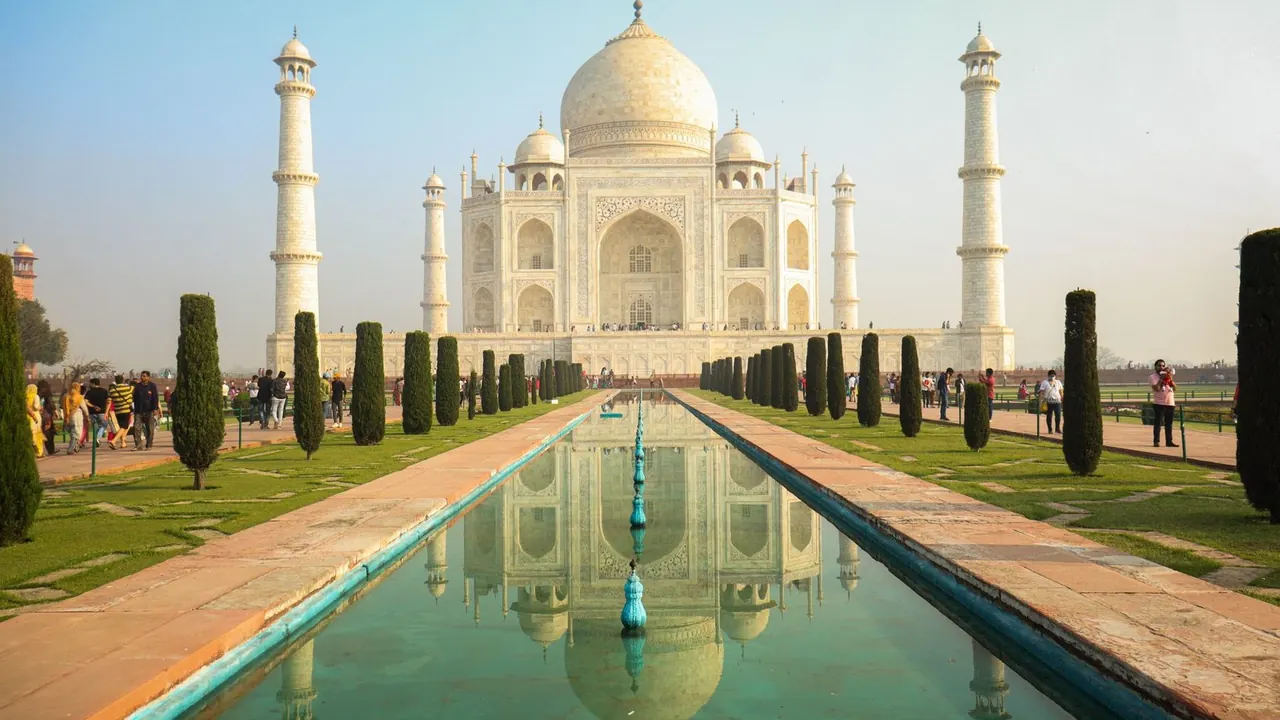
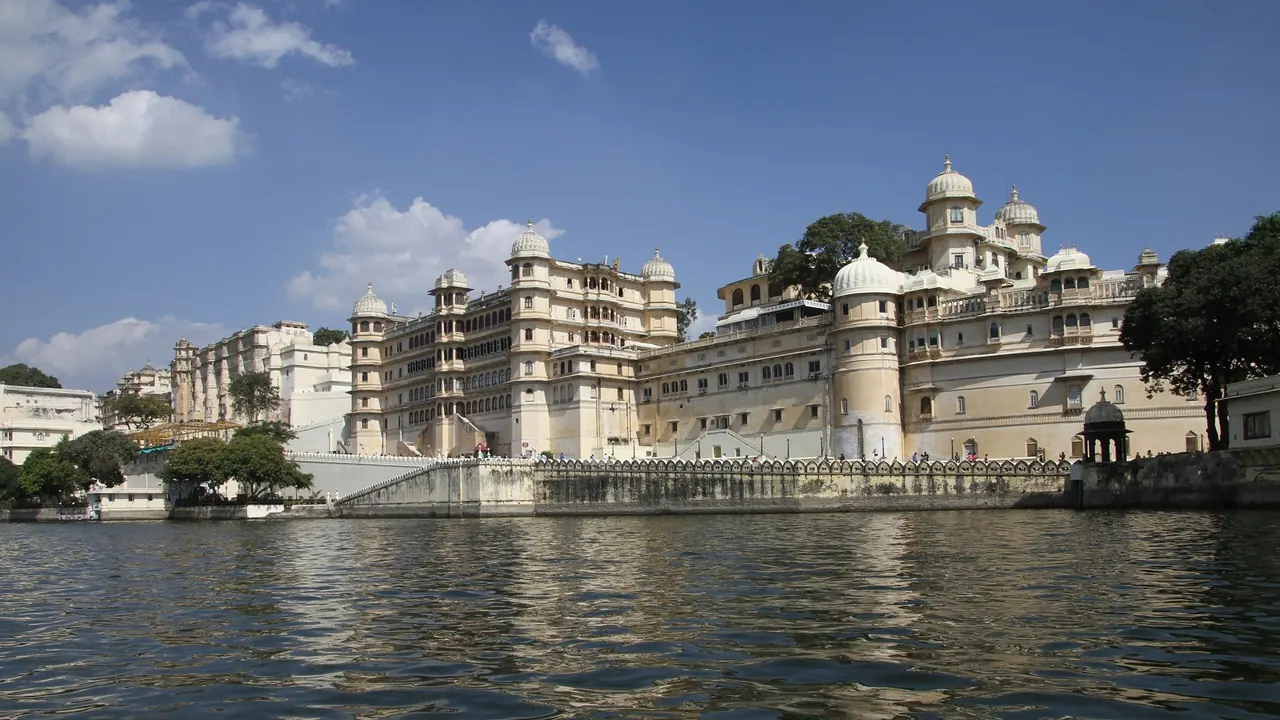
Photos: Agra by Sanket Sawale, Pexels License; Udaipur by Gerd Eichmann, CC BY-SA 4.0, cropped.
Agra or Udaipur?
Our verdict in twelve categories, each scored against the same fixed benchmark cities, and the climate month by month, so you can choose for your trip.
Choose Agra for
- culture and sights
- prices
- day trips
Agra is for the traveller who wants the great Mughal monuments and is happy to skip most other things: the Taj Mahal at dawn, the red sandstone of Agra Fort, the inlay of Itimad-ud-Daulah and the empty capital at Fatehpur Sikri. It works best as a short, focused stop on a route through northern India, with sightseeing early in the morning and the afternoons spent out of the heat.
Choose Udaipur for
- wellness
- live music and the arts
- nature and the outdoors
Udaipur suits a slower trip. Its City Palace and island palaces do not carry the weight of the Taj, but the lakes and Aravalli hills, the spas and sunset terraces, the evening folk shows and the craft workshops make it a place to stay several days and unwind. It is also the easier of the two with children.
Scoreboard
Twelve categories on one fixed scale from 0 to 100. The shaded stretch is the gap between the two.
Your match
Pick a travel style or drag the sliders, and both match scores follow your weighting.
Wins on culture and sights and prices with your weighting.
Wins on wellness and live music and the arts with your weighting.
What matters to you?
Category by category
What the scores mean for a trip.
Beaches & swimming
Neither city has a beach or anywhere to swim outdoors. Agra's Yamuna is a river to admire from the Taj gardens, and Udaipur's lakes are for boat trips, not bathing. The difference is in the hotel pool: in Udaipur it often looks out over Lake Pichola or the hills, while in Agra it is mostly an escape from the afternoon heat.
Food & drink
The two eat equally well for a few days, but in different traditions. Agra is Mughlai country: kormas, biryani and tandoor breads, bedai and jalebi for breakfast in the lanes around Kinari Bazaar, and petha, the candied ash gourd, as its own sweet.
Udaipur cooks Rajasthani and Mewari food: dal baati churma, laal maas and refillable vegetarian thalis, with kachori and poha in the morning. In both cities, restaurants near the Taj and around Lake Pichola sell the location more than the cooking, so the better meals are a few streets back.
Culture & sights
Agra has the greater monuments. The Taj Mahal alone justifies the journey, and Agra Fort, the fine inlay of Itimad-ud-Daulah and Akbar's tomb at Sikandra add a run of Mughal buildings of world rank.
Udaipur's pleasure is different. It centres on one great complex, the City Palace, with the Lake Palace and Jag Mandir on the water and havelis and the Jagdish Temple behind. As a whole townscape it is more romantic, but no single building has the presence of the Taj. Either city is well covered in two or three days.
Nightlife
Neither is a place for a night out, but Udaipur has a little more to its evenings. A sunset drink above Lake Pichola, a handful of lounge bars and some music at weekends make a gentle routine after dark.
Agra ends earlier still, because most visitors are up before dawn for the Taj. A hotel bar or a rooftop with a view of the dome is about as far as it goes, and alcohol is harder to find.
Nature & outdoors
Udaipur has the landscape Agra lacks: lakes ringed by the Aravalli hills, the forested Sajjangarh sanctuary below the Monsoon Palace, short hikes and cycle routes through hill villages, and jungle walks at Kumbhalgarh further out.
Agra sits on a flat, dusty plain with no trails. Its strength is wildlife. Keoladeo at Bharatpur, an hour away, is an outstanding bird wetland in winter, and the Chambal sanctuary has gharials and river dolphins. Birdwatchers may lean towards Agra, but most people will find more time outdoors in Udaipur.
Day trips
Both are fine bases for day trips, but the trips are of different kinds. From Agra the great outing is Fatehpur Sikri, about 40km west. Mathura and Vrindavan's Krishna temples lie to the north, and Gwalior's hilltop fort is a train ride south.
From Udaipur the trips go into Mewar's hill country: the long walls of Kumbhalgarh paired with the marble Jain temple at Ranakpur, the fortress of Chittorgarh, and the temple towns of Eklingji and Nathdwara. These are longer road days that need a car and driver, while some of Agra's best trips can be made by train.
Good for families
Both are hard work with children, but Udaipur is the easier of the two. Boat rides on the lake, puppet shows and the cable car to the hill viewpoints give children something of their own, and lakeside hotels with pools make a calm base.
In Agra there is little beyond the monuments, the crowds and touts at the Taj gates wear families down, and the heat lasts from spring well into autumn. The bear rescue centre on the Mathura road is a real treat for animal lovers, but most families keep the stay short.
Getting around
In both cities you rely on autorickshaws, app taxis and a hired driver, but they are used differently. Agra's sights are spread along and away from the Yamuna on roads with poor or missing pavements, so almost every move is a ride, and only the last stretch to the Taj is done on foot, by electric cart or by cycle rickshaw.
Udaipur's old city around the City Palace, Jagdish Temple and Gangaur Ghat is compact enough to walk, though its steep lanes are shared with motorbikes. You need a driver only for the hilltop sights and the day trips.
Shopping & style
Udaipur offers the better browsing. There are miniature painting workshops near the City Palace, block-printed and bandhani textiles, silver jewellery and puppets, and old bazaars around Hathi Pol and the clock tower that serve locals as much as visitors.
Agra's speciality is pietra dura, the marble inlay used on the Taj, along with leather, shoes and carpets, and Kinari and Sadar bazaars are cheap and lively. Beyond the inlay work the range is narrower, and much of the trade is steered through commission showrooms. In both cities, shop where you choose rather than where a driver takes you.
Affordability
Both are very cheap day to day, with street food, thalis, rickshaws and simple guesthouses costing little. The big expenses fall in different places. In Agra it is the high entry fees foreigners pay at the Taj and the other monuments. In Udaipur it is the temptation to stay in a lake palace or heritage haveli, where rooms reach international luxury prices.
Live music & performing arts
Udaipur gives you a reason to go out in the evening: the folk dance show in the courtyard of Bagore ki Haveli with its pot-balancing dance, puppet shows kept alive by Lok Kala Mandal, and folk musicians at the December crafts fair at Shilpgram.
Agra's evenings rely on staged retellings of the Shah Jahan and Mumtaz Mahal story and dance or music nights in the larger hotels. Its one big event is the spring Taj Mahotsav, with crafts, folk dance and music.
Wellness & relaxation
Udaipur is far the better place to unwind. Ayurvedic massage and yoga classes are easy to find across the old city, the lake hotels run full spas, and an evening on a terrace above the water restores you as well as any treatment.
In Agra, rest happens inside the hotel: a spa and a pool after the dawn visit to the Taj. Outside, the walled gardens of Itimad-ud-Daulah and Sikandra are the only quiet corners in a city of horns and haze.
When should you go?
Pick your month. The climate figures are measured averages, not a forecast.
Agra in July
Udaipur in July
Daytime high, °C
Rainfall in the month, mm
Where the figures come from
Agra has no rain gauge within 25 km of the centre, so its rainfall comes from a gridded climate dataset read at the city rather than from a gauge further away.
Udaipur has no rain gauge within 25 km of the centre, so its rainfall comes from a gridded climate dataset read at the city rather than from a gauge further away.
Temperature and rainfall are climate normals, averaged over the years shown. Agra: 1942-2025 (rainfall 1991-2020) normals, Agra (6.2 km from centre). Udaipur: 1978-2025 (rainfall 1991-2020) normals, Udaipur Dabok (20.6 km from centre).
The two cities have the same broad year. The dry months from October to March are the time to go. From April to June the heat approaches 40°C, so walking between sights is only comfortable early in the morning. The monsoon soaks both from July to September, with well over 250mm in the wettest month. Neither city has a beach, so in the hot months swimming means a hotel pool.
The real difference is in winter. Agra is the cooler of the two, with January highs around 20°C, winter haze over the river and a little rain from January to March. Udaipur is milder, near 24°C in January, and almost completely dry from October to May. It also stays a few degrees cooler than Agra through the rains, and once they end its lakes are full and the hills green, which makes autumn especially rewarding there.
Which traveller are you?
On a culture and arts trip, Agra is the stronger choice for monuments. Udaipur cannot match the Taj Mahal, Agra Fort, the Baby Taj and nearby Fatehpur Sikri, although its evenings offer more, with folk dance at Bagore ki Haveli and traditional puppet shows.
For a relaxing and wellness trip, choose Udaipur. In Udaipur, slowing down is part of the stay itself, so several unhurried days by the lakes come easily. In Agra, rest is mostly a pause inside the hotel between early starts and hot, noisy mornings at the monuments.
On a family trip with children, Udaipur makes the better base for a longer stay, because the days can mix a palace with time on the water. Agra works best as a short stop for the Taj and the Fort. In either city, winter and older children make it easier.
Before you go
| Measure | Agra | Udaipur |
|---|---|---|
| Official language | Hindi, English | Hindi, English |
| Currency | Indian Rupee (INR) | Indian Rupee (INR) |
| Sockets | CM230 V, 50 Hz | CM230 V, 50 Hz |
| Driving side | Left | Left |
| Time zone | UTC+5:30 | UTC+5:30 |
| Emergency number | 108 or 112 | 108 or 112 |
| Elevation | 171 m | 578 m |
| Main airport | Agra Airport / Agra Air Force Station (AGR)6 km from centre2 non-stop destinations | Maharana Pratap Airport (UDR)22 km from centre11 non-stop destinations |
By the numbers
| Measure | Agra | Udaipur |
|---|---|---|
| City population | 1,585,705 | 451,100 |
| People per km² | 8,417 | 12,192 |
| Museums within 10 km | 0 | 3 |
| UNESCO World Heritage sites within 50 km | 4 | 0 |
Where else could you go?
Every comparison below shares a destination with this one, so you can follow Agra or Udaipur somewhere new.