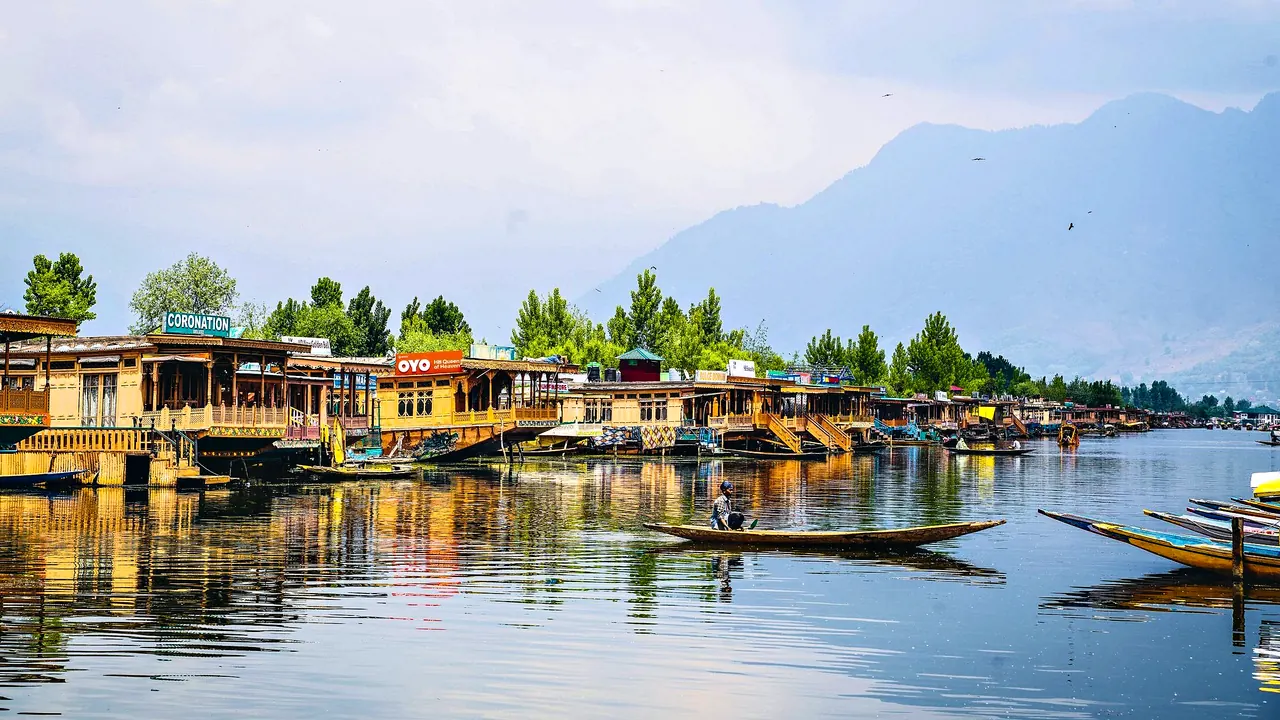
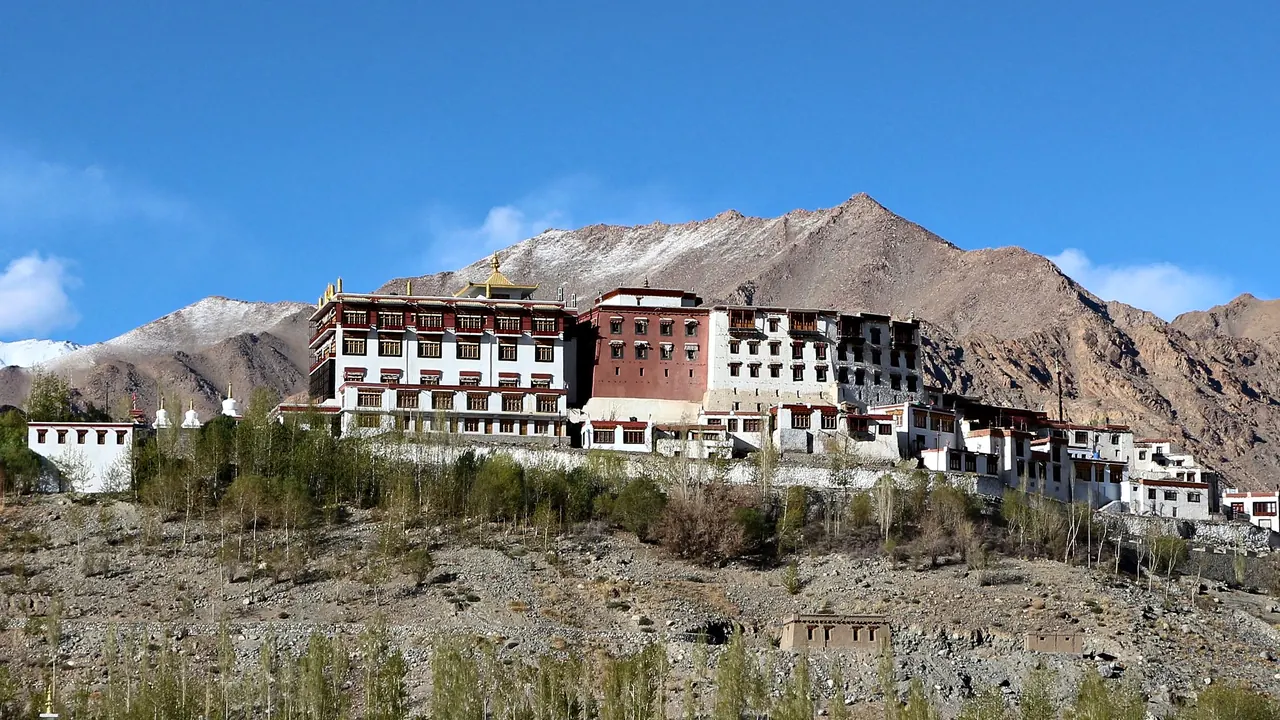
Photos: Kashmir by Ravinder Ravi, Pexels License; Ladakh by Bernard Gagnon, CC BY-SA 4.0, cropped.
Kashmir or Ladakh?
Our verdict in twelve categories, each scored against the same fixed benchmark cities, and the climate month by month, so you can choose for your trip.
Choose Kashmir for
- families
- shopping
- food and drink
Kashmir is the gentler way into the Himalaya. You sleep on a houseboat on Dal Lake, walk the Mughal gardens, eat wazwan in Srinagar and take day drives up to Gulmarg or Pahalgam. It is the better choice for families, for anyone who wants good food and fine crafts alongside the mountains, and for skiers in winter, when Gulmarg has deep powder.
Choose Ladakh for
- culture and sights
- live music and the arts
- day trips
Ladakh asks more and gives back a stranger landscape: a cold, high desert of bare mountains, passes and turquoise lakes, with Tibetan Buddhist monasteries still in daily use on the ridges above the Indus. It suits fit adults and older teenagers who will happily spend days acclimatising in Leh before the long drives and treks, and who care more about monasteries and wild country than about comfort or a good dinner.
Scoreboard
Twelve categories on one fixed scale from 0 to 100. The shaded stretch is the gap between the two.
Your match
Pick a travel style or drag the sliders, and both match scores follow your weighting.
Wins on families and shopping with your weighting.
Wins on culture and sights and live music and the arts with your weighting.
What matters to you?
Category by category
What the scores mean for a trip.
Beaches & swimming
Neither place has a beach, and you swim in neither. In Kashmir the lakes are for living on and gliding across. Dawn shikara rides on Dal and Nigeen are as close as you will get to time on the water. Ladakh's Pangong Tso and Tso Moriri are for looking at: they lie above 4,000m, stay icy all summer and bathing in them is discouraged. Kashmir's larger hotels make a pool slightly easier to find.
Food & drink
Kashmir is clearly the better place to eat. Wazwan, the feast of slow-cooked lamb dishes such as rista and gushtaba, is one of India's great regional cuisines. Everyday life adds pink noon chai, saffron kahwa and girda bread from the kandur bakeries before dawn. Srinagar is where to base yourself for food, because the resorts eat simply.
Ladakh's cooking is plainer and is most rewarding in a village homestay: skyu stew, butter tea, barley and the region's apricots. In Leh most menus are written for trekkers, with momos and thukpa alongside curries, and outside Leh the choice comes down to dal and noodles.
Culture & sights
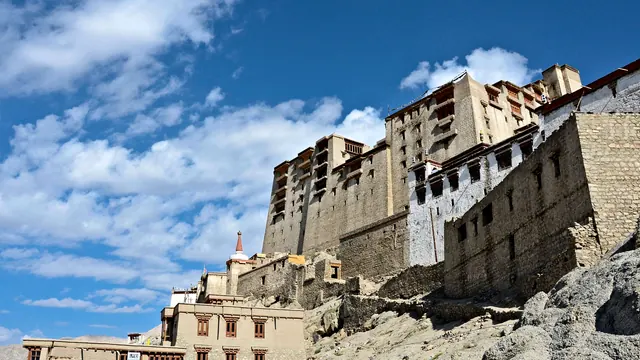
Ladakh has the richer heritage for a visitor. It is one of the best places outside Tibet to see Tibetan Buddhism as a living faith. Leh Palace stands over a mud-brick old town, and monasteries such as Thiksey and Hemis crown the crags along the Indus. Alchi's small temples, about a thousand years old, are a highlight on their own. The sites are spread out, so plan on a car and several days.
Kashmir's heritage is more compact and quite different in character. It has the terraced Mughal water gardens below the Zabarwan range, the carved timber shrines of Downtown Srinagar such as Khanqah-e-Moula and Jamia Masjid, and the stone ruins at Martand. It suits a slow few days rather than a long trip.
Nightlife
Neither place has any real nightlife, and evenings end early in both. The small difference is alcohol. In conservative Kashmir it is served in only a few hotels, while Leh has some rooftop restaurants that serve beer and a couple of quiet bars. In practice, a Kashmir evening means a houseboat veranda or a long dinner, and a Ladakh evening means an early night under the stars before a pre-dawn drive.
Nature & outdoors
Both are among the great mountain regions to visit, but the landscapes are opposites. Kashmir is green: a broad valley of lakes, orchards, pine forest and flower meadows, with skiing at Gulmarg, forest walks and pony treks at Pahalgam, and the alpine lakes of the Kashmir Great Lakes trek beyond Sonamarg.
Ladakh is a cold, bare desert of ochre and violet mountains, with roads crossing passes above 5,000m. Its highlights are the shifting blues of Pangong Tso, the dunes and Bactrian camels of Nubra, and treks through Markha and Zanskar. In winter it adds the Chadar walk and snow leopards in Hemis. The price is a few days acclimatising in Leh before you do anything strenuous.
Day trips
Ladakh has a few more outings from its base that work as day trips. From Leh, easy loops by hired car reach Likir and Basgo in the Sham valley, the royal village at Stok and the stupas and fields around Shey and Thiksey. Nubra and the high lakes are better done as overnight trips.
From Srinagar, the classic day out runs south along the Jhelum, past the saffron fields of Pampore to the ruins at Awantipora and Martand. Kheer Bhawani and Charar-e-Sharif are closer to the city. After that the choices narrow to villages and valleys.
Good for families
Kashmir is much the better choice with children, though nothing there is built for them. A night on a houseboat, a shikara past the floating gardens, pony rides at Pahalgam and the gondola and sledging at Gulmarg are memorable, and people are warm towards children. Long drives and basic medical care outside Srinagar mean toddlers are best kept close to the city.
Ladakh is hard on young children. Leh is already high and the lakes and passes go far higher, so the risk of altitude sickness is real and healthcare is thin. Only fit teenagers who enjoy trekking and camping really get the most out of it.
Getting around
In both places you will rely on a hired car and driver, but Kashmir's distances are easier. Gulmarg is about an hour and a half from Srinagar and Pahalgam about two and a half hours. Shikaras cover the lakes, though you should allow for checkpoints and winter snow on the higher roads.
Ladakh is harder work. Rough passes and landslides can turn a short distance on the map into a full day. Foreign visitors need a permit for Nubra, Pangong and Tso Moriri, and most people fly into Leh because the road routes take two days and open only in the warmer months.
Shopping & style
Kashmir is the place to shop. Its crafts are among the finest in South Asia: pashmina, silk and wool carpets, crewel embroidery, painted papier-mâché, walnut carving and saffron. Polo View and the streets around Lal Chowk hold the established showrooms, and you can visit workshops in Downtown. Buy slowly, because fake pashmina is common and drivers often steer visitors towards showrooms that pay them commission.
Ladakh's shopping is mostly confined to Leh's main bazaar and the Tibetan refugee stalls. You will find thangkas, singing bowls, turquoise jewellery and yak-wool socks, but stock repeats from shop to shop and some of it is not local.
Affordability
Both are cheap day to day, and in both it is transport that pushes the bill up. In Kashmir that means a private driver for most of the trip, fixed union taxi fares in the resorts and higher rates at good houseboats in the peak seasons. Crafts call for hard bargaining. In Ladakh it means the summer flight to Leh, union cars over a week of long drives and protected-area permits, while family guesthouses and homestays stay modest.
Live music & performing arts
Ladakh gives you more you can actually plan around. The monasteries' masked cham dances fill courtyards with brocade, horns and drums. The Hemis festival in early summer is the best known, and an autumn festival in Leh adds folk dance, so a trip can be timed to a date.
Kashmir's Sufiana kalam, chakri songs and Bhand Pather theatre are still living traditions, but you mostly hear them at weddings and shrine gatherings. At best a hotel or houseboat will arrange an evening performance.
Wellness & relaxation
Neither has a spa culture, and the calm they offer is of different kinds. Kashmir's is soft and comfortable: mornings on a houseboat on Nigeen with kahwa on the veranda, afternoons under the chinars in the Mughal gardens, and a few hotel spas in Srinagar and Gulmarg. Ladakh's is more spiritual: early prayers in a monastery, meditation courses near Leh, amchi medicine and simple hot springs at Panamik. The first days at altitude and the long drives there are tiring.
When should you go?
Pick your month. The climate figures are measured averages, not a forecast.
Kashmir in July
Ladakh in July
Daytime high, °C
Rainfall in the month, mm
Where the figures come from
Ladakh has no weather station within reach, so its figures come from a gridded climate model rather than a measured record, and read a broad area rather than one spot.
Temperature and rainfall are climate normals, averaged over the years shown. Kashmir: 1991-2020 normals, Srinagar (3.1 km from centre). Ladakh: 1991-2020 normals, TerraClimate 4 km grid at the town, no weather station within 90 km.
Kashmir has four distinct seasons around Srinagar. Spring brings blossom, but March is also the wettest month at about 99mm. April and May are mild and bright. In July and August the valley floor reaches 30°C, which is a good reason to head up to Pahalgam or Sonamarg, where the high trails open from about June. September and October are the best time for walking the city: dry, with October down to about 23mm, sunny, and the chinars turning red. Winter is cold, and that is when Gulmarg's ski season runs.
Ladakh, measured at Leh, is very dry all year, so the deciding factor is the cold, not the rain. June to September is the main season, with July highs around 26°C and clear high-desert days, though the air is cooler on the passes and at the lakes. By late autumn the mountain roads close, and in January daytime highs stay around -2°C. Only winter specialists come then, for the frozen-river Chadar walk and for tracking snow leopards. For a combined trip, Kashmir works from spring to autumn, while Ladakh fits into the summer window.
Which traveller are you?
On a family trip with children, Kashmir is far easier. Families sleep in Srinagar or Pahalgam, much lower than Leh, and go up Gulmarg's high gondola only for the day. In Ladakh the base itself brings an altitude risk that young children cannot always describe.
For a culture and arts trip, Ladakh has the edge. Its monasteries are still in daily use, and you can quietly attend morning prayers. Alchi holds some of the finest early Buddhist murals in the Himalaya, and the masked cham festivals are worth timing a trip around.
On a shopping trip, Kashmir is the obvious choice. Its pashmina, carpets, papier-mâché and walnut carving are among the finest crafts in South Asia, and many are made in workshops in Downtown Srinagar. Saffron comes from the fields at Pampore. Leh's bazaar is more repetitive, and some of its stock comes from elsewhere.
Before you go
| Measure | Kashmir | Ladakh |
|---|---|---|
| Official language | Hindi, English | Hindi, English |
| Currency | Indian Rupee (INR) | Indian Rupee (INR) |
| Sockets | CM230 V, 50 Hz | CM230 V, 50 Hz |
| Driving side | Left | Left |
| Time zone | UTC+5:30 | UTC+5:30 |
| Emergency number | 108 or 112 | 108 or 112 |
| Main airport | Srinagar International Airport (SXR)12 non-stop destinations | Leh Kushok Bakula Rimpochee Airport (IXL)5 non-stop destinations |
By the numbers
| Measure | Kashmir | Ladakh |
|---|---|---|
| Population | - | 274,289 |
Where else could you go?
Every comparison below shares a destination with this one, so you can follow Kashmir or Ladakh somewhere new.