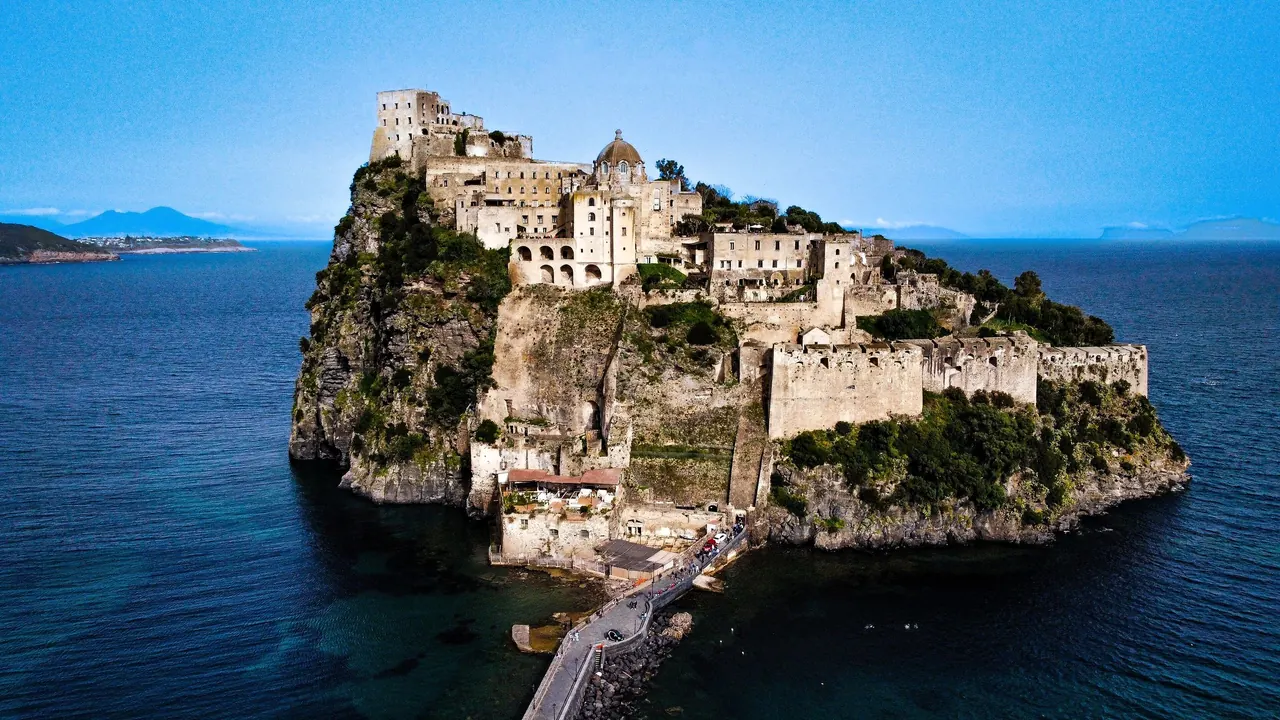
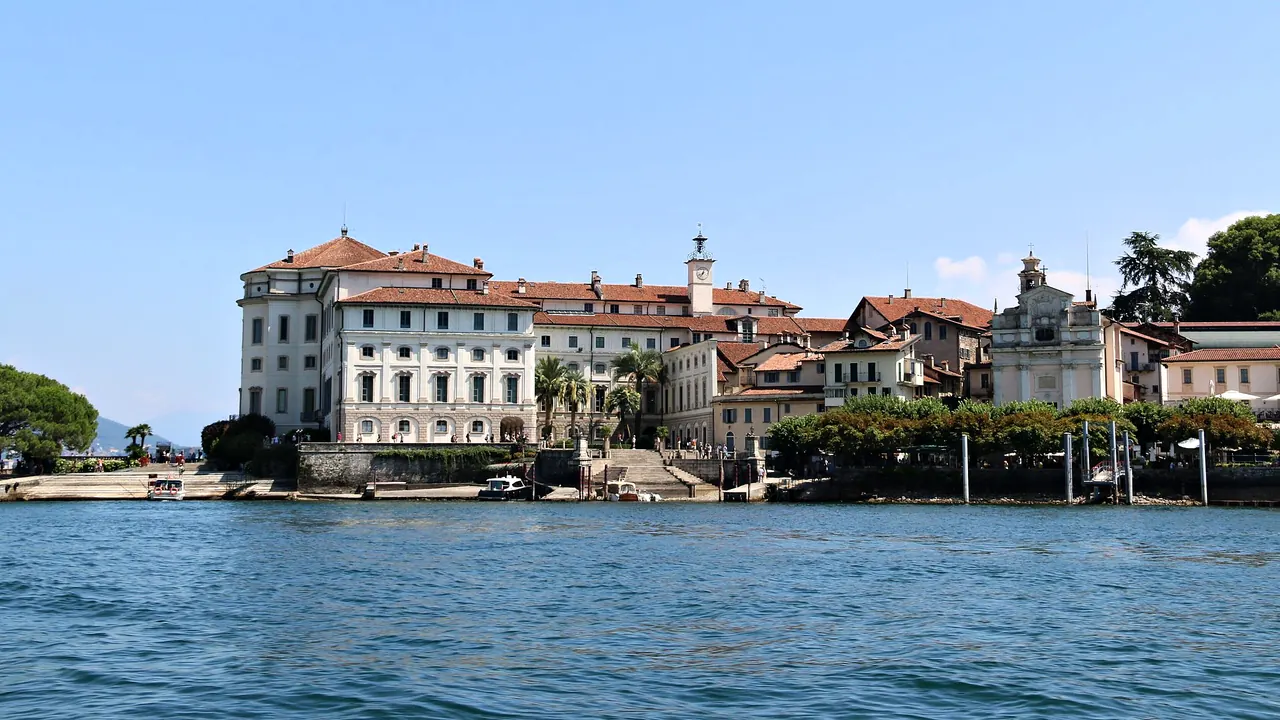
Photos: Ischia by Pipito93, CC BY-SA 4.0, cropped; Lake Maggiore by FrDr, CC BY-SA 4.0, cropped.
Ischia or Lake Maggiore?
Our verdict in twelve categories, each scored against the same fixed benchmark cities, and the climate month by month, so you can choose for your trip.
Choose Ischia for
- wellness
- beaches
- nightlife
Ischia is the choice for a warm-water summer by the sea, with long soaks in between. Its volcanic springs feed hotel pools, terraced thermal parks and wild rock pools in the sea, and it has proper sandy bays for swimming. The trade-off is a small island with modest sights, so the wider world comes by ferry, and the trip works best if you are happy to slow right down.
Choose Lake Maggiore for
- nature and the outdoors
- culture and sights
- getting around
Lake Maggiore is better for people who want to keep moving between gardens, palaces and mountain paths. The Borromean Islands, the Alpine valleys above Locarno and Verbania and easy trains to Milan give each day a different shape, and the ferries and railways make a car-free stay workable. What you give up is the sea: swimming here is a fresh dip from a pebble lido, not the point of the trip.
Scoreboard
Twelve categories on one fixed scale from 0 to 100. The shaded stretch is the gap between the two.
Your match
Pick a travel style or drag the sliders, and both match scores follow your weighting.
Too close to call, 1 point apart
Wins on wellness and beaches with your weighting.
Wins on nature and the outdoors and culture and sights with your weighting.
What matters to you?
Category by category
What the scores mean for a trip.
Beaches & swimming
Ischia is the one to choose for swimming. Maronti's long curve of dark volcanic sand, the calm shallow bay at San Montano and sunset swims at Citara all come with a sea that is properly warm from June onwards.
Lake Maggiore's swimming is fresher and more casual: pebble beaches and stone jetties around Cannobio and Cannero, with gentler sandy entries near Arona. Most people fit in a dip between a garden and a boat ride. Alpine meltwater keeps the water cool, and on parts of the shore it drops off steeply.
Food & drink
Neither is a great food destination, and they are close, but they eat very differently. Ischia's table is southern and coastal: rabbit braised in terracotta, clams and grilled fish in Sant'Angelo and Forio, with crisp Biancolella whites from the terraces of Epomeo. Many visitors are tied to half-board in spa hotels, though, and the better trattorias are up in the hill villages.
Lake Maggiore cooks in a northern, buttery way: perch with sage, risotto and polenta, with Ghemme and Ticino Merlot on the wine list. It has two things Ischia lacks, the rustic grotti in the woods around Locarno and a small fine-dining tier on the Verbania shore. Both fall short on street food and on variety from one evening to the next.
Culture & sights
Lake Maggiore has more to see. The Borromean palaces on Isola Bella and Isola Madre, the frescoed Rocca di Angera, Santa Caterina del Sasso on its cliff and the UNESCO Sacro Monte of Ghiffa give a week of fine half-days, each a boat ride from the next.
Ischia's heritage fits into a couple of days. The Aragonese Castle on its rock is the highlight, and the museum at Villa Arbusta adds real depth with Nestor's Cup from ancient Pithekoussai. After that come gentle village lanes and the Mortella gardens. Neither place has a major museum, but the lake's sights go much further.
Nightlife
Both are places for a long dinner, not a late night. Ischia has a little more going on, mostly in Ischia Porto, where waterfront wine bars and a couple of summer discos stay open late in July and August.
On Lake Maggiore the cocktail bars of Stresa, Verbania, Locarno and Ascona liven up on summer weekends, but by midnight the lakefronts are quiet. A proper night out means the train to Milan.
Nature & outdoors
Lake Maggiore is the stronger outdoors base by some distance. Its northern half runs into the Alps, with ridge walks on Mottarone and Cardada, the genuine wilderness of the Val Grande and the green river pools of the Verzasca valley. The upper lake adds sailing and windsurfing, and cycle paths follow the flatter south.
Ischia's nature is volcanic and compact: chestnut woods and vineyards up Monte Epomeo, steaming ground on the south coast and cliff paths near Sant'Angelo. Its real strength is underwater, in the Regno di Nettuno marine reserve, where snorkelling, diving and the odd dolphin sighting give it something the lake cannot match. A week is enough to see the whole island.
Day trips
Both make excellent bases for outings, but the outings work differently. From Ischia every trip starts on a ferry: Procida's pastel harbour, Naples in about an hour, the Phlegraean Fields via Pozzuoli and, in summer, Capri and Sorrento. Pompeii is possible but makes a long day.
From Lake Maggiore you mostly go by train, often across a border. Milan and the Last Supper are about an hour away, and Lake Orta, the castles of Bellinzona, Lugano and the Centovalli railway to Domodossola are all close. The lake gives more variety of landscape, and Ischia gives the bigger names of ancient history.
Good for families
Lake Maggiore is the slightly easier family choice. The flat southern towns have safe promenades and shallow lidos, there are animals roaming the park at Villa Pallavicino, a summer bobsleigh ride on Mottarone, and the boats themselves feel like an outing.
Ischia suits a simpler beach and pool vacation: gentle water at San Montano and Maronti and warm pools in the thermal parks. Stepped villages and packed summer buses make it harder work, though, and older children can run out of things to do without boat days.
Getting around
Lake Maggiore is easier to move around. Stresa and Arona sit on the railway from Milan and Locarno on the Swiss network, and public ferries link the islands and both shores, so a stay without a car works well from one of those towns. The lake is about 65km long, though, and the hill villages and quieter eastern shore are much easier to reach by car.
Ischia is small but awkward. One coastal road loops the island, its buses are slow and crowded in summer, and visitors' cars are restricted in high season. Microtaxis and water taxis fill the gaps, and simply reaching the island means a ferry or hydrofoil.
Shopping & style
Neither is a shopping trip, and they are about level, but the character differs. Ischia's shopping is one evening stroll along Via Roma and Corso Vittoria Colonna, with linen, sandals, painted ceramics and thermal cosmetics.
Lake Maggiore's best buys come from its weekly markets, above all Luino's big lakefront market, where cheeses, cured meats and leather draw shoppers from both sides of the border. For serious fashion, it is Milan from the lake and Naples from the island.
Affordability
Overall costs are much the same, but they are spread differently. Ischia is an ordinary Italian resort all round, with hundreds of family-run spa hotels on half-board. Costs climb in July and August with sunbeds, thermal park tickets and boat trips.
On Lake Maggiore it depends which shore you stay on. A smaller Piedmont town with an agriturismo or campsite keeps things moderate, while Stresa's grand hotels and anything around Locarno and Ascona, at Swiss prices, cost noticeably more.
Live music & performing arts
Lake Maggiore has rather more to attend, though only in summer. The long-running Stresa Festival holds classical concerts in churches and on the Borromean Islands, Locarno's Piazza Grande stages big open-air concerts and Ascona has its lakefront jazz festival.
Ischia has chamber music in the Mortella gardens, concerts and films at the Aragonese Castle and band music on saint's days, and very little the rest of the year. For opera, both mean a trip to the city, Naples from Ischia and Milan from the lake.
Wellness & relaxation
This is Ischia's great advantage. You come here to take the waters: hotels pipe hot springs into their own pools, the terraced thermal parks at Citara, Lacco Ameno and Casamicciola fill whole days, and Sorgeto's sea pools stay warm even on winter evenings. Mud treatments and the steam caves of Cavascura complete the picture.
Lake Maggiore restores you in a quieter way, through slow boats, silent gardens and empty evenings. There are lake-view hotel spas, and the thermal baths of the Ossola valleys and Bognanco make a good half-day out. The lake itself has no bathing tradition, though, so it is somewhere to unwind rather than to soak.
When should you go?
Pick your month. The climate figures are measured averages, not a forecast.
Ischia in July
Lake Maggiore in July
Daytime high, °C
Rainfall in the month, mm
Where the figures come from
Ischia's temperatures are measured 36 km from the centre, at Grazzanise.
Ischia has no rain gauge within 25 km of the centre, so its rainfall comes from a gridded climate dataset read at the destination rather than from a gauge further away.
Lake Maggiore's temperatures are measured 36 km from the centre, at Lugano.
Lake Maggiore has no rain gauge within 25 km of the centre, so its rainfall comes from a gridded climate dataset read at the destination rather than from a gauge further away.
Temperature and rainfall are climate normals, averaged over the years shown. Ischia: 1991-2020 normals, Grazzanise (36 km from centre). Lake Maggiore: 1991-2020 normals, Lugano (35.9 km from centre).
Ischia is a summer island. The sea is warm enough for swimming from June to early October and reaches about 26°C in August. July and August are long, sunny and dry, but at around 31°C the walking is best left to mornings and evenings. Rain arrives in late September and builds through autumn to about 148mm in November, and winter stays fairly wet. June and September are the best months, when the beaches still work and the heat is gentler. April, May and October suit walking and the thermal pools.
Lake Maggiore is cooler than Ischia in every month, and from spring to autumn it is also much wetter. The island's summers are almost dry, but on the lake May, June and August each bring heavy rain, with May at around 124mm, so a sunny week in summer is never certain. It also gets less sunshine than Ischia through the warm months. Midsummer peaks at about 27°C on the shore, which is comfortable for boat days and garden visits, though it can be hazy. Winter turns the other way round: from December to February the lake is drier than the island, but its short days are cold. Spring and early autumn are the walking seasons.
Which traveller are you?
For a relaxing and wellness trip, Ischia wins easily. Hot springs run into almost every hotel pool, the thermal parks at Citara and Lacco Ameno fill whole days, and Sorgeto's sea pools and the Cavascura steam caves are things Lake Maggiore simply cannot offer.
On a beach and sun trip, Ischia is again the better pick. It has warm sea, sandy bays such as Maronti and San Montano, and long dry summers. The lake gives you fresh water and pebble lidos, which is fine for a swim but not for a week on the sand.
On an outdoors trip, Lake Maggiore pulls clearly ahead. Mottarone, the empty Val Grande and the Verzasca and Maggia valleys give far more walking than Ischia's single mountain, and the upper lake adds sailing and windsurfing on its afternoon breezes.
Before you go
| Measure | Ischia | Lake Maggiore |
|---|---|---|
| Official language | Italian | Italian |
| Currency | Euro (EUR) | Euro (EUR) |
| Sockets | CFL230 V, 50 Hz | CFL230 V, 50 Hz |
| Driving side | Right | Right |
| Time zone | UTC+1, UTC+2 in summer | UTC+1, UTC+2 in summer |
| Emergency number | 112 | 112 |
| Main airport | Naples International Airport (NAP)131 non-stop destinations | Milan Malpensa International Airport (MXP)208 non-stop destinations |
| Public holidays this year | 13 days | 13 days |
By the numbers
| Measure | Ischia | Lake Maggiore |
|---|---|---|
| Population | 62,027 | - |
| People per km² | 1,340 | - |
| Swim season, months above 21 °C | 5 months | - |
Where else could you go?
Every comparison below shares a destination with this one, so you can follow Ischia or Lake Maggiore somewhere new.
- Procidavs Ischia
- Caprivs Ischia
- Amalfi Coastvs Ischia
- Lake Comovs Lake Maggiore
- Swiss Alpsvs Lake Maggiore
- French Alpsvs Lake Maggiore