Japan
Ishigaki
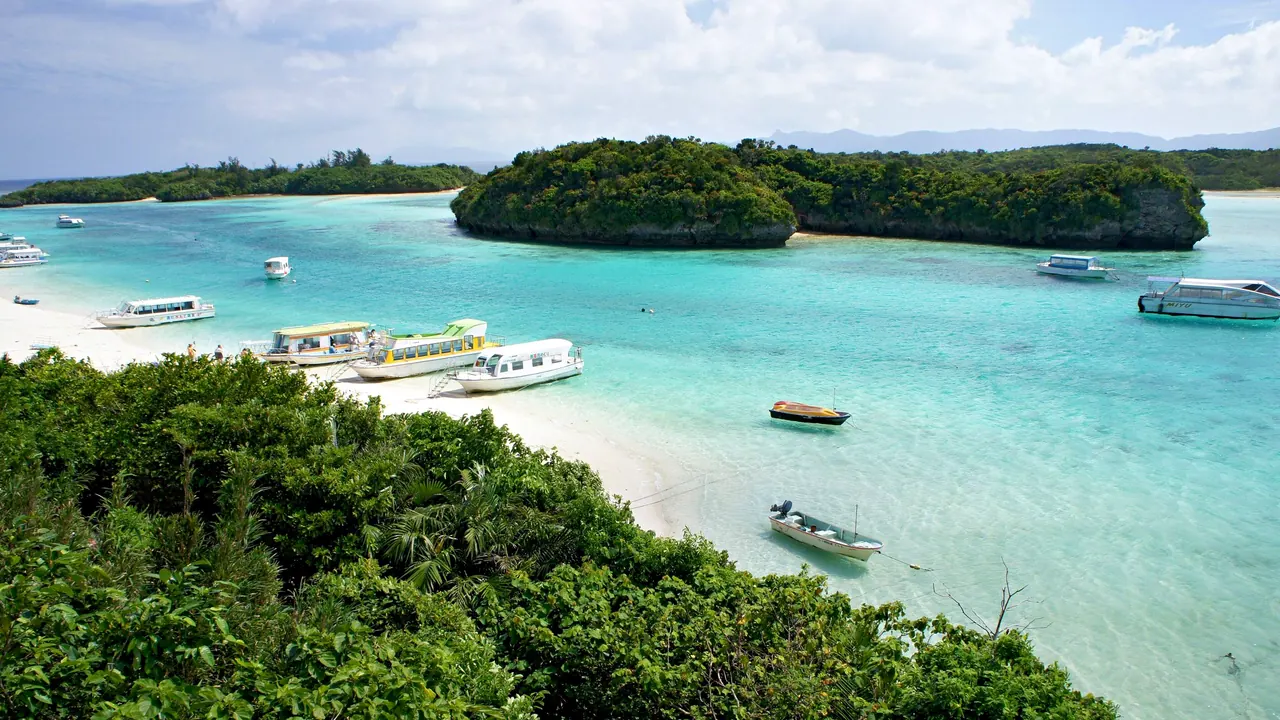
Kabira Bay from above with glass-bottom boats
- Beaches85
- Nature & outdoors80
- Families58
Photo: 663highland, CC BY 2.5, cropped
Match
48
Every category weighted equally
- Beach & sun53
- Culture & arts41
- Food & nightlife42
- Family trip54
- Outdoors54
- Relax & unwind53
- Shopping & style42
- On a budget47
Ishigaki in twelve categories
Our verdict on each, scored 0 to 100 against the same fixed benchmark cities, so a score means the same thing on every page.
Beaches & swimming. Scores 85 out of 100.
Food & drink. Scores 45 out of 100.
Culture & sights. Scores 33 out of 100.
Nightlife. Scores 28 out of 100.
Nature & outdoors. Scores 80 out of 100.
Day trips. Scores 38 out of 100.
Good for families. Scores 58 out of 100.
Getting around. Scores 55 out of 100.
Shopping & style. Scores 28 out of 100.
Affordability. Scores 45 out of 100.
Live music & performing arts. Scores 28 out of 100.
Wellness & relaxation. Scores 48 out of 100.
Ishigaki category by category
Beaches & swimming
85Beach life and the reef are why most people come. The sea is warm enough to swim from about April to November and reaches around 29°C in late summer. The water over the coral is very clear. On Ishigaki itself, Yonehara on the north coast has reef you can reach from the shore, Sukuji and the beaches around Fusaki in the west are calmer and have facilities, and Kabira Bay is famous for its colours but is better seen from a glass-bottom boat than swum in. The finest sand is a short ferry away, at Kondoi on Taketomi, the star-sand coves of Iriomote and Nishihama on Hateruma.
These are small coral beaches, not long resort strands. Reef edges bring currents, and in high summer box jellyfish make the netted, staffed beaches the sensible choice for a swim. Typhoons can wipe out a few days between July and October.
Food & drink
45Eating here means Yaeyama cooking, a local branch of Okinawan food. Look for Yaeyama soba with its thin round noodles and pork broth, goya champuru, island tofu, sea grapes and fish from the reef. Ishigaki beef is the prize, served as yakiniku or steak in the town centre. Evenings centre on the izakaya streets of Misaki-cho near the port, where awamori, the local rice spirit, comes alongside island beer.
The public market arcade sells pineapple, mango in early summer and local salt. Beyond this the range is narrow. There is little fine dining, the outer islands have only a handful of places to eat, and many kitchens close early.
Culture & sights
33Heritage here comes on a small, local scale. The standout is Taketomi, ten minutes by ferry, a preserved village of red-tiled houses, coral-stone walls and white sand lanes, best seen early before the day boats arrive. On Ishigaki, Miyara Donchi is an old Ryukyu-era residence with a stone garden, Torin-ji and the Gongen-do shrine beside it are the oldest religious buildings in the islands, and the Yaeyama Museum tells the story of the islands' crafts and festivals. You can see it all in a day or two. Nobody comes for the sights.
Nightlife
28Evenings out happen in one compact quarter, Misaki-cho and the streets behind the port in Ishigaki town. There you find izakaya, awamori bars, karaoke and small counter bars, and some stay busy past midnight in summer. Elsewhere on the island and on the outer islands, nights belong to stargazing and the hotel bar. There is no real club scene. Going out here means a long, sociable dinner that turns into drinks.
Nature & outdoors
80The best of nature here is underwater and on Iriomote. Some of Japan's richest coral reefs surround the islands, and diving and snorkelling are first rate for much of the year. Manta rays gather off Kabira on Ishigaki's north-west coast, at the site known as Manta Scramble, and in the Yonara channel between Kohama and Iriomote. Iriomote is about forty minutes by ferry and is almost entirely subtropical jungle and mangrove. Visitors kayak up the Urauchi and Nakama rivers, walk to waterfalls such as Pinaisara and Mariyudu, and look out for the rare Iriomote wildcat, though few ever see one.
On Ishigaki itself there are walks up Nosoko and up Omoto, the island's highest peak, and the cliffs at Hirakubozaki and Tamatorizaki. The dark skies are among the best in Japan for stargazing. In the hottest months, outdoor activity is best kept to early morning and late afternoon.
Day trips
38Day trips here mean island-hopping from the ferry terminal in Ishigaki town, and what you visit are villages, not towns. On Kohama, the old settlement has stone walls and hibiscus hedges, with cane fields running down from its central hill. Kuroshima is flat cattle country with a scatter of houses. On Iriomote, a water-buffalo cart crosses the shallows to Yubu, a tiny island laid out as a garden. Hateruma is about an hour across open sea and is the southernmost inhabited island in the country, with a quiet village of coral-stone walls.
Each island has its own character, but there are no historic towns, major heritage sites or wine areas to visit. After two or three of these outings, the list of new places runs out. Yonaguni is a flight away and needs more than a day.
Good for families
58For families who want sea and sand, the islands work well. The staffed beaches at Fusaki and Sukuji have shallow water and nets in jellyfish season. Glass-bottom boats at Kabira Bay show children the coral without anyone getting wet, and the buffalo cart to Yubu and the cycle lanes around Taketomi go down well. The safety and cleanliness you would expect anywhere in Japan apply here too.
What is missing is anything built for children: there is no aquarium, zoo or theme park. The midday sun is fierce from June to September, and with small children a rental car is close to essential.
Getting around
55Ishigaki town is small and easy to walk, and all the island ferries leave from one terminal on its waterfront. Boats to Taketomi, Kohama and Iriomote run often and are quick, though rough seas sometimes cancel the longer crossings. Beyond town, buses are thin. Most visitors hire a car, and the quiet coastal roads make driving easy: the far north of the island is under an hour away. On Iriomote, a car or a tour is likewise the practical way to move. Taketomi is best done by bicycle.
Shopping & style
28Shopping is mostly for island products, found in the covered market arcades in the centre of Ishigaki town. The craft worth looking for is minsa, a woven cotton cloth with a five-and-four pattern. Ishigaki salt, chilli oil, brown sugar, local pottery and awamori make good things to bring home, and a few small studios sell glass and textiles. Beyond that there are souvenir shops and supermarkets. There is no fashion or luxury shopping.
Affordability
45Costs depend heavily on where you stay. In summer the beach resorts on the west and north coasts are expensive, and rental cars, ferries and boat tours add up quickly. Staying in Ishigaki town keeps things moderate: business hotels, soba shops, set lunches and izakaya there cost what they do elsewhere in Japan. The outer islands have few places to stay, and these cost more than their simplicity would suggest. Prices are highest in July and August, and during Golden Week in spring and the Obon week in late summer, when much of Japan travels at once.
Live music & performing arts
28The islands have a strong folk-song tradition, and the way to hear it is in the town's minyo bars. In these small izakaya, musicians play sanshin and sing Yaeyama songs most evenings, and by the end the audience often joins in. The festival calendar adds Eisa and Angama dancing in summer, around Obon. On Taketomi, the autumn Tanadui seed-sowing festival brings days of traditional performance. Beyond these there is no formal concert or theatre life.
Wellness & relaxation
48Most of the rest here comes from the island pace itself: slow mornings, empty roads in the north and evenings watching the sunset and then the stars. The outer islands, Taketomi and Kohama above all, are quieter still once the day visitors leave. Formal wellness is limited to the spas of the larger beach resorts, which offer massage and Okinawan treatments. There is no onsen or bathhouse culture of note, so anyone who wants Japanese bathing should look elsewhere.
Where to stay in Ishigaki
Ishigaki town is the practical base for a first visit. Every island ferry leaves from its waterfront, the izakaya and minyo bars of Misaki-cho are a short walk away, and rooms and meals cost about what they do elsewhere in Japan. It suits island-hoppers, food lovers and anyone without a car, although reaching the better beaches means a drive.
The resort coasts on the west and north suit beach days and families. Around Fusaki in the west you are close to staffed, netted beaches and the sunsets. Kabira and Yonehara in the north put the reef, the manta sites and the dark night skies on your doorstep. Evenings out here are quiet, prices climb in summer, and a rental car is close to essential.
For a second visit, or a few nights within the first, move out to the outer islands. Taketomi and Kohama suit a slow, quiet stay and are at their most peaceful once the day boats have left. Iriomote suits walkers and kayakers who want to reach the rivers and waterfalls early, and you will need a car or a tour to get around. Places to stay on the islands are few and cost more than their simplicity suggests, so most trips pair a base on Ishigaki with one island stay and a single change of base.
When should you go?
Pick a month to see what it is like. The climate figures are measured averages, not a forecast.
Ishigaki in July
Daytime high, °C
Rainfall in the month, mm
The whole year
Shaded against this destination’s own year: the deepest cell is its best month for that figure and the palest its weakest.
Temperature and rainfall are climate normals, averaged over the years shown. Ishigaki: 1991-2020 normals, Ishigakijima (1.3 km from centre).
Before you go
| Measure | Ishigaki |
|---|---|
| Official language | Japanese |
| Currency | Yen (JPY) |
| Sockets | AB100 V, 50 and 60 Hz depending on the region |
| Driving side | Left |
| Time zone | UTC+9 |
| Emergency number | Police 110, fire 119 |
| Main airport | New Ishigaki Airport (ISG)11 non-stop destinations |
| Public holidays this year | 16 days |
By the numbers
| Measure | Ishigaki |
|---|---|
| Population | 47,666 |
| People per km² | 214 |
| Swim season, months above 21 °C | 12 months |
Compare Ishigaki with
Every comparison with a written verdict behind it.