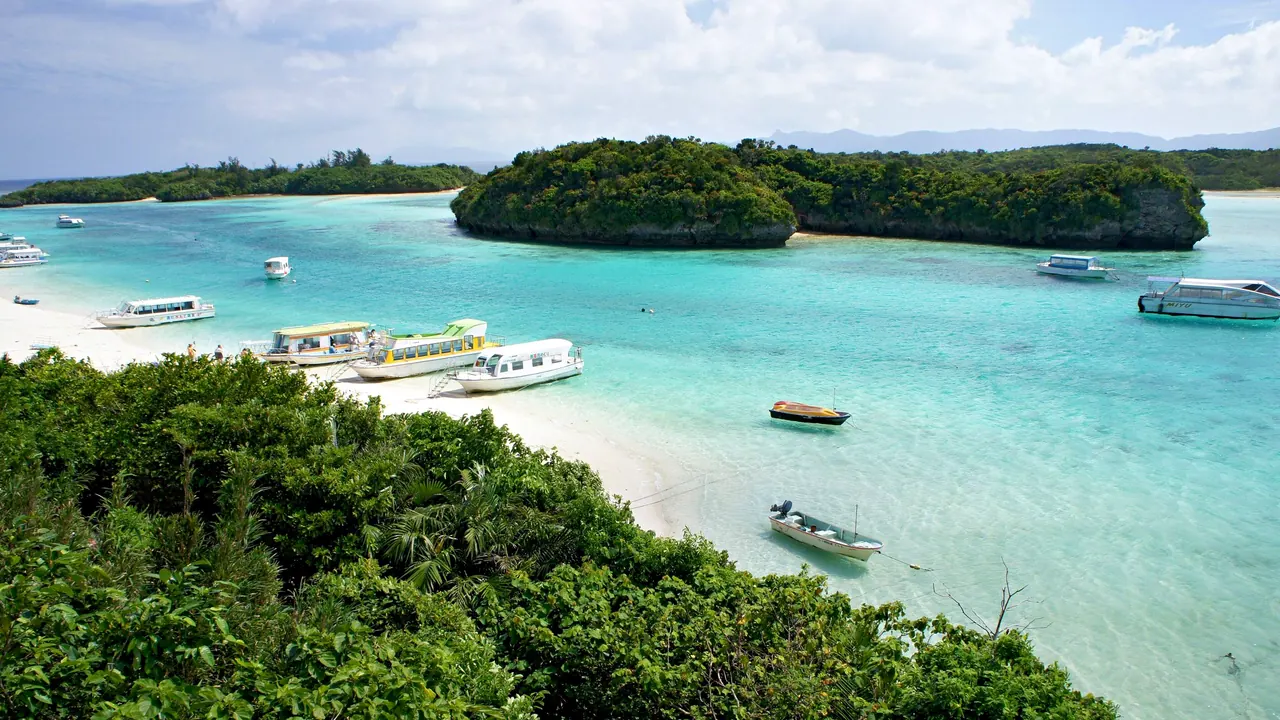
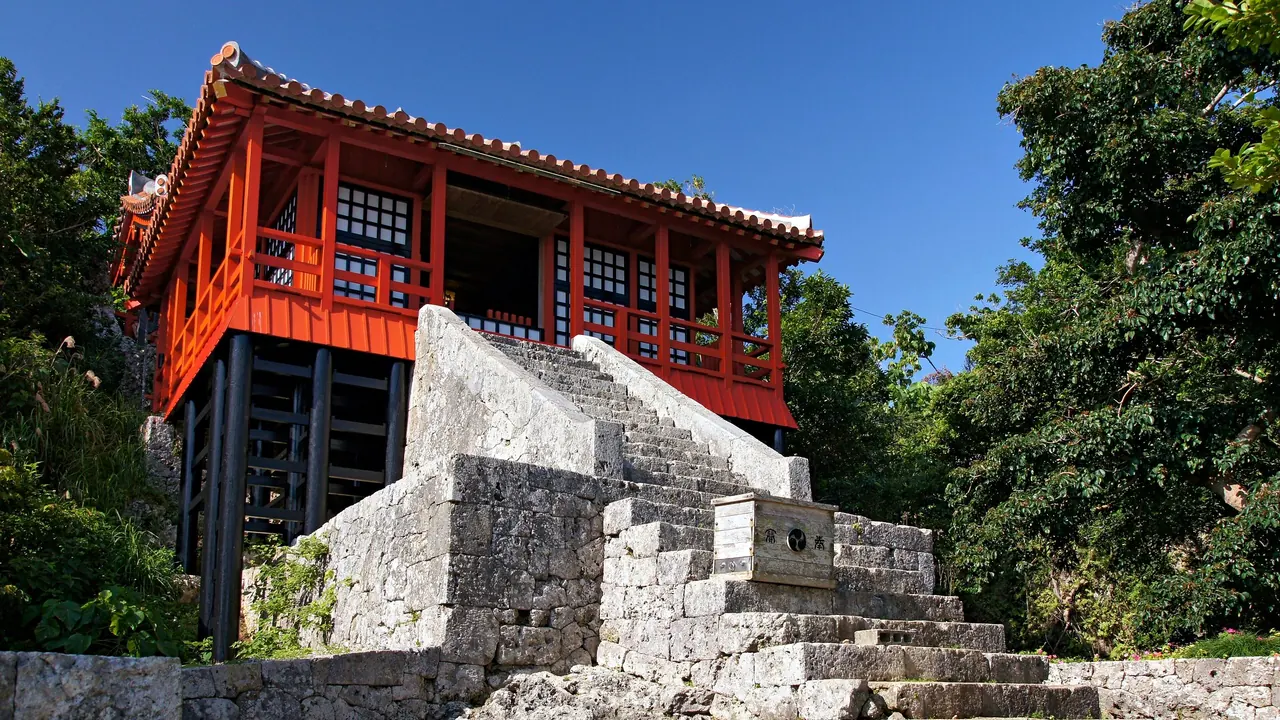
Photos: Ishigaki by 663highland, CC BY 2.5, cropped; Okinawa by 663highland, CC BY 2.5, cropped.
Ishigaki or Okinawa?
Our verdict in twelve categories, each scored against the same fixed benchmark cities, and the climate month by month, so you can choose for your trip.
Choose Ishigaki for
- getting around
Ishigaki suits a traveller who wants a compact island base for reef and jungle. Snorkelling off Yonehara, mantas off Kabira, the mangrove rivers of Iriomote and the village islands of Taketomi and Kohama all lie within easy reach of one ferry terminal and a small, walkable town. You give up range: the food is narrow, nights are quiet, there is little heritage and nothing built for children.
Choose Okinawa for
- culture and sights
- food and drink
- families
Okinawa is the better choice for a fuller trip that mixes sea with everything else. From Naha you get Ryukyu castles and the royal sites at Shuri, the war memorials of the south, the market and izakaya streets, live sanshin most nights and the Churaumi Aquarium for children, with the Keramas a short ferry away. The cost is time on the road, in Naha's traffic and on flights to the outer islands.
Scoreboard
Twelve categories on one fixed scale from 0 to 100. The shaded stretch is the gap between the two.
Your match
Pick a travel style or drag the sliders, and both match scores follow your weighting.
Wins on getting around with your weighting.
Wins on culture and sights and food and drink with your weighting.
What matters to you?
Category by category
What the scores mean for a trip.
Beaches & swimming
The two are level for the beach, but the sand is different. Ishigaki's are small coral beaches: Yonehara lets you snorkel the reef straight from the shore, Sukuji and Fusaki are calmer and staffed, and the finest sand is a short ferry away at Kondoi on Taketomi or Nishihama on Hateruma.
Okinawa's best beaches are longer and whiter, such as Yonaha Maehama on Miyako, or the pale-blue bays of Tokashiki and Zamami an hour from Naha. On the main island, the beaches near Naha and Chatan are largely built resort strands, and you have to head north to Onna and Motobu for better ones.
Food & drink
Okinawa eats better and more widely. In Naha you can have fish bought downstairs at the Makishi Public Market cooked for you upstairs, followed by rafute, thick-noodled Okinawa soba and taco rice, a legacy of the American presence, in the side-street izakaya.
Ishigaki has two real prizes, Ishigaki beef and Yaeyama soba, and a lively izakaya quarter in Misaki-cho. Beyond those the choice is limited, kitchens close early and the outer islands have very few places to eat.
Culture & sights
Okinawa has much more history to see. There is the old royal seat at Shuri with the Tamaudun tombs and Shikinaen garden, castle walls at Nakijin and Katsuren, the sacred grove of Sefa-utaki, and the sobering memorials to 1945 at Mabuni and Himeyuri.
Ishigaki's heritage fits into a day or two: the preserved village on Taketomi, the Miyara Donchi residence, Torin-ji temple and the Yaeyama Museum.
Nightlife
Neither has a club scene, but Okinawa gives you more choice after dark. Naha has the izakaya along Kokusai-dori, the late strip in Matsuyama and standing bars in the Sakaemachi alleys, and Chatan's American Village adds a few clubs at weekends. On Ishigaki, going out means Misaki-cho behind the port and nowhere else.
Nature & outdoors
Both are excellent for nature and evenly matched, with different highlights. From Ishigaki, the subtropical jungle of Iriomote is a short ferry away, with kayaking on the Urauchi river and walks to Pinaisara falls, and Manta Scramble lies off the island's own coast.
Okinawa has the Kerama marine park with turtles close to Naha, humpback whales calving there in late winter, cave diving off Miyako and the Yanbaru forest with its rare birds. Its mantas and Iriomote, though, are a flight away.
Day trips
Okinawa has a little more variety for days out, though both run out of new places fairly soon. From the main island you can visit Kudaka, the island Ryukyu tradition holds sacred, the fukugi-tree lanes of Bise or Ie with its single peak, as well as the Keramas.
Ishigaki's outings are all to village islands: the stone walls of Kohama, the cattle country of Kuroshima, the buffalo-cart crossing to Yubu and the long crossing to Hateruma.
Good for families
Okinawa is clearly the better choice with children. The Churaumi Aquarium, with whale sharks in its main tank, is a full day out on its own, and the Ocean Expo Park, the caves at Okinawa World and Neo Park in Nago fill the days when it rains.
Ishigaki has gentle netted beaches at Fusaki and Sukuji and glass-bottom boats at Kabira Bay, but there is no aquarium, zoo or theme park. In both places a car makes life much easier.
Getting around
Ishigaki is simpler to get around. The town is walkable, every island ferry leaves from one waterfront terminal, and the quiet coastal roads reach the far north in under an hour.
Okinawa has the monorail in Naha, but beyond it you are driving through slow traffic along the west coast, Motobu takes longer than it looks, and Miyako and Ishigaki each need a flight.
Shopping & style
Okinawa has the better crafts. There is yachimun stoneware in Naha's Tsuboya pottery quarter and at the kilns of Yomitan, along with Ryukyu glass, bingata textiles and an outlet mall near the airport. Ishigaki's market arcades are mainly for minsa woven cloth, salt, chilli oil and awamori, and neither has any fashion shopping.
Affordability
Costs are much the same, and in both the cheaper trip is the one based in town. In Naha, the monorail lets you go without a car for part of the stay. Ishigaki town's ferry terminal keeps the outer islands within day-trip reach, which helps because staying on them costs more than their simplicity suggests. On Okinawa, the bigger extra costs are flights to the outer islands and diving trips.
Live music & performing arts
Okinawa's music and theatre go further. Beyond the sanshin izakaya in Naha, the National Theatre Okinawa stages kumiodori court drama, Okinawa City holds the largest eisa gathering, and Koza has a rock and live-house tradition. On Ishigaki it comes down to Yaeyama folk songs in the minyo bars, with Angama dancing at Obon and Taketomi's Tanadui festival in autumn.
Wellness & relaxation
Neither has a hot-spring culture, but Okinawa offers a little more for a restful stay. It has a few spring-fed bathhouses, resort baths on the west coast with sea views, and quiet corners of Miyako and the northern main island. Ishigaki's rest comes mainly from the slow island pace, with starry nights and Kohama after the day visitors leave, and its spas are limited to the large resorts.
When should you go?
Pick your month. The climate figures are measured averages, not a forecast.
Ishigaki in July
Okinawa in July
Daytime high, °C
Rainfall in the month, mm
Temperature and rainfall are climate normals, averaged over the years shown. Ishigaki: 1991-2020 normals, Ishigakijima (1.3 km from centre). Okinawa: 1991-2020 normals, Naha (1.4 km from centre).
Around Ishigaki town the sea is warm enough to swim from April to November, a month longer at each end than on Okinawa. The rain comes in two spells. An early-summer wet spell runs through May and June, and a second, heavier one runs from August to October, peaking at 256mm in September. July falls between them and is the driest and sunniest month of the summer. From June to September daytime highs reach 32°C, which makes midday walking hard work. April and November give the best balance of warm sea and comfortable days, and July suits anyone who can take the heat.
Around Naha the pattern is similar, but the swimming season is shorter, from May to October, and the early-summer rains are heavier, peaking at 285mm in June. A second wet stretch follows in August and September, and July is again the sunny gap between them. On the main island October is the best month for the beach, still warm and drier than the weeks before. From December to March highs sit around 20°C, a little cooler than on Ishigaki. The water is then too cool for most swimmers, but the days suit walking around Shuri and the castle sites.
Which traveller are you?
On an outdoors trip, Ishigaki makes the easier base. The jungle rivers and waterfalls of Iriomote are forty minutes away by ferry, the mantas gather off its own north-west coast, and its dark skies give fine stargazing without long drives.
For a culture and arts trip, Okinawa is clearly the stronger choice. It has the Ryukyu royal sites at Shuri, gusuku castle walls across the main island, the Battle of Okinawa memorials, Ryukyu court dance at the National Theatre and sanshin music every night in Naha.
On a family trip with children, choose Okinawa. The Churaumi Aquarium with its whale sharks, the Ocean Expo Park, Okinawa World and child-friendly west-coast resorts give children plenty to do on days off the beach, which Ishigaki cannot match.
Before you go
| Measure | Ishigaki | Okinawa |
|---|---|---|
| Official language | Japanese | Japanese |
| Currency | Yen (JPY) | Yen (JPY) |
| Sockets | AB100 V, 50 and 60 Hz depending on the region | AB100 V, 50 and 60 Hz depending on the region |
| Driving side | Left | Left |
| Time zone | UTC+9 | UTC+9 |
| Emergency number | Police 110, fire 119 | Police 110, fire 119 |
| Main airport | New Ishigaki Airport (ISG)11 non-stop destinations | Naha International Airport (OKA)37 non-stop destinations |
| Public holidays this year | 16 days | 16 days |
By the numbers
| Measure | Ishigaki | Okinawa |
|---|---|---|
| Population | 47,666 | 1,224,726 |
| People per km² | 214 | 1,013 |
| Swim season, months above 21 °C | 12 months | 12 months |
Where else could you go?
Every comparison below shares a destination with this one, so you can follow Ishigaki or Okinawa somewhere new.