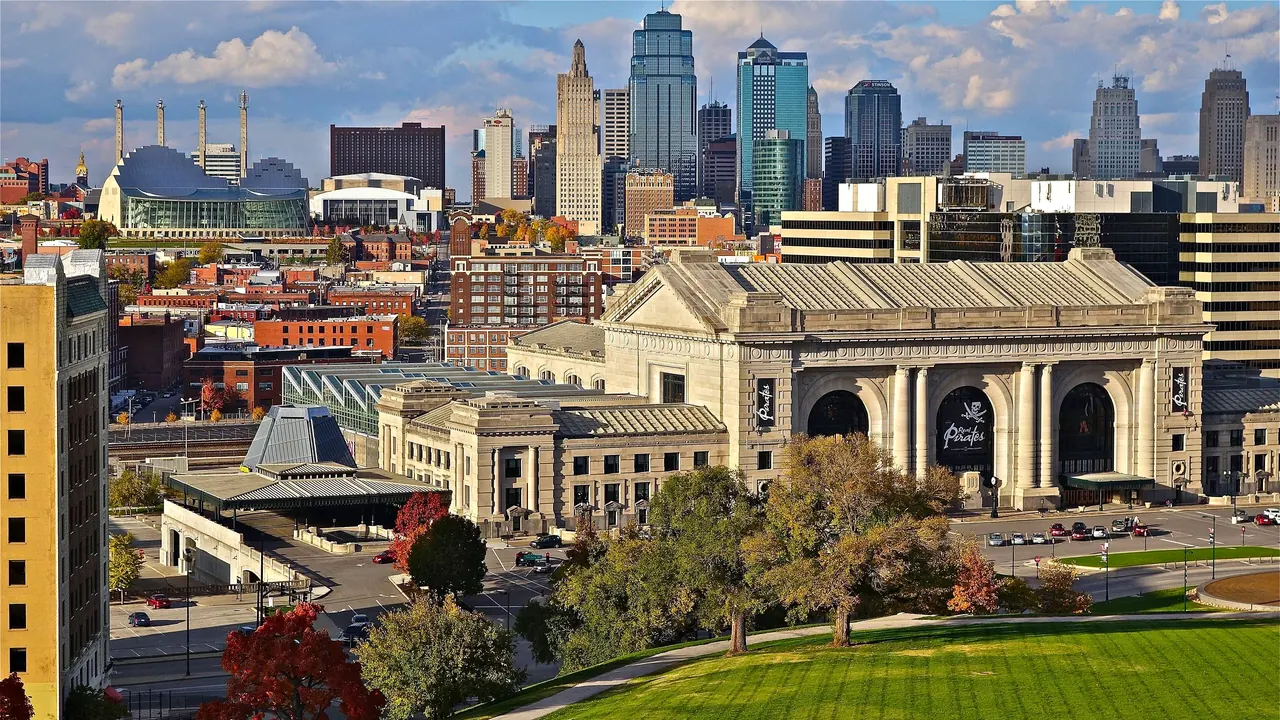
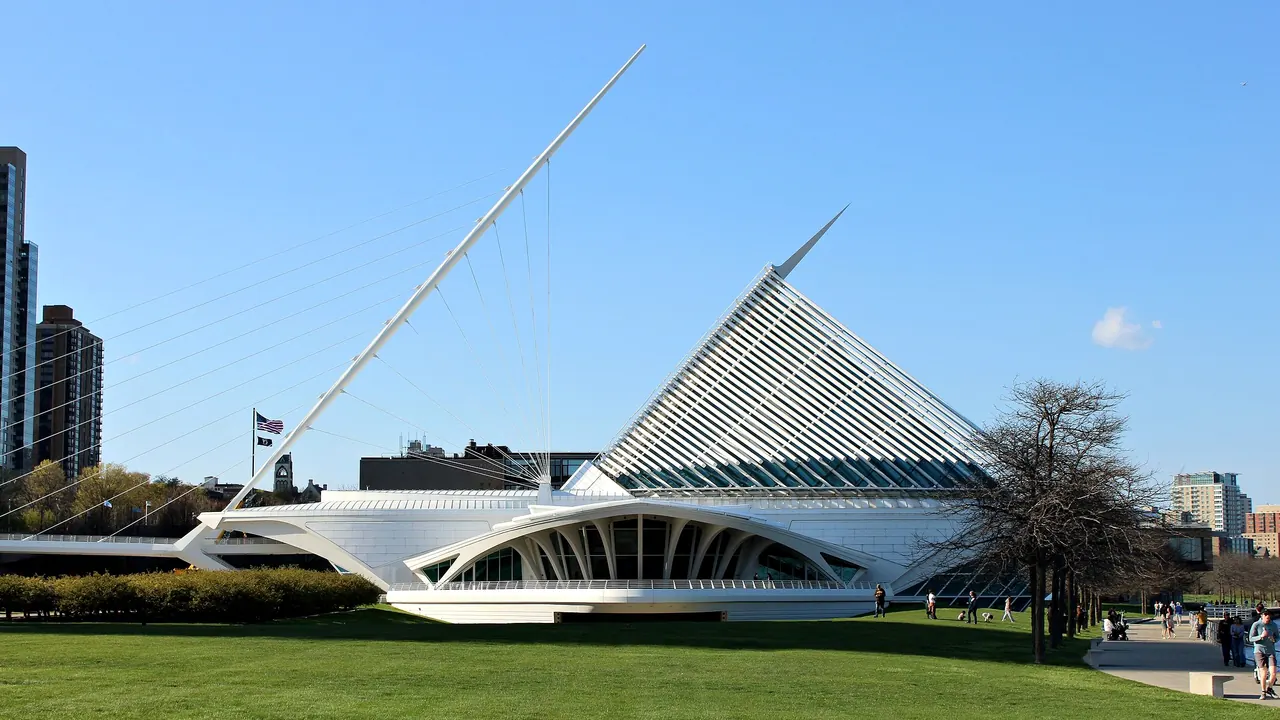
Photos: Kansas City by Dean Hochman from Overland Park, Kansas, U.S., CC BY 2.0, cropped; Milwaukee by Michael Barera, CC BY-SA 4.0, cropped.
Kansas City or Milwaukee?
Our verdict in twelve categories, each scored against the same fixed benchmark cities, and the climate month by month, so you can choose for your trip.
Choose Kansas City for
- food and drink
- shopping
- live music and the arts
Kansas City is the better pick if your trip is about eating and listening. Its barbecue is a real reason to travel, from burnt ends to old smokehouse counters, and the jazz clubs around 18th and Vine give your evenings a character Milwaukee can't quite match. Add the Nelson-Atkins and the WWI Museum and you have a strong two or three days, as long as you're happy to drive between them.
Choose Milwaukee for
- beaches
- day trips
- nature and the outdoors
Milwaukee suits travellers who want water, fresh air and a bit of range. The Lake Michigan shoreline gives it beaches, Olmsted parkland and long cycling trails, the centre is easier to manage without a car, and Chicago is a train ride away for a second city in one trip. Corner taverns, Friday fish fries and the summer festivals make it best between June and September.
Scoreboard
Twelve categories on one fixed scale from 0 to 100. The shaded stretch is the gap between the two.
Your match
Pick a travel style or drag the sliders, and both match scores follow your weighting.
Wins on food and drink and shopping with your weighting.
Wins on beaches and day trips with your weighting.
What matters to you?
Category by category
What the scores mean for a trip.
Beaches & swimming
Kansas City is about as far from open water as a big American city gets. Its swimming means county-park lakes and pools, and they're useful for cooling children down, not for planning a trip around.
Milwaukee at least has a real shoreline. Bradford Beach under the East Side bluffs has sand, volleyball and a summer weekend crowd, and Lake Michigan stretches to the horizon like a sea. The water is cold for most of the year, though, so the beach is a pleasant extra in July and August.
Food & drink
Kansas City has the more compelling food reason to visit, and it comes down to barbecue. Hickory smoke, thick sweet sauce and burnt ends make a whole style of their own, and working through the smokehouses is a trip in itself. The steakhouses and the River Market's immigrant counters back it up.
Milwaukee eats by ritual rather than by a single dish. You get the Friday fish fry, frozen custard, cheese curds, a supper club with a relish tray, and beer brewed nearby. It's satisfying and very regional, but it doesn't pull visitors in the way Kansas City's barbecue does.
Culture & sights
Kansas City has a slight edge, mostly because its museums carry more weight. The Nelson-Atkins is a major collection with outstanding Chinese art, the WWI Museum is the national museum of that war, and the Negro Leagues and jazz museums at 18th and Vine tell stories you won't find elsewhere.
Milwaukee's strengths are architecture and atmosphere. Calatrava's winged art museum on the lake, the Harley-Davidson Museum, the Pabst Mansion and the cream-brick Third Ward all show off its brewing-era wealth, and its old streets hang together better than Kansas City's scattered landmarks.
Nightlife
Milwaukee is the better night out, mainly thanks to the corner tavern, an old-fashioned neighbourhood bar of regulars that turns up all over the city. In summer, beer gardens and patios fill up and Brady Street and Walker's Point give you more to choose from.
Kansas City's nights are split between districts that are a drive apart. There's the enclosed sports-bar block of Power and Light, the student strip in Westport, and quieter craft-beer bars in the Crossroads. Neither city has much in the way of clubs.
Nature & outdoors
Milwaukee has far more outdoors on its doorstep. Olmsted's Lake Park, the ravines and bluffs, long flat bike trails along the shore and a river you can kayak all sit within the city. Kettle Moraine's glacial lakes and hills are close enough for a day out.
Around Kansas City, the land is rolling prairie and farmland. Swope Park is huge and Loose Park's roses are lovely, but for proper hiking you have to drive several hours to the Ozarks.
Day trips
Milwaukee wins easily here. Chicago is an hour and a half away by train, which gives you a whole second city with no car needed. Madison, Frank Lloyd Wright's buildings in Racine, the company village of Kohler and the old mills of Cedarburg add more variety.
Kansas City's outings are modest and need a car. Truman's home in Independence, the college main street in Lawrence, antebellum Weston and the Jesse James house in St Joseph each fill a pleasant half day, but none of them is famous enough to plan around.
Good for families
Both are easy, friendly cities for children, with big zoos, straightforward parking and relaxed baseball evenings. Kansas City has the thrill rides: Worlds of Fun with its roller coasters and water park, and the cluster of Science City, an aquarium and Legoland Discovery around Union Station and Crown Center.
Milwaukee's appeal is calmer and more tied to the lake. Discovery World, the glass Domes and the beach and festival grounds fill a summer stay. Winter limits both cities, but Milwaukee's long, cold months bite harder.
Getting around
Milwaukee is somewhat easier without a car. Downtown, the Third Ward and the lakefront are compact, the Riverwalk links them on foot, and buses reach the zoo and the East Side.
In Kansas City, the Main Street streetcar is the only practical transit line, and anywhere off it means driving. Both cities still want a car or ride-hailing for their outlying sights.
Shopping & style
Kansas City has the better shopping, mainly because of the Country Club Plaza. Its 1920s Spanish-style courtyards gather upmarket and chain stores in one walkable place, and the Crossroads adds galleries and vintage shops.
Milwaukee's shopping is mostly small boutiques in the Third Ward warehouses and food gifts from the Public Market. Here the best souvenirs are cheese, sausage and Harley-Davidson gear rather than clothes.
Affordability
Both are cheap by American standards and ordinary by everyone else's, with modest hotel rates, tax and tips on every bill, and a hire car for anything outside the centre. The savings come from different places. Kansas City's Nelson-Atkins doesn't charge for general entry, and its barbecue lunches are filling.
Milwaukee's lakefront, parks and many festivals cost little, and tavern beer is cheap. The catch is that big summer weekends push its hotel rates up.
Live music & performing arts
Kansas City has the more distinctive music scene. It gave its name to a hard-swinging, blues-based style of jazz, the one Count Basie and Charlie Parker came out of, and small clubs around 18th and Vine and in Midtown still play it most nights, often with jam sessions running late. For a more formal evening, the pleated-shell Kauffman Center houses the symphony, opera and ballet, and the open-air Starlight Theatre stages musicals in summer.
Milwaukee has a full set of resident companies and the ornate 1895 Pabst Theater, but its standout is Summerfest, which fills the lakefront festival grounds with hundreds of acts each summer. In those weeks it is a strong counterweight. For the rest of the year, Kansas City's jazz gives you more to plan an evening around.
Wellness & relaxation
Neither city has a bathing tradition, and in both, wellness mostly means hotel spas. Milwaukee comes out a little ahead. A slow walk along the lake or the Riverwalk is genuinely restful, and the resort spa at Kohler is an easy drive away.
Kansas City's nearest equivalent is the old mineral-water town of Excelsior Springs. Inside the city, quiet time means the rose garden in Loose Park or the Nelson-Atkins sculpture lawn.
When should you go?
Pick your month. The climate figures are measured averages, not a forecast.
Kansas City in July
Milwaukee in July
Daytime high, °C
Rainfall in the month, mm
Where the figures come from
Kansas City has no rain gauge within 25 km of the centre, so its rainfall comes from a gridded climate dataset read at the city rather than from a gauge further away.
Kansas City's sunshine is measured 30 km from the centre, at Kansas City International Airport.
Temperature and rainfall are climate normals, averaged over the years shown. Kansas City: 1991-2020 (sunshine 1981-2010) normals, Kansas City / Harlem (8.2 km from centre). Milwaukee: 1991-2020 (sunshine 1981-2010) normals, Gen Mitchell International Airport (11.2 km from centre).
Kansas City is at its best in late April, May, September and October, when days are warm without being heavy. High summer reaches about 32°C with real humidity, which makes long walks between far-flung sights tiring. Late spring is the wettest stretch, with about 142mm in May, and winter is cold but fairly dry and sunny for the season.
Milwaukee runs cooler and later. January highs sit around -1°C, so winter is for museums and the Domes. June to September is the time to come, with highs near 27°C in July and the most sunshine of the year. The lake is only warm enough to swim from July to early September, when it reaches about 21°C. Kansas City's spring and autumn are the better months for walking, and Milwaukee's summer is the more comfortable one.
Which traveller are you?
On a culture and arts trip, Kansas City is the stronger choice. The Nelson-Atkins and the National WWI Museum anchor the days, and in the evenings you can hear jazz in the city that shaped it, or catch the symphony or ballet at the Kauffman Center.
For an outdoors trip, choose Milwaukee. The lakefront parks, the Oak Leaf Trail and kayaking on the river all start in the city, and the glacial hills of Kettle Moraine are an hour away. Kansas City's prairie edges and reservoirs are gentler and less varied.
For a short city break, Milwaukee is easier. Downtown, the Third Ward and the Riverwalk can be covered on foot or by streetcar, so you don't need a car for a weekend. Kansas City's sights are spread across the metro area, and the driving between them eats into a short stay.
Before you go
| Measure | Kansas City | Milwaukee |
|---|---|---|
| Currency | US Dollar (USD) | US Dollar (USD) |
| Sockets | AB120 V, 60 Hz | AB120 V, 60 Hz |
| Driving side | Right | Right |
| Time zone | UTC-6, UTC-5 in summer | UTC-6, UTC-5 in summer |
| Emergency number | 911 | 911 |
| Elevation | 277 m | 188 m |
| Main airport | Kansas City International Airport (MCI)30 km from centre57 non-stop destinations | General Mitchell International Airport (MKE)12 km from centre34 non-stop destinations |
| Public holidays this year | 14 days | 12 days |
By the numbers
| Measure | Kansas City | Milwaukee |
|---|---|---|
| City population | 508,090 | 577,222 |
| People per km² | 615 | 2,302 |
| Museums within 10 km | 12 | 14 |
| UNESCO World Heritage sites within 50 km | 0 | 0 |
| Swim season, months above 21 °C | - | 1 month |
Where else could you go?
Every comparison below shares a destination with this one, so you can follow Kansas City or Milwaukee somewhere new.
- Chicagovs Milwaukee
- Wisconsin Dellsvs Milwaukee
- Bransonvs Kansas City
- St. Louisvs Kansas City
- Detroitvs Milwaukee
- Minneapolisvs Milwaukee