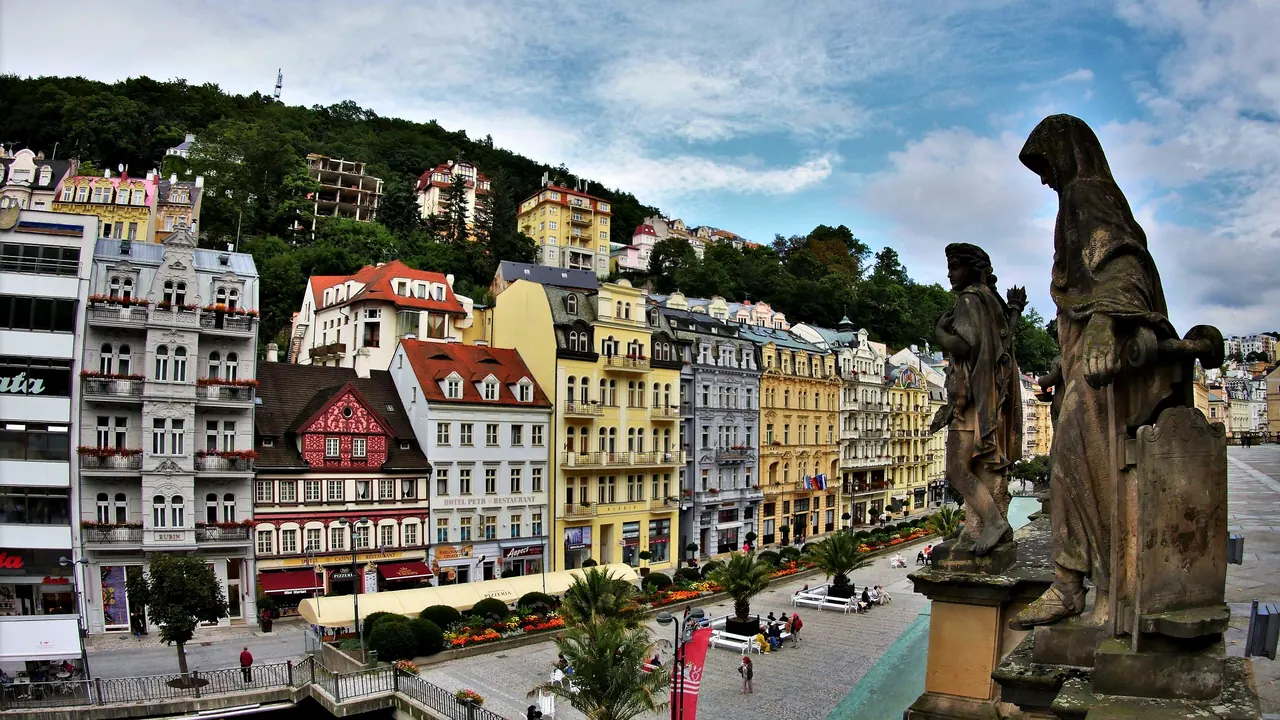
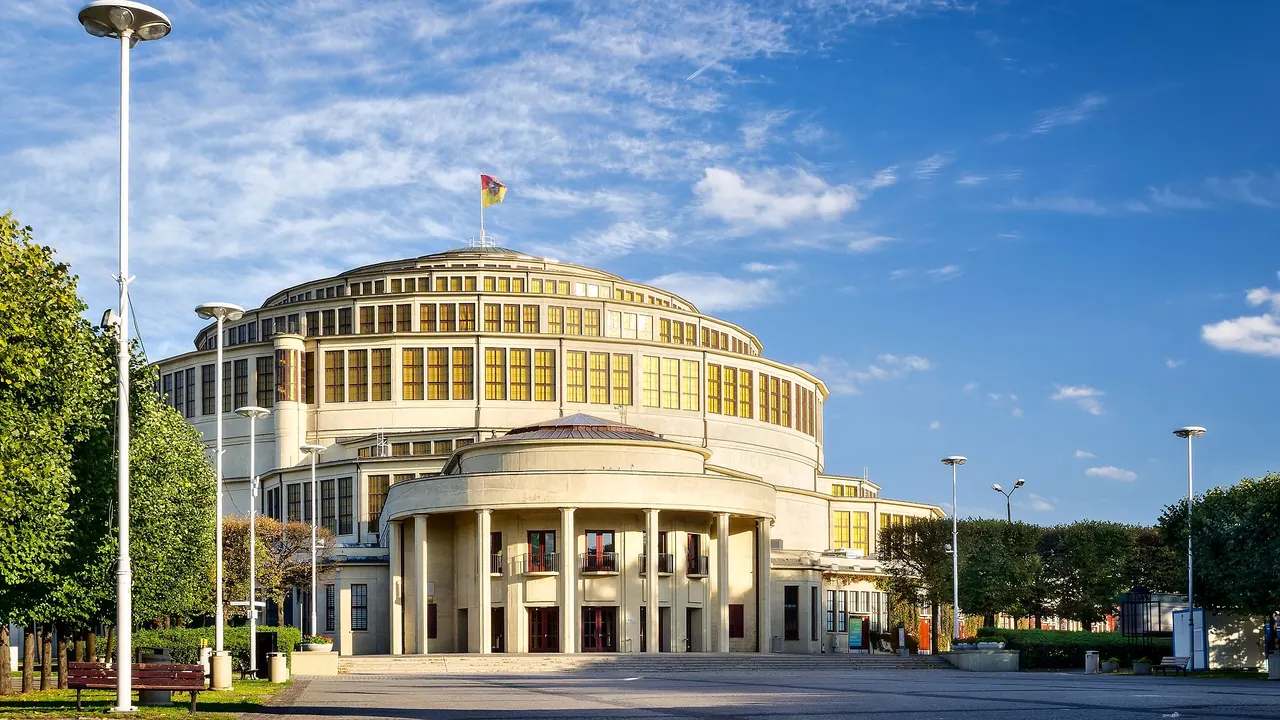
Photos: Karlovy Vary by Rolf Dietrich Brecher from Germany, CC BY-SA 2.0, cropped; Wroclaw by Jar.ciurus, CC BY-SA 3.0 PL, cropped.
Karlovy Vary or Wroclaw?
Our verdict in twelve categories, each scored against the same fixed benchmark cities, and the climate month by month, so you can choose for your trip.
Choose Karlovy Vary for
- wellness
- nature and the outdoors
- day trips
Karlovy Vary is the choice for a slow, restorative stay. The town exists to take the waters, and its spa hotels, drinking cures and forest paths running straight up from the colonnades make it ideal for travellers who want quiet days, early evenings and a Belle Époque setting that is a pleasure to walk through. It also suits anyone who plans to book a proper spa programme and use it as a base for West Bohemia.
Choose Wroclaw for
- nightlife
- families
- live music and the arts
Wroclaw is livelier, cheaper and easier with children. It offers more sights, a busier student bar scene and a serious concert life, and its flat centre makes walking easy. Couples on a city break, groups of friends and families will find more to fill their days and evenings here, and their money goes further.
Scoreboard
Twelve categories on one fixed scale from 0 to 100. The shaded stretch is the gap between the two.
Your match
Pick a travel style or drag the sliders, and both match scores follow your weighting.
Wins on wellness and nature and the outdoors with your weighting.
Wins on nightlife and families with your weighting.
What matters to you?
Category by category
What the scores mean for a trip.
Beaches & swimming
Neither city is a place for a beach vacation, and they come out level here, but the water you will find differs. Karlovy Vary's best swimming is in its warm, spring-fed outdoor pools, with Lake Medard, a flooded mine, about half an hour away.
Wroclaw has sandy beaches along the Oder with deckchairs and drinks stands. They are for lounging on a summer afternoon rather than swimming, and for a real swim you need a pool or a lake out in the countryside.
Food & drink
Wroclaw is the better place to eat. Its Polish comfort food is broader and better handled: pierogi, żurek in a bread bowl, roast duck, cheap milk-bar lunches and a fair number of bistros just off the Market Square that give old dishes a lighter touch. Cellar brewpubs and craft beer add to the evenings.
Karlovy Vary's cooking is narrower: roast pork, dumplings and svíčková, with a few more ambitious kitchens. What it does well is the spa café, with cake and coffee by the Teplá, warm wafers from the colonnade stalls and a glass of Becherovka in the town where the liqueur was invented.
Culture & sights
Wroclaw has more to see and more to fill the days. The vast Market Square with its Gothic Town Hall, the brick churches of Ostrów Tumski lit by the lamplighter at dusk, the gilded Aula Leopoldina, the Centennial Hall and the Racławice Panorama add up to several days of sightseeing. The city's rebuilding after 1945 adds an unusual layer of history.
Karlovy Vary's appeal is the whole town seen as one scene: pastel spa architecture climbing the valley, the colonnades, and the Vřídlo geyser rising inside its hall. It is lovely to walk, but the museums are small and specialised, and a day or two covers it.
Nightlife
The gap here is wide, and it comes down to who is in town after dark. Karlovy Vary's evenings follow the routine of spa guests, so the choice is a Czech pub, one of a few cocktail or wine bars, or a casino, and the streets have mostly emptied by about eleven. The film festival in early summer is the one week a year when the valley fills with crowds, parties and outdoor bars.
In Wroclaw the students set the pace, so timing matters there too: term time is lively, and the city goes noticeably calmer when they leave. Shot bars, craft beer pubs and cocktail bars sit close together in the cellars and courtyards around the Market Square, so a night out is easy to put together on foot. There are only a few dance venues and some industrial spaces for clubbing, and in summer the drinking moves out to the riverbanks.
Nature & outdoors
The two are broadly level, but the landscapes are very different. In Karlovy Vary, beech and spruce forest starts at the edge of the colonnades, so graded spa paths, the funicular to the Diana tower and the Slavkov Forest uplands are right on hand, with skiing at Klínovec about forty minutes away.
Wroclaw is flat and watery, with green spaces such as Szczytnicki Park, the Japanese Garden and kayaking among the Oder islands. Its hills take a drive, but they are more dramatic: the lone peak of Ślęża, the Karkonosze ridge and the sandstone mazes of the Table Mountains.
Day trips
Both make good bases, and the difference is distance. Karlovy Vary's best outings are close: Loket's river-loop castle is twenty minutes away, and the sister spa towns of Mariánské Lázně and Františkovy Lázně, the St Maurus reliquary at Bečov and Plzeň's breweries are all within reach by regional train. Prague is possible as a long day.
Wroclaw's trips are castles and churches spread across Lower Silesia: Książ above its gorge, the timber Churches of Peace, Krzeszów abbey and the Jelenia Góra palaces. A car helps if you want to combine several in a day.
Good for families
Wroclaw is much the better choice with children. The zoo and its Afrykarium are a full day out, the bronze dwarfs turn every street into a treasure hunt, and the water science centre and the summer fountain shows at the Centennial Hall add more. The flat, traffic-free centre makes pushchairs easy.
In Karlovy Vary, children enjoy the geyser, the spouted spring cups, the funicular and the wafers, and Loket's castle makes an easy outing. Otherwise the town is designed for adults on a cure, and its steep slopes wear out small legs.
Getting around
Both are easy without a car, and they work in different ways. Karlovy Vary is a long, narrow strip that you walk along the promenades, with buses and the funicular taking the strain out of the steep sides of the valley.
Wroclaw's old centre is flat and partly pedestrianised. A large tram network and bike lanes along the river reach the zoo and the outer districts, though trams slow down in rush hour.
Shopping & style
Neither city is a shopping destination, but they offer different things. Karlovy Vary sells crafted goods to spa guests: Moser crystal from its own showroom, local porcelain, Bohemian garnets, and jewellers and boutiques along Stará louka.
Wroclaw is more everyday, with malls for the chains, the 1930s Renoma department store and a riverside market hall full of cured meats and pickles. Look for Bolesławiec stoneware, amber and a few vintage shops in Nadodrze.
Affordability
Wroclaw is the cheaper stay. Central hotels cost far less than in Western capitals, milk-bar lunches and beer are very cheap, and trams, museums and the zoo are modestly priced. Only the square's terraces and summer weekends push prices up.
Karlovy Vary is a resort and charges for its setting in the grand spa hotels and colonnade restaurants, especially in festival week. Pubs a street back and the free springs help keep a visit within reason.
Live music & performing arts
Wroclaw has a real concert life. The National Forum of Music runs a full orchestral and chamber season, the opera house stands by the old moat, and the Wratislavia Cantans and Jazz on the Oder festivals add highlights. The theatre is strong but mostly in Polish.
Karlovy Vary offers an evening out rather than a reason to come. Its symphony orchestra, which grew out of the old spa bands, plays light classics, sometimes on the colonnades in summer. Touring shows play in the ornate Fellner and Helmer theatre.
Wellness & relaxation
Karlovy Vary is in a different league for wellness. Thirteen springs feed the colonnades, guests sip from spouted porcelain cups on a centuries-old drinking cure, and sanatoria offer carbonated baths, peat wraps and medical consultations. Public bathhouses are few, though, so it pays to book a spa stay.
Wroclaw has no bathing culture of its own, only hotel spas, an aquapark with saunas and quiet hours on the islands. For taking the waters, you head to Szczawno-Zdrój, about an hour away.
When should you go?
Pick your month. The climate figures are measured averages, not a forecast.
Karlovy Vary in July
Wroclaw in July
Daytime high, °C
Rainfall in the month, mm
Where the figures come from
Karlovy Vary's station stands 156 m above the city centre, so the centre is likely a little warmer than the figures say.
Karlovy Vary has no rain gauge within 25 km of the centre, so its rainfall comes from a gridded climate dataset read at the city rather than from a gauge further away.
Karlovy Vary's sunshine is measured 37 km from the centre, at Cheb.
Temperature and rainfall are climate normals, averaged over the years shown. Karlovy Vary: 1999-2020 (sunshine 1981-2010, rainfall 1991-2020) normals, Karlovy Vary (4.6 km from centre). Wroclaw: 1991-2020 (rainfall 1961-1990) normals, Wroclaw Copernicus Airport (10.5 km from centre).
Karlovy Vary is at its best from late May to September. The wooded valley stays mild, peaking at about 22°C in July and August, which is pleasant for long walks between the springs and up the forest paths and never too hot. Summer is also its wettest time, with July bringing around 95mm of rain, and it gets clearly less sunshine than Wroclaw. Wroclaw is warmer, reaching about 26°C in July, and much sunnier from April to August, which suits lounging on the river beaches and drinking outdoors. Its rain also falls mostly from May to August, but September turns drier and is a fine month for walking the centre.
Neither city has a sea, so summer warmth here means riverbanks, pools and lakes rather than a beach. November is already chilly, with highs of about 5°C in Karlovy Vary and a few degrees more in Wroclaw. From December to February both stay only just above freezing, with Karlovy Vary the colder of the two. This is when a warm thermal pool or a spa hotel earns its keep, while Wroclaw's streets feel grey and bleak.
Which traveller are you?
On a relaxing and wellness trip, Karlovy Vary is the clear pick. Its thirteen springs, medical spa hotels, warm spring-water pools and gentle forest paths make rest the purpose of the stay, while Wroclaw sends you an hour away for anything comparable.
For a food and nightlife trip, Wroclaw wins easily. Cellar brewpubs, pierogi and modern Polish bistros come before nights in the bar-lined courtyards that run past 2am, while Karlovy Vary's evenings end with a quiet drink in the hotel bar.
On a family trip with children, Wroclaw is far easier. The flat, largely car-free centre, the dwarf-statue hunt, the zoo with its Afrykarium shark tunnel and a hands-on science centre beat Karlovy Vary's geyser and funicular, which are fun but quickly done.
Before you go
| Measure | Karlovy Vary | Wroclaw |
|---|---|---|
| Official language | Czech | Polish |
| Currency | Czech Koruna (CZK) | Zloty (PLN) |
| Sockets | CE230 V, 50 Hz | CE50 Hz |
| Driving side | Right | Right |
| Time zone | UTC+1, UTC+2 in summer | UTC+1, UTC+2 in summer |
| Emergency number | 112 | 112 |
| Elevation | 447 m | 111 m |
| Main airport | Václav Havel Airport Prague (PRG)100 km from centre178 non-stop destinations | Copernicus Wrocław Airport (WRO)11 km from centre84 non-stop destinations |
| Public holidays this year | 13 days | 14 days |
By the numbers
| Measure | Karlovy Vary | Wroclaw |
|---|---|---|
| City population | 49,073 | 673,531 |
| People per km² | 830 | 2,299 |
| Museums within 10 km | 2 | 42 |
| UNESCO World Heritage sites within 50 km | 3 | 2 |
Where else could you go?
Every comparison below shares a destination with this one, so you can follow Karlovy Vary or Wroclaw somewhere new.
- Dresdenvs Karlovy Vary
- Praguevs Karlovy Vary
- Leipzigvs Karlovy Vary
- Nurembergvs Karlovy Vary
- Cesky Krumlovvs Karlovy Vary
- Brnovs Wroclaw