Photos: Kefalonia by Tony Hisgett from Birmingham, UK, CC BY 2.0, cropped; Skiathos by Giles Laurent, CC BY-SA 4.0, cropped.
Kefalonia or Skiathos?
Our verdict in twelve categories, each scored against the same fixed benchmark cities, and the climate month by month, so you can choose for your trip.
Choose Kefalonia for
- nature and the outdoors
- food and drink
- culture and sights
Kefalonia suits travellers who want a large, mountainous island to explore over a week or more, with a hire car and the patience for winding roads. The rewards are a wider spread of landscapes, from the fir forest of Mount Ainos to the cliffs above Myrtos and the cave lake at Melissani, plus better taverna cooking and a local wine to taste at the source. Evenings are dinners by the harbour, not nights out.
Choose Skiathos for
- nightlife
- getting around
- families
Skiathos is the easier, livelier choice for a beach vacation with little planning. The airport sits at the edge of town, a bus runs the length of the south coast past sandy, pine-backed bays, and Skiathos Town keeps its bars busy well after midnight in summer. Go there for short distances and lively evenings, accepting simpler food and gentler scenery.
Scoreboard
Twelve categories on one fixed scale from 0 to 100. The shaded stretch is the gap between the two.
Your match
Pick a travel style or drag the sliders, and both match scores follow your weighting.
Too close to call, 1 point apart
Wins on nature and the outdoors and food and drink with your weighting.
Wins on nightlife and getting around with your weighting.
What matters to you?
Category by category
What the scores mean for a trip.
Beaches & swimming
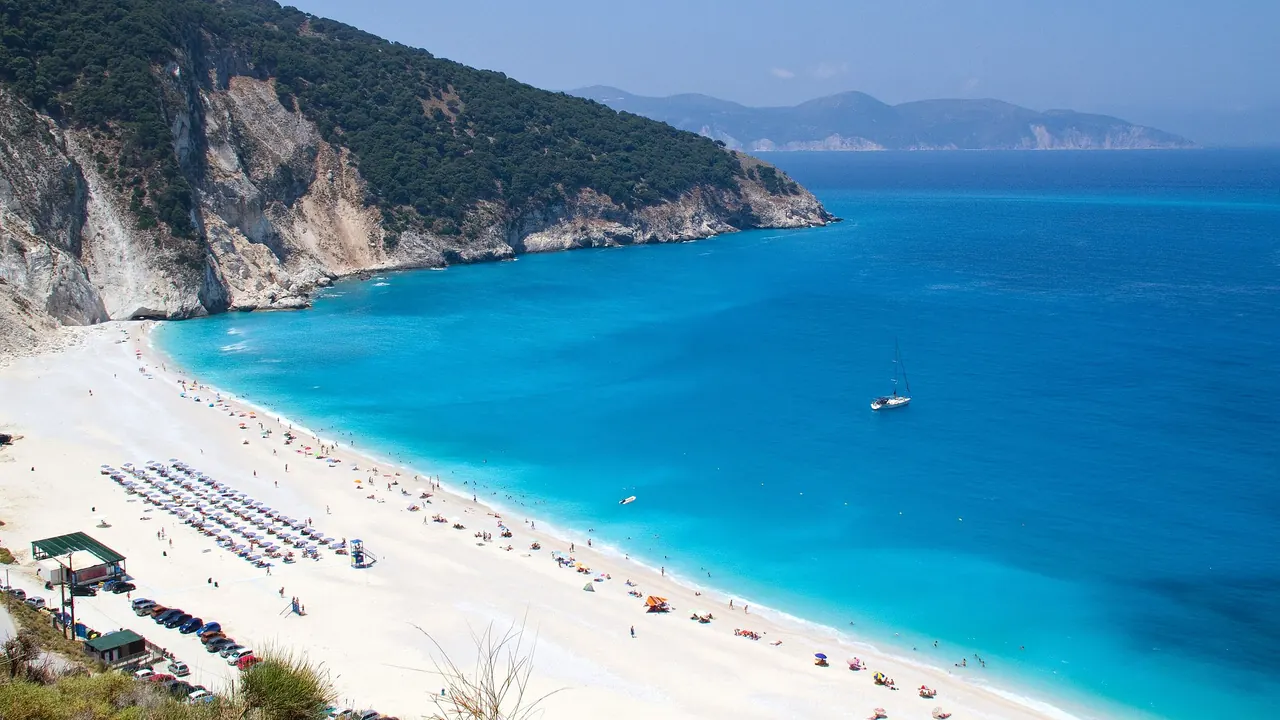
These are two of the strongest beach islands in Greece, and they differ in character rather than quality. Kefalonia's best beaches are dramatic and scattered: the white pebble crescent of Myrtos under its cliffs, Petani and the reddish sand of Xi on the Paliki peninsula, and Antisamos in its green bowl near Sami, so seeing them means driving between coasts.
Skiathos packs dozens of mostly sandy beaches into a small island, with pine trees running almost to the waterline. Koukounaries, Banana Beach and Agia Eleni line the calm south, the north coast is wilder and windier, and Lalaria's pebble arch is reached by boat. It is easier to beach-hop, but the popular sunbed beaches get busier in high summer.
Food & drink
Kefalonia gives a food-minded visitor more to seek out. It has dishes of its own, such as the spiced meat pie, bourbourelia soup and aliada with salt cod, along with thyme honey, mandoles and the Robola wine made in the Omala valley, whose wineries open for tastings. Argostoli adds a waterfront fish market.
Skiathos offers sound Greek island cooking, grilled octopus and Sporades-style pies in the old-quarter tavernas and beach lunches under the pines, but many menus are pitched at package visitors and there is no wine or market culture to explore.
Culture & sights
Neither island is a reason to travel for sights, but Kefalonia has a little more depth. Venetian Fiskardo survived the 1953 earthquake, Assos has its fortress ruins, and the Mycenaean tomb at Tzanata and the museum in Argostoli reach further back in time.
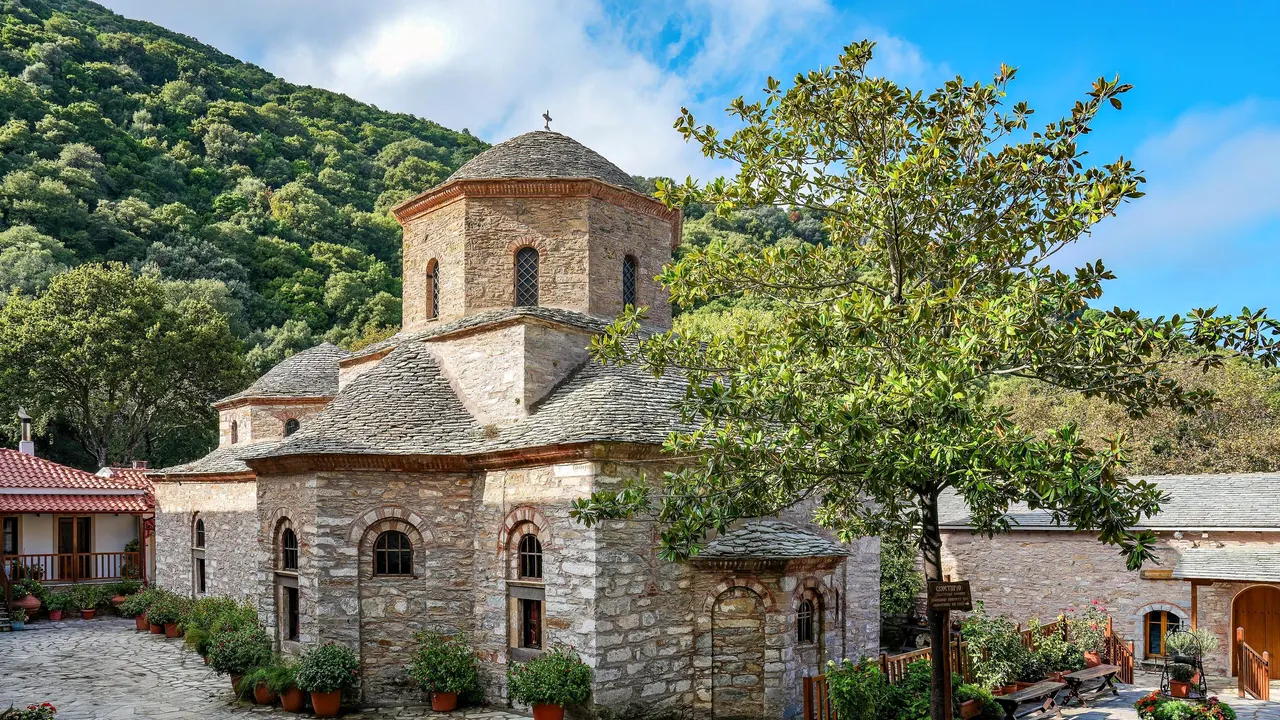
On Skiathos, the clifftop ruins of the Kastro are the highlight, alongside Papadiamantis's house and the Evangelistria Monastery, and two days covers the lot.
Nightlife
This is where Skiathos pulls clearly ahead. Its town has a tight run of cocktail and music bars climbing from the harbour that fill after midnight, and waterfront clubs that keep going until morning in July and August, plus sunset parties at the beach bars around Banana Beach. The crowd is young and international.
Kefalonia's evenings are long dinners and a drink by the water: Argostoli's square and Lithostroto, the bar strip at Lassi, and the harbour bars of Skala and Fiskardo. Anyone after a party island should look elsewhere.
Nature & outdoors
Both islands are unusually green, but Kefalonia has the bigger, wilder landscape. Mount Ainos climbs to about 1,628m through a national park of Greek fir with semi-wild horses, the west coast falls in white cliffs, and the karst hides the Melissani cave lake. Loggerhead turtles in Argostoli harbour are a bonus.
Skiathos is gentler: pine and oak hills crossed by old footpaths, the Strofilia lagoon wetland behind Koukounaries, and boat trips towards the Alonissos marine park, where dolphins are sometimes seen. It is pleasant walking country with nothing high or rugged.
Day trips
Each island has one excellent neighbour and not much beyond it. From Kefalonia, a short ferry from Sami reaches Ithaca and its Odysseus sites, with summer boats to Zakynthos and Lefkada as well, though most of these crossings are seasonal.
From Skiathos, Skopelos is about an hour by ferry, with its steep harbour town and the film-famous clifftop chapel, and Alonissos makes a longer day. Pelion on the mainland is better kept for an overnight stay.
Good for families
Families fare about equally well, as both islands come down to beach days with no built attractions. Kefalonia rewards picking the right base, with sandy Skala, Lourdas and Xi rather than the steep pebble beaches of the north-west, and the Melissani boat ride and turtle-spotting make good outings, though they mean long drives.
Skiathos is simpler to manage: a short airport transfer and gentle sandy bays along one coast road. The trade-off is that road's summer scooter and quad traffic, with few pavements, and the need to stay well away from the town's bar streets.
Getting around
Skiathos is far easier to move around. One road runs about 12km along the south coast with a summer bus stopping at numbered beach stops, water taxis leave from the old harbour, and the airport and ferry port are both on the edge of town. Only the north coast and the Kastro need a scooter, jeep or boat.
Kefalonia is large and mountainous, and a hire car is close to essential. Argostoli to Fiskardo is about an hour and a half of winding road, buses are too rare to rely on, and parking at Myrtos, Assos and Fiskardo is tight in summer.
Shopping & style
Neither island is a place to shop. Each has one resort street of summer clothes, jewellery and souvenirs, and the difference lies in what is worth taking home. On Kefalonia the best buys are the local produce you have already met at the table, plus a few craft stalls around Fiskardo's harbour, while Skiathos Town gives a browser more in its ceramics and jewellery shops, though nearly all of them close once the summer is over.
Affordability
Costs are much the same, middling for a Greek island in summer, with June and September cheaper than July and August on both. On Kefalonia the savings lie in the south around Skala and Lourdas, while yachting Fiskardo and Assos cost more, and a hire car is hard to avoid. Skiathos offers plentiful studios and a cheap bus, but sunbeds and boat trips add up.
Live music & performing arts
Neither island has a regular theatre or music scene. Kefalonia has the more distinctive tradition in its kantades serenades and Argostoli's long-standing philharmonic band, heard at summer concerts in the squares. Skiathos offers concerts at the open-air theatre on the Bourtzi and saints'-day festivals with traditional dancing.
Wellness & relaxation
On both islands, relaxation means pace rather than spas, which are confined to the larger resort hotels. Kefalonia makes slowing down slightly easier, with long lunches in hill villages and quiet corners on the Paliki peninsula and the north-east coast. On Skiathos, peace means staying on the north coast or away from the town, whose nights are loud in high season.
When should you go?
Pick your month. The climate figures are measured averages, not a forecast.
Kefalonia in July
Skiathos in July
Daytime high, °C
Rainfall in the month, mm
Where the figures come from
Kefalonia's temperatures are measured 59 km from the centre, at Zakinthos / Agrilia.
Kefalonia has no rain gauge within 25 km of the centre, so its rainfall comes from a gridded climate dataset read at the destination rather than from a gauge further away.
Skiathos's temperatures are measured 60 km from the centre, at Anchialos Airport.
Skiathos has no rain gauge within 25 km of the centre, so its rainfall comes from a gridded climate dataset read at the destination rather than from a gauge further away.
Temperature and rainfall are climate normals, averaged over the years shown. Kefalonia: 1991-2020 normals, Zakinthos / Agrilia (58.6 km from centre). Skiathos: 1998-2020 (rainfall 1991-2020) normals, Anchialos Airport (59.8 km from centre).
Both islands follow the same summer arc. The sea is warm enough for swimming from June, reaching about 26°C in August, and it stays pleasant into early October. July and August bring daytime highs around 32°C on both, hot enough to make walking the streets or the hills hard after mid-morning, so May, June and September are the comfortable months for pairing beach days with exploring. Kefalonia is also very sunny in midsummer.
Where they part is the wet season. Kefalonia's rain comes on hard from October and peaks in November at around 159mm, so late autumn and winter there are damp as well as cool. Skiathos is drier through the cooler months and a couple of degrees colder in midwinter, but neither island is a beach destination between November and April.
Which traveller are you?
On an outdoors trip, Kefalonia is the clear pick. Mount Ainos gives proper mountain walking in a fir-forest national park, the west coast has towering cliffs, and Melissani and Drogarati add caves, with kayaking and sailing towards Ithaca.
For a food and nightlife trip, it depends which half matters more. Skiathos Town's bar street and late waterfront clubs are far livelier, while Kefalonia eats better, with its meat pie, Robola wineries and harbour tavernas, but goes quiet early.
On a family trip with young children, Skiathos is the easier choice. The airport transfer takes minutes, Koukounaries and its neighbours shelve gently on a bus route, and nobody faces the long, winding drives that Kefalonia's spread-out sights demand in summer heat.
Before you go
| Measure | Kefalonia | Skiathos |
|---|---|---|
| Official language | Greek | Greek |
| Currency | Euro (EUR) | Euro (EUR) |
| Sockets | CF230 V, 50 Hz | CF230 V, 50 Hz |
| Driving side | Right | Right |
| Time zone | UTC+2, UTC+3 in summer | UTC+2, UTC+3 in summer |
| Emergency number | 112 | 112 |
| Main airport | Kefalonia International Airport "Anna Pollatou" (EFL)41 non-stop destinations | Skiathos Island National Airport (JSI)37 non-stop destinations |
| Public holidays this year | 15 days | 15 days |
By the numbers
| Measure | Kefalonia | Skiathos |
|---|---|---|
| Population | 36,064 | - |
| People per km² | 49 | - |
| Swim season, months above 21 °C | 5 months | 5 months |
Where else could you go?
Every comparison below shares a destination with this one, so you can follow Kefalonia or Skiathos somewhere new.
- Skopelosvs Skiathos
- Zakynthosvs Kefalonia
- Lefkadavs Kefalonia
- Halkidikivs Skiathos
- Paxosvs Kefalonia
- Aeginavs Skiathos