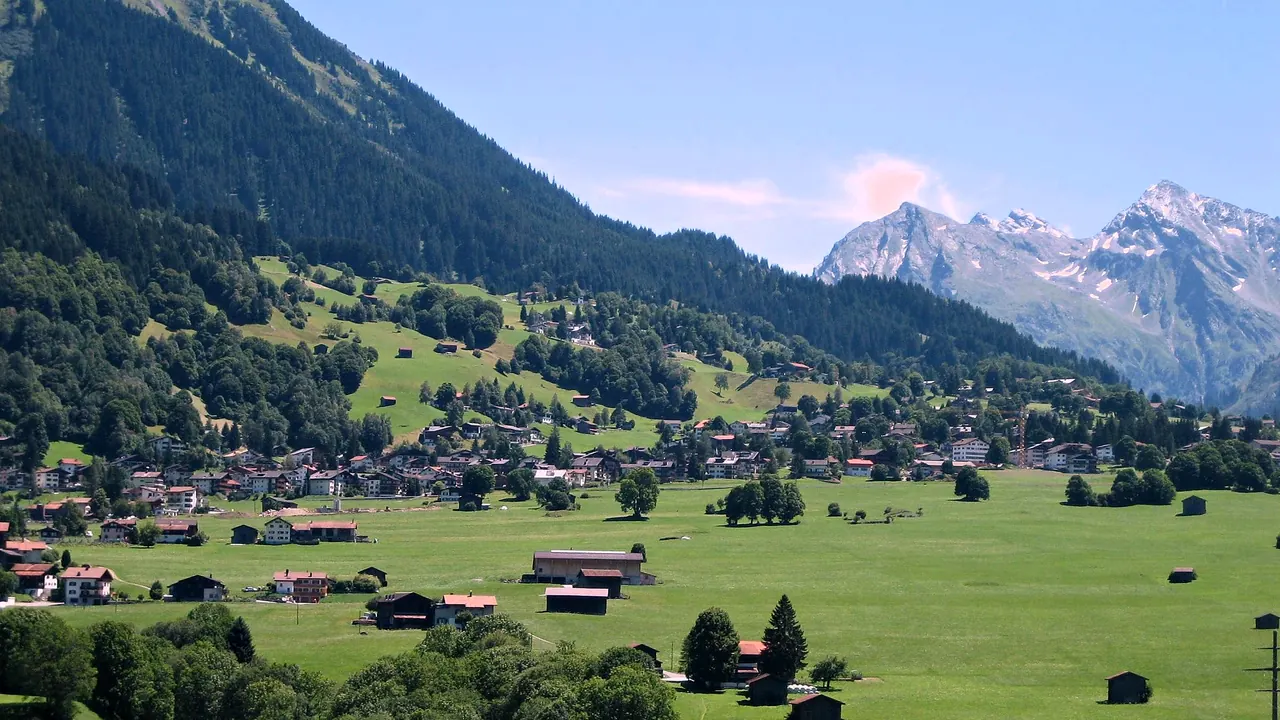
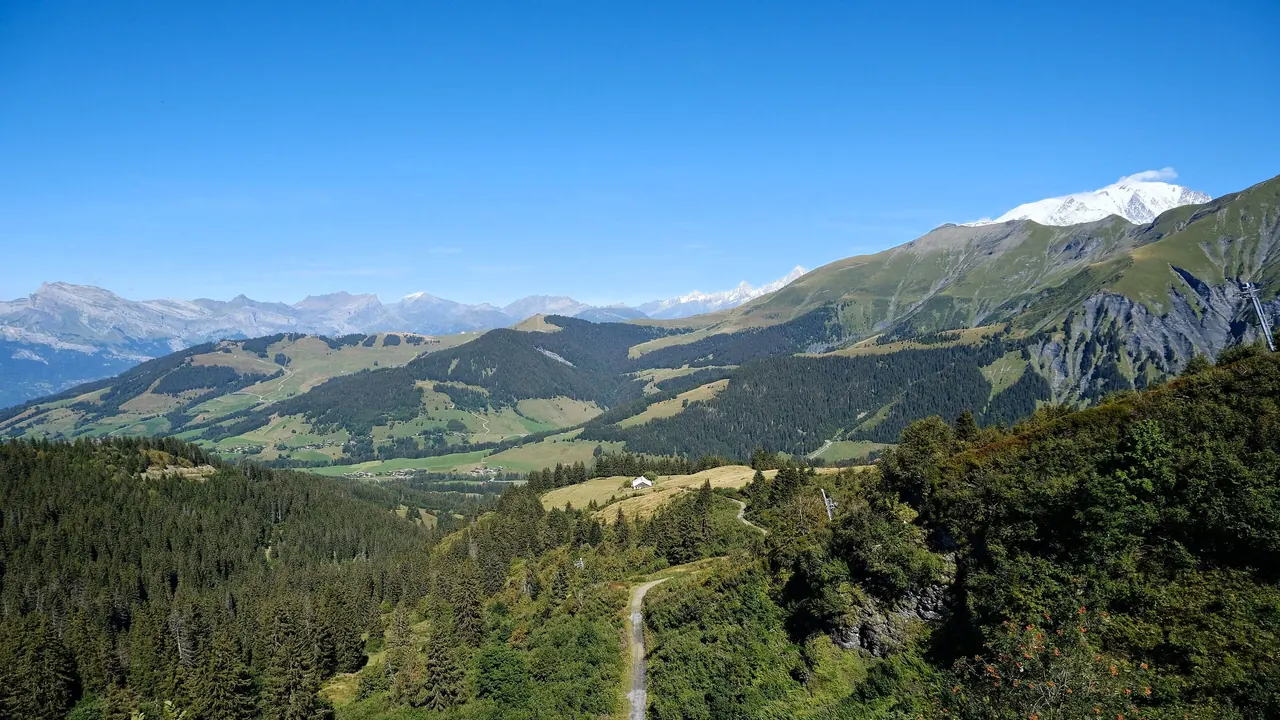
Photos: Klosters by Adrian Michael, CC BY-SA 3.0, cropped; Megève by Guilhem Vellut, CC BY 2.0, cropped.
Klosters or Megève?
Our verdict in twelve categories, each scored against the same fixed benchmark cities, and the climate month by month, so you can choose for your trip.
Choose Klosters for
- getting around
- families
- nature and the outdoors
Klosters is for travellers who want the mountains without the fuss. Trains of the Rhaetian Railway stop in the village, the Gotschna cable car leaves beside the station, and the long Parsenn runs down to the valley are the main event. Evenings are spent by the fire and the village goes to bed early. Pick it if you want skiing or hiking, a car-free stay and very little else going on.
Choose Megève for
- shopping
- food and drink
- nightlife
Megève suits people who want the mountain days to come with more around them. It has Michelin-starred kitchens, piano bars in a cobbled medieval centre, boutiques for cashmere and ski-wear, and wide wooded pistes looking straight at Mont Blanc. With a hire car, you can reach Chamonix, Annecy, Geneva and Aosta from the same base.
Scoreboard
Twelve categories on one fixed scale from 0 to 100. The shaded stretch is the gap between the two.
Your match
Pick a travel style or drag the sliders, and both match scores follow your weighting.
Wins on getting around and families with your weighting.
Wins on shopping and food and drink with your weighting.
What matters to you?
Category by category
What the scores mean for a trip.
Beaches & swimming
Neither village is a swimming destination, but Megève gives a summer swimmer more to work with. It has natural bathing ponds in the neighbouring valleys, indoor and outdoor pools at the Palais, and Lake Annecy about an hour away, warm enough for a proper swim in high summer.
In Klosters, swimming means the outdoor village pool or a chilly dip in the lake at Davos, where the water rarely gets far above 17°C. For anything more, you rely on a hotel pool.
Food & drink
Both villages serve mountain cooking on sunny terraces, but Megève eats on another level. Alongside fondue, tartiflette and Reblochon, it has a cluster of Michelin-starred tables in the village and on Mont d'Arbois, plus farmhouse auberges in the side valleys in summer.
Klosters keeps to Graubünden staples, such as capuns, pizokel, barley soup and Bündnerfleisch, served in wood-panelled stuben and hotel dining rooms, with Pinot Noir from the Bündner Herrschaft. It is good, honest food from a much shorter list, and the hut lunch is often the highlight.
Culture & sights
Neither is a place for sightseeing, though Megève has a little more to wander through. Its car-free centre keeps a medieval layout around Saint-Jean-Baptiste and the clock tower, the Calvaire chapels climb the hillside, and Henry Jacques Le Même's interwar chalets give the resort its look.
Klosters has two stops: Augusto Giacometti's stained glass in St. Jakob and the Prättigau farm museum in the Nutli-Hüschi. After that, its timber chalets and setting are the attraction.
Nightlife
Megève has a proper evening scene, if a polished and grown-up one. There are terrace après-ski, fireside hotel bars, piano and wine bars in the cobbled lanes, and a couple of clubs open late in the peak weeks, though long dinners matter more than dancing.
Klosters is quieter still. A few hotel bars and one or two late spots fill up around Christmas and February, and the rest of the year the village sleeps early. The easy fix is the train up to Davos.
Nature & outdoors
This is where the two are evenly matched, and it is the reason to go to either. Klosters is higher and more rugged. The Gotschna lift opens up the big Parsenn area shared with Davos, known for long descents to the valley. In summer, routes lead into the Silvretta massif, and the Swiss National Park is reachable through the Vereina tunnel.
Megève's skiing in the Évasion Mont-Blanc area is gentler: wide, tree-lined cruising runs suited to intermediates, with Mont Blanc as the backdrop. The lower slopes mean snow at the bottom varies from year to year. In summer, Mont Joly, golf on Mont d'Arbois and the glaciers around Chamonix fill the days.
Day trips
Megève has the richer list of outings, with a mountain town, a lake town, a big city and a second country all within a short drive. Chamonix is about forty minutes away, Annecy and Geneva each about an hour, and Aosta and Courmayeur lie through the Mont Blanc tunnel. The catch is that most of these trips need a car.
From Klosters, the range is smaller but it all runs by rail. Chur's old town, the Maienfeld wine villages, the painted sgraffito houses of Guarda and Scuol, and the UNESCO-listed Albula line to St. Moritz can all be done without driving.
Good for families
Both villages suit families who come for skiing or summer walks, but in different ways. Klosters revolves around the child-friendly Madrisa side, with its summer play and adventure area, and the train takes care of getting there.
Megève offers more off the slopes: an ice rink, a climbing wall and pools at the Palais, sleigh rides and pony rides. These help on a bad-weather afternoon. In both places, lessons and passes for a whole family add up quickly.
Getting around
Klosters is much easier without a car. Two stations on the Rhaetian Railway serve the village, the main cable car is next to the platform, and buses connect the long valley village to the outlying lifts.
Megève is simple inside its walkable centre, with free winter shuttles between lift stations and hamlets. Beyond that, there is no railway. The nearest station is down at Sallanches, many chalets are up steep hillside roads, and most visitors end up renting a car.
Shopping & style
Megève turns browsing into a pastime. Its lanes are lined with designer ski-wear, cashmere and fur, jewellers and Alpine interior galleries selling antler lamps and sheepskin. There are also good cheese shops and the family-founded Allard ski-wear house.
Klosters has one main street of rental and outdoor shops, a few boutiques and delicatessens for cured meats. Anyone who wants a real shopping day goes to Zurich.
Affordability
Both are among the most expensive places in the Alps, and neither offers a cheap way in. Rooms, lift passes, lessons and meals are priced for a wealthy regular crowd in both.
The ways to soften the bill differ. In Klosters, the guest card covers local transport and self-catering apartments help. In Megève, summer and the quieter weeks of January and March cost less, and some visitors stay in the valley towns and drive up.
Live music & performing arts
Live performance is modest in both, so the difference is in style rather than amount. Klosters leans classical, with a summer concert series and occasional recitals in the church. The rest of the year it is a hotel pianist.
Megève's long association with jazz means you may find live sets in a cellar or piano bar in season, plus open-air summer concerts. Neither has a theatre. Klosters sends you to Chur for one.
Wellness & relaxation
Megève does more for anyone who wants to slow down. Its grand hotels compete on spas with hammams and Alpine treatments, the Palais has a public wellness area open to all, and the historic thermal baths of Saint-Gervais are about twenty minutes away.
Klosters relies on hotel spas and the calm of the place. For thermal bathing, you go to Scuol through the Vereina tunnel, under an hour away, or to the public pool and sauna complex in Davos.
When should you go?
Pick your month. The climate figures are measured averages, not a forecast.
Klosters in July
Megève in July
Daytime high, °C
Rainfall in the month, mm
Where the figures come from
Klosters's temperatures are measured 51 km from the centre, at S. Valentino Alla Muta.
Klosters's station stands 280 m above the city centre, so the centre is likely a little warmer than the figures say.
Klosters has no rain gauge within 25 km of the centre, so its rainfall comes from a gridded climate dataset read at the destination rather than from a gauge further away.
Megève's temperatures are measured 29 km from the centre, at Bourg-St-Maurice.
Megève's station stands 162 m below the city centre, so the centre is likely a little cooler than the figures say.
Megève has no rain gauge within 25 km of the centre, so its rainfall comes from a gridded climate dataset read at the destination rather than from a gauge further away.
Temperature and rainfall are climate normals, averaged over the years shown. Klosters: 1991-2020 normals, S. Valentino Alla Muta (51.4 km from centre). Megève: 1999-2020 (rainfall 1991-2020) normals, Bourg-St-Maurice (29.1 km from centre).
Klosters is the cooler and more sharply seasonal of the two. Winter days hover around 2°C, and those are its driest months. Summer is mild, with highs near 20°C, which is good for hiking but brings the heaviest rain of the year, up to 141mm in August. That usually means afternoon showers on the walking routes. June to September is the time for meadows and huts, and December to March for snow.
Megève is several degrees warmer in every month. July reaches about 27°C, warm enough for afternoons at the bathing ponds and Lake Annecy, and May and September are pleasant for walking. Its rain is spread more evenly but peaks in winter, with 140mm in December, while summer is comparatively dry. So the two are opposites: Klosters is wettest in summer and Megève is wettest in winter.
Which traveller are you?
On a food and nightlife trip, Megève is the clear choice. Its Savoyard cooking is topped by several Michelin-starred kitchens, and evenings move from après-ski terraces to piano bars, wine bars and a couple of late clubs. Klosters offers hearty stuben dinners and then quiet.
For a shopping trip, Megève again. Its cobbled lanes hold designer ski-wear, cashmere, jewellers, Alpine interior galleries and the old Allard house. In Klosters there are mainly rental shops and a few boutiques on one street, and a real shopping day means going to Zurich.
On a family trip with children, Klosters edges ahead for families without a car. Trains arrive in the village, the Madrisa side has a summer adventure area and gentle beginner slopes, and the traffic-calm streets make days easy. Megève has more indoor fallbacks but needs driving.
Before you go
| Measure | Klosters | Megève |
|---|---|---|
| Official language | French, German, Italian, Romansh | French |
| Currency | Swiss Franc (CHF) | Euro (EUR) |
| Sockets | CJ230 V, 50 Hz | CE230 V, 50 Hz |
| Driving side | Right | Right |
| Time zone | UTC+1, UTC+2 in summer | UTC+1, UTC+2 in summer |
| Emergency number | 112 | 112 |
| Elevation | 1,179 m | 1,027 m |
| Main airport | Zürich Airport (ZRH)120 km from centre226 non-stop destinations | Geneva International Airport (GVA)58 km from centre150 non-stop destinations |
| Public holidays this year | 9 days | 11 days |
By the numbers
| Measure | Klosters | Megève |
|---|---|---|
| Population | 4,499 | 2,893 |
| People per km² | 20 | 66 |
| Museums within 10 km | 3 | 2 |
| UNESCO World Heritage sites within 50 km | 1 | 1 |
Where else could you go?
Every comparison below shares a destination with this one, so you can follow Klosters or Megève somewhere new.
- Davosvs Klosters
- Saint-Gervais-les-Bainsvs Megève
- La Clusazvs Megève
- Le Grand-Bornandvs Megève
- Flainevs Megève
- Arosavs Klosters