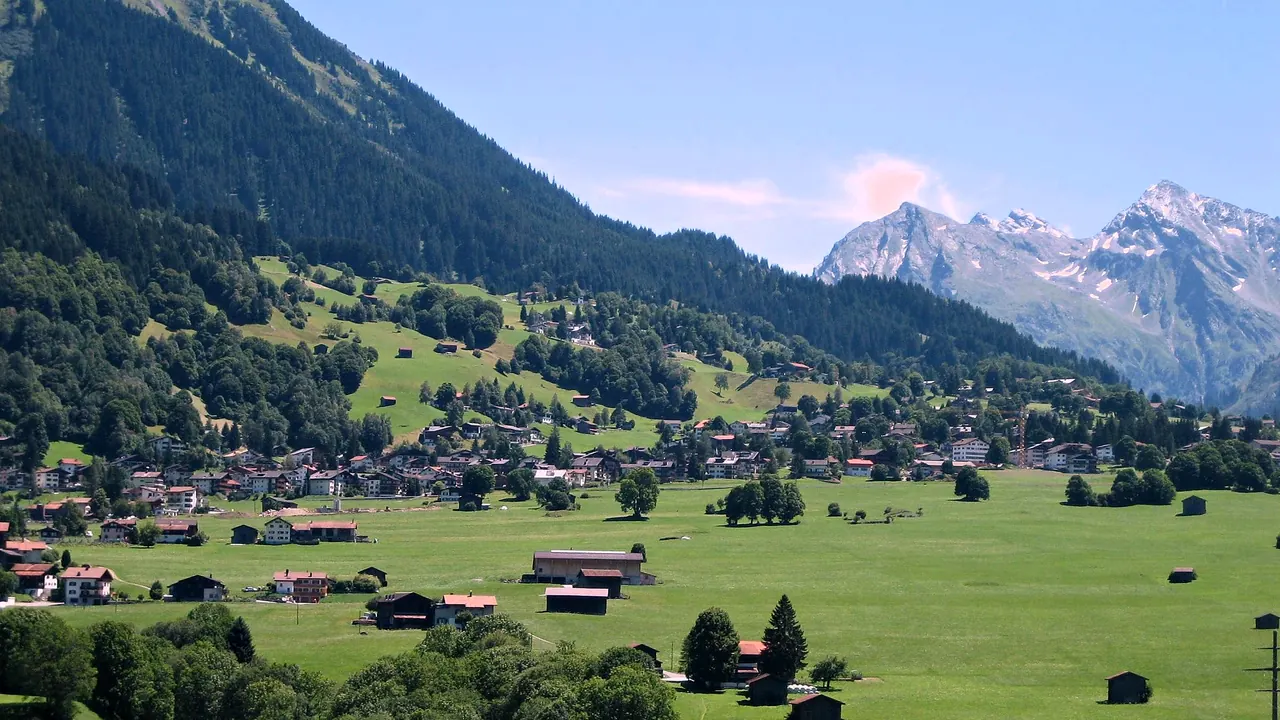
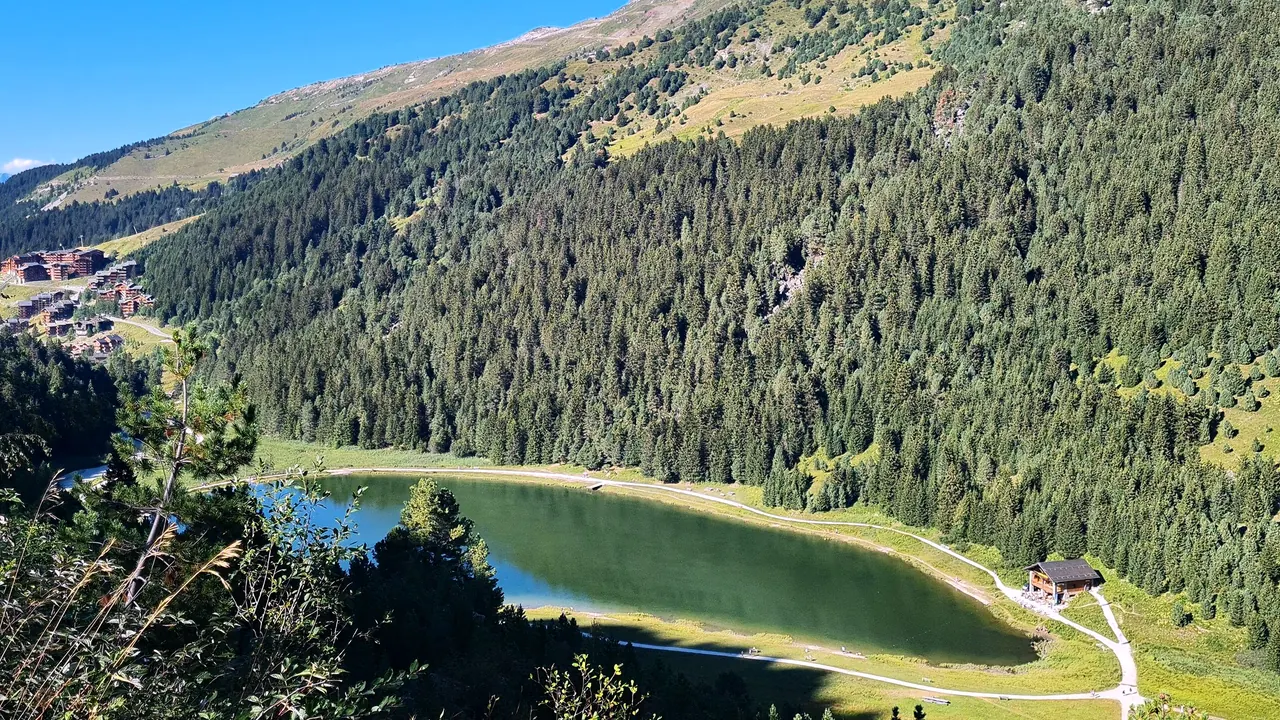
Photos: Klosters by Adrian Michael, CC BY-SA 3.0, cropped; Méribel by Augustin Cléchet, CC BY-SA 3.0, cropped.
Klosters or Méribel?
Our verdict in twelve categories, each scored against the same fixed benchmark cities, and the climate month by month, so you can choose for your trip.
Choose Klosters for
- getting around
- day trips
- families
Klosters suits travellers who want the mountains without the noise. It is a quiet, discreet village where the Gotschna cable car leaves beside the station, Rhaetian Railway trains run to Davos, Chur and the Engadine, and evenings end by the fire. It is the better base for a stay without a car, and for mixing days on the slopes or trails with trips to painted Engadine villages or the Bündner Herrschaft wine country.
Choose Méribel for
- nightlife
- food and drink
- prices
Choose Méribel if the skiing itself is the point and you want company afterwards. The 3 Vallées put a huge network of high, snow-sure runs on your doorstep, the après-ski moves from mountain bars into the village pubs, and Savoyard dinners and terrace lunches give the eating more range. The trade-off is a steep hillside layout and a long road down whenever you want to leave.
Scoreboard
Twelve categories on one fixed scale from 0 to 100. The shaded stretch is the gap between the two.
Your match
Pick a travel style or drag the sliders, and both match scores follow your weighting.
Too close to call, 1 point apart
Wins on getting around and day trips with your weighting.
Wins on nightlife and food and drink with your weighting.
What matters to you?
Category by category
What the scores mean for a trip.
Beaches & swimming
Neither is a place for swimmers. Klosters has a summer outdoor pool in the village and a bathing area on the lake at Davos, though the water stays cool. In Méribel you swim in the Olympic Park pool, its mountain lakes are for walking round rather than bathing, and the big Savoie lakes are more than an hour's drive away.
Food & drink
Méribel eats better and with more variety. Its mountain restaurants range from rustic huts serving croûtes to white-tablecloth terraces with long wine lists. In the evenings there is fondue, raclette and tartiflette, plus a handful of ambitious hotel kitchens across the 3 Vallées.
Klosters is smaller and more homely. Its wood-panelled stuben serve capuns, pizokel, barley soup and Bündnerfleisch, with Pinot Noir from the Bündner Herrschaft. Neither has street food or markets, and in both a sunny lunch on the mountain is often the best meal of the day.
Culture & sights
Both are short of sights, so the difference is in the little each has. Klosters offers Augusto Giacometti's stained glass in the church of St. Jakob, a small museum of rural life in the old Nutli-Hüschi farmhouse, and Prättigau timber chalets with real age. Méribel is a resort planned from the 1930s, interesting mainly for its consistent chalet style and traces of the 1992 Winter Olympics, and from either place you go down the valley for history.
Nightlife
Klosters keeps its evenings low-key: après-ski in a few hotel bars, a drink by the fire, and a late spot or two that fill up around Christmas, New Year and February. Anyone wanting more takes the short train ride up to Davos.
Méribel is the place for a proper night out in winter. People dance on tables at the mountain bars as the lifts close, then move on to village pubs with a large British crowd, and in busy weeks a few late bars and a small club stay open into the early hours. Outside the ski season both go very quiet.
Nature & outdoors
Klosters has two mountains, one on each side of the village. The Gotschna cable car lifts you into the Parsenn, which it shares with Davos and which is known for long runs down to the valley, while the gentler Madrisa rises opposite. In summer the draw is hiking into the Silvretta, with the green Prättigau valley below and the Swiss National Park through the Vereina tunnel.
Méribel trades that intimacy for scale. It sits in the middle of the 3 Vallées, where skiers can cross linked valleys without taking their skis off. Much of the terrain lies above 2,000m, with couloirs and off-piste bowls for confident skiers. In summer it offers the arolla pine forest of the Tueda reserve and the ibex country of the Vanoise.
Day trips
Klosters is the better base for days out, because the Rhaetian Railway does the work. Trains run to Chur's old town and past the wine villages and Heidi country around Maienfeld, and Vaduz is a train ride plus a bus connection away. Through the Vereina tunnel lie the sgraffito houses of Guarda and Scuol, and St. Moritz and the Albula line make a longer day.
From Méribel, every outing starts on the winding road down to Moûtiers and needs a car. Annecy, Chambéry, Conflans and Aix-les-Bains reward the drive and lie within about two hours, but in winter snowy roads stretch every journey.
Good for families
Klosters has Madrisa, a mountain built around children, with an adventure area in summer and gentle slopes and ski schools in winter. The village is traffic-calm and easy to plan around. Its weak spot is a rainy day, when there is nothing indoors to fall back on.
Méribel's strength is chalet childcare, which lets parents ski while ski schools take the children from a young age. The Olympic Park's ice rink and pool cover days off the slopes. The steep hillside layout makes moving small children around harder work, though, and in summer there is less for the very young.
Getting around
Klosters is much easier without a car. Its two stations on the Rhaetian Railway have direct trains to Davos and connections down to Landquart and Chur. The centre around Platz is walkable, the Gotschna cable car leaves beside the station, and buses cover the length of the village.
Méribel gets by within the resort with lifts, free shuttle buses and the Olympe gondola to Brides-les-Bains. But the village climbs a steep hillside with icy pavements, and because the nearest station is at Moûtiers, arriving means a transfer and going any further means driving.
Shopping & style
Shopping is a sideline in both, centred on ski hire, outdoor gear and a few smart boutiques for regular guests. What you take home differs: Bündnerfleisch and Graubünden cheese from Klosters, Beaufort and Savoyard sausages from Méribel. For a proper shopping day, Klosters guests go to Zurich.
Affordability
Each place has its own ways to cut the bill. In Klosters, the guest card covers local transport and a self-catering apartment saves on restaurant meals, but hotels, lift passes and lessons stay well above European norms.
Méribel has cheaper apartments in Mottaret and beds down the valley in Brides-les-Bains, and its short summer season costs noticeably less. In winter it is every bit as costly, above all in the weeks when European schools are off.
Live music & performing arts
Neither has a theatre or a concert hall, and the little live music each has is different in kind. Klosters leans classical, with a summer concert series and occasional recitals in the church. Méribel's music is cover bands and DJs in the après-ski bars, plus the odd outdoor festival weekend. For serious performances you travel to Chur from one and to Chambéry or Annecy from the other.
Wellness & relaxation
Both rely on hotel spas, saunas and pools, and both have proper thermal bathing nearby. From Klosters it is Scuol, through the Vereina tunnel. From Méribel it is the old spa town of Brides-les-Bains, at the bottom of the Olympe gondola.
The difference is pace. Klosters is restful by nature, with early nights and little to hurry for. Méribel's winter runs on early lifts and late après-ski, so its calmer times are early summer and September.
When should you go?
Pick your month. The climate figures are measured averages, not a forecast.
Klosters in July
Méribel in July
Daytime high, °C
Rainfall in the month, mm
Where the figures come from
Klosters's temperatures are measured 51 km from the centre, at S. Valentino Alla Muta.
Klosters's station stands 280 m above the city centre, so the centre is likely a little warmer than the figures say.
Klosters has no rain gauge within 25 km of the centre, so its rainfall comes from a gridded climate dataset read at the destination rather than from a gauge further away.
Méribel has no weather station within reach, so its figures come from a gridded climate model rather than a measured record, and read a broad area rather than one spot.
Temperature and rainfall are climate normals, averaged over the years shown. Klosters: 1991-2020 normals, S. Valentino Alla Muta (51.4 km from centre). Méribel: 1991-2020 normals, TerraClimate 4 km grid at the town, no weather station within 90 km.
Neither place has a beach season, and their temperatures run close all year. In midwinter daytime highs sit around freezing. July and August peak at about 20°C, which is warm enough for hiking and terrace lunches but not for swimming outdoors. The real difference is when the rain falls. Klosters is driest in winter and wettest in high summer. August is its dampest month at 141mm, so summer walks often meet showers.
Méribel is the other way round. Summer is its drier spell, with July the lowest month, while November and December are the wettest, reaching 153mm in November. For a drier summer hiking trip Méribel has the edge, and for more settled winter weather Klosters is the safer bet. Spring and late autumn are cool in both and suit few plans.
Which traveller are you?
On a food and nightlife trip, Méribel is the clear choice. Après-ski starts with dancing at the mountain bars as the lifts close and carries on in the village pubs and late bars. Its Savoyard cooking, from fondue to ambitious hotel kitchens, also has more range.
On a family trip with young children, Klosters is easier. The village is traffic-calm and the centre is walkable from the station. Madrisa is built around children in both seasons, and you don't have to get small skiers up steep, icy roads between chalet and lift.
For an outdoors trip built around skiing, Méribel wins on sheer scale. The 3 Vallées link Courchevel, Val Thorens and Les Menuires on skis, with couloirs and off-piste bowls above 2,000m. Klosters makes more sense for a summer of hiking into the Silvretta.
Before you go
| Measure | Klosters | Méribel |
|---|---|---|
| Official language | French, German, Italian, Romansh | French |
| Currency | Swiss Franc (CHF) | Euro (EUR) |
| Sockets | CJ230 V, 50 Hz | CE230 V, 50 Hz |
| Driving side | Right | Right |
| Time zone | UTC+1, UTC+2 in summer | UTC+1, UTC+2 in summer |
| Emergency number | 112 | 112 |
| Elevation | 1,179 m | 1,447 m |
| Main airport | Zürich Airport (ZRH)120 km from centre226 non-stop destinations | Geneva International Airport (GVA)100 km from centre150 non-stop destinations |
| Public holidays this year | 9 days | 11 days |
By the numbers
| Measure | Klosters | Méribel |
|---|---|---|
| Population | 4,499 | - |
| People per km² | 20 | - |
| Museums within 10 km | 3 | 0 |
| UNESCO World Heritage sites within 50 km | 1 | 0 |
Where else could you go?
Every comparison below shares a destination with this one, so you can follow Klosters or Méribel somewhere new.
- Courchevelvs Méribel
- Davosvs Klosters
- Les Menuiresvs Méribel
- Val Thorensvs Méribel
- La Plagnevs Méribel
- Arosavs Klosters