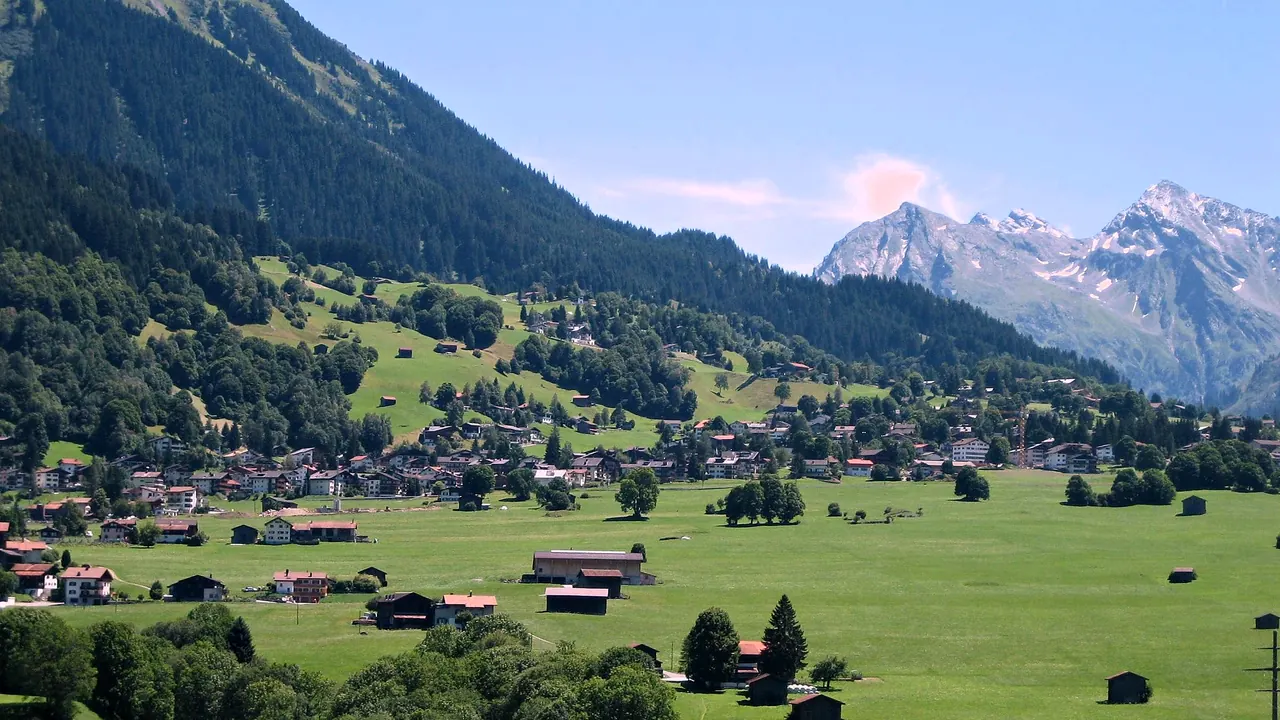
Photos: Klosters by Adrian Michael, CC BY-SA 3.0, cropped.
Klosters or Verbier?
Our verdict in twelve categories, each scored against the same fixed benchmark cities, and the climate month by month, so you can choose for your trip.
Choose Klosters for
- families
- getting around
- wellness
Klosters suits travellers who want the mountains without the noise. It is a good fit for families using the Madrisa slopes and play area, for walkers heading into the Silvretta, and for anyone happy with a hotel sauna and an early night. It is also the easier place to manage without a car, with the train at the door and Davos, Chur and the Engadine all a short ride away.
Choose Verbier for
- nightlife
- live music and the arts
- food and drink
Pick Verbier for a livelier and more demanding stay. Expert skiers come for its steep off-piste and freeride terrain, evenings run from terrace après-ski to late clubs, and its raclette and Valais wines make it the better place to eat. Music lovers can plan a summer visit around the Verbier Festival, and with a car the Rhône valley, Lake Geneva and Aosta are all within reach.
Scoreboard
Twelve categories on one fixed scale from 0 to 100. The shaded stretch is the gap between the two.
Your match
Pick a travel style or drag the sliders, and both match scores follow your weighting.
Wins on families and getting around with your weighting.
Wins on nightlife and live music and the arts with your weighting.
What matters to you?
Category by category
What the scores mean for a trip.
Beaches & swimming
Neither is a place to swim, so this barely separates them. The difference is in what you can do instead. Klosters has an outdoor village pool in summer and a bathing area on the lake at Davos, while Verbier's lakes above the resort are only for looking at, so swimmers use the indoor pool at the sports centre or drive over an hour to Lake Geneva.
Food & drink
Both kitchens are alpine, heavy on cheese and expensive, but Verbier gives you more to eat well. Raclette made from Val de Bagnes cheese is a reason to go in itself, and the village has a cluster of ambitious chef-led dining rooms, with Petite Arvine and Cornalin from the Valais on every list.
Klosters has a narrower range: Graubünden stuben serving capuns, pizokel and barley soup, hotel dining rooms and a few refined kitchens, with Pinot Noir from the Bündner Herrschaft. In both places the best meal is often a long lunch on a mountain terrace, and cheap casual food is hard to find.
Culture & sights
Neither village is somewhere to go sightseeing, and both send history lovers elsewhere. Klosters keeps its few points of interest in the village itself: Augusto Giacometti's stained glass in St. Jakob and the Nutli-Hüschi farmhouse museum among old timber chalets. Verbier is a twentieth-century ski village, so its stone church, Bagnes museum and old granaries are down in Le Châble.
Nightlife
This is where the two differ most. In winter, Verbier's evenings start on terraces as the lifts close, move on to packed bars around the Place Centrale and end in a handful of clubs in the small hours, with seasonal workers and wealthy visitors in the same rooms.
Klosters prefers a drink by the fire. There are a few hotel bars and one or two late spots that fill in the peak weeks, and anyone wanting more takes the train to Davos. Outside the ski season both villages go quiet.
Nature & outdoors
Both are first-rate mountain bases, and the difference is one of character. Verbier is bigger and steeper. The 4 Vallées lifts climb to Mont Fort at about 3,300m, with glacier views to Mont Blanc and the Matterhorn, and serious skiers come from far afield for its off-piste and ski touring.
Klosters is broader and gentler, with the long Parsenn runs down to the valley, the easier Madrisa slopes, cross-country trails and toboggan runs, and summer routes into the Silvretta. Through the Vereina tunnel, the Swiss National Park offers a quieter kind of wilderness than Verbier's glaciers.
Day trips
Verbier has the wider reach, close to where Switzerland, France and Italy meet. Within range are Roman Martigny, the hilltop castles of Sion, the abbey at Saint-Maurice, Chillon and the Lavaux terraces, then the Great St Bernard, Aosta and Chamonix. Most of this is easier with a car.
From Klosters the outings stay closer to home but are simple by rail. You can reach Chur's old town, Maienfeld and the Bündner Herrschaft wine villages, Vaduz, and the sgraffito houses of Guarda and Scuol, with the Albula line to St. Moritz for a longer day.
Good for families
Klosters is the better fit with children. The Madrisa side is built for them, with an adventure area in summer and gentle slopes in winter, and the traffic-calmed village keeps days simple. Verbier has ski schools and snow gardens, and beginners do best at La Tzoumaz and Savoleyres, but the steep, spread-out village and après-ski evenings are geared to adults.
Neither has attractions to fall back on in bad weather, and in both the cost of lessons and lift passes adds up quickly.
Getting around
Klosters is the easier of the two without a car. It has two Rhaetian Railway stations, the Gotschna cable car right beside the station at Platz, and buses along the length of the village. Verbier is easy to reach, by train to Le Châble and then the gondola, but its chalets are spread up a steep hillside. Many guests depend on shuttle buses or taxis there, and anything beyond the valley is easier by car.
Shopping & style
Neither is a shopping destination, but Verbier has more to browse. Its centre is lined with well-stocked ski and technical outdoor shops, plus fashion and jewellery boutiques, while Klosters has only a short stretch of main street around Platz. Both are best for food to take home, Valais cheese and wine in Verbier and Graubünden cured meats in Klosters. For serious shopping you go to Zurich from Klosters and to Lausanne or Geneva from Verbier.
Affordability
Both are among the most expensive places to stay in the Alps, and neither can be done cheaply. The ways to save differ. Klosters has a guest card for local transport and self-catering apartments, while in Verbier self-catering, coming in summer or the shoulder seasons, and staying down the valley in Le Châble all bring the bill down a little.
Live music & performing arts
In Klosters, music is a pleasant extra rather than a reason to come. The summer concert series and the odd recital in St. Jakob are village-sized evenings you might fit in after a day's walking. The rest of the year, live music means a hotel pianist or an après-ski band, and a proper concert or play means going to Chur.
Verbier's festival works on another scale. For a few summer weeks it brings the kind of international names who usually play big city concert halls, and the youth orchestra and public masterclasses give you something to hear during the day as well. The gap between the two only really shows in summer, though. Once the festival is over, Verbier is as short of live performance as Klosters.
Wellness & relaxation
Klosters is the more restful of the two. The slow pace is the point, with early nights, long views and hotel saunas. The thermal baths at Scuol are under an hour away, and Davos has a large public pool and sauna complex.
Verbier has well-equipped hotel and chalet spas, a public wellness area at the sports centre, and warm springs at Saillon and Lavey-les-Bains. In peak winter, though, the resort is lively rather than calm, so the quieter months suit a restful stay better.
When should you go?
Pick your month. The climate figures are measured averages, not a forecast.
Klosters in July
Verbier in July
Daytime high, °C
Rainfall in the month, mm
Where the figures come from
Klosters's temperatures are measured 51 km from the centre, at S. Valentino Alla Muta.
Klosters's station stands 280 m above the city centre, so the centre is likely a little warmer than the figures say.
Klosters has no rain gauge within 25 km of the centre, so its rainfall comes from a gridded climate dataset read at the destination rather than from a gauge further away.
Verbier has no weather station within reach, so its figures come from a gridded climate model rather than a measured record, and read a broad area rather than one spot.
Temperature and rainfall are climate normals, averaged over the years shown. Klosters: 1991-2020 normals, S. Valentino Alla Muta (51.4 km from centre). Verbier: 1991-2020 normals, TerraClimate 4 km grid at the town, no weather station within 90 km.
Neither village gets warm enough for a beach, so the choice is between winter snow and summer walking. Klosters is the milder of the two, with summer highs around 20°C, a few degrees above Verbier. Its wettest months come in summer, though, peaking at 141mm in August, so showers come with the hiking season. Winter and spring are comparatively dry here. March and April are among its driest months, still cold enough for late-season skiing before the walking country opens up.
Verbier runs the other way. Its heaviest precipitation falls from November to January, peaking at 145mm in December, and with highs around freezing much of it comes as snow on the slopes. Spring stays wintry in Verbier, cold enough in March and April to keep the skiing going. Summer is its drier spell, which makes July to September the steadier months for the high trails. Late autumn is the least rewarding time to visit, when the village turns cold and wet.
Which traveller are you?
On a family trip with young children, Klosters is the easier choice. The Madrisa side has beginner slopes, ski schools and a summer play area, and the village is calm and traffic-calmed. Verbier's steep, scattered hillside is harder going with small children.
For a food and nightlife trip, Verbier wins clearly. Raclette made from Val de Bagnes cheese, chef-led dining rooms and Valais wines lead on to terrace après-ski, bars around the Place Centrale and late clubs. Klosters offers hearty stuben dinners and then bed.
On a relaxing and wellness trip, Klosters suits better. The village is slow and unshowy, hotel saunas fill the evenings, and the thermal baths at Scuol are under an hour away through the Vereina tunnel. Verbier has fine spas, but its peak winter weeks are loud.
Before you go
| Measure | Klosters | Verbier |
|---|---|---|
| Official language | French, German, Italian, Romansh | French, German, Italian, Romansh |
| Currency | Swiss Franc (CHF) | Swiss Franc (CHF) |
| Sockets | CJ230 V, 50 Hz | CJ230 V, 50 Hz |
| Driving side | Right | Right |
| Time zone | UTC+1, UTC+2 in summer | UTC+1, UTC+2 in summer |
| Emergency number | 112 | 112 |
| Elevation | 1,179 m | 1,490 m |
| Main airport | Zürich Airport (ZRH)120 km from centre226 non-stop destinations | Geneva International Airport (GVA)88 km from centre150 non-stop destinations |
| Public holidays this year | 9 days | 9 days |
By the numbers
| Measure | Klosters | Verbier |
|---|---|---|
| Population | 4,499 | - |
| People per km² | 20 | - |
| Museums within 10 km | 3 | 4 |
| UNESCO World Heritage sites within 50 km | 1 | 0 |
Where else could you go?
Every comparison below shares a destination with this one, so you can follow Klosters or Verbier somewhere new.
- Davosvs Klosters
- Arosavs Klosters
- Lenzerheidevs Klosters
- Crans-Montanavs Verbier
- Chamonixvs Verbier
- Châtelvs Verbier