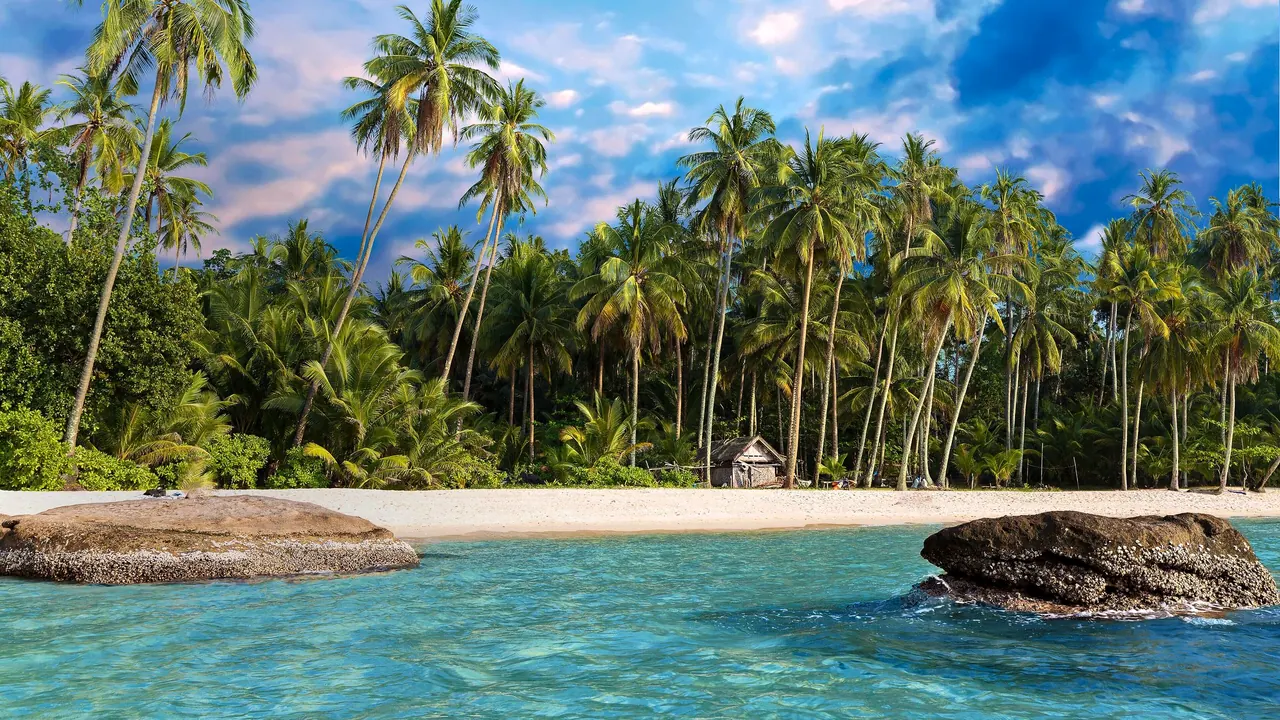
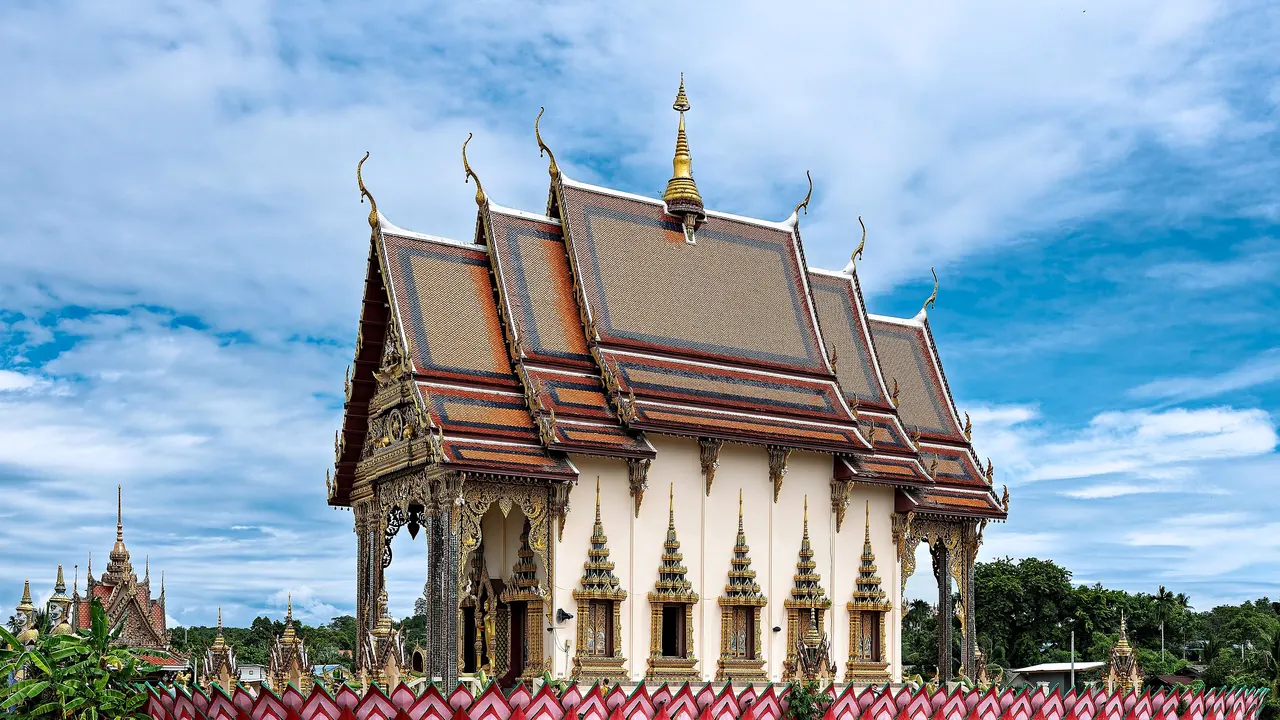
Photos: Koh Kood by Stéphane Bidouze, CC BY-SA 4.0, cropped; Koh Samui by Mustang Joe, CC0.
Koh Kood or Koh Samui?
Our verdict in twelve categories, each scored against the same fixed benchmark cities, and the climate month by month, so you can choose for your trip.
Choose Koh Kood for
Koh Kood does not lead in any category we score.
Koh Kood is for travellers who want a beach and very little else. Much of the island is still forest, only a few resorts stand behind each pale west-coast bay, and evenings end with dinner and an early night. Choose it for a dry-season week of swimming, kayaking up a mangrove river and walking to waterfall pools, and accept the long road-and-boat journey, the few places to eat and the lack of anything to do after dark.
Choose Koh Samui for
- nightlife
- shopping
- wellness
Koh Samui offers the same warm sea with a whole resort island around it. Chaweng's bars and clubs, the night markets at Bophut and Lamai, the retreat and detox centres in the hills, family resorts with children's clubs and boat trips to Ang Thong, Koh Phangan and Koh Tao all give a stay more variety. It suits couples, groups and families who want choice from one day to the next and an airport on the island, and who don't mind busier beaches in the main resort areas.
Scoreboard
Twelve categories on one fixed scale from 0 to 100. The shaded stretch is the gap between the two.
Your match
Pick a travel style or drag the sliders, and both match scores follow your weighting.
Has no clear advantage with the weighting you have chosen.
Wins on nightlife and shopping with your weighting.
What matters to you?
Category by category
What the scores mean for a trip.
Beaches & swimming
These are two equally fine beach islands with a very different feel on the sand. Koh Kood's west coast is a chain of soft, palm-backed bays such as Klong Chao, Ao Tapao and Ao Prao, with little behind them but a few resorts and the jungle. Some go very shallow at low tide and a few have sandflies, so pick a stretch with deeper water.
Koh Samui offers more types of beach. Chaweng is a long, social curve of white sand and Lamai is a little rougher, while Choeng Mon is a sheltered bay and coves like Silver Beach let you swim among boulders. The calmer north-coast beaches have the same low-tide shallows as some of Koh Kood's bays.
Food & drink
On Koh Kood most meals are eaten at your resort, because the bays are far apart after dark. The best food is grilled crab, squid and fish at the stilt fishing villages of Ao Salad and Ao Yai. The Thai cooking is good, but there is not much else.
Koh Samui gives you far more choice. There are southern Thai curries at roadside kitchens, night markets in Lamai and Maenam, and the walking street in Fisherman's Village at Bophut. Polished restaurants along the Bophut waterfront and in the hillside resorts look out over the sea. The menus on the Chaweng strip are uneven, but it is easy to eat elsewhere.
Culture & sights
Neither island is a place to come for heritage. Koh Kood's interest is limited to the wooden stilt houses and piers of Ao Yai and Ao Salad and a few small temples. Koh Samui has enough for a half-day drive: the Big Buddha on its causeway islet, the many-armed Guanyin at Wat Plai Laem, the mummified monk at Wat Khunaram and the old Chinese shophouses of Fisherman's Village.
Nightlife
This is where the two islands differ most. Koh Kood has no clubs, no bar strip and no beach parties, only a drink at your resort's bar and an early night.
On Koh Samui, Chaweng's beach clubs, roadside bars and clubs in the lanes run well past midnight in high season, with DJs and fire shows. Lamai has a smaller scene of its own, and the full moon parties on Koh Phangan are a short boat ride away. Anyone who wants a few nights out should choose Samui.
Nature & outdoors
Koh Kood feels wilder on the island itself. Its interior is still largely forest, with giant old trees, short walks to the Klong Chao and Huang Nam Kheo waterfalls, and kayaks that can paddle up a mangrove river straight from the beach. Snorkelling trips run to the marine park reefs to the north between December and April.
Koh Samui has the bigger trips offshore. Ang Thong National Marine Park has sheer limestone islands, an emerald saltwater lake and a steep climb to a viewpoint. Divers can reach the pinnacles around Sail Rock, among the best dive sites in the Gulf of Thailand. Samui's own interior offers the Na Muang waterfalls and rough tracks through coconut plantations.
Day trips
Koh Kood is a place to stay put. The one real outing is a dry-season boat to neighbouring Koh Mak, a flat, quiet island of coconut plantations and small resorts, sometimes combined with stops at tiny sandy islets for snorkelling. Trat and the mainland are too far away to make a worthwhile day.
Koh Samui gives you more to choose from, although every option is another island rather than a sight. Koh Phangan is under an hour away by boat and has a small port town at Thong Sala and a looser, quieter feel than Samui. A longer crossing to Koh Tao and the sandbar islets of Koh Nang Yuan fills a whole day. As on Koh Kood, there are no historic towns within reach.
Good for families
Koh Kood suits a quiet beach week with young children: calm bays, waterfall pools and kayaks, but nothing else built for them. The island has only a small, basic hospital, so anything serious means a boat to Trat. The long journey from Bangkok is hard going with toddlers.
Koh Samui is easier for families. Choeng Mon, Bophut and Maenam have calmer water, many resorts have large pools and children's clubs, and older children have a water park, animal parks and Ang Thong trips. The busy ring road and Chaweng's late nights are the parts to avoid.
Getting around
Reaching Koh Kood takes time: a road journey or a flight to Trat, then a speedboat or ferry of an hour or more, with fewer boats in the monsoon. Once there, a single hilly road with steep, sandy turns down to the bays means hiring a scooter or relying on resort pick-ups. Many guests barely leave their own bay.
Koh Samui has its own airport, and a ring road of about 51km links every beach, so Chaweng to Bophut takes only a quarter of an hour. Songthaews, ride-hailing cars and hire cars give you options, although taxi fares have to be negotiated and scooter accidents on the hills are common.
Shopping & style
Koh Kood has a few minimarts for sun cream and snacks and some resort boutiques selling beachwear, and that is all. Koh Samui has proper browsing: the Friday walking street at Bophut with its crafts and coconut-wood homeware, weekly markets in Lamai and Maenam, tailors for suits, and a large mall in Chaweng. Neither island has luxury shopping.
Affordability
Overall the two cost about the same, but for different reasons. On Koh Kood the cost comes from isolation. Most places to stay are mid-range or upmarket bungalow resorts, meals end up at resort prices because the bays are far apart, and the boat transfers add to the bill.
Koh Samui is one of the dearer places in Thailand, with expensive taxis, flights and food on the main strips. Most of that can be avoided by staying in guesthouses back from the beach, eating at night markets and basing yourself on the north or west coast.
Live music & performing arts
Neither island has a stage worth travelling for. On Koh Kood the most you will find is an acoustic guitar evening at a resort bar. Koh Samui at least puts on shows for visitors: Muay Thai fight nights around Chaweng and Lamai, ladyboy cabaret and fire dancers on the beach.
Wellness & relaxation
Koh Kood's calm comes from what it doesn't have: no traffic, no nightlife, and resorts set in jungle or on a bay of their own. Treatments are limited to massage in open-sided pavilions and the spas at upmarket resorts.
Koh Samui has a long-established retreat scene. There are detox and fasting programmes around Lamai, yoga and meditation centres, and hillside spas looking over the Gulf. Maenam, Bang Po and Lipa Noi are as slow and quiet as most of Koh Kood, so it is worth staying well away from Chaweng.
When should you go?
Pick your month. The climate figures are measured averages, not a forecast.
Koh Kood in July
Koh Samui in July
Daytime high, °C
Rainfall in the month, mm
Where the figures come from
Koh Kood's temperatures are measured 39 km from the centre, at Khlong Yai.
Koh Kood has no rain gauge within 25 km of the centre, so its rainfall comes from a gridded climate dataset read at the destination rather than from a gauge further away.
Koh Samui has no rain gauge within 25 km of the centre, so its rainfall comes from a gridded climate dataset read at the destination rather than from a gauge further away.
Temperature and rainfall are climate normals, averaged over the years shown. Koh Kood: 1971-2000 (rainfall 1991-2020) normals, Khlong Yai (38.5 km from centre). Koh Samui: 1991-2020 normals, Ko Samui (7.4 km from centre).
The two islands have almost opposite seasons. Koh Kood is at its best from November to February, when the west coast is calm and almost dry, with around 19mm of rain in December. Showers return in March and April, and from May the southwest monsoon arrives. Rainfall peaks at around 777mm in August, heavy swell hits the bays and many resorts close.
Koh Samui stays fairly even from January to September, with moderate rain each month, then turns wet from October to December. November brings about 372mm, and the east-coast beaches at Chaweng and Lamai get choppy water. Both islands are hot all year, with daytime highs of 29°C to 33°C, and both seas are warm enough to swim in every month. Rain matters far more than heat. For a midwinter escape Koh Kood is the drier choice, while from June to September Samui is the one to pick.
Which traveller are you?
On a beach and sun trip, Koh Kood is the better pick if you want empty sand from November to April. Its bays have only a few resorts behind them and no beach bars, while Samui's best-known beaches, Chaweng and Lamai, are long and busy.
For a food and nightlife trip, Koh Samui wins clearly. Chaweng has beach clubs and late bars, the night markets at Bophut, Lamai and Maenam make for good evening eating, and Haad Rin's parties are a boat ride away. Koh Kood has nothing after dinner.
On a relaxing and wellness trip, Koh Samui goes deeper. It has detox and fasting programmes around Lamai, yoga and meditation retreats, and hillside spas. Koh Kood's natural quiet is real, but its treatments rarely go beyond beach massage and resort spa menus.
Before you go
| Measure | Koh Kood | Koh Samui |
|---|---|---|
| Official language | Thai | Thai |
| Currency | Baht (THB) | Baht (THB) |
| Sockets | ABCF220 V, 50 Hz | ABCF220 V, 50 Hz |
| Driving side | Left | Left |
| Time zone | UTC+7 | UTC+7 |
| Emergency number | Police 191, ambulance 1669, fire 199 | Police 191, ambulance 1669, fire 199 |
| Main airport | Trat Airport (TDX)1 non-stop destination | Samui International Airport (USM)10 non-stop destinations |
By the numbers
| Measure | Koh Kood | Koh Samui |
|---|---|---|
| Population | 2,000 | 62,500 |
| People per km² | 18 | 273 |
| Swim season, months above 21 °C | 12 months | 12 months |
Where else could you go?
Every comparison below shares a destination with this one, so you can follow Koh Kood or Koh Samui somewhere new.
- Koh Phanganvs Koh Samui
- Koh Changvs Koh Kood
- Koh Taovs Koh Samui
- Koh Rongvs Koh Kood
- Koh Sametvs Koh Kood
- Phu Quocvs Koh Kood