Thailand
Koh Kood
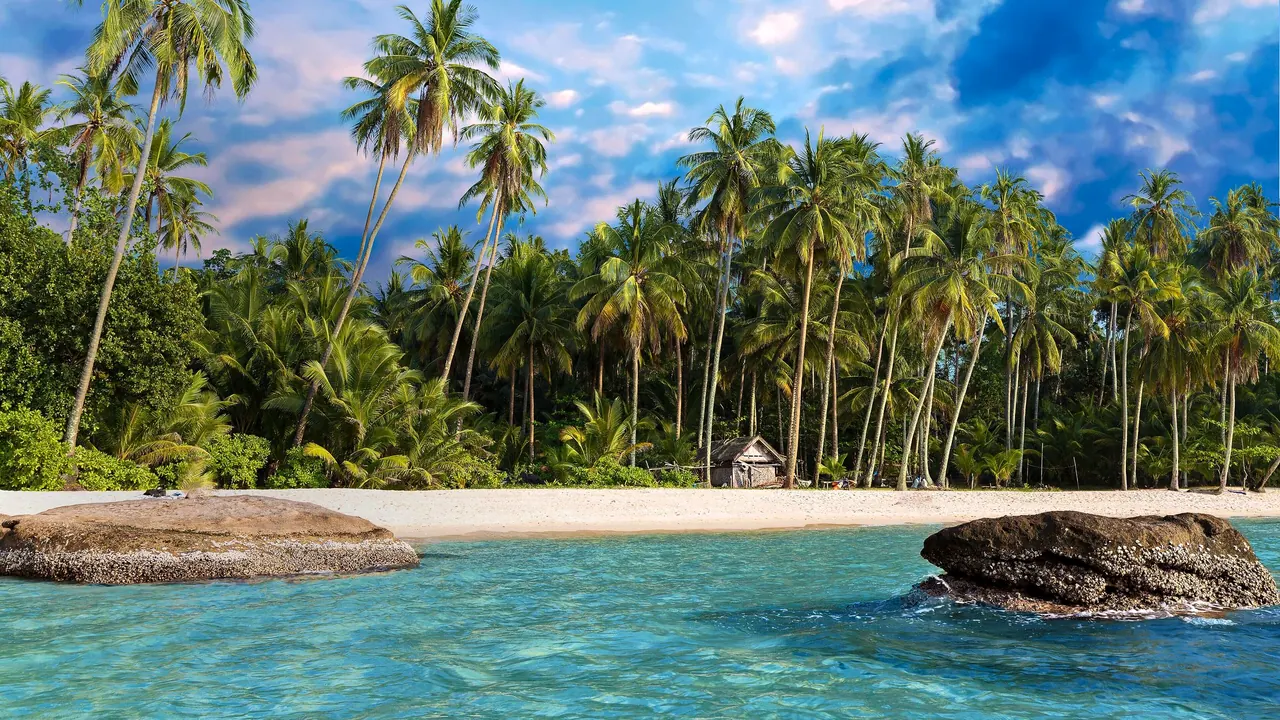
Ao Noi beach on Koh Kood under a blue sky
- Beaches86
- Affordability58
- Nature & outdoors55
Photo: Stéphane Bidouze, CC BY-SA 4.0, cropped
Match
32
Every category weighted equally
- Beach & sun43
- Culture & arts23
- Food & nightlife25
- Family trip40
- Outdoors40
- Relax & unwind42
- Shopping & style24
- On a budget35
Koh Kood in twelve categories
Our verdict on each, scored 0 to 100 against the same fixed benchmark cities, so a score means the same thing on every page.
Beaches & swimming. Scores 86 out of 100.
Food & drink. Scores 35 out of 100.
Culture & sights. Scores 10 out of 100.
Nightlife. Scores 5 out of 100.
Nature & outdoors. Scores 55 out of 100.
Day trips. Scores 18 out of 100.
Good for families. Scores 40 out of 100.
Getting around. Scores 20 out of 100.
Shopping & style. Scores 3 out of 100.
Affordability. Scores 58 out of 100.
Live music & performing arts. Scores 3 out of 100.
Wellness & relaxation. Scores 55 out of 100.
Koh Kood category by category
Beaches & swimming
86Beaches are the reason to come. The west coast is a string of soft, pale bays backed by palms and jungle, with Klong Chao, Ao Tapao, Bang Bao, Ao Noi and Ao Prao the best known, and most of them have only a few resorts behind them, so even in the busiest months there is room to spread out. The water is calm, clear and warm, around 29°C, and stays swimmable through the dry season from November to May.
The character is quiet rather than social: no promenades or beach bars lined up along the sand, just a hammock, a kayak and the sea. Some bays go very shallow at low tide, and a few have sandflies, so it pays to choose a stretch with deeper water. In the monsoon months the west coast takes heavy swell and rain, and many places close.
Food & drink
35Eating is pleasant but limited. Most meals are taken at resort restaurants, and the rest at simple Thai places along the main road and in the stilt fishing villages of Ao Salad and Ao Yai, where grilled fish, crab and squid come straight off the boats. Thai cooking keeps the standard decent, with curries, som tam and stir-fries done properly in the family-run spots.
There are no markets worth planning around, no café culture and little range beyond Thai and Western resort menus, and many visitors end up eating where they sleep because the bays are far apart after dark.
Culture & sights
10There is very little to see in the sightseeing sense. The interest lies in the fishing villages of Ao Yai and Ao Salad, with wooden houses and piers on stilts over the water, a few small Buddhist temples and a scattering of shrines. Nobody comes here for heritage, and a visitor who needs museums or historic architecture will find nothing on the island.
Nightlife
5Nights are quiet by design. Evenings mean dinner, a drink at a resort bar on the sand and an early bed, and the island has no clubs, no bar strip and no beach parties. Travellers who want to go out should look elsewhere in Thailand.
Nature & outdoors
55Much of the island is still covered in forest, which gives it a greener, wilder feel than most Thai islands. Klong Chao and Huang Nam Kheo waterfalls are short jungle walks with pools beneath them, the giant old trees in the interior are a popular outing, and kayaks can paddle up the mangrove-lined Klong Chao river from the beach.
On the water, boat trips run to the reefs around the small islands of the marine park to the north for snorkelling and diving, best from December to April when the sea is calm and clear. The scale is modest though: there are no real mountains or long trails, and the outdoor life is gentle rather than adventurous.
Day trips
18Options are few. Neighbouring Koh Mak, a flat, relaxed island of coconut plantations and small resorts, is the one real outing, reached by boat in the dry season, and island-hopping trips combine it with tiny islets that are about sand and snorkelling rather than towns. The mainland and Trat are too far by boat and road to make a worthwhile day, so most visitors simply stay put.
Good for families
40Families who want a quiet beach week can do well here. The calm, warm bays, kayaks, waterfall pools and resorts with family rooms and pools suit young children, and Thai staff are warm with them. Pick a beach with gradual, deeper water rather than one that empties at low tide.
There is nothing made for children beyond that, though: no attractions and very limited shopping for supplies. The island has a small, basic hospital inland near Ao Tapao, but anything serious means a boat transfer to a hospital in Trat on the mainland. The trip from Bangkok is long, a road journey plus a boat, which is hard going with small children, and older ones may get restless after a few days.
Getting around
20Getting here is the effort: a long road journey or flight to Trat followed by a speedboat or ferry of about an hour or more, with fewer boats in the monsoon months. On the island there is no public transport. Resorts run pick-ups, a few pick-up truck taxis can be arranged, and most visitors hire a scooter for the single main road, which is paved but hilly, with steep, sandy turns down to the bays. The beaches are spread along the coast and not walkable from one another, so many guests stay close to their own bay.
Shopping & style
3There is essentially no shopping. A few small grocery stores and minimarts on the main road cover sun cream and snacks, and resort boutiques sell beachwear, but there are no markets, crafts or shops to browse.
Affordability
58Cheaper than a Western beach resort but not a budget island. Most places to stay are mid-range and upmarket bungalow resorts, with a few very expensive luxury retreats, and because the bays are isolated, many meals end up at resort restaurant prices. The boat crossing, transfers and snorkelling trips add to the bill.
Budget travellers can still manage with simple fan bungalows, scooter hire, local Thai restaurants and cheap massages, but the island rewards a comfortable rather than a shoestring budget.
Live music & performing arts
3There is no live music or performing arts scene to speak of. At most a resort bar may put on an acoustic guitar evening, and visitors should not plan around it.
Wellness & relaxation
55Slowing down is the main thing people do here. Days follow the tide and the light, there is no traffic noise or nightlife, and many resorts are set in jungle or on a bay of their own, so the quiet is real rather than staged. Simple open-sided massage pavilions near most beaches offer Thai massage and oil treatments, and the upmarket resorts have proper spas, some with yoga sessions.
What the island lacks is a bathing tradition or any real depth of wellness: there are no thermal springs, bathhouses or dedicated retreat centres, and treatments rarely go beyond massage and resort spa menus. It suits someone who finds rest in calm and quiet more than in a spa programme.
Where to stay in Koh Kood
Nearly everyone stays on the west coast, where the beaches are, and picks one bay for the whole trip. The bays are not walkable from one another and the turns down to them are steep and sandy, so where you sleep largely decides where you swim and eat. You don't need to move between bases, whether it's your first visit or a return.
Klong Chao is the easiest choice for a first stay. The waterfall is a short walk inland, kayaks go up the river from the beach, and more of the simple Thai places to eat are on the nearby road, so it suits travellers without a scooter. Ao Tapao and Bang Bao are wider bays for long beach days and families. Before booking, check how shallow the water gets at low tide. Ao Tapao also has the island's small hospital close by.
Further south, Ao Noi and Ao Prao feel more secluded, with resorts on bays largely to themselves. They suit couples and anyone after a quiet stay who is happy to eat where they sleep. The stilt fishing villages of Ao Salad and Ao Yai are better as a scooter outing for grilled seafood than as a beach base.
When should you go?
Pick a month to see what it is like. The climate figures are measured averages, not a forecast.
Koh Kood in July
Daytime high, °C
Rainfall in the month, mm
The whole year
Shaded against this destination’s own year: the deepest cell is its best month for that figure and the palest its weakest.
Where the figures come from
Koh Kood's temperatures are measured 39 km from the centre, at Khlong Yai.
Koh Kood has no rain gauge within 25 km of the centre, so its rainfall comes from a gridded climate dataset read at the destination rather than from a gauge further away.
Temperature and rainfall are climate normals, averaged over the years shown. Koh Kood: 1971-2000 (rainfall 1991-2020) normals, Khlong Yai (38.5 km from centre).
Before you go
| Measure | Koh Kood |
|---|---|
| Official language | Thai |
| Currency | Baht (THB) |
| Sockets | ABCF220 V, 50 Hz |
| Driving side | Left |
| Time zone | UTC+7 |
| Emergency number | Police 191, ambulance 1669, fire 199 |
| Main airport | Trat Airport (TDX)1 non-stop destination |
By the numbers
| Measure | Koh Kood |
|---|---|
| Population | 2,000 |
| People per km² | 18 |
| Swim season, months above 21 °C | 12 months |
Compare Koh Kood with
Every comparison with a written verdict behind it.
- Koh Chang
- Koh Lanta
- Koh Lipe
- Koh Phangan
- Koh Phi Phi
- Koh Rong
- Koh Samet
- Koh Samui
- Koh Tao
- Mekong Delta
- Phu Quoc
- Phuket