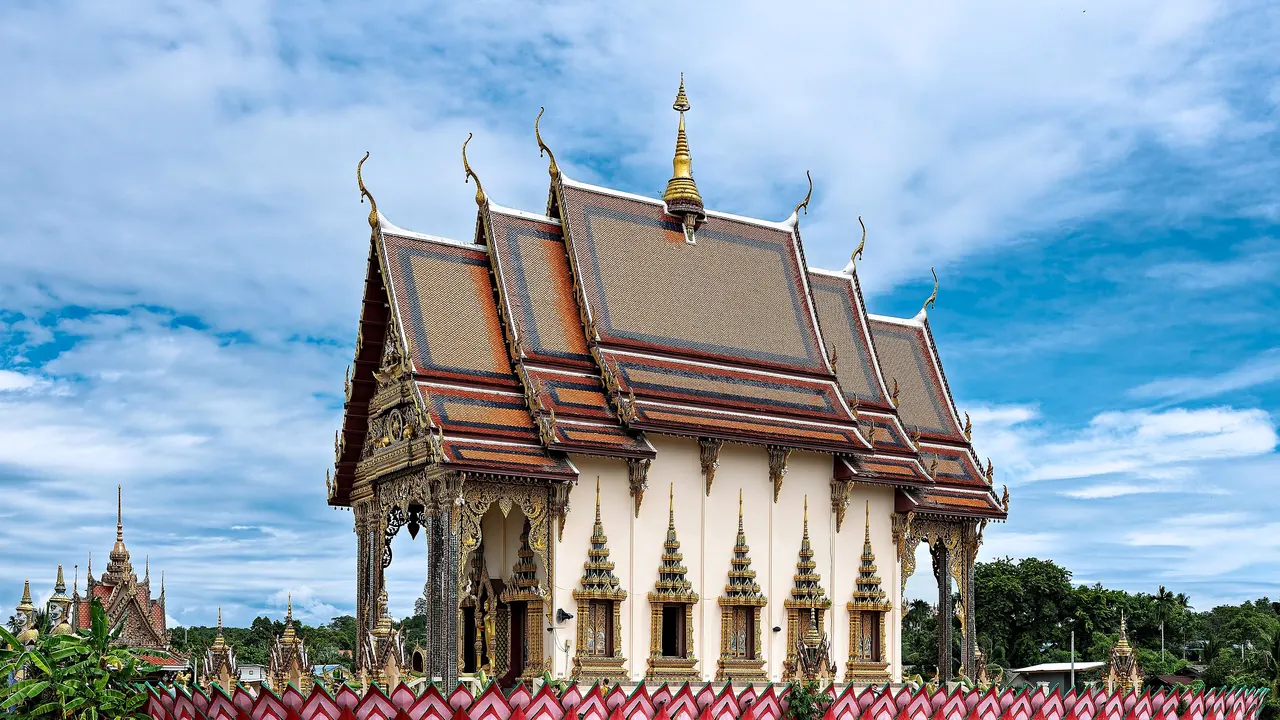
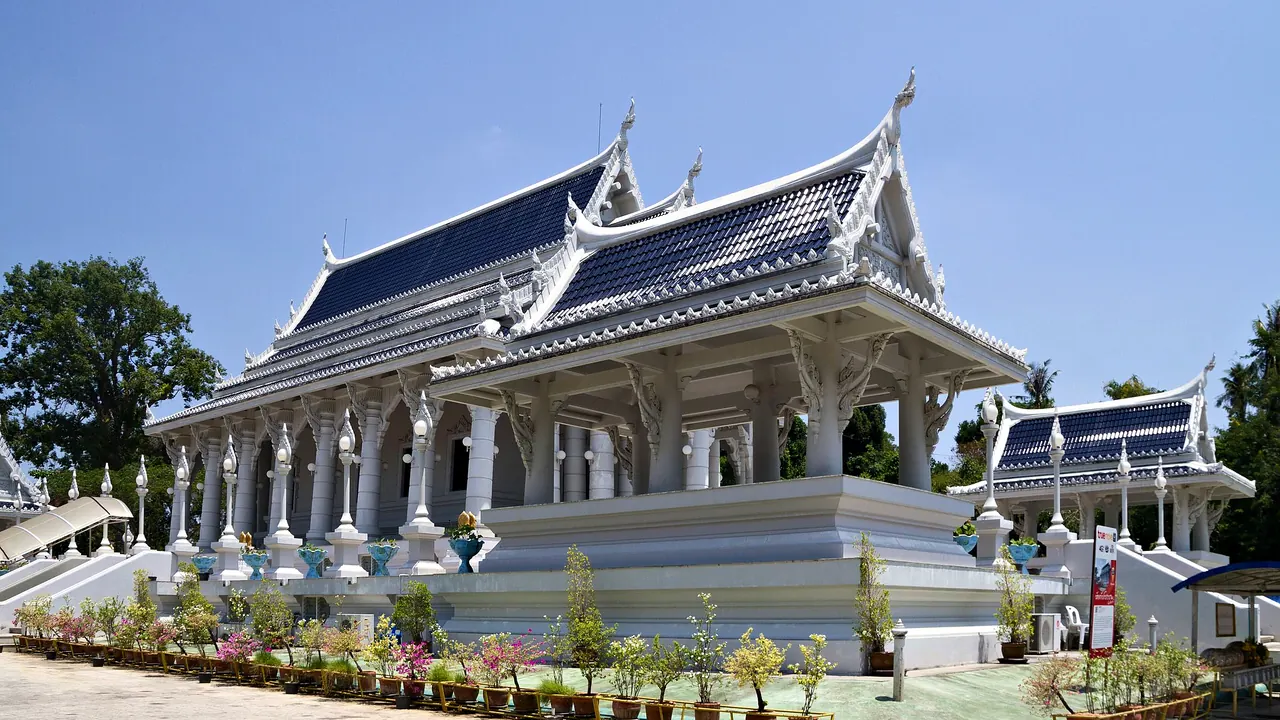
Photos: Koh Samui by Mustang Joe, CC0; Krabi by Maksym Kozlenko, CC BY-SA 4.0, cropped.
Koh Samui or Krabi?
Our verdict in twelve categories, each scored against the same fixed benchmark cities, and the climate month by month, so you can choose for your trip.
Choose Koh Samui for
- nightlife
- shopping
- wellness
Koh Samui suits travellers who want a beach vacation with comforts and proper evenings out. It has long sandy beaches on the east coast, a real night out in Chaweng, and one of Asia's established retreat scenes, with yoga, detox and spa stays in the hills above Lamai and along the slower north coast. It is also the better choice in the middle of the year, when its weather stays mostly dry.
Choose Krabi for
- nature and the outdoors
- prices
- day trips
Krabi is for people who travel for the landscape. Limestone towers, climbing at Railay, kayaking through mangroves and island hops to Hong and Phi Phi give it far more to do outdoors, and rooms and meals cost noticeably less, especially in Krabi Town. Its evenings are quieter, and its best season is the northern winter, when Samui is at its wettest.
Scoreboard
Twelve categories on one fixed scale from 0 to 100. The shaded stretch is the gap between the two.
Your match
Pick a travel style or drag the sliders, and both match scores follow your weighting.
Too close to call, 2 points apart
Wins on nightlife and shopping with your weighting.
Wins on nature and the outdoors and prices with your weighting.
What matters to you?
Category by category
What the scores mean for a trip.
Beaches & swimming
Both are first-rate beach destinations, but their beaches feel different. Samui's are long and easy to reach by road: the broad white sand of Chaweng, rougher Lamai, the sheltered bay at Choeng Mon and the gentler north-coast beaches at Bophut and Maenam, where the water turns shallow at low tide.
In Krabi the best sand is usually a longtail ride away rather than right outside the hotel. Railay West and Phra Nang sit beneath limestone cliffs, and island hops to Poda, Chicken Island and Phi Phi add variety, while Ao Nang's own beach is plain by comparison. The seasons matter more than the sand: Samui's east coast is calmest through the middle of the year, and Krabi's sea in the northern winter.
Food & drink
Both serve southern Thai cooking, with fiery curries and grilled seafood, but Samui has a little more range. Its night markets at Lamai, Maenam and Fisherman's Village offer plenty of choice, and there are polished restaurants with sea views in the hillside resorts and along the Bophut waterfront.
Krabi's best eating is plainer and more local, at Krabi Town's walking-street market and riverside stalls. Its Muslim communities shape dishes such as khao mok gai and the roti eaten for breakfast. Ao Nang's restaurant strip leans towards pizzas and toned-down curries, much as Chaweng's menus are aimed at visitors.
Culture & sights
Neither is a place to visit for heritage, and either can be seen in half a day. Samui's sights are temples spread along the ring road: the Big Buddha on its causeway, the many-armed Guanyin at Wat Plai Laem and the mummified monk at Wat Khunaram, plus the old Chinese shophouses of Fisherman's Village. Krabi's one real landmark takes some effort: a climb of more than 1,200 steps at the Tiger Cave Temple, with wide views over the karst at the top.
Nightlife
Samui has a real night out and Krabi mostly does not. In high season Chaweng's beach bars, roadside bars and clubs in the lanes behind the sand run well past midnight, with fire shows, DJs and a young international crowd, though parts of it are seedy. Haad Rin's full moon parties on Koh Phangan are within reach by boat.
Evenings in Krabi mean a few drinks rather than a party. Ao Nang has a short run of bars, Railay has hammocks, reggae and fire-spinning on the sand, there are no proper clubs and most places are quiet by midnight. For a bigger night, people take the ferry to Phi Phi.
Nature & outdoors
Krabi's scenery is in another league. Limestone towers rise straight out of the sea and the jungle, and Railay and Tonsai are known worldwide for sport climbing. The mangroves at Ao Thalane and the Hong islands are outstanding for kayaking, and inland there are the Emerald Pool, waterfalls and the hike up Dragon Crest.
Samui's own coast is pretty rather than dramatic, with low jungle hills and the Na Muang waterfalls. Its best nature is offshore: a boat day to the limestone islands and emerald lake of Ang Thong Marine Park, and diving at Sail Rock and around Koh Tao, the one area where it holds its own.
Day trips
Both depend on boats, but Krabi has more places worth the journey. Koh Lanta's stilted Old Town, with its Sea Gypsy and Chinese heritage, the fishing villages of Koh Yao Noi and the village on Phi Phi Don are all within reach, and Phuket's Sino-Portuguese Old Town makes a long but possible day.
From Samui the choice is mostly other islands: Koh Phangan, with its port at Thong Sala and looser backpacker feel, or a full day on Koh Tao and the sandbar islets of Koh Nang Yuan. The mainland transport hubs on the other side have nothing to see.
Good for families
Both work for a family beach stay, with famously warm Thai staff and resorts that have pools and kids' clubs. Samui has a little more beyond the sand, with a water park, small animal parks and elephant sanctuaries, and calm bases at Choeng Mon, Bophut and Maenam away from Chaweng's traffic.
Krabi has nothing built for children, so days revolve around the shallow water at Klong Muang and Phra Nang, gentle boat trips and the Emerald Pool. Open longtail boats and strong sun need planning there, just as Samui's busy ring road does.
Getting around
Samui is compact. A single ring road of about 51km circles the island, and getting from Chaweng to Bophut or Lamai takes around a quarter of an hour. The problem is how you get around on it. Songthaews run along the main road with no timetable, taxi fares are haggled rather than metered, and scooter accidents on the hills and wet roads are common, so most visitors hire a car or use ride-hailing.
Krabi is more spread out and partly cut off by water. Songthaews link Ao Nang, the beaches to the north and Krabi Town, but Railay has no road at all. Every trip there is by longtail boat, and the boats stop in heavy seas. Ao Nang's beachfront is easy on foot, much like each beach area on Samui, though patchy pavements and the heat make longer walks tiring.
Shopping & style
Samui gives a browser more to do. The Friday walking street along the old waterfront lane of Fisherman's Village at Bophut is the most pleasant place to look for crafts, clothes and coconut-wood homeware. Lamai and Maenam hold their own weekly markets, and Chaweng's large mall has the international chains. None of it adds up to luxury or design shopping.
Krabi has less. Ao Nang's main road has stalls of beachwear, souvenirs and copies, plus a few tailors and small craft shops. Krabi Town has a more local weekend walking-street market and a couple of plain malls for everyday needs.
Affordability
Krabi is noticeably easier on the wallet. Krabi Town has guesthouses and market meals at local prices, and Ao Nang still has plenty of affordable rooms. Only Railay costs more, because everything arrives by boat, and the expenses that add up are island tours, longtail fares and park fees.
Samui is among the dearest places to stay in Thailand. Its resorts and villas are priced for international visitors, taxis are expensive and the limited flights cost more. Bungalows, night-market food and massages stay cheap, so careful travellers based on the north or west coast can keep costs modest.
Live music & performing arts
Neither has a theatre or concert hall, and the evening shows in both are staged for visitors. Samui has a slightly wider spread, with ladyboy cabaret as well as Muay Thai nights at small stadiums in Chaweng and Lamai. Krabi's offer comes down to fire-spinning on the beaches at Railay and Ao Nang, cover bands and Muay Thai near Ao Nang.
Wellness & relaxation
Samui is the stronger choice for a restorative stay. It is an established retreat island, with detox and fasting programmes around Lamai, yoga and meditation centres and lavish hillside spas. Maenam, Bang Po and Lipa Noi offer genuinely slow days.
Krabi has massage shops on every street, resort spas along Klong Muang, Tubkaek and Railay and easy-to-find yoga classes, but fewer dedicated retreats. What it has that Samui lacks is natural hot springs: the Hot Springs Waterfall at Khlong Thom, about an hour's drive south, where warm mineral water runs into pools in the forest.
When should you go?
Pick your month. The climate figures are measured averages, not a forecast.
Koh Samui in July
Krabi in July
Daytime high, °C
Rainfall in the month, mm
Where the figures come from
Koh Samui has no rain gauge within 25 km of the centre, so its rainfall comes from a gridded climate dataset read at the destination rather than from a gauge further away.
Krabi's temperatures are measured 67 km from the centre, at Phuket Airport.
Krabi has no rain gauge within 25 km of the centre, so its rainfall comes from a gridded climate dataset read at the destination rather than from a gauge further away.
Temperature and rainfall are climate normals, averaged over the years shown. Koh Samui: 1991-2020 normals, Ko Samui (7.4 km from centre). Krabi: 1991-2020 (sunshine 1961-1990) normals, Phuket Airport (66.6 km from centre).
The two run on opposite seasons. Koh Samui is good from January to September. The sea stays between 28°C and 30°C, February is the driest month and the summer brings only moderate rain, though the heat in May and June makes walking around in the middle of the day hard work. From October to December the northeast monsoon arrives, with about 372mm of rain in November, and those months are best avoided.
Krabi is at its best from December to March, when rain is light, the days are long and sunny and the Andaman Sea is calm and clear, although March reaches about 34°C. The southwest monsoon sets in from May, the rain builds to around 321mm in October, sunshine drops and some boat trips stop. For a winter trip choose Krabi. In July or August, Samui is the drier of the two.
Which traveller are you?
For a food and nightlife trip, Koh Samui is the clear choice. Chaweng's beach clubs and bars run well past midnight, Koh Phangan's full moon parties are a short boat ride away, and the night markets at Bophut, Lamai and Maenam give dinner more range.
On an outdoors trip, Krabi wins easily. Railay and Tonsai have hundreds of bolted climbing routes above the sand, the mangroves of Ao Thalane are ideal for kayaking, and karst islands, jungle pools and the Dragon Crest hike are all close at hand.
On a tight budget, Krabi makes money go further. Krabi Town's guesthouses and market meals cost what locals pay, and Ao Nang still has plenty of affordable rooms. On Samui, resorts, taxis and limited flights push costs up unless you stick to bungalows and night markets.
Before you go
| Measure | Koh Samui | Krabi |
|---|---|---|
| Official language | Thai | Thai |
| Currency | Baht (THB) | Baht (THB) |
| Sockets | ABCF220 V, 50 Hz | ABCF220 V, 50 Hz |
| Driving side | Left | Left |
| Time zone | UTC+7 | UTC+7 |
| Emergency number | Police 191, ambulance 1669, fire 199 | Police 191, ambulance 1669, fire 199 |
| Elevation | - | 16 m |
| Main airport | Samui International Airport (USM)10 non-stop destinations | Krabi International Airport (KBV)9 km from centre14 non-stop destinations |
By the numbers
| Measure | Koh Samui | Krabi |
|---|---|---|
| Population | 62,500 | 30,499 |
| People per km² | 273 | - |
| Museums within 10 km | - | 0 |
| UNESCO World Heritage sites within 50 km | - | 0 |
| Swim season, months above 21 °C | 12 months | 12 months |
Where else could you go?
Every comparison below shares a destination with this one, so you can follow Koh Samui or Krabi somewhere new.
- Koh Phanganvs Koh Samui
- Koh Phi Phivs Krabi
- Koh Lantavs Krabi
- Phuketvs Krabi
- Koh Taovs Koh Samui
- Koh Phanganvs Krabi