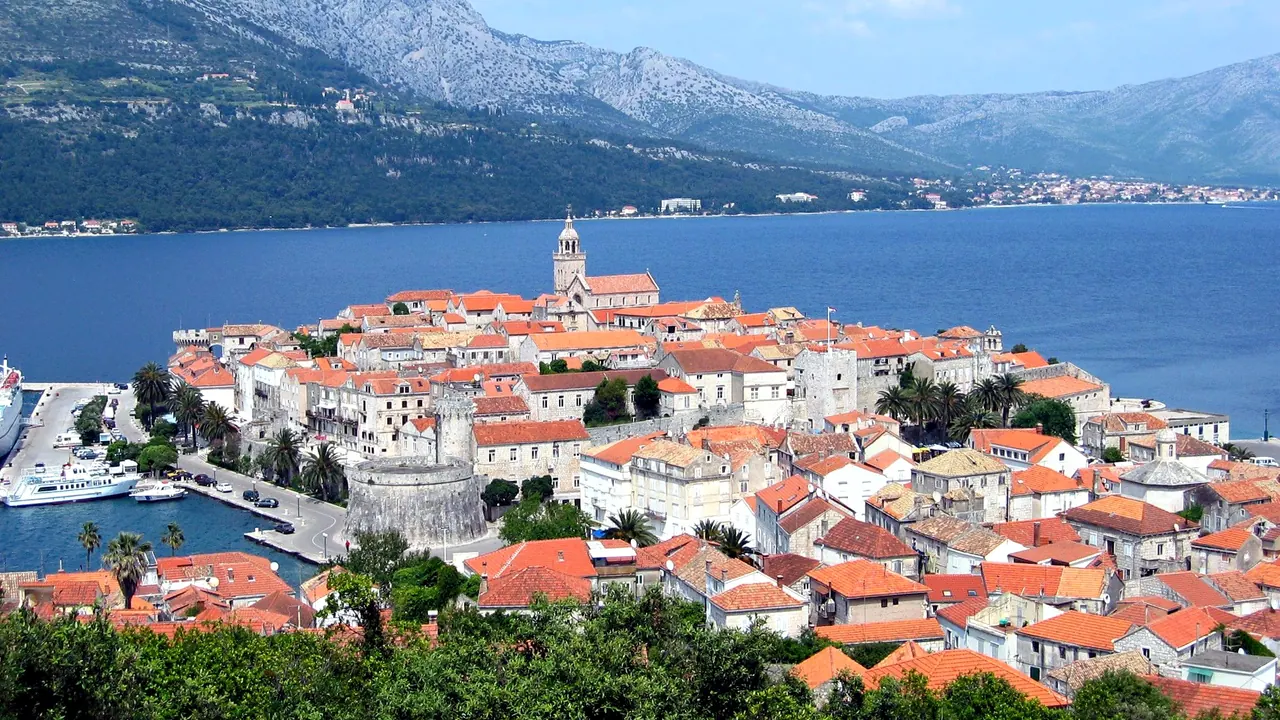
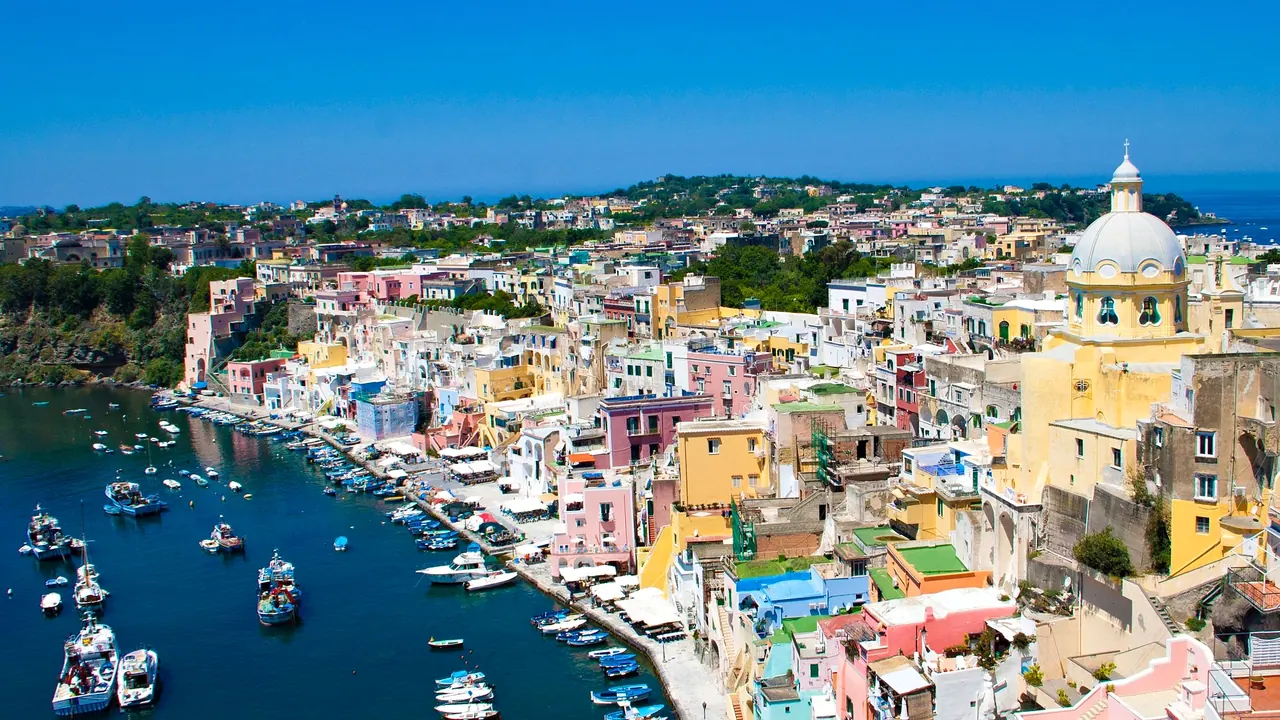
Photos: Korčula by Εὐθυμένης, CC BY-SA 3.0, cropped; Procida by DIANA.GRYGAROVA, CC BY-SA 4.0, cropped.
Korčula or Procida?
Our verdict in twelve categories, each scored against the same fixed benchmark cities, and the climate month by month, so you can choose for your trip.
Choose Korčula for
- culture and sights
- nature and the outdoors
- nightlife
Korčula suits travellers who want an island to explore in its own right. It has the walled stone town with its cathedral and towers, sandy shallows at Lumbarda, pine-covered walking country and wine villages, and the Pelješac peninsula and Mljet just across the water. It is the better choice for a week of swimming, walking, kayaking and tasting wine, and the island itself gives you more to do. Expect to hire a car to reach the best coves.
Choose Procida for
- day trips
- wellness
- getting around
Choose Procida if you want a small, slow base with half of Campania close by. The island takes a day or two to see, but Naples, Ischia's hot springs, the Phlegraean Fields and the Roman sites of the gulf are all a short boat ride away. You need no car at all. You give up variety on the island itself for easy outings and a gentler pace.
Scoreboard
Twelve categories on one fixed scale from 0 to 100. The shaded stretch is the gap between the two.
Your match
Pick a travel style or drag the sliders, and both match scores follow your weighting.
Wins on culture and sights and nature and the outdoors with your weighting.
Wins on day trips and wellness with your weighting.
What matters to you?
Category by category
What the scores mean for a trip.
Beaches & swimming
Korčula offers the better and more varied swimming. Most of its coast is pine-backed pebble and rock, but around Lumbarda, Pržina and Bilin Žal have real sand and shallow water. Pupnatska Luka on the south coast is a deep, bright bay, and taxi boats from Korčula Town run out to the flat rocks of Badija and the other islets. If one cove is crowded, there is always another a little further along the shore.
Procida's beaches are dark volcanic sand in small coves: Chiaiolella facing Vivara, the long curve of Ciraccio, Chiaia at the foot of its steps and sheltered Pozzo Vecchio. The water here is slightly warmer, but there is less coast to choose from, and in August it fills early.
Food & drink
On both islands you eat simple seafood cooked well, and on both the choice is short and many kitchens close out of season. The difference lies in what each does best. On Korčula it is the wine: Grk from Lumbarda, Pošip from Čara and Smokvica, and Plavac Mali reds from Dingač across the channel. Add lamb or octopus slow-cooked under the iron bell and oysters at Ston.
Procida is all about lemons. They go into the island's mint and chilli lemon salad and into the lemon cream of lingua, the pastry eaten on the Marina Grande waterfront. The harbour trattorias at Corricella serve fried anchovies and seafood linguine.
Culture & sights
Korčula Town has more to see. Its herringbone streets were laid out against the wind, and St Mark's Cathedral holds a Tintoretto altarpiece. The town also has its walls and towers, a treasury, a museum and the house said to be Marco Polo's birthplace. At the far end of the island, the prehistoric cave of Vela Spila adds a second, much older layer.
Procida's heritage is concentrated at Terra Murata. Here you find the abbey with its gilded ceiling and sailors' ex-votos, and the Palazzo d'Avalos, a former prison you can visit on a guided tour. Below it, the pastel houses of Corricella are the picture everyone comes for. Both islands can be seen in a day or two, but Procida in less.
Nightlife
Neither island is for clubbing, but Korčula gives you a little more to do after dinner. There are cocktail bars on the town walls and towers facing the channel, and a few harbour bars open late in high summer. For a big night out, people take a boat to a livelier island.
Procida's evenings end around midnight even in July and August, at the waterfront bars of Marina Grande or Chiaiolella. A real night out means Ischia or Naples, and the last ferry home cuts it short.
Nature & outdoors
Korčula is greener and offers more to do outdoors. Aleppo pine, holm oak, olive groves and terraced vineyards cover the island, and walking and cycling routes cross its central ridge between villages. Sea kayaking around the islets is excellent. Across the channel, Pelješac adds a near 1,000m climb up Sveti Ilija and the steady afternoon wind at Viganj for windsurfers, and Mljet's saltwater lakes are a boat ride away.
Procida is low and gentle, a landscape of old craters, walled lemon gardens and short cliffs, so you walk to viewpoints such as Terra Murata and Solchiaro rather than along trails. Vivara is a lovely reserve, but you can visit it only on guided openings. Snorkelling and diving are good, though a few days covers it all.
Day trips
Procida has the better day trips by a wide margin. Ischia is a quarter of an hour away, and Pozzuoli about half an hour, with its amphitheatre and the Serapeum and the sunken villas of Baia and Greek Cuma close by. Naples and its museums are under an hour away by hydrofoil, and Herculaneum and Pompeii are within reach. The one limit is the time of the last boat back.
Korčula's outings are more rural. Pelješac has wineries, monasteries above Orebić and the walls and oyster beds of Ston, and Mljet offers its lake monastery and the Roman remains at Polače. Hvar is under two hours away by catamaran. Dubrovnik and Split are possible, but each takes close to three hours each way.
Good for families
Families will find the two islands evenly matched. Both are safe and relaxed, children are welcome at the table, and neither has anything built for them. On Korčula the best base is Lumbarda, where the sandy bays are shallow enough for toddlers, and boat rides out to the islets keep older children busy. The island is long, though, and the ferry crossings and summer heat need planning.
Procida's appeal is its size. Chiaiolella and Ciraccio shelve gently into warm water, and no outing takes long. Pushchairs struggle on both islands, for different reasons. On Korčula the problem is the steps of the old town, and on Procida it is the steps down to Corricella and Chiaia and the lanes without pavements that you share with buses and scooters.
Getting around
Procida is much easier to get around. It is only a few kilometres across, small buses run from Marina Grande to every corner, and three-wheeled taxis fill the gaps, so you do not need a car. Frequent ferries and hydrofoils run to Naples, Pozzuoli and Ischia. The one drawback is walking along the busy lanes, which have no pavements.
Korčula is long and narrow, with a single main road from Lumbarda to Vela Luka and buses that run infrequently. The best coves lie down steep side roads, so a hired car or scooter is close to essential, and ferry services thin out outside the summer.
Shopping & style
Neither island is a shopping destination, but Korčula has a little more to browse. Korčula Town has jewellery and craft studios and small galleries, and the best souvenirs are Grk and Pošip bought at the cellar door, olive oil and cukarini biscuits. On Procida, shopping is a single stretch of Via Roma selling ceramics, limoncello and linen, and for anything more you take the boat to Naples.
Affordability
Costs are much the same, with Procida slightly easier on the budget. On both islands, July and August bring island prices, and the shoulder months are the time to save. On Korčula, the savings come from renting an apartment in Lumbarda, Vela Luka or a village and eating at family konobas inland.
Procida has few rooms, and they fill up in high summer. Once you have a room, pastries, pizza, the buses and a beach day without a sunbed cost little.
Live music & performing arts
Korčula has the stronger tradition of live performance, though it is still small. Local troupes perform the Moreška sword dance in Korčula Town through the summer, villages keep up older sword dances for feast days, and klapa groups sing unaccompanied harmonies in churches and squares on summer evenings.
Procida's great performance comes once a year. On Good Friday, the Misteri procession carries its tableaux from Terra Murata down to the sea. Beyond that there are only occasional summer concerts, and for opera in Naples the trip home afterwards is the difficulty.
Wellness & relaxation
Both islands are made for slow days, but Procida offers more to anyone who wants treatments as well as quiet. On Korčula, spa options go no further than the facilities of the bigger hotels around Korčula Town. The rest it offers is a different kind: shaded lunches in the vineyard villages and nights with nothing planned, best in June or September, when the island is at its quietest.
Procida has no spas of its own either, but Ischia's hot springs and thermal pools are an easy outing, so a lazy week can include a day soaking in warm mineral water. The rest of the time you can linger over lunch above the harbour and sit out the evening as the colours of Corricella fade.
When should you go?
Pick your month. The climate figures are measured averages, not a forecast.
Korčula in July
Procida in July
Daytime high, °C
Rainfall in the month, mm
Where the figures come from
Korčula's temperatures are measured 69 km from the centre, at Mostar.
Korčula has no rain gauge within 25 km of the centre, so its rainfall comes from a gridded climate dataset read at the destination rather than from a gauge further away.
Procida's temperatures are measured 32 km from the centre, at Grazzanise.
Temperature and rainfall are climate normals, averaged over the years shown. Korčula: 1991-2020 normals, Mostar (69.2 km from centre). Procida: 1991-2020 (rainfall 1971-2000) normals, Grazzanise (32.2 km from centre).
Both islands have the same Mediterranean year. The sea is warm enough for swimming from June, the best beach months are July and August, and the rain returns in autumn. Korčula gets the hotter summer, with highs around 33°C in July and August that make walking at midday hard going. On Procida highs stay nearer 31°C, and the sea there runs a degree or so warmer, reaching about 26°C in August. On Procida it also stays swimmable well into October, while on Korčula late September is the practical end.
Autumn rain hits Procida harder. October and November are its wettest months, reaching about 163mm in November, while Korčula's autumn is noticeably drier. Winters are milder on Procida, with highs near 13°C against about 9°C on Korčula in January. On both islands, May, June and September are the best months for walking and sightseeing in comfort.
Which traveller are you?
On an outdoors trip, Korčula is the better choice. The island has real country to cover on foot, by bike and by kayak, and the mountain and wind of the neighbouring peninsula add more. Procida is pleasant for strolling, but a few days covers it.
For a relaxing and wellness trip, Procida suits better. It is small enough that nothing needs organising, and Ischia, one of the Mediterranean's great spa islands, is close by. Korčula is just as calm but has far less to pamper you.
On a beach and sun trip, Korčula has the edge. Swimming is the main reason people come, and its long coast gives you more coves and more kinds of shore, from pebble to rare sand. Procida's sea is a touch warmer, but its beaches are fewer.
Before you go
| Measure | Korčula | Procida |
|---|---|---|
| Official language | Croatian | Italian |
| Currency | Euro (EUR) | Euro (EUR) |
| Sockets | CF230 V, 50 Hz | CFL230 V, 50 Hz |
| Driving side | Right | Right |
| Time zone | UTC+1, UTC+2 in summer | UTC+1, UTC+2 in summer |
| Emergency number | 112 | 112 |
| Main airport | Dubrovnik Ruđer Bošković Airport (DBV)76 non-stop destinations | Naples International Airport (NAP)131 non-stop destinations |
| Public holidays this year | 14 days | 13 days |
By the numbers
| Measure | Korčula | Procida |
|---|---|---|
| Population | - | 10,092 |
| People per km² | - | 2,347 |
| Swim season, months above 21 °C | 5 months | 5 months |
Where else could you go?
Every comparison below shares a destination with this one, so you can follow Korčula or Procida somewhere new.