Photos: Kotor by Muhammed Fatih Beki, Pexels License; Ohrid by kallerna, CC BY-SA 4.0, cropped.
Kotor or Ohrid?
Our verdict in twelve categories, each scored against the same fixed benchmark cities, and the climate month by month, so you can choose for your trip.
Choose Kotor for
- day trips
- nature and the outdoors
- beaches
Kotor suits travellers who want dramatic scenery and plenty of outings from one base. The fjord-like bay, the hairpin road up into Lovcen and the run of stone villages from Perast to Herceg Novi give a week more variety than Ohrid can. The Budva riviera is close by for sand and late nights. Expect to rely on a car, and to pay more.
Choose Ohrid for
- prices
- shopping
- culture and sights
Choose Ohrid for a cheaper, slower trip with more history to look at. Its frescoed churches, Samuel's Fortress and the excavations at Plaošnik make a richer old town than Kotor's. The centre is easier to get around, and the clear lake makes summer days simple for families. The trade-off is a shorter swimming season and much colder winters.
Scoreboard
Twelve categories on one fixed scale from 0 to 100. The shaded stretch is the gap between the two.
Your match
Pick a travel style or drag the sliders, and both match scores follow your weighting.
Wins on day trips and nature and the outdoors with your weighting.
Wins on prices and shopping with your weighting.
What matters to you?
Category by category
What the scores mean for a trip.
Beaches & swimming
Neither town has a real beach on its doorstep. In both you swim from concrete platforms, jetties and short pebble strips. The difference is the water: Kotor has warm salt water in a sheltered but less clear inner bay, while Ohrid's lake is fresh, very clear and cooler, with a season that barely lasts past mid-September.
Kotor has the better fallback, because the sand at Jaz and the coves around Budva are half an hour over the hill. Ohrid keeps its beach life close to town, with Potpeš and the coves below Kaneo within walking distance and longer shores with loungers at Lagadin and Gradište.
Food & drink
Both kitchens are narrow and repeat themselves along the waterfront, and in both towns the better meals are found away from the main crowds. Kotor's food leans towards the sea, with mussels, black cuttlefish risotto and octopus, plus Njegusi ham and dark Vranac from the mountains behind. Ohrid serves inland home cooking such as beans baked in earthenware, stuffed peppers and grilled meat, along with lake fish like belvica and Macedonian wine from Tikveš.
Culture & sights
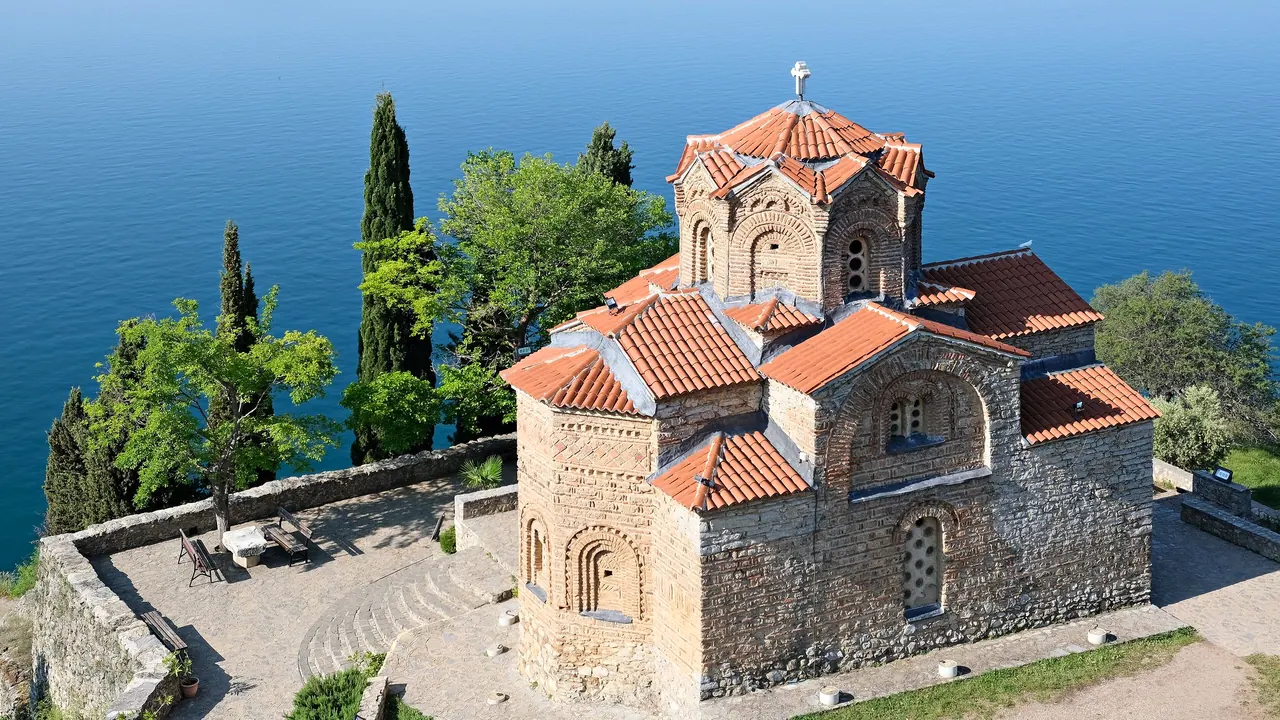
Ohrid has the deeper layers of history. St Sophia's frescoes, the church at Kaneo on its rock above the water, the rebuilt church at Plaošnik tied to the Cyrillic tradition, a Hellenistic theatre and an icon gallery add up to more sights than Kotor has.
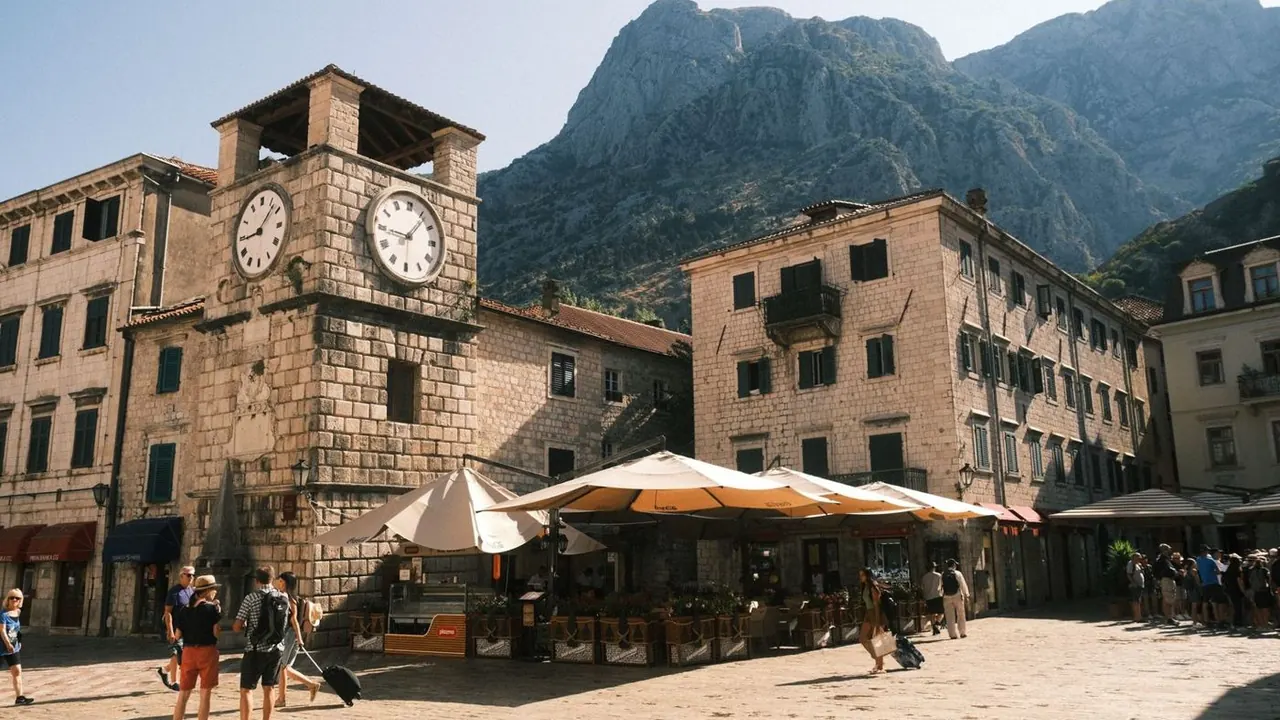
Kotor's strength is the walled townscape as a whole: St Tryphon's Cathedral, the palazzi of the seafaring families, the Maritime Museum and the walls zigzagging up to St John's fortress. It rewards a few hours of wandering, but there are fewer places to go inside.
Nightlife
Both are quiet towns that only come alive in summer, and neither has a real club scene. In Kotor, an evening means a drink on a terrace under the floodlit walls, with Budva's seafront clubs half an hour away if you want a late night. Ohrid's evenings centre on the lakefront promenade and the old bazaar, where café-bars stay open late in summer and beach clubs on the southern shore play music into the small hours.
Nature & outdoors
Kotor has the more striking setting and more to do in it. Limestone walls rise more than 1,000m almost straight from the bay, the Ladder of Kotor and the fortress path start at the town gates, and Lovcen National Park and Lake Skadar are both within reach.
Ohrid's landscape is gentler but still fine. It has the deep, clear lake and Galičica National Park, with summits above 2,000m and viewpoints where you can see Ohrid and Prespa together. The lakeshore path and the spring-fed pool at the southern end of the lake are good for easier days.
Day trips
Kotor is the better base for outings. Perast and its island church are twenty minutes away. Herceg Novi, Budva, Sveti Stefan, Cetinje and the Njegos mausoleum on Lovcen all make easy days, and Dubrovnik and Ostrog work for longer ones.
Ohrid's options are fewer and further apart. You can take the boat to St Naum in summer, visit Struga close by, or go to Bitola and Heraclea Lynkestis, which are more than an hour away. Korçë is across the Albanian border. The roads are slow, so most of these trips need a car.
Good for families
Ohrid works better with children, mainly because the clear lake gives them whole days of easy swimming right by town. The reconstructed pile village at the Bay of Bones also makes a proper outing. The steep cobbled lanes of the old town are hard going with a pushchair, though.
Kotor's old town is flat, car-free and full of cats, but its main sight is a hot, exposed fortress climb, and the lanes fill with day visitors at midday. Families usually end up swimming off the shore or driving to the sand near Budva.
Getting around
Ohrid is the simpler town to get about. The promenade, the bazaar and the old town sights are a short walk apart, and there are plenty of taxis for short hops, though the old town's stairs tire older visitors.
Kotor's walled centre is flat and takes minutes to cross, but leaving it is the hard part. The single road round the bay jams in summer and the buses are infrequent, so most visitors hire a car or a driver much sooner than they would in Ohrid.
Shopping & style
Ohrid has one thing worth buying that Kotor cannot match: the Ohrid pearl, made by a few families in workshops around the old bazaar, along with hand-carved wood and icons. Kotor's lanes sell souvenirs, lace and coral jewellery, and its best buys are things to eat and drink, such as Vranac, Njegusi ham and honey from the green market. Neither town has a fashion scene.
Affordability
Ohrid is clearly the cheaper stay. Guesthouses, meals with wine, taxis and entry fees all cost little, and only lakefront rooms in July and August cost noticeably more.
Kotor is moderately priced but charges resort rates inside its walls in high summer. An apartment in Dobrota or Muo and a visit in May, June or September bring the cost down, but a hire car, which you are more likely to need here, adds to it.
Live music & performing arts
Kotor's summer programme is lighter than Ohrid's. Its churches host recitals and choirs, while carnival masks and the decorated boats of Boka Night make the season more festive than formal.
Ohrid's festival has run every summer since the early 1960s and brings opera, classical concerts and theatre to St Sophia and the ancient theatre. Outside the summer, neither town has much going on in the way of live performance.
Wellness & relaxation
In Kotor you have to plan for calm. Stay along the shore in Dobrota or Muo, see the walled town early or late, and keep out of its lanes at midday in summer. Ohrid offers that slow pace without any effort, with still mornings by the lake and quiet evenings on the promenade in May, June and September.
For treatments, both towns rely on hotel spas, since neither has a bathing tradition of its own.
When should you go?
Pick your month. The climate figures are measured averages, not a forecast.
Kotor in July
Ohrid in July
Daytime high, °C
Rainfall in the month, mm
Where the figures come from
Kotor has no rain gauge within 25 km of the centre, so its rainfall comes from a gridded climate dataset read at the city rather than from a gauge further away.
Kotor's sunshine is measured 42 km from the centre, at Podgorica-Grad.
Ohrid has no rain gauge within 25 km of the centre, so its rainfall comes from a gridded climate dataset read at the city rather than from a gauge further away.
Temperature and rainfall are climate normals, averaged over the years shown. Kotor: 1991-2020 normals, Tivat (4.2 km from centre). Ohrid: 1999-2017 (rainfall 1991-2020) normals, Ohrid (0.2 km from centre).
Kotor is the warmer of the two in every month. From June to September its bay is warm enough for swimming, with the sea at 26°C in August and long, sunny days. July and August reach 32°C, though, which makes the fortress steps and the bare limestone trails hard work at midday. The rain sets in from late September and peaks at 202mm in November, so late autumn and winter are wet, if mild.
Ohrid has a mountain-lake climate. Summer highs of about 29°C in August are comfortable for walking the old town, and the lake is warm enough for swimming from late June to mid-September. Winters are properly cold, around 6°C in January, though Ohrid is drier than Kotor all year round. For both towns, May, June and September are the best months, and Ohrid's spring arrives a few weeks later.
Which traveller are you?
On a trip on a tight budget, Kotor means watching what you spend, especially in high summer. In Ohrid the money goes further: you can eat out every evening, visit every church and still afford the summer boat down the lake to St Naum.
For an outdoors trip, Kotor is the one to pick. The hiking starts at your door, and a week can mix steep mountain days with calm mornings paddling the bay. Ohrid has good walking above its lake, but less variety close to town.
On a culture and arts trip, Kotor gives you a day or two of atmosphere in one beautifully kept walled town. Ohrid feels more like a slow lesson in Byzantine and Slavic history, with medieval art round every corner and summer evenings of music in ancient settings.
Before you go
| Measure | Kotor | Ohrid |
|---|---|---|
| Official language | Montenegrin | Albanian, Macedonian |
| Currency | Euro (EUR) | Denar (MKD) |
| Sockets | CF230 V, 50 Hz | CF230 V, 50 Hz |
| Driving side | Right | Right |
| Time zone | UTC+1, UTC+2 in summer | UTC+1, UTC+2 in summer |
| Emergency number | 112 | 112 |
| Elevation | 10 m | 695 m |
| Main airport | Tivat Airport (TIV)5 km from centre42 non-stop destinations | Ohrid St. Paul the Apostle Airport (OHD)9 km from centre14 non-stop destinations |
| Public holidays this year | - | 12 days |
By the numbers
| Measure | Kotor | Ohrid |
|---|---|---|
| City population | 562 | 38,818 |
| People per km² | - | 100 |
| Museums within 10 km | 3 | 11 |
| UNESCO World Heritage sites within 50 km | 3 | 2 |
| Swim season, months above 21 °C | 5 months | - |
Where else could you go?
Every comparison below shares a destination with this one, so you can follow Kotor or Ohrid somewhere new.