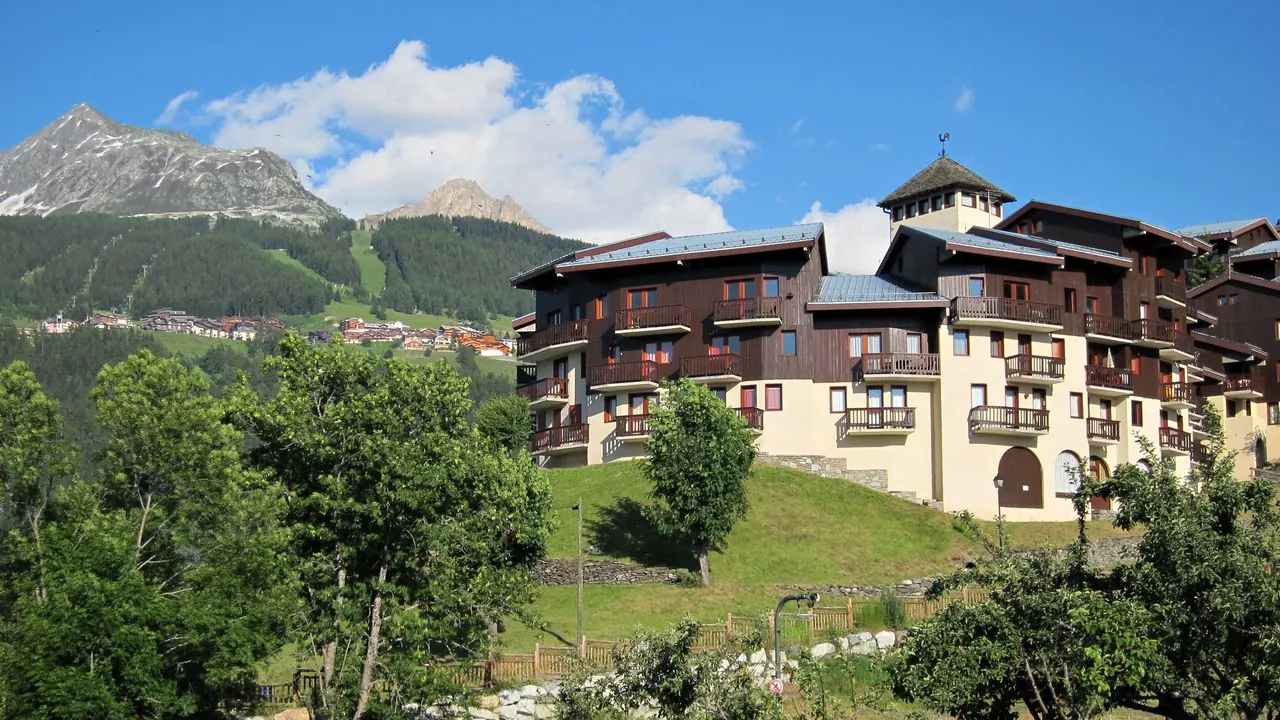
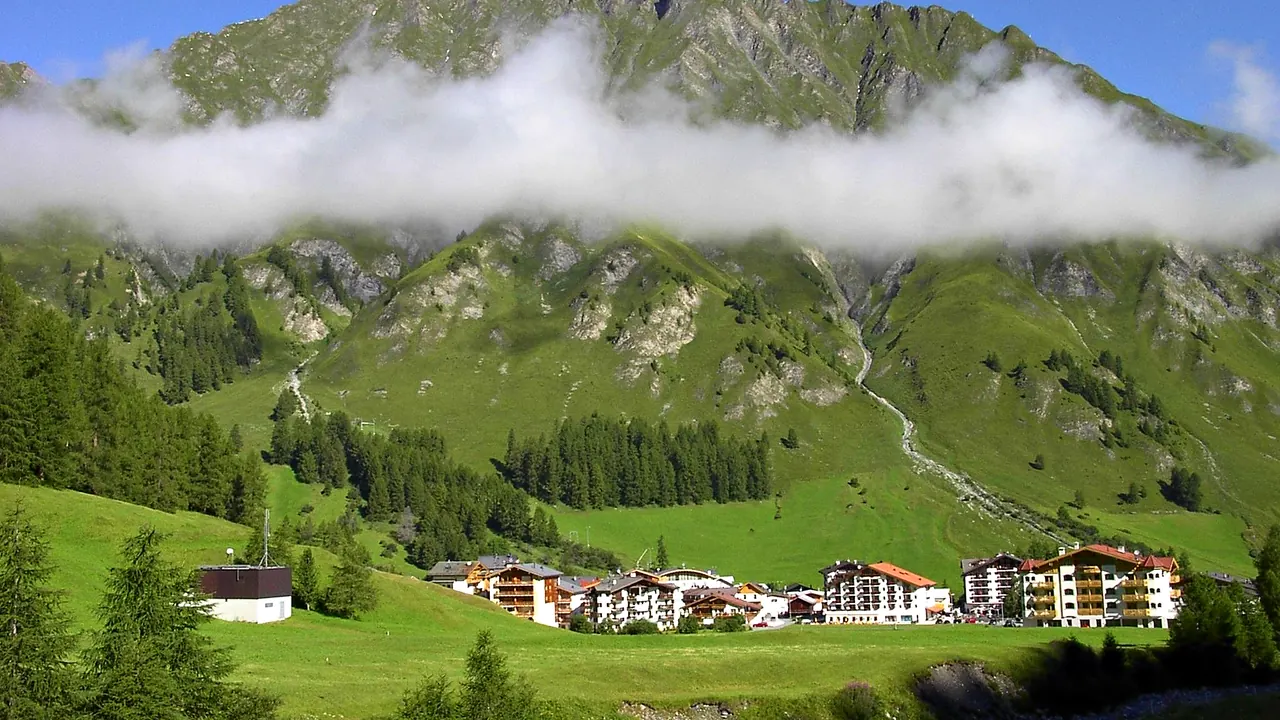
Photos: La Plagne by Henk Monster, CC BY 3.0, cropped; Samnaun by Rene Nueesch, CC BY 3.0, cropped.
La Plagne or Samnaun?
Our verdict in twelve categories, each scored against the same fixed benchmark cities, and the climate month by month, so you can choose for your trip.
Choose La Plagne for
- families
- prices
- food and drink
La Plagne suits families and intermediate skiers who want huge amounts of linked terrain and as little hassle as possible. Its car-free villages sit right on the snow, the children's ski programmes are large, and the Paradiski link to Les Arcs gives a week's worth of runs without repeating yourself. Self-catering apartments help keep a pricey week under control, and there is a bit more going on after the lifts close.
Choose Samnaun for
- shopping
- wellness
- day trips
Samnaun is the better pick for couples and quieter groups who like a remote valley and calm evenings, and who are happy with hotel half board. You ski a large cross-border area that runs over into Austria, then come back to a sleepy village with hotel spas and Scuol's mineral baths within reach. The duty-free shopping street is a real bonus if you want to bring home a watch, perfume or a good bottle.
Scoreboard
Twelve categories on one fixed scale from 0 to 100. The shaded stretch is the gap between the two.
Your match
Pick a travel style or drag the sliders, and both match scores follow your weighting.
Too close to call, 2 points apart
Wins on families and prices with your weighting.
Wins on shopping and wellness with your weighting.
What matters to you?
Category by category
What the scores mean for a trip.
Beaches & swimming
Neither place has anywhere to swim outdoors in any real sense, and their cold mountain lakes are better for a picnic than a dip. The difference lies in the pools. La Plagne's leisure centres include a heated outdoor pool, so you can swim under the peaks, while Samnaun relies on its indoor leisure pool with slides and on hotel pools.
Food & drink
La Plagne gives you more choice and a more distinct regional cuisine. Fondue, raclette and tartiflette made with Beaufort and Reblochon are the staples, the long lunches on sunny chalet terraces between runs are a real pleasure, and the villages add crêperies, pizzerias and a few more ambitious dining rooms. Its cheese counters also make self-catering enjoyable.
In Samnaun most meals come with your hotel's half board or are eaten in a mountain hut, and the cooking is hearty: capuns, pizokel, rösti and Tyrolean dishes from over the border. The real interest is the drink. Thanks to duty-free status, the wine and spirits shelves are deep enough to make a bottle the best souvenir.
Culture & sights
Both are thin on sights, so neither is a place to go for culture. What there is differs in kind. La Plagne's interest is modern: Aime 2000, the stepped concrete block that looks like a beached liner, the tall Plagne Centre and the Olympic bob track are period pieces of French resort planning from the 1960s onwards.
Samnaun is older and quieter, with small parish churches, chapels and a few timber farmhouses scattered among the hotels across its hamlets. Its best story is historical: the valley was so cut off that in 1892 it was left outside the Swiss customs area.
Nightlife
La Plagne has a little more going on after dark. Après-ski bars at the foot of the slopes fill up as the lifts close, and Plagne Centre and Belle Plagne have pubs, late bars and a small club or two for those who stay out. Even so, it is a family resort, and most people turn in early.
Samnaun goes quiet sooner, with a few hotel bars and peak-weekend clubs as the main options. The Alps' famous party resort lies just across the ski area, but by road it is a long drive round through Austria, so you can ski there but not go out there.
Nature & outdoors
Both are first-rate mountain bases, but La Plagne has the edge in scale and range. Paradiski links it with Les Arcs via the Vanoise Express. The runs drop from the Bellecôte glacier above 3,000m to tree-lined slopes at Montchavin and Champagny, which helps in poor light. In summer you can walk into the Vanoise National Park, where you will see ibex and marmots, and there is paragliding, via ferrata and rafting on the Isère.
Samnaun starts higher, at about 1,800m, and its cross-border area with the Paznaun valley is mostly long, open runs above the treeline, with reliable snow over a long season. Summer trails follow the Swiss-Austrian border, and the Swiss National Park is within an hour. Its remoteness means far fewer people on the trails.
Day trips
There is little to choose between them here, and either way you need a car. What you find on a day out differs. From La Plagne you drive down to the valley for the Romanesque basilica at Aime and walled Conflans, or further to proper towns: Chambéry's château and old centre, and the lake at Annecy. In summer the passes open up the Beaufortain and Italy's Aosta Valley.
Samnaun's outings stay small but stretch across three countries. You can visit the sgraffito-painted villages of the Lower Engadine and Tarasp Castle, cross the Reschen Pass to walled Glurns and Marienberg Abbey, or see the UNESCO-listed convent at Müstair.
Good for families
For families, La Plagne is the stronger choice by some way, because the resort was planned around them from the start. Belle Plagne and several other villages keep cars out and sit right on the snow, so small children can step outside straight onto gentle runs. Snow gardens, kids' clubs and large ski schools for the very young fill the mornings, and older children get the thrill of a padded bob-raft down the Olympic track.
Samnaun works for a straightforward ski week with children, with nursery slopes close to the village and hotels that are used to families. Beyond that, the leisure pool's slides are the main extra on bad-weather days. The long, winding road in can also be hard on children who get car-sick.
Getting around
Once you arrive, both are easy to get around, and both are awkward to reach. La Plagne has free shuttle buses between its villages, a small cable car from Plagne Centre to Aime 2000 and mostly ski-in, ski-out lodging. Its railhead at Aime is in the valley below, with buses up the hairpins.
Samnaun's hamlets are strung along a single road served by local buses. The valley is a cul-de-sac entered from Austria, with no railway, and the postbus from Scuol takes over an hour.
Shopping & style
This is where Samnaun clearly pulls ahead. As a duty-free enclave, it has a dense main street of watches, jewellery, perfume, spirits, tobacco and ski clothing, often below normal Swiss and Austrian prices. Shoppers come over by coach from the Tyrol, and drivers fill up with cheap fuel on the way out. Expect international brands rather than local crafts.
La Plagne's shops are practical: ski hire, sports gear and groceries. The best things to take home are Beaufort, cured sausage, génépi and honey from its produce counters.
Affordability
Neither is cheap, but La Plagne is easier to keep within budget. Its large stock of self-catering apartments lets families cook their own meals instead of eating out every night, and summer and the quieter ski weeks cost noticeably less.
Samnaun follows Swiss mountain prices for hotels, passes and meals. Half board softens the cost, and duty-free fuel, alcohol and perfume trim the extras, but none of this changes the overall size of the bill.
Live music & performing arts
Neither has theatres, concert halls or regular venues, so music lovers should look elsewhere. In La Plagne, evening events mean torchlight descents, a few open-air concerts in season and bands in the après-ski bars, and the nearest proper stage is in Chambéry.
Samnaun's main events are the big open-air concerts on the slopes that open and close the winter season in the shared ski area, and they are worth planning a trip around.
Wellness & relaxation
Samnaun is the more restful of the two. The valley slows down outside the main ski weeks, most of the larger hotels have their own sauna and spa, the public pool has a sauna area, and the mineral baths at Scuol are under an hour away.
La Plagne offers small spas in its residences and aquatic centres for tired legs, but a week there feels more energetic than relaxing. For proper thermal bathing you drive down to the nineteenth-century spa towns of Brides-les-Bains or La Léchère.
When should you go?
Pick your month. The climate figures are measured averages, not a forecast.
La Plagne in July
Samnaun in July
Daytime high, °C
Rainfall in the month, mm
Where the figures come from
La Plagne has no weather station within reach, so its figures come from a gridded climate model rather than a measured record, and read a broad area rather than one spot.
Samnaun has no rain gauge within 25 km of the centre, so its rainfall comes from a gridded climate dataset read at the destination rather than from a gauge further away.
Temperature and rainfall are climate normals, averaged over the years shown. La Plagne: 2001-2020 normals, NASA POWER reanalysis grid, no weather station within 90 km. Samnaun: 1991-2020 normals, Passo Resia / Resia Pass (16.3 km from centre).
La Plagne is the colder of the two through the whole year. From December to February the daytime highs stay below freezing, around -4°C in January, which helps keep the snow good but makes for raw lift rides. Summer is short. July and August are the only properly mild months for walking the high pastures, at about 18°C, and May is the wettest month.
Samnaun's valley is a few degrees milder in every month, with highs just above freezing in midwinter and around 21°C in July. The catch is that summer is also its wettest season, with close to 118mm in July, so walkers should expect showers. September is often the better time to walk there, still around 16°C and noticeably drier. In both places the gap between seasons, in spring and late autumn, is chilly and damp and has little to recommend it.
Which traveller are you?
On a family trip with young children, La Plagne is the easier choice. The whole resort is organised around children learning to ski and has far more to fill their days, while Samnaun covers the basics of a ski week and little beyond.
For a shopping trip, La Plagne offers little beyond ski gear and local cheese, so Samnaun wins easily. Its duty-free status turns a remote ski village into a place people visit partly to shop, and few travellers leave empty-handed.
On a relaxing and wellness trip, La Plagne's ski weeks feel more energetic than restful. Samnaun is the calmer base, with quiet evenings, a hotel sauna almost wherever you stay and thermal water a short drive away.
Before you go
| Measure | La Plagne | Samnaun |
|---|---|---|
| Official language | French | French, German, Italian, Romansh |
| Currency | Euro (EUR) | Swiss Franc (CHF) |
| Sockets | CE230 V, 50 Hz | CJ230 V, 50 Hz |
| Driving side | Right | Right |
| Time zone | UTC+1, UTC+2 in summer | UTC+1, UTC+2 in summer |
| Emergency number | 112 | 112 |
| Elevation | 1,974 m | 1,846 m |
| Main airport | Geneva International Airport (GVA)92 km from centre150 non-stop destinations | Innsbruck Airport (INN)82 km from centre40 non-stop destinations |
| Public holidays this year | 11 days | 9 days |
By the numbers
| Measure | La Plagne | Samnaun |
|---|---|---|
| Population | - | 773 |
| People per km² | - | 14 |
| Museums within 10 km | 2 | 1 |
| UNESCO World Heritage sites within 50 km | 0 | 1 |
Where else could you go?
Every comparison below shares a destination with this one, so you can follow La Plagne or Samnaun somewhere new.
- Courchevelvs La Plagne
- Les Arcsvs La Plagne
- Méribelvs La Plagne
- Tignesvs La Plagne
- La Rosièrevs La Plagne
- Les Menuiresvs La Plagne