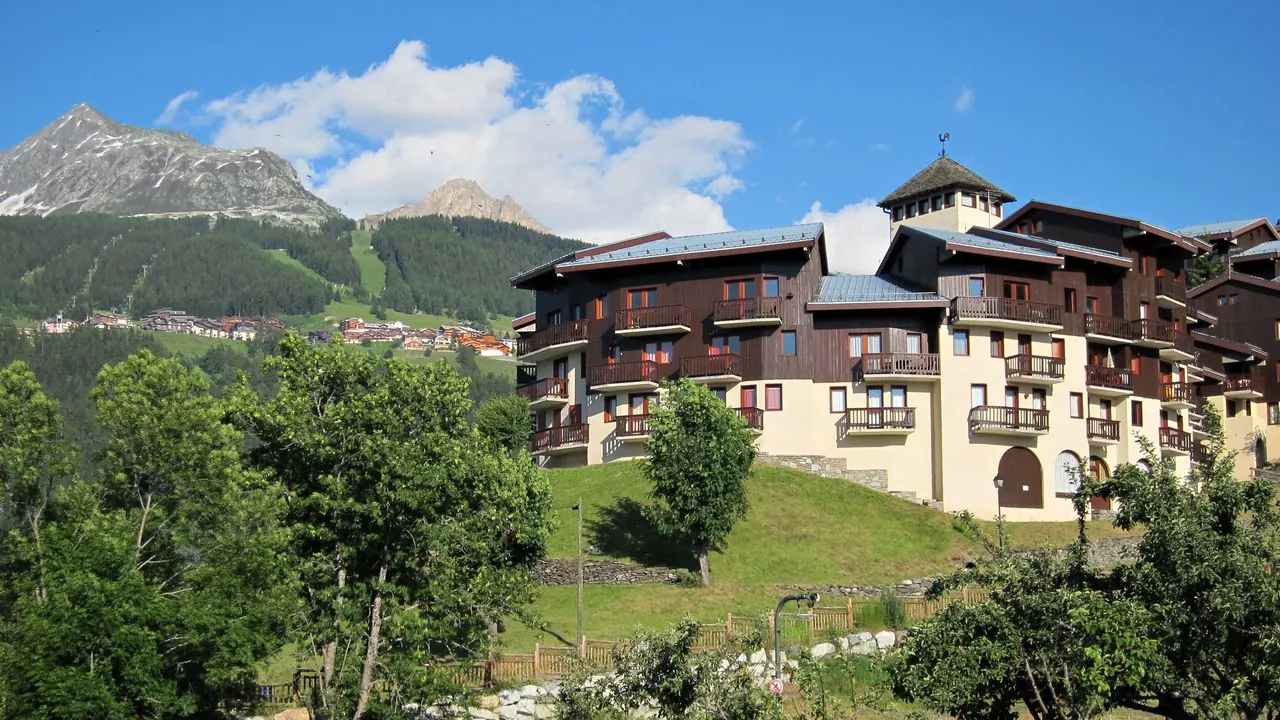
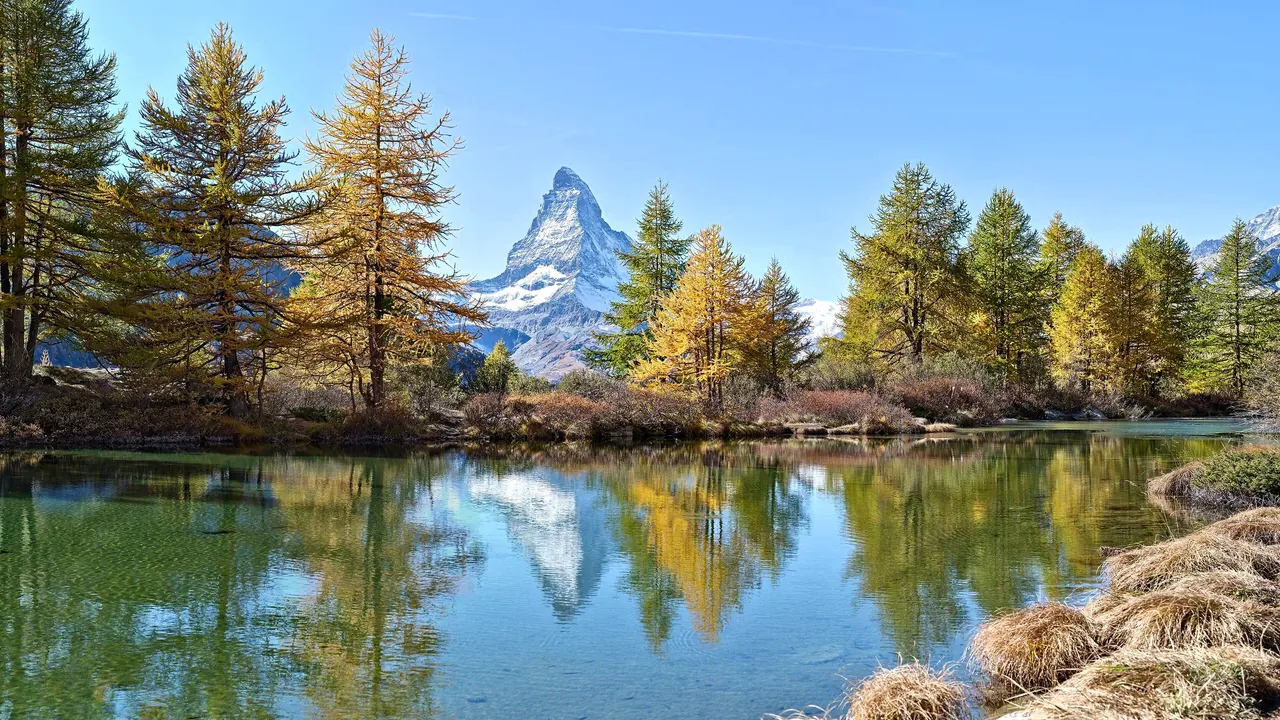
Photos: La Plagne by Henk Monster, CC BY 3.0, cropped; Zermatt by Roy Egloff, CC BY-SA 4.0, cropped.
La Plagne or Zermatt?
Our verdict in twelve categories, each scored against the same fixed benchmark cities, and the climate month by month, so you can choose for your trip.
Choose La Plagne for
- families
- prices
- day trips
La Plagne suits families and groups who want a full ski week on wide, forgiving slopes without paying Swiss prices. Its villages sit right on the snow, the ski schools are built around small children, and the Paradiski link to Les Arcs gives confident skiers more terrain than they can cover in a week. Self-catering apartments keep the bill manageable, as long as you are happy with a purpose-built resort and plain cooking.
Choose Zermatt for
- getting around
- shopping
- live music and the arts
Zermatt is for travellers who want the Matterhorn above their window and are prepared to pay heavily for it. The car-free village is reached by train, the lifts climb to some of the highest terrain in Europe, and the food, hotel spas and mountaineering history give it more polish and more story than a 1960s resort can offer. It suits couples and experienced skiers and walkers better than budget-minded families.
Scoreboard
Twelve categories on one fixed scale from 0 to 100. The shaded stretch is the gap between the two.
Your match
Pick a travel style or drag the sliders, and both match scores follow your weighting.
Wins on families and prices with your weighting.
Wins on getting around and shopping with your weighting.
What matters to you?
Category by category
What the scores mean for a trip.
Beaches & swimming
Neither place is for swimming outdoors, and the difference is small. La Plagne at least has resort aquatic centres and a heated outdoor pool, plus mountain lakes and a valley leisure lake that make good picnic spots. In Zermatt the tarns are there to reflect the Matterhorn rather than to swim in, so a swim means a hotel pool.
Food & drink
Both kitchens lean on melted cheese, but Zermatt eats better. Its wealthy international crowd supports a handful of serious fine-dining rooms in the village. The chalet hamlets of Findeln, Furi and Zum See make long terrace lunches into an outing, and Valais wines such as Petite Arvine and Cornalin go with the raclette and air-dried beef.
La Plagne's strength is the Savoyard repertoire: tartiflette, croziflette, Beaufort and Reblochon, eaten on sunny slope terraces between runs. Down in the villages the choice narrows to pizzerias, crêperies and a few more ambitious rooms, and many guests simply cook in their apartments.
Culture & sights
Neither is a sightseeing destination, and La Plagne has the least to offer. It was built from nothing in the 1960s, so its interest is architectural: the stepped concrete block that sits on the mountainside like a stranded liner, the towers of Plagne Centre, and the bob track from the Albertville Winter Olympics. For old stone you have to drive down to Aime's Romanesque basilica.
Zermatt has enough to fill a morning. The underground Matterhorn Museum tells the story of the 1865 first ascent and the disaster on the way down. The mountaineers' cemetery and the dark larch barns of the Hinterdorf recall the farming village that was here before the hotels, and the Gornergrat cog railway, running since the end of the nineteenth century, is a historic sight in itself.
Nightlife
The two are close, and both are about après-ski rather than real nightlife. In Zermatt the slope-side bars on the runs back into the village fill up in the late afternoon, and a few main-street bars and small clubs run past midnight at weekends. It is lively and expensive. La Plagne's evenings are split across its villages, with pubs and late bars in Plagne Centre and Belle Plagne, and the family crowd means most people are in bed early. Both go quiet in summer.
Nature & outdoors
Both are outstanding mountain bases, and the difference is one of character. La Plagne offers breadth. It is part of the Paradiski area, linked to Les Arcs by the Vanoise Express. It has wide sunny intermediate slopes, tree-lined runs down to Montchavin and Champagny, and in summer the Vanoise National Park, paragliding and rafting on the Isère.
Zermatt offers height and drama. The Matterhorn stands over the village, ringed by dozens of four-thousand-metre peaks. The skiing reaches into Italy, the glacier allows skiing in summer, and guides lead ascents of the big peaks. Walks such as the Five Lakes trail and the Europaweg suspension bridge make it the stronger choice for serious alpinists.
Day trips
Both are dead-end mountain resorts, and most visitors stay up high in either. The real difference is how you get out. From La Plagne you need a car. With one you can reach Aime's basilica, the walled village of Conflans, Chambéry and Annecy, and in summer you can cross the Little St Bernard Pass into the Aosta Valley.
From Zermatt the train does the work. It takes you to Brig's Stockalper Palace and to Sion, with its castle hills and the Valère basilica set among vineyards. Saas-Fee is a bus ride away, and Bern is possible on a long day.
Good for families
La Plagne was designed for families and is clearly the better choice for them. Car-free Belle Plagne sits on the snow, there are large ski-school programmes, snow gardens and kids' clubs, and the wide runs suit wobbly beginners. Older children love the padded bob-raft ride down the Olympic track.
Zermatt's car-free streets are calm and safe, and the nursery slopes at Sunnegga, marmots and cog railways all appeal to children. Beyond that, little is made for them. Rainy days are hard to fill, and the highest viewpoints can be too thin and cold for small children.
Getting around
Zermatt is much simpler from start to finish. You arrive by train, often via the shuttle from Täsch, and walk everywhere after that. Electric taxis and ski buses cover the outer lift stations, and the cog railway, funicular and gondolas all start within reach of the centre. Smooth Swiss rail links take you out again.
Inside La Plagne the villages are easy enough, with ski-in, ski-out lodging, free shuttles and a small cable car. Getting there is the hard part: a winding climb from the railway at Aime, often with snow chains, and a car is close to essential for anything beyond the resort.
Shopping & style
Zermatt has more to look at, though it is a narrow offer. Its main street is lined with Swiss watch and jewellery boutiques and with genuinely good mountaineering outfitters. La Plagne's shops are practical, mostly ski hire and groceries. Its best buys are edible: Beaufort, cured sausages, génépi and local honey from the cheese and produce counters.
Affordability
Neither is cheap, but La Plagne costs far less. Lift passes, hire and lessons still add up there. Even so, the large stock of apartments lets families cook for themselves, and summer and the quieter ski weeks bring real savings.
Zermatt sits at the very top of Alpine prices. Plain hotel rooms are steep in season, a drink on a mountain terrace costs well above the European norm, and the lifts and cog railways are expensive too. Picnics, apartments and sleeping down in Täsch soften the blow without making it a budget trip.
Live music & performing arts
Zermatt has at least two reasons to plan around the calendar. Zermatt Unplugged brings acoustic sets to tents and mountain stages in spring, and a late-summer chamber music festival fills the village church with classical musicians. La Plagne has nothing comparable beyond torchlight descents and bands in the après-ski bars. For theatre or concerts you would drive to Chambéry.
Wellness & relaxation
Zermatt is the more restful place to recover. It has many excellent hotel spas, many looking out at the mountains and some open to non-residents, and the car-free streets keep the village quiet at night.
La Plagne's spas are smaller, mostly saunas and hot tubs in apartment residences plus the resort's aquatic centres. Its real asset is down the valley: the thermal towns of Brides-les-Bains and La Léchère, about an hour away, have mineral springs in use since the nineteenth century.
When should you go?
Pick your month. The climate figures are measured averages, not a forecast.
La Plagne in July
Zermatt in July
Daytime high, °C
Rainfall in the month, mm
Where the figures come from
La Plagne has no weather station within reach, so its figures come from a gridded climate model rather than a measured record, and read a broad area rather than one spot.
Zermatt has no weather station within reach, so its figures come from a gridded climate model rather than a measured record, and read a broad area rather than one spot.
Temperature and rainfall are climate normals, averaged over the years shown. La Plagne: 2001-2020 normals, NASA POWER reanalysis grid, no weather station within 90 km. Zermatt: 1991-2020 normals, TerraClimate 4 km grid at the town, no weather station within 90 km.
Both are winter resorts first. From December to March daytime highs sit around or below freezing in each, with La Plagne slightly colder in midwinter at about -4°C in January. In summer La Plagne is the milder of the two, reaching about 18°C in July against roughly 14°C in Zermatt, so its high pastures are more comfortable for long walks, while Zermatt stays crisp and its glacier keeps some pistes open. Neither gets anywhere near warm enough for outdoor swimming in any month.
Rain and snow are spread across the year in both places rather than arriving in one wet season. La Plagne's wettest month is May, at about 103mm, as winter turns to summer. Zermatt's is November, at about 130mm, which makes late autumn its dullest time to visit. For summer walking, July and August suit both. For skiing, January to March is the core of the season in each.
Which traveller are you?
On a family trip with young children, La Plagne is the easier choice. In Belle Plagne children step straight out onto gentle snow, the ski schools run large programmes for little ones, and the wide easy runs suit nervous beginners. Zermatt has much less made for children.
For a trip on a tight budget, La Plagne leaves far more room, though a winter week there is never cheap. Self-catering apartments, resort cheese counters and the cheaper summer weeks all help. Zermatt is among the dearest places in the Alps, from hotel rooms to lift tickets.
On a relaxing and wellness trip, Zermatt has the edge. It has a run of excellent hotel spas, many with mountain views, and a car-free village that stays quiet in the evening. La Plagne's spas are smaller, built mainly for soaking legs after a ski day.
Before you go
| Measure | La Plagne | Zermatt |
|---|---|---|
| Official language | French | French, German, Italian, Romansh |
| Currency | Euro (EUR) | Swiss Franc (CHF) |
| Sockets | CE230 V, 50 Hz | CJ230 V, 50 Hz |
| Driving side | Right | Right |
| Time zone | UTC+1, UTC+2 in summer | UTC+1, UTC+2 in summer |
| Emergency number | 112 | 112 |
| Elevation | 1,974 m | 1,624 m |
| Main airport | Geneva International Airport (GVA)92 km from centre150 non-stop destinations | Geneva International Airport (GVA)128 km from centre150 non-stop destinations |
| Public holidays this year | 11 days | 9 days |
By the numbers
| Measure | La Plagne | Zermatt |
|---|---|---|
| Population | - | 6,023 |
| People per km² | - | 25 |
| Museums within 10 km | 2 | 2 |
| UNESCO World Heritage sites within 50 km | 0 | 2 |
Where else could you go?
Every comparison below shares a destination with this one, so you can follow La Plagne or Zermatt somewhere new.
- Courchevelvs La Plagne
- Les Arcsvs La Plagne
- Méribelvs La Plagne
- Saas-Feevs Zermatt
- Tignesvs La Plagne
- La Rosièrevs La Plagne