Photos: La Rosière by Florian Pépellin, CC BY-SA 4.0, cropped; Samnaun by Rene Nueesch, CC BY 3.0, cropped.
La Rosière or Samnaun?
Our verdict in twelve categories, each scored against the same fixed benchmark cities, and the climate month by month, so you can choose for your trip.
Choose La Rosière for
- prices
- families
- nature and the outdoors
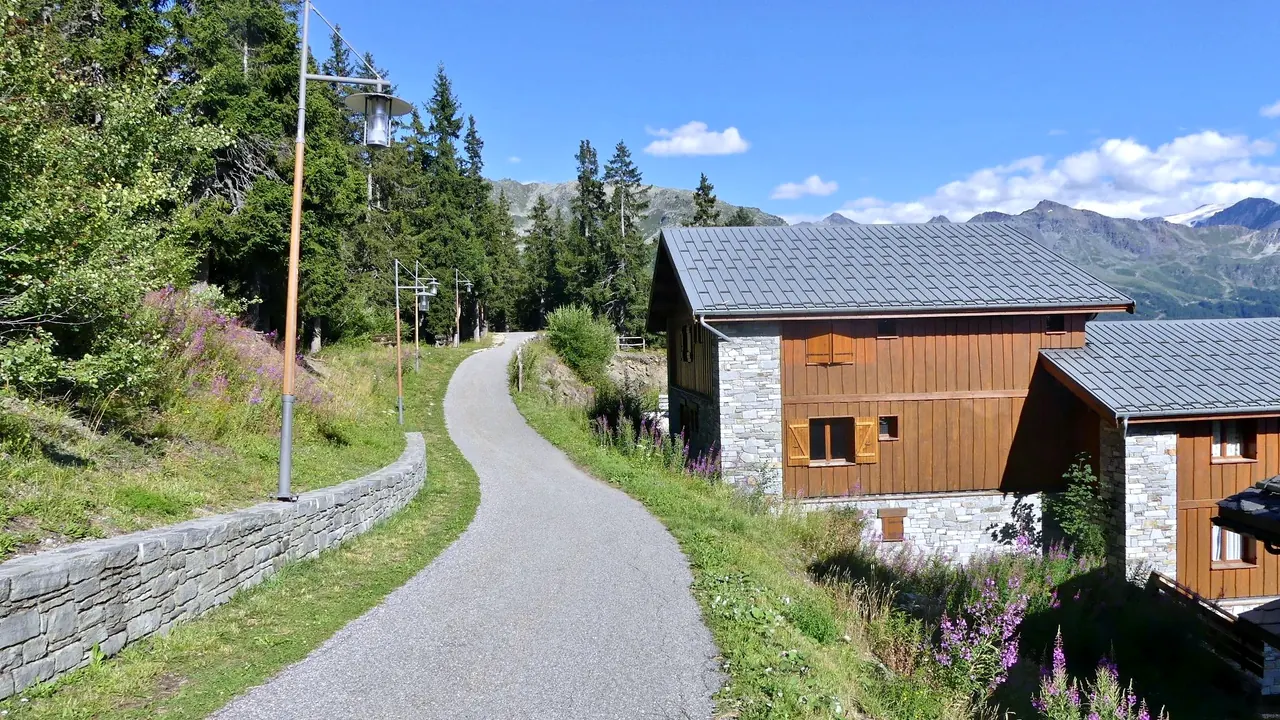
La Rosière suits families on a ski week who want sunny slopes, central nursery areas and a quiet village where older children can wander. The Italian link to La Thuile gives skiers a second country and a change of lunch, and the bill runs lower than in Samnaun, especially for those who self-cater. Choose it if the children's skiing is the point of the trip and evenings in the chalet are enough.
Choose Samnaun for
- shopping
- wellness
- nightlife
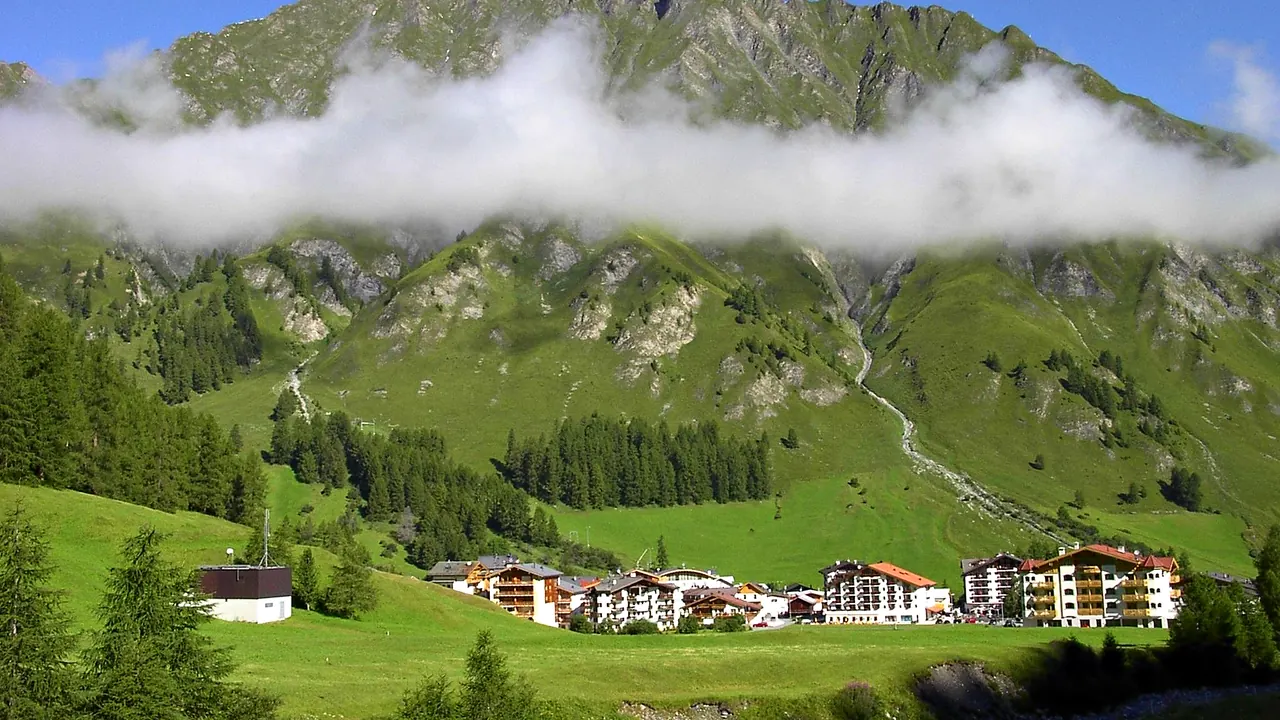
Samnaun is the better pick for adults who like a bit more going on after the lifts close, a calmer stay with saunas and spa time, and a duty-free main street for watches, perfume and spirits. Its ski area runs high above the treeline into Austria, and the hamlets are easier to move between. Expect to pay Swiss prices for the privilege, and to drive a long way in.
Scoreboard
Twelve categories on one fixed scale from 0 to 100. The shaded stretch is the gap between the two.
Your match
Pick a travel style or drag the sliders, and both match scores follow your weighting.
Wins on prices and families with your weighting.
Wins on shopping and wellness with your weighting.
What matters to you?
Category by category
What the scores mean for a trip.
Beaches & swimming
Neither place has any swimming beyond a pool. In La Rosière that means a hotel or residence pool, or a chilly lake down the valley. Samnaun at least has a public indoor leisure pool with slides, which counts for something on a cold afternoon.
Food & drink
Both offer hearty mountain cooking and little more, but the cooking differs. La Rosière serves Savoyard staples such as tartiflette, raclette and Beaufort in chalet restaurants and slope huts, and the link to La Thuile means you can ski to Italy for pasta and espresso at lunch.
In Samnaun meals mostly come on half board in hotel dining rooms, with Graubünden dishes like capuns and pizokel alongside Tyrolean influences. Its real draw is drink: the duty-free shops carry an unusually wide range of wines and spirits to take home.
Culture & sights
Neither is a place for sightseeing. La Rosière's nearest points of interest are the baroque churches of Tarentaise villages and, in summer, the Iron Age stone circle on the Little St Bernard Pass. Samnaun has modest chapels and old timber farmhouses, plus the curious story of how isolation left it outside Swiss customs in 1892.
Nightlife
Samnaun is the livelier of the two, though only modestly. Après-ski runs at the foot of its slopes, and on peak-season weekends a few hotel bars and a small club or two keep going later.
La Rosière is built around families, and after the early après crowd thins most visitors are back in their chalets after dinner. Anyone who wants proper partying would do better at a different resort than either of these.
Nature & outdoors
Both are first-rate mountain bases, so the choice is about the style of skiing. La Rosière sits on a sunny south-facing balcony looking towards the Vanoise glaciers, with tree-lined runs lower down, a link over the pass into Italy and heli-skiing from the Italian side.
Samnaun plugs into one of the largest ski areas in the Alps, shared with Austria's Paznaun, with long, high runs above the treeline and its double-decker cable car. In summer, La Rosière looks towards Mont Blanc and the Vanoise, while Samnaun has border trails and the Swiss National Park within reach.
Day trips
The outings are about equally good, but they fall in different seasons. From La Rosière the best day out is over the Little St Bernard Pass to Roman Aosta and Courmayeur, and that is only possible in summer, when the pass road is open; in winter the choice shrinks to other ski resorts and long drives.
Samnaun has more scattered choices: the sgraffito villages of the Lower Engadine and Tarasp Castle within an hour, and across the Reschen Pass the walled town of Glurns, Marienberg Abbey and the UNESCO-listed convent at Müstair.
Good for families
La Rosière is the more natural family resort. Its sunny nursery slopes and children's ski schools are central, many beds are ski-in, ski-out, and the village is small enough for older children to roam on their own, with sledging and dog sleds for the afternoons.
Samnaun also works for a ski week with children, and its leisure pool with slides is a good bad-weather refuge. But the long, winding road in is hard on young travellers, and outside the slopes there is even less laid on for them.
Getting around
Samnaun is the easier of the two once you are there. Its hamlets string along one road with local buses, and Samnaun Dorf and Compatsch are compact enough to walk, though there is no railway and the postbus from Scuol takes over an hour.
La Rosière's quarters are spread up a hillside, linked by lifts and a free shuttle, and walking between them can be steep and icy. The train stops at Bourg-Saint-Maurice, about half an hour below by road.
Shopping & style
This is where the two differ most. Samnaun is a duty-free enclave, and its main street is packed with shops selling watches, jewellery, perfume, spirits, chocolate and outdoor clothing, often below normal Swiss and Austrian prices, though it is all international brands rather than local craft.
La Rosière's shops are strictly practical: ski hire, small supermarkets and a few counters of local cheese and charcuterie.
Affordability
La Rosière is the cheaper of the two. Winter there is still expensive, but it costs less than the glamorous Tarentaise resorts, self-catering chalets keep budgets down, and summer prices drop sharply.
Samnaun follows Swiss mountain prices for rooms, passes and meals. Duty-free fuel, alcohol and perfume take a little off the total, and half board helps, but neither changes the overall bill much.
Live music & performing arts
Neither has a stage or a concert season. La Rosière's live music is limited to the odd band in a bar. Samnaun is broadly the same, with one exception worth planning around: the big open-air concerts on the slopes that open and close the winter season in its shared ski area.
Wellness & relaxation
Samnaun is the more restful choice. Its bigger hotels mostly have saunas and small spas, the public pool has its own sauna area, and outside peak weeks the valley is slow and quiet. The mineral springs of Scuol are under an hour away.
La Rosière also winds down early, with pools and small spas in its hotels and residences. In summer, though, cars on the pass road pass through the village, and its nearest real bathing, the thermal baths of Pré-Saint-Didier, is across the border in Italy.
When should you go?
Pick your month. The climate figures are measured averages, not a forecast.
La Rosière in July
Samnaun in July
Daytime high, °C
Rainfall in the month, mm
Where the figures come from
La Rosière has no weather station within reach, so its figures come from a gridded climate model rather than a measured record, and read a broad area rather than one spot.
Samnaun has no rain gauge within 25 km of the centre, so its rainfall comes from a gridded climate dataset read at the destination rather than from a gauge further away.
Temperature and rainfall are climate normals, averaged over the years shown. La Rosière: 2001-2020 normals, NASA POWER reanalysis grid, no weather station within 90 km. Samnaun: 1991-2020 normals, Passo Resia / Resia Pass (16.3 km from centre).
Neither place has beach weather at any point of the year; these are mountain resorts, and summer means hiking rather than swimming. La Rosière is the colder of the two, with daytime highs below freezing from December to February, around -4°C in January, which helps the snow on its sunny slopes but makes walking around the village a matter of boots and layers. Its rain is spread fairly evenly through the year, with a peak in May.
Samnaun's days are a few degrees milder throughout the year, reaching about 21°C in July against 18°C at La Rosière, so its summer walking is a touch more comfortable. The catch is rain: Samnaun's summers are distinctly wetter, with around 115mm a month from June to August, while La Rosière stays drier then. For a summer hiking trip, La Rosière's July and August are the steadier bet; for winter, both are at their best from January to March.
Which traveller are you?
On a family trip with young children, La Rosière is the better base. Families pick it deliberately: the nursery slopes and children's ski schools are central, many beds are ski-in, ski-out, and the quiet village lets older children roam.
For a shopping trip, Samnaun wins outright. Its duty-free status turns browsing into a real part of the stay, and a watch, a bottle or a full tank bought on the way out can take the edge off a Swiss bill. La Rosière has nothing comparable.
On a tight budget, La Rosière makes the money go further. Its winter bill is gentler than Samnaun's Swiss prices, self-catering chalets are easy to find, and summer, when lifts and hotels are priced for walkers, costs less again.
Before you go
| Measure | La Rosière | Samnaun |
|---|---|---|
| Official language | French | French, German, Italian, Romansh |
| Currency | Euro (EUR) | Swiss Franc (CHF) |
| Sockets | CE230 V, 50 Hz | CJ230 V, 50 Hz |
| Driving side | Right | Right |
| Time zone | UTC+1, UTC+2 in summer | UTC+1, UTC+2 in summer |
| Emergency number | 112 | 112 |
| Elevation | 1,844 m | 1,846 m |
| Main airport | Geneva International Airport (GVA)89 km from centre150 non-stop destinations | Innsbruck Airport (INN)82 km from centre40 non-stop destinations |
| Public holidays this year | 11 days | 9 days |
By the numbers
| Measure | La Rosière | Samnaun |
|---|---|---|
| Population | - | 773 |
| People per km² | - | 14 |
| Museums within 10 km | 0 | 1 |
| UNESCO World Heritage sites within 50 km | 0 | 1 |
Where else could you go?
Every comparison below shares a destination with this one, so you can follow La Rosière or Samnaun somewhere new.
- Les Arcsvs La Rosière
- Tignesvs La Rosière
- La Plagnevs La Rosière
- Val d'Isèrevs La Rosière
- Courchevelvs La Rosière
- Megèvevs La Rosière