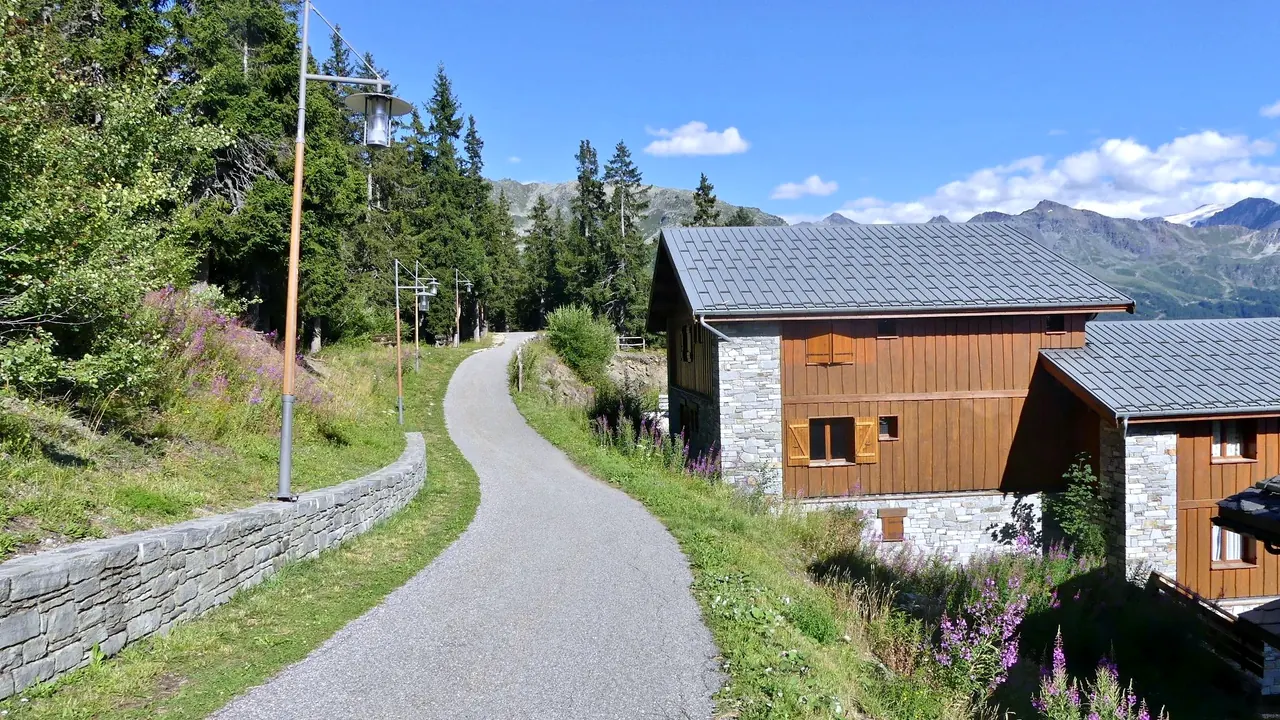
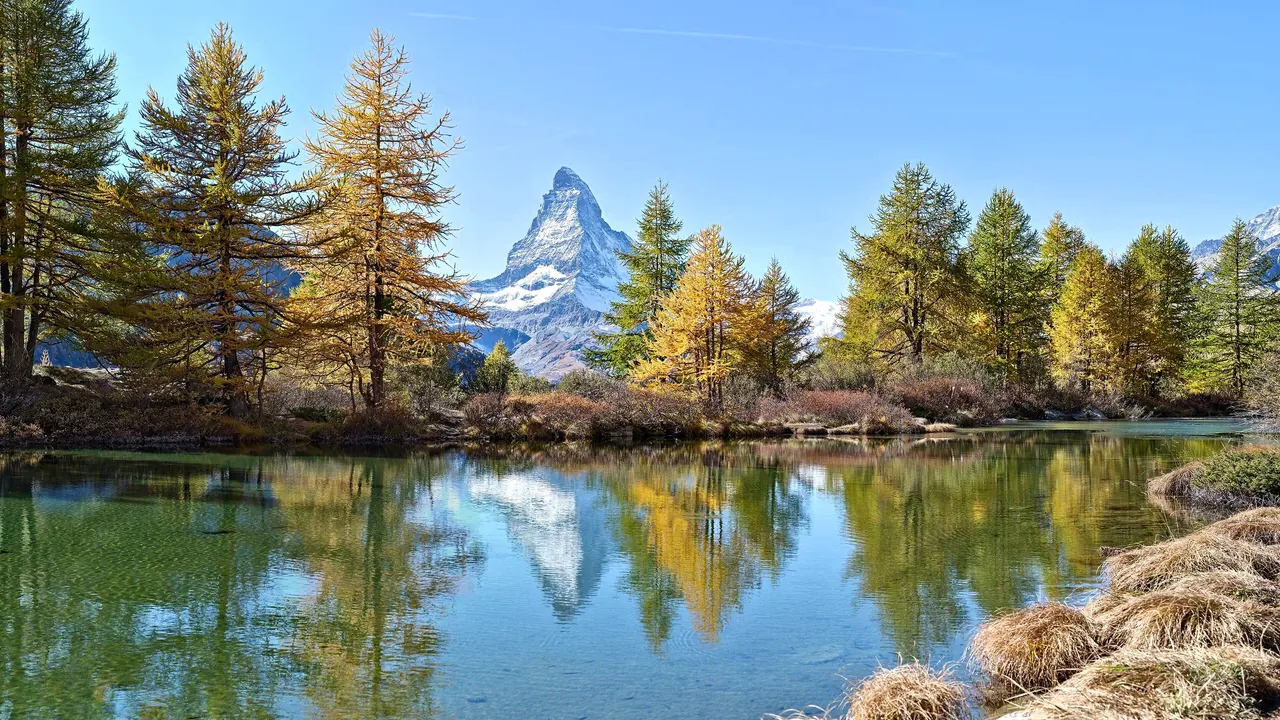
Photos: La Rosière by Florian Pépellin, CC BY-SA 4.0, cropped; Zermatt by Roy Egloff, CC BY-SA 4.0, cropped.
La Rosière or Zermatt?
Our verdict in twelve categories, each scored against the same fixed benchmark cities, and the climate month by month, so you can choose for your trip.
Choose La Rosière for
- prices
- day trips
- families
La Rosière suits families and skiers who want a sunny, quiet resort without Swiss bills. South-facing slopes, central nursery areas and ski-in, ski-out chalets make easy days with children. The link to La Thuile adds Italian runs and lunches, and self-catering keeps a week well within reach. Expect early nights and little to do off the mountain.
Choose Zermatt for
- getting around
- nightlife
- shopping
Zermatt is for travellers who want the most dramatic mountain setting in the Alps and can pay for it. It has the Matterhorn above a car-free village, glacier skiing that carries on into summer, better mountain restaurants and livelier après. It comes out ahead on almost everything except cost, and there it is one of the dearest places in the Alps.
Scoreboard
Twelve categories on one fixed scale from 0 to 100. The shaded stretch is the gap between the two.
Your match
Pick a travel style or drag the sliders, and both match scores follow your weighting.
Wins on prices and day trips with your weighting.
Wins on getting around and nightlife with your weighting.
What matters to you?
Category by category
What the scores mean for a trip.
Beaches & swimming
Neither place offers any swimming worth planning around, and in both a hotel or chalet pool is the realistic option. La Rosière at least has Alpine lakes lower in the valley for a cold summer dip. Zermatt's tarns are for photographing the Matterhorn, not for swimming.
Food & drink
Both serve cheese-heavy mountain cooking: Savoyard tartiflette and Beaufort in La Rosière, Valais raclette, air-dried beef and apricot desserts in Zermatt. Zermatt has more depth. Its chalets in Findeln, Furi and Zum See turn lunch into an outing, the village has a few serious fine-dining kitchens, and wines such as Petite Arvine and Cornalin are poured everywhere.
La Rosière's menus start to repeat after a few nights. Its trump card is the Italian side of the ski area, where pasta, polenta and espresso break the routine at lunch, and Bourg-Saint-Maurice in the valley adds everyday restaurants and a weekly market.
Culture & sights
Neither is a sightseeing destination, but Zermatt has a story to tell. The Matterhorn Museum covers the first ascent of 1865 and the deaths on the descent. The mountaineers' cemetery and the old larch barns of the Hinterdorf fill out a morning, and the Gornergrat railway has run since 1898.
La Rosière is a modern resort with no past of its own. Its nearest sights are the baroque churches of the Tarentaise villages and, in summer, the Iron Age stone circle on the Little St Bernard Pass.
Nightlife
Zermatt is clearly the livelier of the two in winter. Slope-side bars on the runs into the village fill with ski boots and loud music, and a few bars and small clubs on the main street carry on past midnight at busy weekends, though every round costs a lot.
La Rosière is built around families. A handful of bars fill when the lifts close, and most people are back in their chalets after dinner. In summer the two are much alike, with hikers heading to bed early in both.
Nature & outdoors
Both are superb mountain bases, and both ski across the border into Italy. Zermatt has the stronger hand. The Matterhorn rises straight over the village within a ring of four-thousand-metre peaks, the lifts climb to over 3,800m, glacier pistes stay open in summer, and walks such as the Five Lakes trail and the Europaweg start from the lifts.
La Rosière is gentler and sunnier. It sits on a south-facing balcony above the Tarentaise, with wide tree-lined runs and heli-skiing from the Italian side. In summer its pastures are good for hiking, biking and paragliding, with the Vanoise and Mont Blanc close by.
Day trips
Neither is a base for touring, and the difference between them is mostly the season. In summer La Rosière has the better outing, over the Little St Bernard Pass to Roman Aosta, the castles of its valley and Courmayeur. In winter that road closes and every town becomes a long drive.
Zermatt's outings work all year by train: the castle hills and vineyards of Sion, Brig's Stockalper Palace, or Saas-Fee by bus. Each one begins with more than an hour down the valley.
Good for families
Both suit families who ski or hike together, and neither has theme parks, aquariums or much to fill a rainy day. La Rosière is set up around children, with sunny slopes, central nursery areas, ski-in, ski-out lodging, and sledging and dog-sled outings in the afternoons.
Zermatt's strength is its car-free streets, which make the walks between hotel, ski school and lift short and safe, and children enjoy the cog railways. The highest viewpoints, though, can be too cold and thin-aired for the very young.
Getting around
Zermatt is far easier to get around once you arrive. There are no ordinary cars, the village is a compact strip you can walk, electric taxis cover the edges, and the cog railway, funicular and gondolas all start within walking distance of the centre. Trains connect smoothly into the Swiss network.
La Rosière is spread over several quarters along a hillside road. In winter the free shuttle and lifts link them, but walking between them is uphill and sometimes icy. The railway is half an hour down at Bourg-Saint-Maurice, and anything beyond the slopes really needs a car.
Shopping & style
Neither is a reason to travel for shopping, but Zermatt's main street at least gives you something to browse. It has Swiss watch and jewellery boutiques, chocolate, and outfitters with good mountaineering gear. La Rosière's shops cover ski hire, groceries and local cheese, and little else.
Affordability
Neither is cheap in ski season, but La Rosière costs noticeably less than the glamorous resorts around it. Self-catering chalets put a family week within reach, and in summer prices fall a long way.
Zermatt is one of the most expensive places in the Alps, from plain hotel rooms to terrace drinks and the lifts every visitor uses. Staying down the valley in Täsch and picnicking from the supermarket help, but it remains a splurge.
Live music & performing arts
There is little live culture in either, but Zermatt has two festival windows worth timing a visit around. Zermatt Unplugged brings acoustic sets in spring, and a late-summer chamber music festival fills the village church. La Rosière has nothing beyond the odd band in a bar and seasonal resort events.
Wellness & relaxation
Zermatt is the better place to unwind after the slopes. It has an unusual number of polished hotel spas, several selling day access, and car-free quiet that makes evenings restful. La Rosière offers smaller pools and saunas in hotels and residences, though the village itself is calm and goes to bed early.
Neither has thermal springs of its own. From La Rosière in summer, the historic baths of Pré-Saint-Didier are an easy trip over the pass. From Zermatt, the nearest spa towns are further down the Valais valley.
When should you go?
Pick your month. The climate figures are measured averages, not a forecast.
La Rosière in July
Zermatt in July
Daytime high, °C
Rainfall in the month, mm
Where the figures come from
La Rosière has no weather station within reach, so its figures come from a gridded climate model rather than a measured record, and read a broad area rather than one spot.
Zermatt has no weather station within reach, so its figures come from a gridded climate model rather than a measured record, and read a broad area rather than one spot.
Temperature and rainfall are climate normals, averaged over the years shown. La Rosière: 2001-2020 normals, NASA POWER reanalysis grid, no weather station within 90 km. Zermatt: 1991-2020 normals, TerraClimate 4 km grid at the town, no weather station within 90 km.
Both are winter destinations first, with daytime highs below freezing from December to February, but La Rosière is the milder of the two in summer. July reaches about 18°C there against 14°C in Zermatt. That makes La Rosière's high pastures properly pleasant for walks and picnics from June to September, while Zermatt needs an extra layer even in August. Neither gets warm enough for swimming outdoors.
Rain falls steadily all year in both. La Rosière's wettest month is May, at about 103mm. Zermatt's is November, at around 130mm, which makes late autumn its least rewarding time. For skiing, January to March suits both, and September is a calm, dry-enough month for walking in either.
Which traveller are you?
On a trip on a tight budget, La Rosière is the one to choose. A winter week still takes careful planning, but it never reaches Zermatt's level of cost, and a summer walking trip there is much cheaper. In Zermatt even a modest stay is a splurge.
For an outdoors trip, La Rosière gives sunny, unhurried days on wide slopes and high pastures. Zermatt goes further and higher, with guided climbs of four-thousand-metre peaks, the finish of the Haute Route, and lifts that start each ski day or walk right from the car-free village.
For a food and nightlife trip, La Rosière is the quieter option, with simple mountain cooking and evenings that end soon after dinner. Zermatt is the clear choice. Days can be planned around a long lunch on the mountain, and in winter the nights go on long after the lifts close.
Before you go
| Measure | La Rosière | Zermatt |
|---|---|---|
| Official language | French | French, German, Italian, Romansh |
| Currency | Euro (EUR) | Swiss Franc (CHF) |
| Sockets | CE230 V, 50 Hz | CJ230 V, 50 Hz |
| Driving side | Right | Right |
| Time zone | UTC+1, UTC+2 in summer | UTC+1, UTC+2 in summer |
| Emergency number | 112 | 112 |
| Elevation | 1,844 m | 1,624 m |
| Main airport | Geneva International Airport (GVA)89 km from centre150 non-stop destinations | Geneva International Airport (GVA)128 km from centre150 non-stop destinations |
| Public holidays this year | 11 days | 9 days |
By the numbers
| Measure | La Rosière | Zermatt |
|---|---|---|
| Population | - | 6,023 |
| People per km² | - | 25 |
| Museums within 10 km | 0 | 2 |
| UNESCO World Heritage sites within 50 km | 0 | 2 |
Where else could you go?
Every comparison below shares a destination with this one, so you can follow La Rosière or Zermatt somewhere new.
- Les Arcsvs La Rosière
- Saas-Feevs Zermatt
- Tignesvs La Rosière
- La Plagnevs La Rosière
- Val d'Isèrevs La Rosière
- Courchevelvs La Rosière