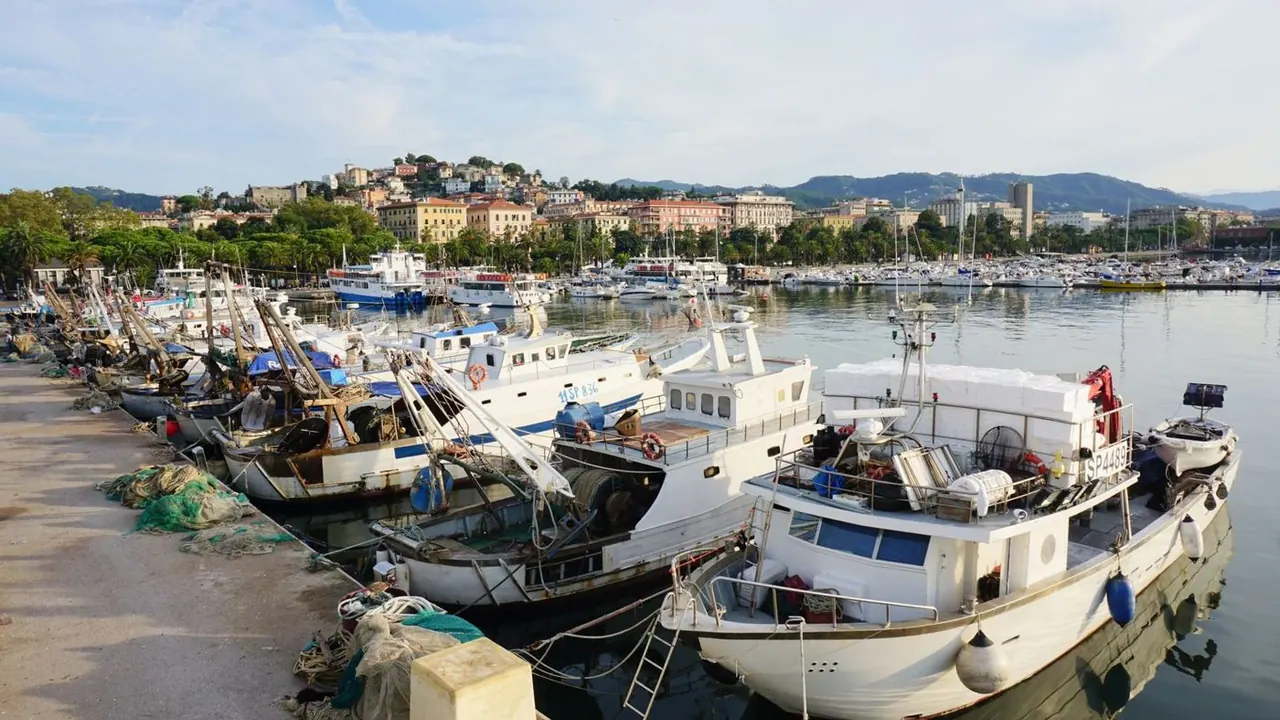
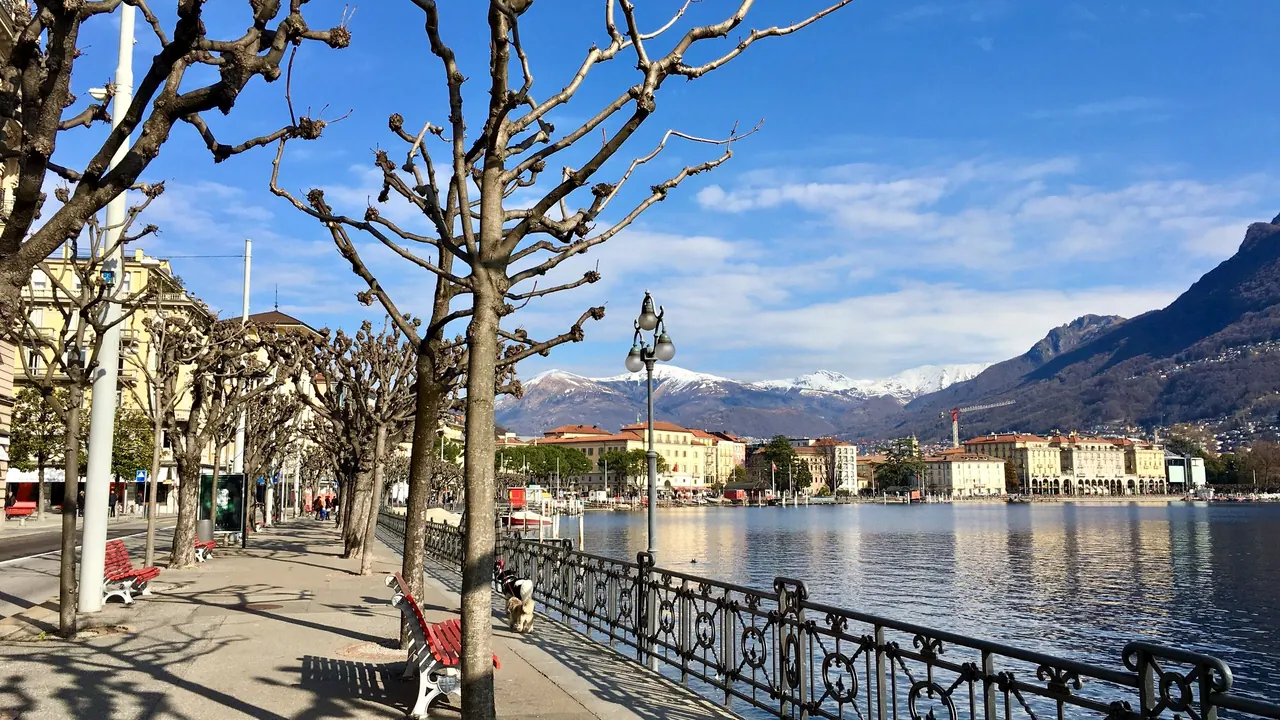
Photos: La Spezia by Irina Balashova, Pexels License; Lugano by Thomas Woodtli from Zürich, Switzerland, CC BY-SA 2.0, cropped.
La Spezia or Lugano?
Our verdict in twelve categories, each scored against the same fixed benchmark cities, and the climate month by month, so you can choose for your trip.
Choose La Spezia for
- prices
- beaches
- food and drink
La Spezia suits a coast-and-walking trip on a sensible budget. The Cinque Terre trails are within minutes, so are the swimming coves of Portovenere and Lerici, and there is everyday Ligurian food: farinata, gulf mussels and Vermentino. Rooms in town cost far less than anything on Lake Lugano. It works best for walkers, swimmers and anyone who wants the sea to be part of the stay.
Choose Lugano for
- live music and the arts
- wellness
- families
For a calmer and more polished break, Lugano makes more sense. Funiculars, lake boats and lidos make it easier with children, and LAC gives the evenings a proper concert hall. A slow lake stay with long grotto lunches is restful in a way the Cinque Terre in summer rarely is. The catch is the cost, because Swiss prices apply to every part of the stay.
Scoreboard
Twelve categories on one fixed scale from 0 to 100. The shaded stretch is the gap between the two.
Your match
Pick a travel style or drag the sliders, and both match scores follow your weighting.
Too close to call, 1 point apart
Wins on prices and beaches with your weighting.
Wins on live music and the arts and wellness with your weighting.
What matters to you?
Category by category
What the scores mean for a trip.
Beaches & swimming
La Spezia has the real seaside, even though its own waterfront is a port. There is sheltered sand and pebble at San Terenzo and Lerici, very clear rocky water off Portovenere and Palmaria, and Monterosso's long beach a short train ride away. The sea stays good for swimming from June into early October.
Lugano offers lake bathing instead. You swim from lidos with lawns, decks and ladders, such as the one at the mouth of the Cassarate, and the season ends in early September. It is a pleasant way to cool off on a hot afternoon, but there is no sand or salt water.
Food & drink
Both kitchens are Italian at heart, but La Spezia's has more to explore and costs less to explore. There is farinata from wood ovens, mussels from the gulf, pesto on testaroli and the Piazza Cavour market, with Cinque Terre whites and Sciacchetrà to drink. Fine dining is thin, but everyday eating is good.
Lugano's strength is the grotto: polenta, braised meat and Ticino Merlot at granite tables under chestnut trees. Beyond that the choice is narrow, street food is scarce, and Swiss prices push many visitors to eat across the border.
Culture & sights
Neither is a heritage destination, and a day or two covers either. La Spezia's centre is a nineteenth-century naval town of straight avenues and Liberty facades. Its highlights are the early Italian paintings at the Museo Amedeo Lia and the prehistoric stele statues in Castello San Giorgio.
Lugano is older in feel, with a small Lombard old town of arcaded squares. Its highlights are Luini's Passion fresco in Santa Maria degli Angioli, the cathedral above the lake and an art collection split between LAC and Palazzo Reali.
Nightlife
La Spezia's evenings are more casual and easier on the wallet than Lugano's, though in neither place does the night run late. People gather for a spritz or a glass of Vermentino on Via del Prione and around Piazza Verdi. In summer, the waterfront at Lerici and San Terenzo across the gulf becomes the place to be. Dress is relaxed, and the evening usually ends soon after dinner.
Lugano treats the same aperitivo as a smarter occasion. A well-dressed, mostly local crowd fills the old-town arcades and the lounge bars by the lake, Swiss prices apply to every glass, and the long dinner that follows is the main event. The lake promenade stays lively a little longer on summer weekends, but clubs are few, and the young go to Milan when they want a proper night out.
Nature & outdoors
Both are places people visit for the landscape, but the landscapes are different. La Spezia has terraced cliffs dropping into the sea and the Cinque Terre paths, from the Sentiero Azzurro to the quieter ridge trails. It also has the loop walk on Palmaria and kayaking and diving in the gulf, with the marble peaks of the Apuan Alps about an hour inland.
Lugano has lake and mountain instead of sea. Funiculars run up Monte Brè and San Salvatore, a rack railway climbs Monte Generoso, and there is the lakeside walk to Gandria and the ridge from Lema to Tamaro. In both places, spring and autumn are the seasons for walking.
Day trips
Both are excellent bases, but they reach different places. From La Spezia most trips stay close and on the coast: the five Cinque Terre villages by local train, Portovenere by boat, walled Sarzana and the ruins of Luni, with Pisa and Lucca about an hour away.
Lugano's trips cross a border and lean towards bigger cities and lakes. Milan has The Last Supper and the Brera gallery, Como is half an hour away, Bellinzona has its castles, and the Borromean Islands lie on Lake Maggiore. Choose La Spezia for villages and coast, and Lugano for cities and lakes.
Good for families
Lugano is the easier family base. Lidos with slides, boat trips to the villages, funicular rides and the miniature Swiss landmarks at Melide fill several days, and Parco Ciani has playgrounds. The steep streets are hard work with a pushchair, though.
La Spezia is flat and relaxed, and the sheltered beaches at San Terenzo and Lerici suit small children. Beyond boat trips and the naval museum, little is aimed at them, and packed trains and steep village paths suit older children better.
Getting around
You can manage without a car in either place, but Lugano's transport works more smoothly. Swiss trains, lake boats and mountain railways connect well, and hotel stays usually include regional transport. The climb from the station to the lake is the main nuisance, and a short funicular takes care of it.
La Spezia's flat centre is easier on foot. Trains, buses and the seasonal ferries reach everything around the gulf, but in summer the Cinque Terre trains and village platforms get very crowded.
Shopping & style
Lugano has the more interesting shopping, mostly for people with money to spend. Via Nassa has Swiss watchmakers, jewellers and Italian fashion houses under its arcades, and there is a large designer outlet near Mendrisio.
La Spezia offers high-street chains and a few boutiques along Via del Prione. The best things to take home are edible: pesto, olive oil, Sciacchetrà and Monterosso anchovies.
Affordability
This is where the two differ most. La Spezia is mid-priced Italy, with cheap local trains, fair trattorias and rooms well below what the Cinque Terre villages charge. Spring and autumn make it cheaper still.
Lugano is expensive in every way, from lakeside hotels and dinners to boat trips and mountain railways, and there is no cheap way to stay there. Grotto lunches and the free transport that comes with many hotels help only a little.
Live music & performing arts
Lugano has the stronger stage, thanks to LAC. Its concert hall has fine acoustics and is home to the Orchestra della Svizzera italiana, with a season of drama and dance alongside, and Estival Jazz brings free concerts to Piazza della Riforma in summer.
La Spezia has the Teatro Civico, plus a long-established summer jazz festival with concerts in piazzas and castle courtyards, but most of the year is quiet. For opera, La Spezia sends you to Genoa or Pisa and Lugano to La Scala.
Wellness & relaxation
Neither city has a bathing tradition, but Lugano is the more restful stay. Lido afternoons, benches in Parco Ciani, long grotto lunches, the big lakeside hotel spas and an indoor pool and sauna complex near Rivera all make it easy to slow down.
In La Spezia, how calm the stay feels depends on when you go. Off-season evenings on the seafront, a slow lunch in Tellaro and the quiet of Palmaria are restful, but summer in the Cinque Terre is not. The nearest thermal baths are at Equi Terme, about an hour inland.
When should you go?
Pick your month. The climate figures are measured averages, not a forecast.
La Spezia in July
Lugano in July
Daytime high, °C
Rainfall in the month, mm
Where the figures come from
La Spezia's temperatures are measured 65 km from the centre, at Pisa / S. Giusto.
La Spezia has no rain gauge within 25 km of the centre, so its rainfall comes from a gridded climate dataset read at the city rather than from a gauge further away.
Temperature and rainfall are climate normals, averaged over the years shown. La Spezia: 1991-2020 normals, Pisa / S. Giusto (64.8 km from centre). Lugano: 1991-2020 normals, Lugano (1.2 km from centre).
La Spezia is the warmer of the two and the one for swimming. From June to September the days are hot, reaching about 30°C in July and August, and the sea warms to 25°C. Summer is also its driest and sunniest stretch. Spring and late September are best for the trails, before or after the heat. The rain arrives in October and November, at around 150mm a month, and winters are mild but dull.
Lugano is cooler and much wetter in the warm months. Summer highs in the mid to high twenties are pleasant for walks and lidos, but rain is heavy from April to November, peaking at about 178mm in May, and summers are less sunny than on the Ligurian coast. Winter is Lugano's driest season, but it is cold, around 7°C in January. For a dependable dry spell in midsummer, La Spezia is the safer bet.
Which traveller are you?
On a trip on a tight budget, La Spezia is the clear choice. Rooms, trattorias, farinata and local trains cost what they do anywhere in Italy. Lugano charges Swiss prices for everything, from hotels and dinners to the funiculars that take you up to its views.
For a beach and sun trip, choose La Spezia. You can swim in warm seawater into early October at Lerici, Portovenere and Monterosso, and summers there are drier and sunnier. Lugano offers lake lidos instead, with a shorter season and more summer rain.
On a relaxing and wellness trip, Lugano is the better match. The whole place moves slowly, with lido afternoons, grotto lunches, Parco Ciani and big hotel spas by the lake. La Spezia is only calm out of season, away from the crowded Cinque Terre.
Before you go
| Measure | La Spezia | Lugano |
|---|---|---|
| Official language | Italian | French, German, Italian, Romansh |
| Currency | Euro (EUR) | Swiss Franc (CHF) |
| Sockets | CFL230 V, 50 Hz | CJ230 V, 50 Hz |
| Driving side | Right | Right |
| Time zone | UTC+1, UTC+2 in summer | UTC+1, UTC+2 in summer |
| Emergency number | 112 | 112 |
| Elevation | 3 m | 283 m |
| Main airport | Pisa International Airport (PSA)65 km from centre82 non-stop destinations | Milan Malpensa International Airport (MXP)46 km from centre208 non-stop destinations |
| Public holidays this year | 13 days | 15 days |
By the numbers
| Measure | La Spezia | Lugano |
|---|---|---|
| City population | 92,119 | 63,495 |
| People per km² | 1,792 | 837 |
| Museums within 10 km | 12 | 17 |
| UNESCO World Heritage sites within 50 km | 2 | 5 |
| Swim season, months above 21 °C | 4 months | - |
Where else could you go?
Every comparison below shares a destination with this one, so you can follow La Spezia or Lugano somewhere new.