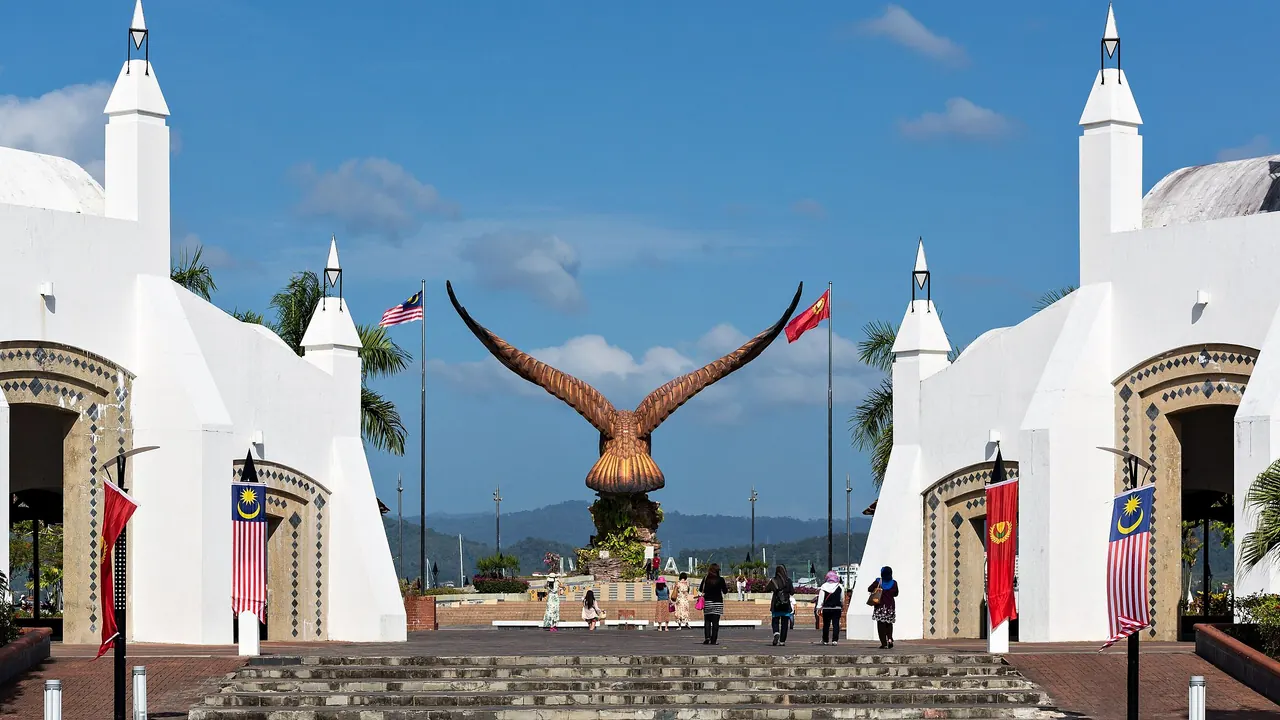
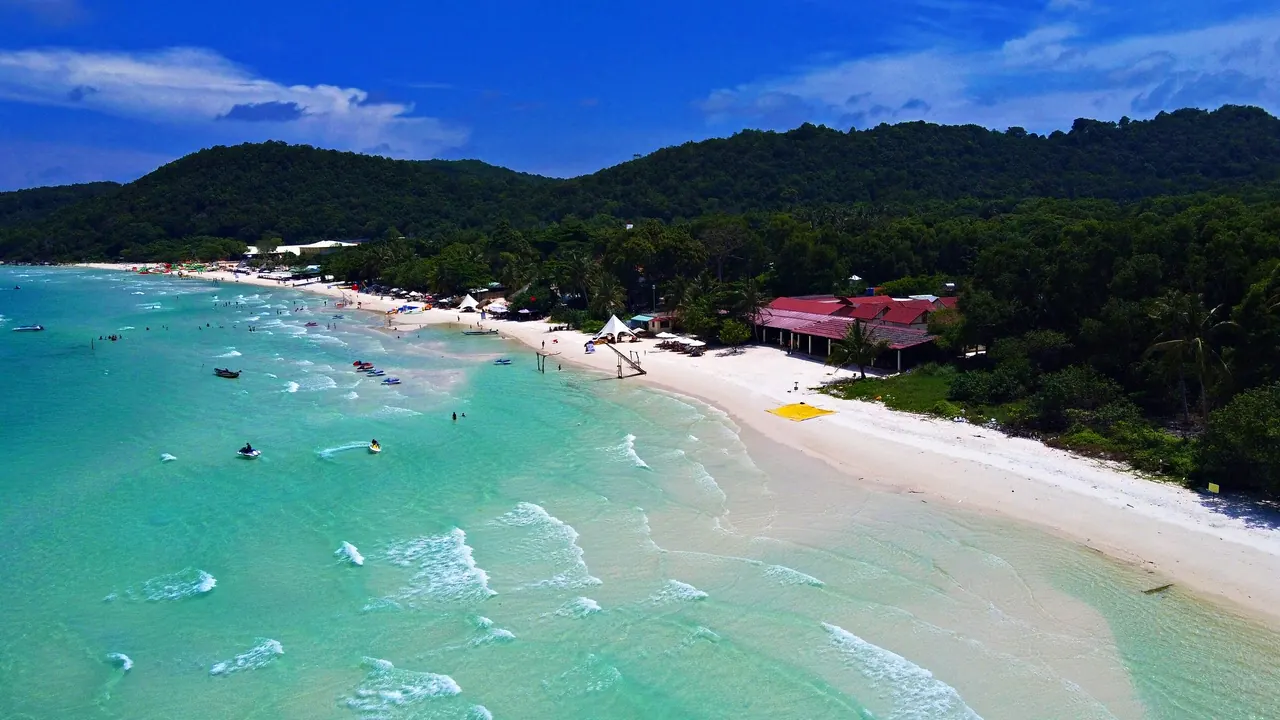
Photos: Langkawi by CEphoto, Uwe Aranas, CC BY-SA 3.0, cropped; Phu Quoc by Trantuonglam, CC BY-SA 4.0, cropped.
Langkawi or Phu Quoc?
Our verdict in twelve categories, each scored against the same fixed benchmark cities, and the climate month by month, so you can choose for your trip.
Choose Langkawi for
- nature and the outdoors
- getting around
- shopping
Langkawi suits travellers who want the landscape as much as the beach. Mangrove channels under limestone cliffs at Kilim, ancient rainforest on the Machinchang range and hornbills on Gunung Raya give it far more to do outdoors. The island is also compact enough that a hire car puts everything within a short drive. Pick it for a couple's escape or an active beach stay with duty-free evenings on the sand at Pantai Cenang.
Choose Phu Quoc for
- food and drink
- families
- live music and the arts
Phu Quoc is the better pick for families and for anyone who travels to eat. A safari park, a theme park and a water park at the end of the Hon Thom cable car keep children busy for longer. The seafood, fish sauce houses and pepper farms give meals more local character. Its softest sand, at Sao and Khem on the southeast coast, also rivals anything on Langkawi.
Scoreboard
Twelve categories on one fixed scale from 0 to 100. The shaded stretch is the gap between the two.
Your match
Pick a travel style or drag the sliders, and both match scores follow your weighting.
Too close to call, level with your weighting
Wins on nature and the outdoors and getting around with your weighting.
Wins on food and drink and families with your weighting.
What matters to you?
Category by category
What the scores mean for a trip.
Beaches & swimming
Both islands are true beach destinations with warm water all year, and the difference lies in the kind of shore. Langkawi's main strip at Pantai Cenang is a wide, shallow bay of pale sand with Pantai Tengah quieter beside it, and Tanjung Rhu and Datai Bay add casuarina-lined and jungle-backed coves.
Phu Quoc has far more coastline, with Long Beach alone running about 20km. Its whitest sand and most turquoise water are at Sao and Khem in the southeast. That east side is also a useful refuge in the monsoon, when the west coasts of both islands turn rough.
Food & drink
Phu Quoc eats better. Seafood is the point there: squid, scallops with spring onion oil and live crab at coastal shacks and the Duong Dong evening market, plus local dishes such as raw herring salad. You can also visit the fish sauce houses and pepper farms behind two of Vietnam's best-known products.
Langkawi's food is cheap and decent rather than distinctive. The roving pasar malam night markets and the roti canai breakfasts in Kuah are the highlights, and much of what Pantai Cenang serves is ordinary tourist fare. Its one advantage is duty-free beer and wine, which comes with dinner far more readily than in most of Malaysia.
Culture & sights
Neither island is a culture trip, and a morning covers the sights on each. Langkawi's sights are gentle and local: the legend of Mahsuri at her tomb and heritage village, the rice museum at Laman Padi and the state gifts in the Galeria Perdana. Phu Quoc has the weightier history in the old prison near An Thoi, a sober record of the French and American wars, along with the Dinh Cau shrine and the hillside Ho Quoc Pagoda.
Nightlife
Evenings are quiet on both islands, and most visitors are in bed well before midnight. Langkawi's scene is beach bars with bean bags and fire-twirling at Pantai Cenang, helped along by duty-free drinks. Phu Quoc spreads its bars between Long Beach and Duong Dong and adds lit-up entertainment districts and a casino in the north. Those districts are livelier at night, but their main attraction is a stroll and a show rather than a bar.
Nature & outdoors
Langkawi is much the stronger island for nature. The whole archipelago is a UNESCO Global Geopark, and you can kayak through the Kilim mangroves under limestone cliffs with sea eagles overhead. The Machinchang cable car climbs above rainforest to the sky bridge, and Gunung Raya gives good chances of seeing hornbills and dusky langurs.
Phu Quoc's protected forest in the north is low and gentle, and its waterfalls only run in the rains. Its outdoor life is mostly on the water: snorkelling and diving trips to the An Thoi islands, night squid fishing and the long cable car to Hon Thom. The reefs there are pleasant but not outstanding.
Day trips
Both islands are poor bases for outings elsewhere, and most visitors stay put and take boat trips. From Langkawi the most tempting escape is a dry-season ferry across the Thai border to Koh Lipe. From Phu Quoc the realistic option is the ferry to Ha Tien on the Vietnamese mainland, a quiet border town with a temple hill and river views.
Good for families
Phu Quoc is the easier island with children. The north has an open-range safari park you tour by bus and a large theme park with rides and an aquarium, and the Hon Thom cable car ends at a water park. Family resorts with kids' clubs line the west and north coasts.
Langkawi works well for a calm, beach-led family stay, with shallow water at Cenang and Tengah, the Underwater World aquarium and eagle-feeding boat trips through the mangroves. Its attractions run out within a few days, though. On both islands, the heat and the need for a taxi or car to reach most sights are the main drawbacks.
Getting around
Langkawi is the simpler island to cover, even though it has no real public transport. It is only about 25km across, with light traffic, cheap car hire and nowhere more than about forty minutes away. The airport is right by Pantai Cenang.
Phu Quoc does have clean electric buses along its main spine from the airport through Long Beach and Duong Dong to the northern resort district. The island is twice as long, though, and the safari park, the southeast beaches and the Hon Thom cable car each take half an hour or more by road. That means a taxi or ride-hail for almost every outing.
Shopping & style
Shopping is thin on both, but Langkawi has a real draw in its duty-free status. Its big complexes in Kuah and along Cenang stock chocolate, alcohol, cosmetics and kitchenware at tax-free prices. Phu Quoc offers souvenirs: pearls from the island's farms, dried seafood and black pepper from the Duong Dong market, and fish sauce that may not be allowed in your luggage.
Affordability
Both are inexpensive by international standards, and on each the bill depends mostly on where you sleep. Langkawi's savings are in cheap car hire and fuel, modest mid-range chalets around Cenang and duty-free drinks. Phu Quoc is cheapest for guesthouses near Duong Dong and market seafood. Its theme parks, cable car and organised boat trips add up quickly, and prices peak in the dry season around the turn of the year.
Live music & performing arts
Neither island has a theatre or a local music scene, but Phu Quoc at least stages something. Its resort districts put on large shows with water, fireworks, lights and drones by the sea, made for tourists but well produced. Langkawi's live entertainment is fire-dancing on Cenang beach, bar cover bands and the occasional Malay cultural show over a resort dinner.
Wellness & relaxation
Both islands are made for slowing down, and both rely on spas and massage rather than any bathing tradition. Langkawi's appeal is the setting, with resort spas in the northwest rainforest using Malay herbal traditions and cheap reflexology along Cenang. Phu Quoc offers cheap Vietnamese massage, herbal baths at the resort spas and yoga at some beach resorts, with the quietest bases at Ong Lang in the north or near Khem Beach in the southeast.
When should you go?
Pick your month. The climate figures are measured averages, not a forecast.
Langkawi in July
Phu Quoc in July
Daytime high, °C
Rainfall in the month, mm
Where the figures come from
Langkawi's temperatures are measured 75 km from the centre, at Alor Star.
Langkawi has no rain gauge within 25 km of the centre, so its rainfall comes from a gridded climate dataset read at the destination rather than from a gauge further away.
Temperature and rainfall are climate normals, averaged over the years shown. Langkawi: 2004-2020 (rainfall 1991-2020) normals, Alor Star (75 km from centre). Phu Quoc: 1991-2020 normals, Phu Quoc (0.7 km from centre).
Both islands share a monsoon pattern, so the best time for either is roughly November to April, when the west coasts are calm and the sea sits near 29°C. Phu Quoc has the drier dry season: January there sees barely any rain. On Langkawi the rain starts earlier, with showers building through April. Langkawi is also hotter at the end of the dry season, peaking at 35°C in March, which makes midday walking hard work. On Phu Quoc the days stay a little milder all year.
From May to October both get heavy rain, but Phu Quoc's wet season is more intense, reaching about 520mm in September, against a peak of about 385mm on Langkawi in October. In those months Phu Quoc at least has a sheltered east coast to fall back on. On Langkawi the west-coast beaches turn choppy and cloudy. For either island, December to March is the safest window.
Which traveller are you?
On an outdoors trip, Langkawi is the clear choice. Its geopark landscape offers kayaking through the Kilim mangroves, the Machinchang rainforest, Seven Wells waterfall and wildlife on Gunung Raya, while Phu Quoc's interior is mostly flat farmland and its reefs are only middling.
On a family trip with children, Phu Quoc gives more to fill the days. It has a drive-through safari park, a theme park with an aquarium and a water park reached by cable car. Langkawi's aquarium, sky bridge and mangrove boat trips are used up sooner.
For a food and nightlife trip, Phu Quoc has the edge on the plate, with grilled seafood, herring salad, stilted restaurants at Ham Ninh and pepper farms. Evenings on both islands are low-key. Phu Quoc adds staged shows, while Langkawi has cheap duty-free beer on the sand.
Before you go
| Measure | Langkawi | Phu Quoc |
|---|---|---|
| Official language | Malay | Vietnamese |
| Currency | Malaysian Ringgit (MYR) | Dong (VND) |
| Sockets | G240 V, 50 Hz | ACFG220 V, 50 Hz |
| Driving side | Left | Right |
| Time zone | UTC+8 | UTC+7 |
| Emergency number | 999 | Police 113, ambulance 115, fire 114 |
| Main airport | Langkawi International Airport (LGK)9 non-stop destinations | Phú Quốc International Airport (PQC)36 non-stop destinations |
By the numbers
| Measure | Langkawi | Phu Quoc |
|---|---|---|
| Population | 64,792 | 179,480 |
| People per km² | 136 | 305 |
| Swim season, months above 21 °C | 12 months | 12 months |
Where else could you go?
Every comparison below shares a destination with this one, so you can follow Langkawi or Phu Quoc somewhere new.
- Koh Lipevs Langkawi
- Koh Rongvs Phu Quoc
- Penangvs Langkawi
- Koh Lantavs Langkawi
- Koh Phi Phivs Langkawi
- Mekong Deltavs Phu Quoc