Photos: Mekong Delta by Bùi Thụy Đào Nguyên, CC BY-SA 4.0, cropped; Phu Quoc by Trantuonglam, CC BY-SA 4.0, cropped.
Mekong Delta or Phu Quoc?
Our verdict in twelve categories, each scored against the same fixed benchmark cities, and the climate month by month, so you can choose for your trip.
Choose Mekong Delta for
- day trips
- prices
- culture and sights
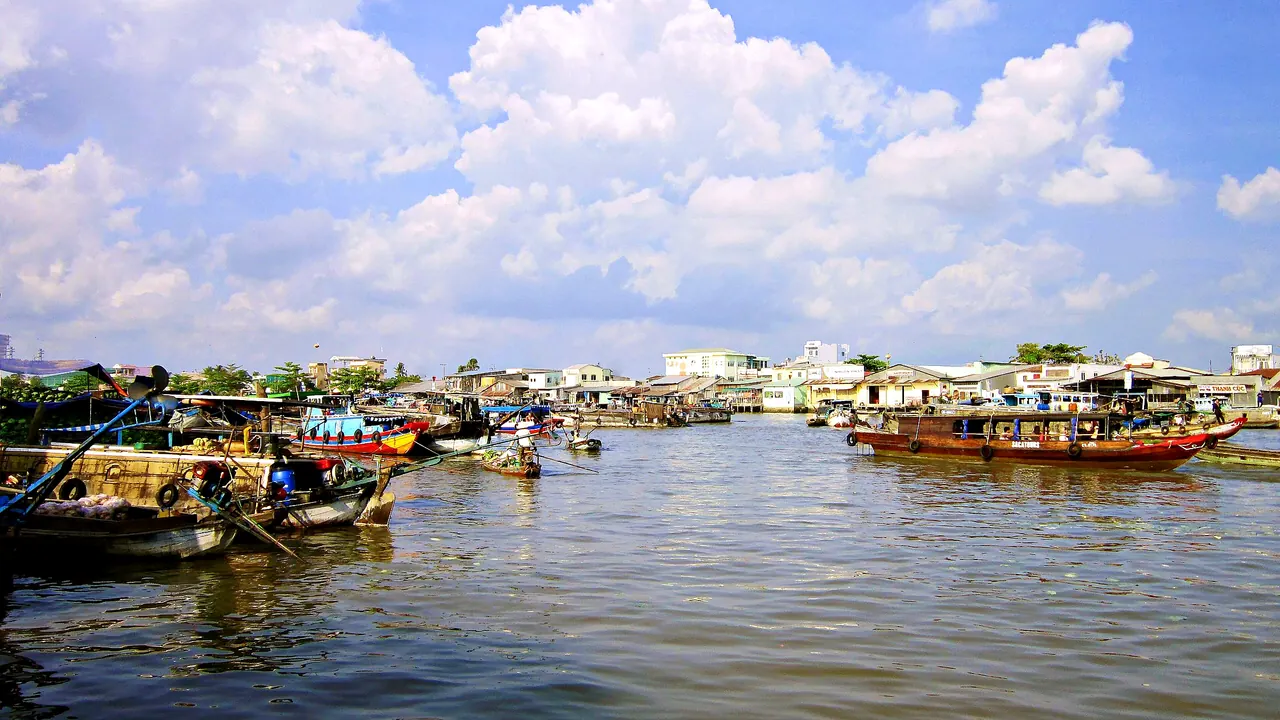
The Mekong Delta suits travellers who want to see how people live on the water: dawn floating markets at Cai Rang, Khmer pagodas around Soc Trang, orchard homestays and canal trips by sampan. It is a journey you make town by town rather than a place you stay. It pays off if you are curious about food and daily life more than comfort, and it is among the cheapest places to travel in the region.
Choose Phu Quoc for
- beaches
- families
- wellness
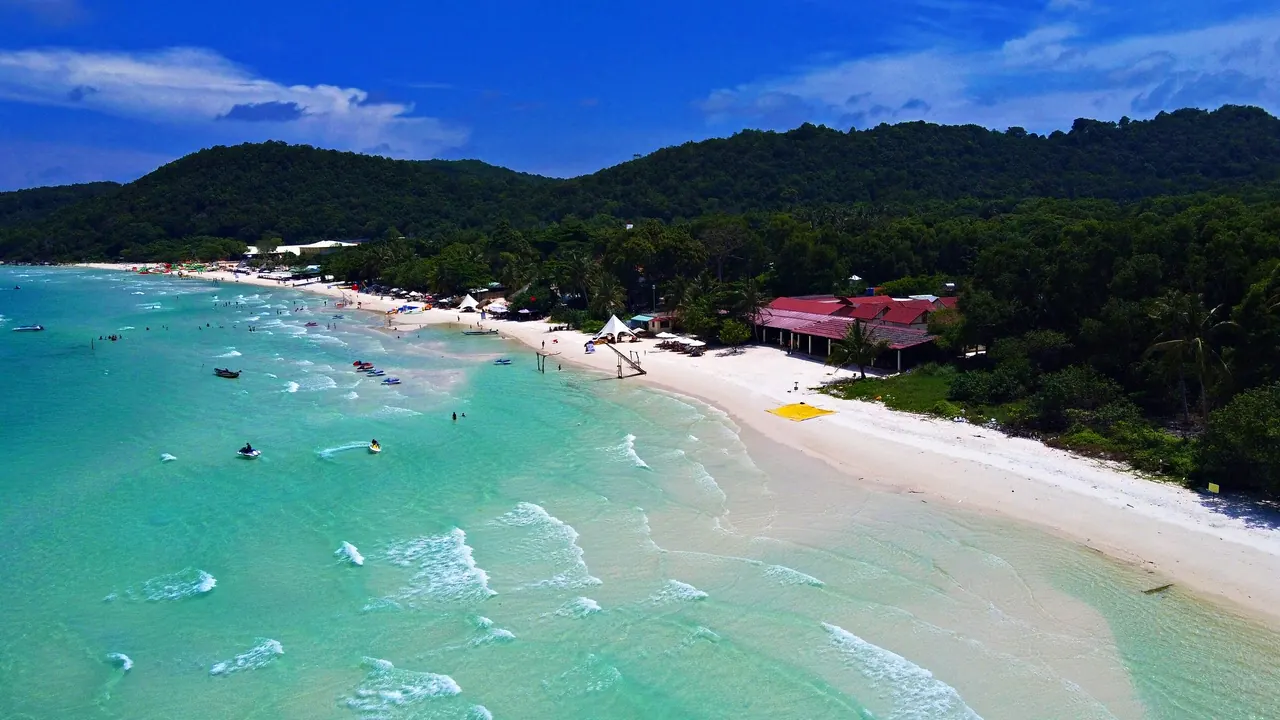
For a beach vacation that takes little effort, Phu Quoc is the better pick. It has long stretches of sand, a warm sea, resort pools, cheap massage and theme parks for the children. Heritage and day trips are thin, so it works best as a place to stop and rest. That is why many people make it the last leg after the delta, reached by ferry from Ha Tien.
Scoreboard
Twelve categories on one fixed scale from 0 to 100. The shaded stretch is the gap between the two.
Your match
Pick a travel style or drag the sliders, and both match scores follow your weighting.
Too close to call, 2 points apart
Wins on day trips and prices with your weighting.
Wins on beaches and families with your weighting.
What matters to you?
Category by category
What the scores mean for a trip.
Beaches & swimming
Most of the delta's coast is mud flat and mangrove with brown water. Swimming only begins on its far western edge, at small bays around Ha Tien such as Mui Nai and on the fishing islands of Hon Son and Nam Du. They are pleasant, but they are an extra at the end of the trip.
On Phu Quoc the beach is the reason to go. Long Beach runs some 20km with sunsets over the gulf, and the finer white sand and turquoise water are at Sao and Khem on the southeast coast. From May to October the west side turns rough and the sheltered east coast is the better place to swim.
Food & drink
The delta has the better and wider food. Hu tieu at a riverside stall, giant turmeric banh xeo, snakehead grilled in clay, Khmer-influenced mam hotpot around Chau Doc and fruit picked from the tree in Vinh Long make meals half the point of the trip.
Phu Quoc's menu is mostly seafood, very fresh and simply cooked, from herring salad to the grills at the Duong Dong night market and the restaurants on stilts at Ham Ninh. The fish sauce houses and pepper farms are worth a visit, but beyond these and resort buffets the choice is short.
Culture & sights
Neither has great museums, but the delta has much more to see. There are Khmer pagodas with naga balustrades in Soc Trang and Tra Vinh, the pilgrimage temples of Sam Mountain, Cham villages near Chau Doc, the ancient Funan site at Oc Eo and the floating markets themselves.
Phu Quoc's heritage comes down to a handful of sites: the sober prison museum near An Thoi, the Dinh Cau shrine and Ho Quoc Pagoda above the east coast. Its copies of European streets in the resort districts are pleasant to walk around but have no history.
Nightlife
Neither is a place for a big night out, but Phu Quoc has more going on after dark. There are sundowners on Long Beach, bars in Duong Dong, the lit-up entertainment districts and a casino in the north.
In the delta only Can Tho has much of a night, with its riverfront promenade and loud open-air beer restaurants. Elsewhere, an early boat to the market sends everyone to bed soon after dinner.
Nature & outdoors
Both have plenty to offer outdoors, but of very different kinds. The delta is a flat world of water, best seen from a small boat in the canals near Cai Be and Ben Tre or by bicycle on the dyke paths. For wildlife there is the flooded Tra Su forest, the storks at Tram Chim and the mangroves at Ca Mau.
On Phu Quoc most of the outdoor life is at sea: snorkelling and diving among the small islands south of An Thoi, kayaking and sunset cruises. The forested national park in the north is good for short walks, and the Hon Thom cable car gives the widest views.
Day trips
From Can Tho the delta opens up in every direction. Soc Trang's pagodas, the orchard islands of Vinh Long and the old houses of Sa Dec are all within an hour or two, though the outings start to feel alike.
Phu Quoc offers little more than island-hopping boats around the An Thoi archipelago and the ferry of just over an hour to Ha Tien. Most days there are spent on the island.
Good for families
Phu Quoc is much the easier choice with children. The safari park and theme park in the north, the water park at the end of the Hon Thom cable car, resorts with kids' clubs and a calm, shallow sea in the dry season make the days simple.
The delta can delight school-age children who like boats, animals and fruit straight from the tree. With toddlers it is hard work, because of the long hot road journeys, the lack of anything built for children and the jetties without railings.
Getting around
You need a ride in both places, but for different reasons. The delta means road journeys across many branches of the river. Coaches link Ho Chi Minh City, Can Tho and Chau Doc well, but side roads are slow, small ferries break up the journeys and many visitors hire a driver.
Phu Quoc is one island about 50km long, with electric buses along the west-coast spine and plenty of ride-hailing, so distances are shorter. Even so, almost every beach or attraction is half an hour or more by car.
Shopping & style
The delta's things to take home are woven and handmade: Cham silk and checked krama scarves from the villages near Chau Doc, sedge mats, rice paper and coconut-shell goods from Ben Tre. Its markets mostly sell food, and the few malls in Can Tho add little.
Phu Quoc's souvenirs come from its farms and the sea. There is black pepper, fish sauce aged in wooden vats, and cultured pearls sold in showrooms on the west coast and at the Duong Dong evening market. Check before packing the fish sauce, because airlines may not allow it in luggage. The resort districts have rows of shops, but on both trips shopping is something you do along the way, not a reason to go.
Affordability
The delta is clearly the cheaper of the two. Homestays, noodle stalls, coaches and motorbike taxis cost very little, and only private boat charters and the few riverside resorts push costs up.
Phu Quoc is still good value for a beach island, and you can eat and sleep cheaply near Duong Dong. The beach resorts, theme parks, cable car and boat trips add up, though, especially in the dry-season peak around the turn of the year.
Live music & performing arts
The delta has music of its own. Don ca tai tu, the southern chamber music for zither, moon lute and voice, and cai luong opera are usually heard in short sets in orchard gardens on boat tours. The Khmer pagodas of Soc Trang and Tra Vinh hold dance at festivals such as Ok Om Bok. The quality of the garden sets varies, but this is the region's own tradition.
On Phu Quoc the evening entertainment is staged for visitors. There are shows of water, fireworks and drones by the sea in the south and multimedia shows in the north. They are well produced, but apart from them there are only resort bands and the occasional act in a beach bar.
Wellness & relaxation
Phu Quoc is the easier place to unwind. Massage is cheap and everywhere, resort spas offer herbal baths, some beach resorts have yoga, and the coasts around Ong Lang and Khem Beach are quiet.
In the delta, rest comes from the slow pace instead: a hammock in an orchard homestay and a slow boat ride at dusk. The towns are noisy with motorbikes, though, so it pays to stay somewhere on the water.
When should you go?
Pick your month. The climate figures are measured averages, not a forecast.
Mekong Delta in July
Phu Quoc in July
Daytime high, °C
Rainfall in the month, mm
Where the figures come from
Mekong Delta has no weather station within reach, so its figures come from a gridded climate model rather than a measured record, and read a broad area rather than one spot.
Temperature and rainfall are climate normals, averaged over the years shown. Mekong Delta: 2001-2020 normals, NASA POWER reanalysis grid, no weather station within 90 km. Phu Quoc: 1991-2020 normals, Phu Quoc (0.7 km from centre).
Both are hot all year, so the choice is mostly about rain. In the delta the dry months run from December to April, with barely any rain from January to March. March and April are the hottest months, though, at around 36°C, which makes walking around at midday hard work. Rain sets in from May and stays heavy until October. From September to November the floods change the landscape, so late in the wet season is when the water is highest.
On Phu Quoc the heat stays steady, rarely far from 31°C, and the sea is between 28°C and 31°C all year. December to March is the beach season, dry and calm on the west coast where most visitors stay. Rain builds from April and peaks far above anything the delta gets, with more than 500mm in September. The island's wet season is heavier and longer, and while it lasts the sheltered east coast is the better side for swimming.
Which traveller are you?
On a beach and sun trip, Phu Quoc wins easily. Long Beach, the white sand of Sao and Khem, a warm sea and resort pools are the whole point of the island. The delta only reaches clear water at its far western tip near Ha Tien.
For a culture and arts trip, the Mekong Delta has far more to offer. Khmer pagodas in Soc Trang, the Sam Mountain temples, Cham villages, floating markets and don ca tai tu music show a way of life that Phu Quoc's few sights cannot match.
On a family trip with young children, Phu Quoc is the easier choice. It has a safari park, a theme park, a water park, resorts with kids' clubs and a shallow sea in the dry season. In the delta, children face long hot drives and jetties without railings.
Before you go
| Measure | Mekong Delta | Phu Quoc |
|---|---|---|
| Official language | Vietnamese | Vietnamese |
| Currency | Dong (VND) | Dong (VND) |
| Sockets | ACFG220 V, 50 Hz | ACFG220 V, 50 Hz |
| Driving side | Right | Right |
| Time zone | UTC+7 | UTC+7 |
| Emergency number | Police 113, ambulance 115, fire 114 | Police 113, ambulance 115, fire 114 |
| Main airport | Can Tho International Airport (VCA)7 non-stop destinations | Phú Quốc International Airport (PQC)36 non-stop destinations |
By the numbers
| Measure | Mekong Delta | Phu Quoc |
|---|---|---|
| Population | 24,490,000 | 179,480 |
| People per km² | - | 305 |
| Swim season, months above 21 °C | - | 12 months |
Where else could you go?
Every comparison below shares a destination with this one, so you can follow Mekong Delta or Phu Quoc somewhere new.
- Koh Rongvs Phu Quoc
- Ho Chi Minh Cityvs Mekong Delta
- Koh Koodvs Phu Quoc
- Koh Changvs Phu Quoc
- Koh Rongvs Mekong Delta
- Koh Sametvs Phu Quoc