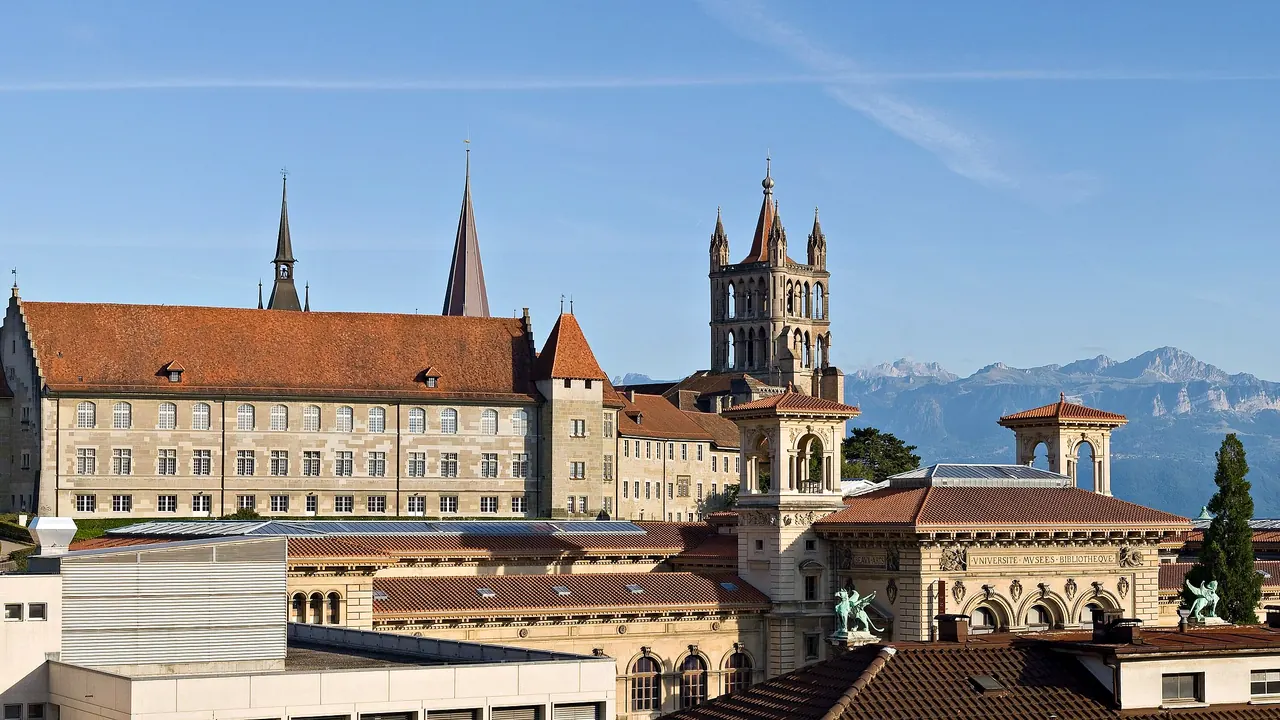
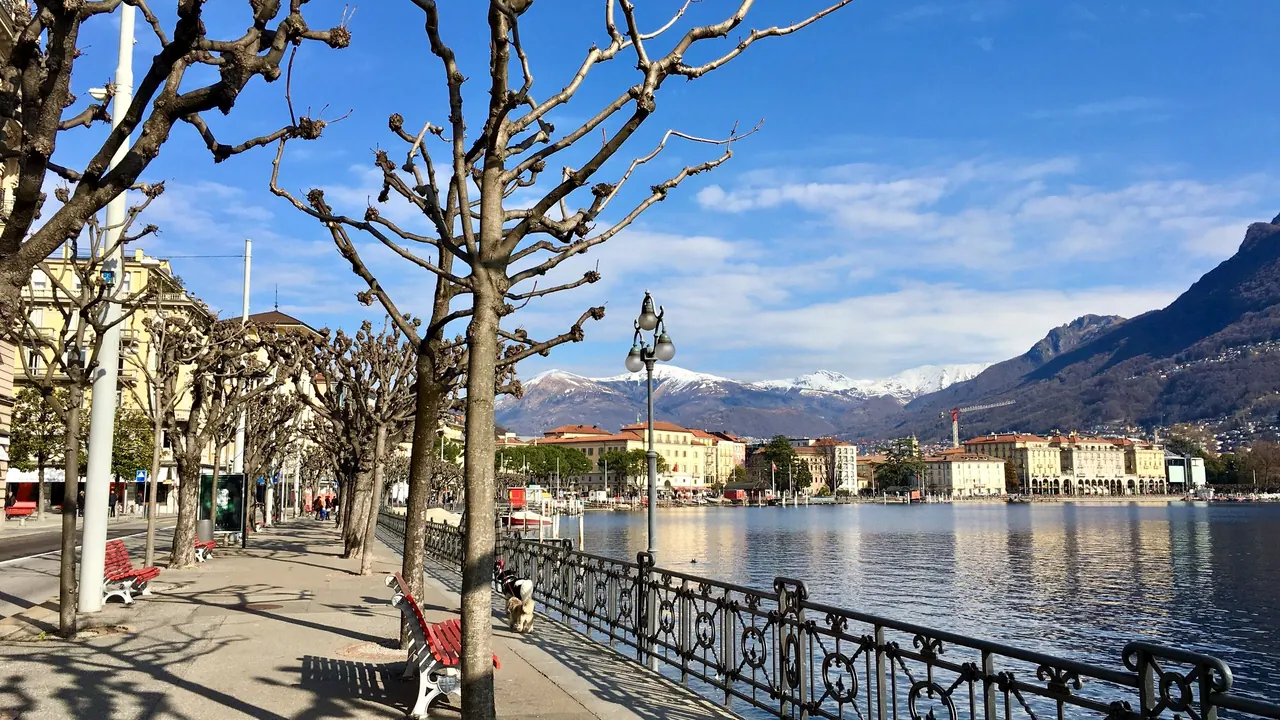
Photos: Lausanne by Christian Mehlführer, CC BY-SA 3.0, cropped; Lugano by Thomas Woodtli from Zürich, Switzerland, CC BY-SA 2.0, cropped.
Lausanne or Lugano?
Our verdict in twelve categories, each scored against the same fixed benchmark cities, and the climate month by month, so you can choose for your trip.
Choose Lausanne for
- culture and sights
- live music and the arts
- nightlife
Lausanne is the better pick for travellers who want a city as well as a view. It has the stronger museums, led by the Olympic Museum and the Plateforme 10 cluster, a serious stage life built around dance, more for children to do, and a student crowd that keeps the Flon busy at weekends. Add the Lavaux vineyards on the doorstep and fast trains across French-speaking Switzerland, and it suits a varied, active stay.
Choose Lugano for
- beaches
- prices
- shopping
Lugano suits a slower trip where the lake and the light matter more than the sights. Its old town is seen in a day, and the evenings end early. What it offers instead is an Italian rhythm of arcades, aperitivo and long lunches in grotti, brighter winters, funiculars straight from town onto the mountains, and Milan and Lake Como close enough for an easy day out.
Scoreboard
Twelve categories on one fixed scale from 0 to 100. The shaded stretch is the gap between the two.
Your match
Pick a travel style or drag the sliders, and both match scores follow your weighting.
Wins on culture and sights and live music and the arts with your weighting.
Wins on beaches and prices with your weighting.
What matters to you?
Category by category
What the scores mean for a trip.
Beaches & swimming
Neither city has a beach in the usual sense. Both swim in their lake from about June to early September, and the water is similarly warm. Lausanne's bathing happens on lawns, piers and pebble shores from Vidy to Lutry, with the historic Bellerive lido as the classic afternoon.
Lugano's swimming is more organised around lidos with wooden decks, pools and ladders, the main one at the mouth of the Cassarate. It also has small lake baths in villages reached by boat, which makes a swim easy to combine with a day on the water.
Food & drink
Lausanne eats better, mostly because of its wine and its top restaurants. Lavaux Chasselas tasted in village caveaux, lake perch, papet vaudois and the Saturday market at Riponne give it a clear local identity, and some of Switzerland's most celebrated restaurants are in and around the city.
Lugano's strength is narrower but more atmospheric: the grotto, where polenta, braised meats and salumi come to granite tables under chestnut trees, with Ticino Merlot. Beyond that the range is thin, and many visitors save their serious meals for Italy.
Culture & sights
Lausanne has much more to see. The cathedral of Notre-Dame, with its painted portal and the night watchman still calling the hours, anchors a steep old town. The Olympic Museum at Ouchy, Plateforme 10 beside the station and the Collection de l'Art Brut give it real depth.
Lugano is pleasant rather than substantial: the Lombard arcades around Piazza della Riforma, San Lorenzo above them, and Luini's Passion fresco in Santa Maria degli Angioli as the single great work. One day covers it, where Lausanne needs two or three.
Nightlife
Lausanne is the livelier of the two after dark, thanks to its university and EPFL students. The Flon's warehouse clubs and late bars fill on Friday and Saturday nights, and summer evenings spill onto the waterfront at Ouchy.
Lugano's evenings are an aperitivo and a long dinner, with a few lounge bars by the water and hardly any clubs. The town is usually quiet before midnight, and young locals head to Milan to go out.
Nature & outdoors
Both cities are set in outstanding scenery, but it is different in kind. Lausanne looks across Lake Geneva to the French Alps, has the Lavaux vineyard terraces for walking, and puts the high mountains of the Vaud Alps within an hour, with skiing at Villars and Les Diablerets and a glacier at Glacier 3000. The Jura adds long hikes and cross-country skiing.
Lugano's mountains begin at the edge of town. Funiculars climb Monte Brè and San Salvatore, a rack railway goes up Monte Generoso, and the Gandria lakeside path and the Lema to Tamaro ridge are classic walks. It is better for walking in spring and autumn than for snow, since the high Alps are further off.
Day trips
Both are excellent bases, but they point in different directions. From Lausanne, trains reach Montreux and the Château de Chillon, Geneva, Bern, Fribourg and Gruyères, and boats cross to Évian, so the trips stay mostly within Swiss towns and villages.
Lugano's day trips cross a border. Milan with The Last Supper is just over an hour away, Como half an hour, and Bergamo is within reach. On the Swiss side are the castles of Bellinzona and Lake Maggiore with the Borromean Islands, which gives Lugano the better choice for anyone who wants Italian cities in the mix.
Good for families
Lausanne has more aimed directly at children. The Olympic Museum is interactive, the aquarium-vivarium shows freshwater life, and Sauvabelin combines an animal park, pedal boats and a wooden tower to climb, with paddle steamers and the Bellerive pools for summer.
Lugano is just as safe and calm, but it relies on the lake and the mountain railways. Boat trips, lido slides and the Swissminiatur park at Melide suit small children well, but there is no zoo, aquarium or science museum for older ones. Both cities are steep work with a pushchair.
Getting around
Getting around is equally easy in both, and in both the obstacle is the slope rather than distance. Lausanne solves it with the m2 metro, which climbs more than 300m from Ouchy through the station and the Flon to the upper town, so a day can be planned largely around one line.
Lugano is more of a walking town along its flat lakefront promenade, with a short funicular from the high station down to the old town and buses for the hillsides. Its funiculars and rack railways also carry you straight up the surrounding mountains, so getting about doubles as sightseeing. Anyone tempted to drive should know that parking in town is scarce and the valley roads are narrow.
Shopping & style
Shopping is a side activity in both, with similar strengths: Swiss watches, jewellery and food to take home. Lausanne spreads it across Rue de Bourg, Saint-François and the Flon, and its best buys are chocolate and Lavaux wine.
Lugano concentrates everything in arcaded Via Nassa, which leans more towards Italian fashion and a wealthy clientele, with delicatessens in the lanes around it. It also has the large designer outlet at Mendrisio near the border and Milan within easy reach for serious shopping.
Affordability
Both are among the most expensive places in Europe to spend a vacation, and neither has a cheap way to stay. In Lausanne the savings come from supermarket picnics, free lakeside promenades and a glass of Chasselas in a village caveau.
Lugano has slightly more ways to cut costs. Grotti and set lunches are reasonable ways to eat well, hotel stays usually include free regional transport, and lunch in an Italian lakeside town on a day trip costs far less.
Live music & performing arts
Lausanne has the richer stage life, unusually so for its size. The Béjart Ballet and the Prix de Lausanne make it a dance city, the lakeside Théâtre de Vidy is known across Europe for contemporary work, and the opera and the chamber orchestra run full seasons. The Montreux Jazz Festival is a short train ride away in July.
Lugano concentrates almost everything at LAC, where the Orchestra della Svizzera italiana plays in a concert hall with fine acoustics. Much of the theatre is in Italian, and the summer high point is free open-air jazz at Estival Jazz on Piazza della Riforma.
Wellness & relaxation
Neither city has a bathing tradition of its own, and both rely on grand lakeside hotel spas. The difference is what lies nearby. From Lausanne, real thermal water is a short train ride away at Yverdon-les-Bains and at Lavey-les-Bains, the hottest springs in Switzerland, while the Lavaux vineyard paths offer quiet walking.
Lugano's calm comes from its climate and pace: palm-lined promenades, Parco Ciani and long grotto lunches. For pools and saunas there is an indoor complex near Rivera.
When should you go?
Pick your month. The climate figures are measured averages, not a forecast.
Lausanne in July
Lugano in July
Daytime high, °C
Rainfall in the month, mm
Where the figures come from
Lausanne's temperatures are measured 40 km from the centre, at Payerne.
Lausanne has no rain gauge within 25 km of the centre, so its rainfall comes from a gridded climate dataset read at the city rather than from a gauge further away.
Temperature and rainfall are climate normals, averaged over the years shown. Lausanne: 1991-2020 (sunshine 1961-1990) normals, Payerne (39.7 km from centre). Lugano: 1991-2020 normals, Lugano (1.2 km from centre).
Both cities are at their best from June to early September, when the lakes are warm enough to swim and July highs reach about 26°C in Lausanne and 27°C in Lugano. Lugano is a few degrees milder all year, and spring and autumn there are good for walking. The difference is in the rain. Lausanne's rain is spread fairly evenly across the year. Lugano is dry in winter but much wetter from April to November, with heavy downpours peaking in May at around 178mm, so a summer stay there will usually include thundery days.
Winter is where the two separate most. Lausanne is often grey under low cloud, with only about 44 hours of sunshine in January, and is too cold for long days outdoors in town, though the mountains above the fog are bright. Lugano gets around 124 hours in January and stays mild enough for a sunny walk along the lakefront. For a winter city break, Lugano is the brighter choice.
Which traveller are you?
For a culture and arts trip, Lausanne gives you far more to fill the days and the evenings. You can spend mornings in serious museums and nights at the ballet or contemporary theatre. Lugano's sights are pleasant, but you will have seen them by the second morning.
On a family trip with children, Lausanne is easier to plan, because more of it is built with children in mind and rainy days have indoor answers. Lugano works for toddlers happy with boats and lidos, but older children may run short of things to do.
On a beach and sun trip, Lugano is the better of the two, though neither has a real beach. Its summers are a little warmer and noticeably sunnier, and its lidos make a whole lakeside day easy. Lausanne's shorter lawns and shingle suit a quick swim better than a day by the water.
Before you go
| Measure | Lausanne | Lugano |
|---|---|---|
| Official language | French, German, Italian, Romansh | French, German, Italian, Romansh |
| Currency | Swiss Franc (CHF) | Swiss Franc (CHF) |
| Sockets | CJ230 V, 50 Hz | CJ230 V, 50 Hz |
| Driving side | Right | Right |
| Time zone | UTC+1, UTC+2 in summer | UTC+1, UTC+2 in summer |
| Emergency number | 112 | 112 |
| Elevation | 495 m | 283 m |
| Main airport | Geneva International Airport (GVA)52 km from centre150 non-stop destinations | Milan Malpensa International Airport (MXP)46 km from centre208 non-stop destinations |
| Public holidays this year | 9 days | 15 days |
By the numbers
| Measure | Lausanne | Lugano |
|---|---|---|
| City population | 144,873 | 63,495 |
| People per km² | 3,499 | 837 |
| Museums within 10 km | 31 | 17 |
| UNESCO World Heritage sites within 50 km | 3 | 5 |
Where else could you go?
Every comparison below shares a destination with this one, so you can follow Lausanne or Lugano somewhere new.