Photos: Ljubljana by detait, Pexels License; Salzburg by Leonhard Niederwimmer, Pexels License.
Ljubljana or Salzburg?
Our verdict in twelve categories, each scored against the same fixed benchmark cities, and the climate month by month, so you can choose for your trip.
Choose Ljubljana for
- prices
- nightlife
- food and drink
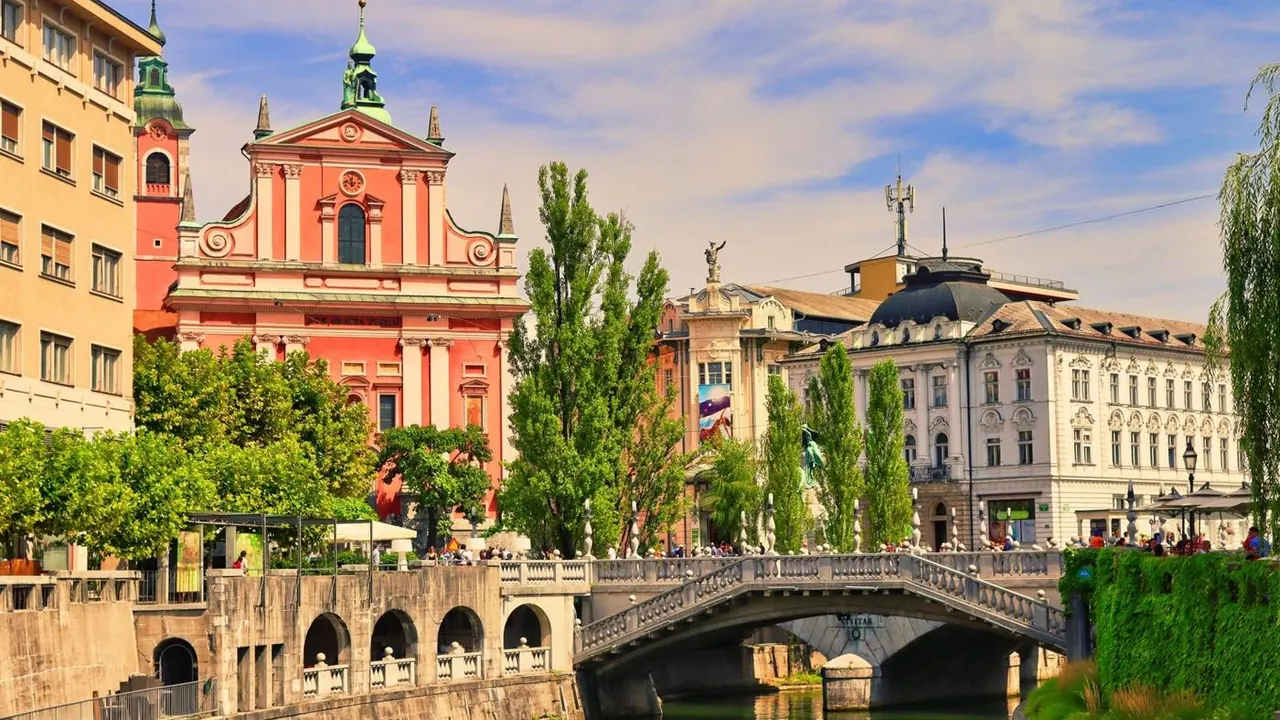
Ljubljana suits a traveller who wants an easy, affordable few days with good wine, evenings on the river terraces and the Julian Alps and karst caves within an hour's reach. Rooms and meals cost less than in Salzburg. Students and Metelkova keep it livelier after dark, and its flat, car-free centre is made for slow wandering rather than a long list of sights.
Choose Salzburg for
- live music and the arts
- culture and sights
- shopping
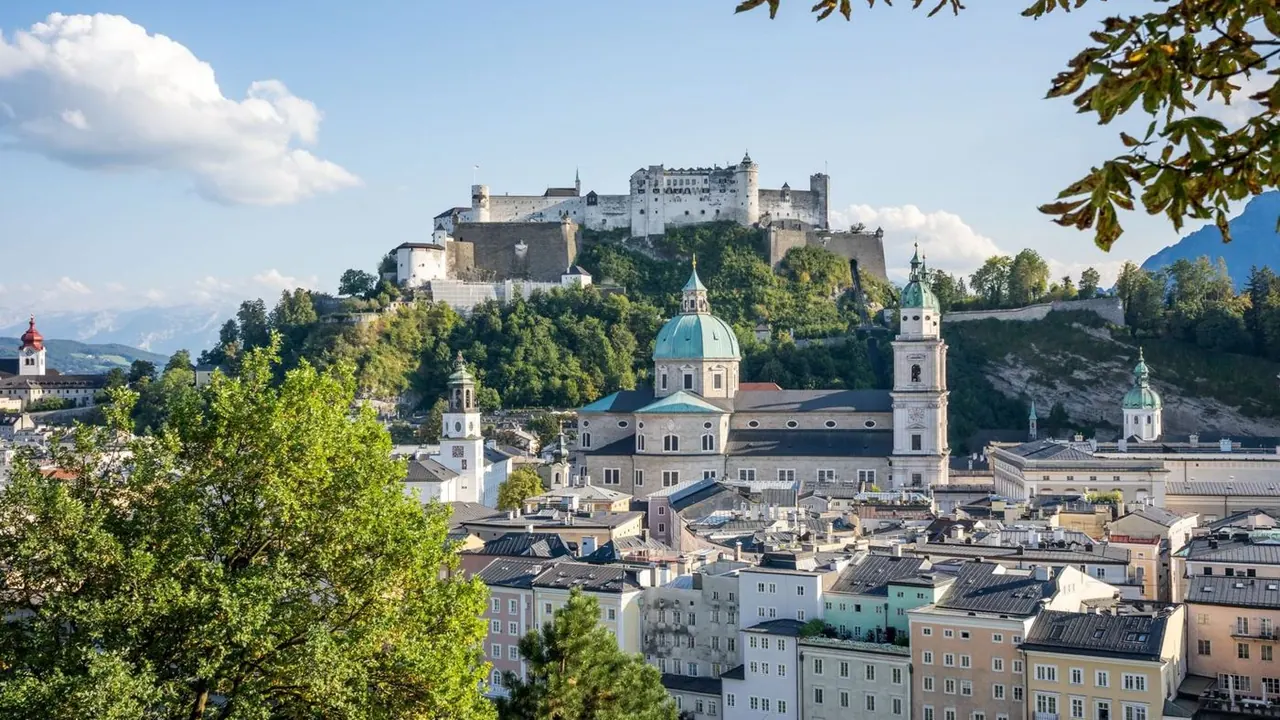
Choose Salzburg if music and Baroque grandeur are the point of the trip. The festival halls, Mozart's houses, the fortress and the archbishops' squares give it a cultural weight Ljubljana cannot match, and the Salzkammergut lakes and the Untersberg are closer to town. Families find more to fill their days too. The cost is a pricier stay and quiet nights.
Scoreboard
Twelve categories on one fixed scale from 0 to 100. The shaded stretch is the gap between the two.
Your match
Pick a travel style or drag the sliders, and both match scores follow your weighting.
Wins on prices and nightlife with your weighting.
Wins on live music and the arts and culture and sights with your weighting.
What matters to you?
Category by category
What the scores mean for a trip.
Beaches & swimming
Neither city is a swimming destination, but Salzburg makes a summer dip easier. Fuschlsee, Wolfgangsee and Mondsee lie half an hour to forty-five minutes away, with clear green water you enter from lawns and wooden jetties, so an afternoon swim fits around a day of sightseeing.
From Ljubljana the nearest proper lake is Bled, about an hour away, or the colder, clearer Bohinj beyond it. The Adriatic at Piran is a full day out, and the shore there is concrete platforms and pebble strips. Locals also swim in the Sava on the city's edge, something Salzburg's cold, fast Salzach doesn't allow.
Food & drink
Ljubljana is the better place to eat, and above all to drink. Its wine bars pour Vipava, Brda and Styrian wines by the glass, including the orange wines of the west. The Central Market under Plečnik's colonnades is a working produce market, and gostilna inns serve štruklji and jota without fuss.
Salzburg's strengths are coffee and cake in the old coffee houses and the monastery brewery garden in Mülln, where you bring your own food. Old-town restaurants lean towards tour-group menus, so the better meals mean heading out to the inns of the outer districts and the hills.
Culture & sights
Salzburg has more to see. The prince-archbishops' Baroque cathedral and Residenz, Hohensalzburg on its cliff, Mirabell, Mozart's two family homes, the St Peter catacombs and Hellbrunn are all landmarks worth a visit in their own right.
Ljubljana is more about the whole than the parts. Plečnik's bridges, embankments and library give the centre its look, the castle sits on the hill above, and Metelkova's murals add a rougher edge. Its museums are good but local in scope, so the city rewards strolling more than ticking off sights.
Nightlife
Ljubljana is the livelier of the two after dark, though neither is a party city. Students keep the riverside terraces full on warm nights, and the small, scruffy clubs of Metelkova, in the old army barracks, stay open late at weekends.
A Salzburg evening is a concert, a late dinner and a litre mug at a long table in a beer hall, and the old town is quiet by midnight. A few student pubs on Rudolfskai stay open later, but anyone after clubs takes the train to Munich.
Nature & outdoors
Both cities sit at the edge of the Alps and will please walkers, with Salzburg slightly ahead because the mountains come right up to it. The Mönchsberg and Kapuzinerberg rise from the centre, a cable car on the southern edge lifts you to about 1,800m on the Untersberg, and the Königssee and the Salzkammergut lakes are around half an hour away.
Ljubljana's outdoors is more varied. Triglav National Park is an hour off, there is rafting on the emerald Soča, and the karst country holds the Postojna and Škocjan caves. Closer in, Šmarna Gora and the flat Marshes give easy climbs and cycling.
Day trips
Both make excellent bases, and the difference lies in what you go out to see. Ljubljana's day trips take in a whole small country: Bled's island church, painted Radovljica, Predjama Castle set into its cliff, the Lipizzaners at Lipica, the coast at Piran and the Brda wine villages, with Trieste and Zagreb as trips across the border.
Salzburg's outings centre on lakes and salt: Hallstatt, St Wolfgang, imperial Bad Ischl, the mines at Hallein and Berchtesgaden, and Werfen's clifftop fortress. Munich by train adds a big-city day that Ljubljana can't offer. In both cases a car makes the smaller villages much easier.
Good for families
Salzburg gives children more to do. The trick fountains at Hellbrunn, the zoo next to them, the hands-on Haus der Natur and the miners' slides and underground boat rides in the nearby salt mines fill several days well.
Ljubljana is gentler and simpler. Its flat, car-free centre is easier with a pushchair than Salzburg's cobbles and steep lanes, and the castle funicular, the Dragon Bridge and the puppet theatre please younger children. The zoo and science centre are small, though.
Getting around
Both are walking cities with no metro or tram, and a visitor rarely needs more than their own feet. Ljubljana's centre is flat, with bike-share and electric shuttles in the car-free core, but the slow railways mean intercity buses or a hired car for the countryside.
Salzburg is a little hillier, but its trolleybuses reach Hellbrunn and the Untersberg cable car, and direct trains run from the main station to Munich and Vienna. Regional buses to the lakes are slow, which is why many visitors hire a car for that part of the trip.
Shopping & style
Salzburg is the better place to shop, mostly for things you can only buy there. Workshops sell made-to-measure dirndls and loden jackets, Getreidegasse puts its shops inside medieval burgher houses under wrought-iron guild signs, and the Advent market on Domplatz is one of the oldest in the region.
Ljubljana sticks to small-scale local goods: honey, pumpkin-seed oil and sea salt at the Central Market, lace from Idrija, and a Sunday antiques market on the embankment. Neither city has much luxury shopping.
Affordability
Ljubljana is clearly the cheaper stay. Inns serve set lunches, local wine is fairly priced and most sights cost little, though old-town rooms in July and August are priced like Western Europe.
Salzburg is expensive all year, and costs climb further during the summer festival and Advent, when rooms and restaurant tables run short. Staying across the river and buying a city card both help, but the gap remains.
Live music & performing arts
Here Salzburg is in another league. The Salzburg Festival brings leading performers to the Grosses Festspielhaus and the Felsenreitschule, a riding school carved into the cliff, and Jedermann is played outdoors in front of the cathedral. Mozart Week and the Easter Festival add two more seasons, and the Mozarteum and the evening palace concerts fill the rest of the year.
Ljubljana has a respectable opera and ballet, a philharmonic with roots going back to 1701, and the summer Ljubljana Festival in Plečnik's Križanke courtyard. That is enough for one good night out, and it has more rock and alternative music, at Metelkova and in small venues.
Wellness & relaxation
Salzburg is the more restful choice, with better bathing close at hand. The Paracelsus Bad in the city park has saunas and a pool, Bad Reichenhall's salt-brine spas are twenty minutes away, and the Gastein valley's radon springs and Belle Époque hotels are a longer trip south.
Ljubljana offers quiet streets free of cars and long afternoons in riverside cafés. For bathing, though, the city has only an indoor water park on its eastern edge and a few hotel spas, and Slovenia's thermal spa towns are about an hour's drive out.
When should you go?
Pick your month. The climate figures are measured averages, not a forecast.
Ljubljana in July
Salzburg in July
Daytime high, °C
Rainfall in the month, mm
Temperature and rainfall are climate normals, averaged over the years shown. Ljubljana: 1991-2020 normals, Ljubljana / Bezigrad (1.9 km from centre). Salzburg: 1991-2020 normals, Salzburg (3.4 km from centre).
Both cities are at their best from May to September, but their summers differ. Ljubljana is the warmer and sunnier of the two, with highs around 28°C in July and August and long bright days. Salzburg peaks at about 25°C, which stays comfortable for walking the old town even at midday. Summer is also Salzburg's wettest stretch, with around 168mm in June and again in August, so expect showers between swims in the lakes, which are warm enough from June to early September. Ljubljana's heaviest rain comes later, in September and October, at around 159mm a month.
Winter is cold in both, with highs near 4°C in December and January, and in Salzburg snow often reaches the town. Spring and autumn suit walking in either city. Ljubljana's late spring is the sunnier choice, while in October Salzburg is the drier and brighter of the two.
Which traveller are you?
On a culture and arts trip, Salzburg is the clear pick. The Salzburg Festival, Mozart Week and evening palace concerts come on top of the cathedral, the Residenz and Hohensalzburg. Ljubljana's Plečnik townscape and its opera house make a shorter, lighter programme.
For a trip on a tight budget, Ljubljana makes your money go much further. Set lunch menus at the gostilna inns, fairly priced local wine and a centre you can walk across all keep costs low, while Salzburg's old-town hotels and restaurants are expensive all year.
On a food and nightlife trip, Ljubljana gives you more. Orange wines by the glass, the Central Market and riverside terraces lead on to late weekends at Metelkova. In Salzburg the evening usually ends in a beer hall, with the old town quiet by midnight.
Before you go
| Measure | Ljubljana | Salzburg |
|---|---|---|
| Official language | Slovene | German, Austrian Sign Language |
| Currency | Euro (EUR) | Euro (EUR) |
| Sockets | CF230 V, 50 Hz | CF230 V, 50 Hz |
| Driving side | Right | Right |
| Time zone | UTC+1, UTC+2 in summer | UTC+1, UTC+2 in summer |
| Emergency number | 112 | 112 |
| Elevation | 309 m | 424 m |
| Main airport | Ljubljana Jože Pučnik Airport (LJU)20 km from centre32 non-stop destinations | Salzburg Airport (SZG)3 km from centre64 non-stop destinations |
| Public holidays this year | 21 days | 16 days |
By the numbers
| Measure | Ljubljana | Salzburg |
|---|---|---|
| City population | 284,293 | 155,021 |
| People per km² | 1,736 | 2,360 |
| Museums within 10 km | 14 | 38 |
| UNESCO World Heritage sites within 50 km | 3 | 3 |
Where else could you go?
Every comparison below shares a destination with this one, so you can follow Ljubljana or Salzburg somewhere new.