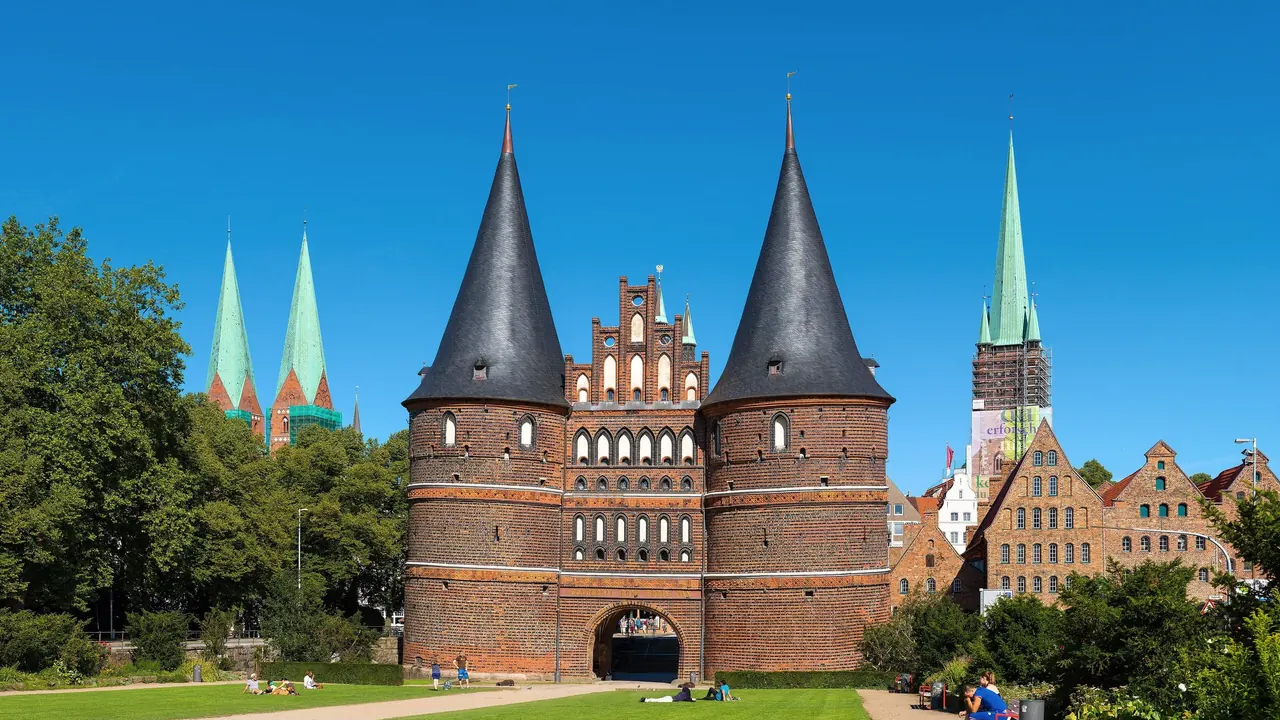
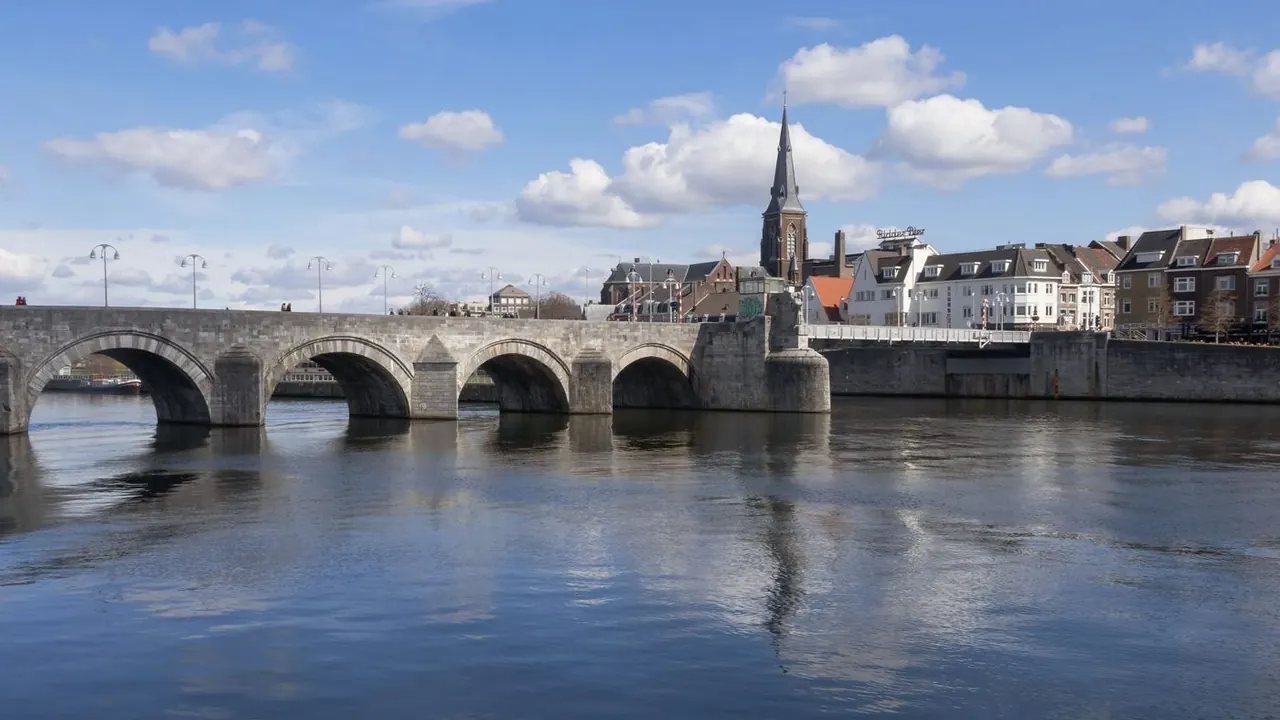
Photos: Lubeck by Christian Wolf (www.c-w-design.de), CC BY-SA 3.0 DE, cropped; Maastricht by Michielverbeek, CC BY-SA 4.0, cropped.
Lubeck or Maastricht?
Our verdict in twelve categories, each scored against the same fixed benchmark cities, and the climate month by month, so you can choose for your trip.
Choose Lubeck for
- beaches
- prices
- culture and sights
Lübeck suits a traveller who wants history first: a whole Hanseatic old town on its island, brick Gothic churches and the Holstentor, with the Baltic twenty minutes away at Travemünde for a few beach afternoons in summer. Its evenings are quiet and it is a little easier on the budget. A day in Hamburg fits in easily.
Choose Maastricht for
- shopping
- food and drink
- nightlife
Choose Maastricht if you want the trip to be about eating, browsing and cafés: Limburg cooking, Belgian beer on the Vrijthof terraces, boutiques in the Stokstraat quarter and livelier nights in the cafés. Its position on two borders is its biggest asset. Aachen, Liège and the hills of South Limburg are all close, though there is no sea to swim in.
Scoreboard
Twelve categories on one fixed scale from 0 to 100. The shaded stretch is the gap between the two.
Your match
Pick a travel style or drag the sliders, and both match scores follow your weighting.
Wins on beaches and prices with your weighting.
Wins on shopping and food and drink with your weighting.
What matters to you?
Category by category
What the scores mean for a trip.
Beaches & swimming
The gap here is wide. Lübeck has a real seaside within its own city limits: Travemünde's long sandy beach with its hooded wicker chairs, and the resorts of Timmendorfer Strand and Scharbeutz a short drive along the bay. The water is cool even in summer, but it is calm and shallow, which makes it good for a few beach afternoons.
Maastricht is far inland. Swimming there means the old gravel-pit lakes along the Maas, which are pleasant on a hot day and nothing more.
Food & drink
Maastricht eats better. Its Dutch reputation for good living shows in zuurvlees with fries, vlaai in every bakery, asparagus and game in season, Belgian beer and white wines from the local hillsides. Its fine dining is unusually strong for a small city.
Lübeck's food is narrower and more northern: marzipan around the town hall, smoked herring and fish sandwiches from harbour kiosks, Rotspon from the city's cellars, and a meal at the Schiffergesellschaft under its hanging ship models. Some of it is memorable, but food is a side pleasure there rather than the reason to go.
Culture & sights
Lübeck has the stronger set of sights. Nearly its whole island old town is a UNESCO site, the best-preserved Hanseatic townscape on the Baltic. It has the Holstentor, the Marienkirche that set the pattern for brick Gothic churches across the north, and museums such as the European Hansemuseum and the Buddenbrookhaus.
Maastricht's history goes back further, to Roman and Romanesque times. It has the Basilica of Saint Servatius, the Helpoort, the tunnels of the Sint-Pietersberg and the Bonnefanten for art. That fills two good days, but its sights are scattered pieces rather than a whole preserved old town like Lübeck's.
Nightlife
Neither is a clubbing city, but Maastricht has much more going on after dark. Its large student population keeps the brown cafés around the Markt and the Platielstraat busy late at weekends, and for several days before Lent carnival turns the whole city into a street party.
Lübeck goes to bed early. It has a few pubs and wine bars in the old town and along the Obertrave, and Travemünde's promenade is livelier on summer nights. For anything bigger, people take the train to Hamburg.
Nature & outdoors
Maastricht has more varied countryside on its doorstep. Footpaths start at the edge of the city on the marl cliffs of the Sint-Pietersberg. The Heuvelland of South Limburg has orchards, sunken lanes and short steep climbs that road cyclists love, and Hoge Kempen and the Ardennes lie further out.
Lübeck's surroundings are flatter and full of water: canoeing on the Wakenitz, the clifftop walk along the Brodtener Steilufer, the lakes of Holstein Switzerland and long, easy cycle routes by the coast. It has the sea and sailing, which Maastricht lacks, but less variety for walkers.
Day trips
Maastricht wins this one through its position on two borders. Aachen and Liège are each about half an hour away, Valkenburg and Tongeren are nearer still, and Cologne, Brussels and Leuven make longer days out. A week there can take in three countries.
Lübeck has one outstanding excursion in Hamburg, about 45 minutes by train, and good second choices in Wismar, Schwerin's island castle and Ratzeburg on its lake. Beyond those, the list runs short.
Good for families
Both are small, safe and flat enough for buggies, so the difference is in what children can do. In summer Lübeck has the seaside, with Travemünde's shallow beach, promenades and playgrounds along the bay, and Hansa-Park half an hour up the shore. Maastricht has no sea, but its tunnel tour under the Sint-Pietersberg and Valkenburg's caves, cable car and fairy-tale park work in any season.
Getting around
Both centres are made for walking, and in both the station is a short stroll from the old town. Lübeck's island is about 2km long, and buses and a twenty-minute train cover the trip to the beach at Travemünde. Maastricht spreads across both banks of the Maas and is a cycling town, where a bike is the natural way to reach the riverside and the hill villages.
Shopping & style
Maastricht is a shopping destination in its own right. The restored 17th- and 18th-century houses of the Stokstraat quarter hold designer boutiques, the Grote Staat has the main brands, and the weekly market fills the Markt with cheese and textiles.
Lübeck's Breite Strasse and Königstrasse are mostly chain stores and a department store, though the courtyard passages around Hüxstrasse hide some craft shops and galleries. For fashion in any depth, shoppers go on to Hamburg.
Affordability
Lübeck is the easier city on a budget. Old-town rooms are moderately priced, tavern meals and harbour fish kiosks are reasonable, and the train to the coast is cheap. The exception is Travemünde's beach accommodation in July and August, which costs noticeably more.
Maastricht has Dutch prices, and because it is a favourite for short breaks, weekend rooms are in demand. Midweek stays, bakery lunches and a walkable centre help keep costs down, but overall it costs more.
Live music & performing arts
The two are on a similar provincial footing and differ mostly in style. Lübeck leans towards church and classical music: organ concerts in the Marienkirche, where Buxtehude was organist, opera at the Art Nouveau Theater Lübeck and the Schleswig-Holstein Music Festival in summer.
Maastricht has more popular and outdoor music. Large open-air concerts fill the Vrijthof in summer, jazz cafés play through the week and brass bands march at carnival, alongside the regional orchestra and opera at the Vrijthof theatre.
Wellness & relaxation
Maastricht is better placed for a spa break. The thermal pools above Valkenburg, Aachen's baths, in use since Roman times, and the Belgian town of Spa are all within an hour, and the city itself has a slow rhythm of long lunches.
Lübeck's restful side is the sea. Travemünde has been a seaside spa resort since the early nineteenth century, and there are wellness hotels along the bay and an indoor seawater pool complex at Scharbeutz. It suits a quiet few days more than a dedicated spa trip.
When should you go?
Pick your month. The climate figures are measured averages, not a forecast.
Lubeck in July
Maastricht in July
Daytime high, °C
Rainfall in the month, mm
Temperature and rainfall are climate normals, averaged over the years shown. Lubeck: 1991-2020 normals, Luebeck-Blankensee (6 km from centre). Maastricht: 1991-2020 normals, Maastricht Airport Zuid Limburg (10 km from centre).
The two share the same northern European pattern: summer highs of about 24°C in July and August, cold, grey winters, and rain spread through the year with a peak in late summer. Only Lübeck has a beach season, and it is short. The Baltic reaches only about 18°C to 19°C in July and August, so swimming means warm afternoons from late June into early September. May to July is its sunny stretch and the best time for walking the old town, while November to February is dark and raw.
Maastricht is a degree or two milder in winter and gets noticeably more winter sun, so a December or February weekend there is less gloomy. It is the wetter of the two, with August the rainiest month at about 84mm. Spring and early autumn suit its countryside walks best.
Which traveller are you?
On a beach and sun trip, Lübeck is the only real choice. Travemünde's sandy shore and the resorts along the Bay of Lübeck give calm, shallow Baltic water in summer, while Maastricht offers only gravel-pit lakes along the Maas.
For a food and nightlife trip, Maastricht is clearly ahead. Zuurvlees, vlaai and Belgian beer fill its terraces and brown cafés, its fine dining is strong, and student bars stay busy late, while Lübeck's evenings end early after herring and marzipan.
On a shopping trip, Maastricht is the better pick. Weekend visitors from three countries come for its old-town fashion boutiques and Wyck's interiors and vintage shops. Lübeck's main streets are mostly chain stores, and its best buy is marzipan.
Before you go
| Measure | Lubeck | Maastricht |
|---|---|---|
| Official language | German | Dutch |
| Currency | Euro (EUR) | Euro (EUR) |
| Sockets | CF230 V, 50 Hz | CF230 V, 50 Hz |
| Driving side | Right | Right |
| Time zone | UTC+1, UTC+2 in summer | UTC+1, UTC+2 in summer |
| Emergency number | 112 | 112 |
| Elevation | 13 m | 49 m |
| Main airport | Hamburg Helmut Schmidt Airport (HAM)53 km from centre120 non-stop destinations | Maastricht Aachen Airport (MST)9 km from centre5 non-stop destinations |
| Public holidays this year | 10 days | 11 days |
By the numbers
| Measure | Lubeck | Maastricht |
|---|---|---|
| City population | 217,061 | 120,227 |
| People per km² | 1,013 | 2,000 |
| Museums within 10 km | 23 | 21 |
| UNESCO World Heritage sites within 50 km | 1 | 6 |
| Swim season, months above 21 °C | None | - |
Where else could you go?
Every comparison below shares a destination with this one, so you can follow Lubeck or Maastricht somewhere new.
- Hamburgvs Lubeck
- Dusseldorfvs Maastricht
- Colognevs Maastricht
- Brusselsvs Maastricht
- Antwerpvs Maastricht
- Ghentvs Maastricht