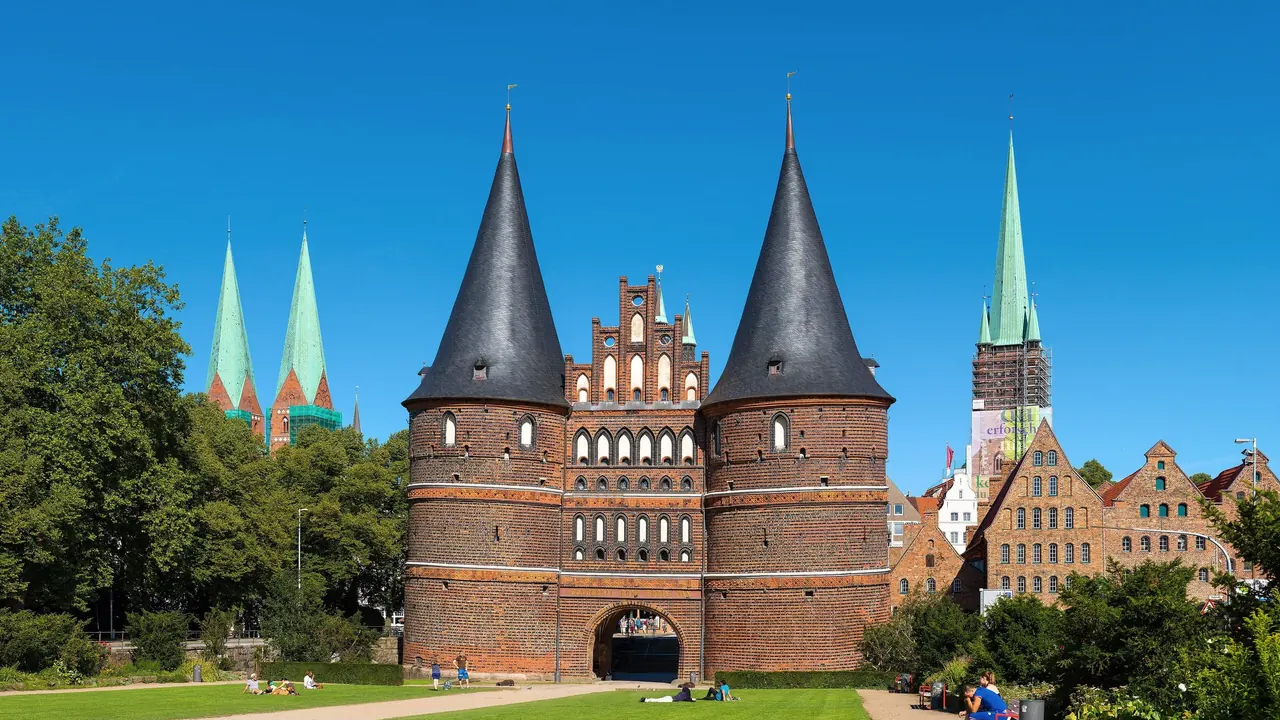
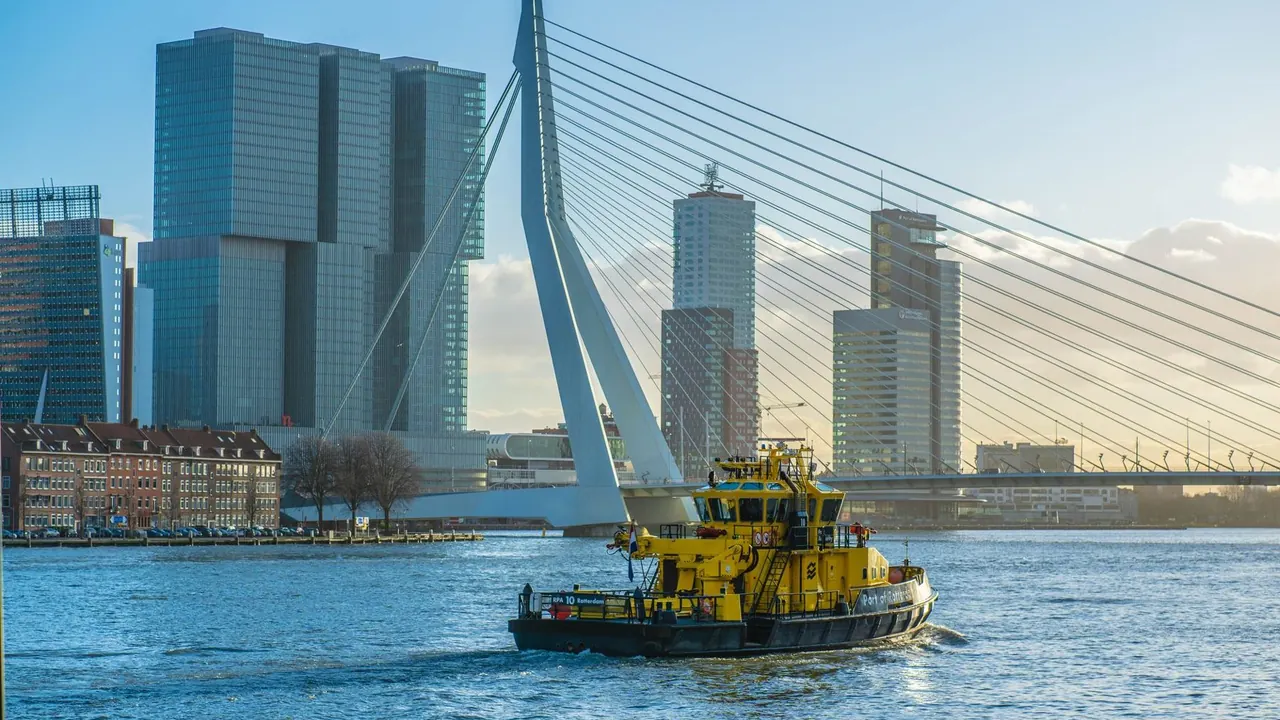
Photos: Lubeck by Christian Wolf (www.c-w-design.de), CC BY-SA 3.0 DE, cropped; Rotterdam by Bas Geerlings, Pexels License.
Lubeck or Rotterdam?
Our verdict in twelve categories, each scored against the same fixed benchmark cities, and the climate month by month, so you can choose for your trip.
Choose Lubeck for
- prices
- beaches
- culture and sights
Lübeck suits a slower trip built around history. Its island old town of brick Gothic churches, gabled merchants' houses and hidden courtyards is a complete medieval set piece, and it is easy to see on foot in a couple of days. The Baltic beach at Travemünde is a short train ride away for summer afternoons. Rooms and meals cost less than in Rotterdam, and the evenings are quiet, which suits couples and anyone who goes to bed early.
Choose Rotterdam for
- nightlife
- day trips
- shopping
Rotterdam is the better pick for travellers who want a modern city with more to do after dark. People go for the architecture, the immigrant kitchens, the clubs and the jazz, and also for the location: Delft, The Hague, Amsterdam and Antwerp are all within easy reach by train. It costs more and has little old fabric left, but it gives an active traveller more to fill a week.
Scoreboard
Twelve categories on one fixed scale from 0 to 100. The shaded stretch is the gap between the two.
Your match
Pick a travel style or drag the sliders, and both match scores follow your weighting.
Wins on prices and beaches with your weighting.
Wins on nightlife and day trips with your weighting.
What matters to you?
Category by category
What the scores mean for a trip.
Beaches & swimming
Lübeck has the better seaside. Travemünde's sandy beach with its hooded wicker chairs sits on the calm, tideless Baltic, and the resorts of the Bay of Lübeck line the coast within half an hour.
Hoek van Holland, Rotterdam's beach, is wilder and more striking, with dunes behind it and huge ships passing close offshore. The North Sea there is windy, though, and few visitors go in. In both places the water stays cool, so the beach is an outing rather than the reason to come.
Food & drink
Rotterdam has the wider range of food, thanks to its port and its immigrant communities. You can eat Surinamese roti, Cape Verdean and Moroccan dishes and Turkish bread, or browse the stalls under the Markthal's painted vault. Restaurants run in long rows along the Witte de Withstraat and the Nieuwe Binnenweg.
Lübeck eats in a more traditional, regional way. It has centuries-old marzipan, smoked herring, plaice and Rotspon wine, and the long tables of the Schiffergesellschaft are an experience of their own. Beyond that the choice is limited, the way you would expect in a provincial town.
Culture & sights
Lübeck has the richer historic townscape. Its island old town has seven church spires, the leaning Holstentor and the Marienkirche, and almost all of it is a World Heritage site. It is very much a city to wander through.
Rotterdam lost its old centre in 1940, so its interest is modern. It has the Erasmus Bridge, the Cube Houses, the mirrored Depot Boijmans and the towers of the Kop van Zuid. Its history survives only in pockets such as Delfshaven.
Nightlife
Rotterdam is the one for a night out. The bar streets around the Oude Haven and the Witte de Withstraat fill up on summer evenings, and the city's hard electronic heritage lives on in harbour and warehouse clubs that draw crowds from across the country.
Lübeck's evenings are spent over a glass of wine by the Obertrave or a beer in an old town pub, with a little more going on along the Travemünde promenade in summer. For anything more, people take the train to Hamburg.
Nature & outdoors
Neither city has dramatic scenery, so the outdoors means water and bikes in both. Lübeck's landscape is softer and more varied. You can canoe the reed-lined Wakenitz, walk the clay cliff of the Brodtener Steilufer, or head for the lakes of Holstein Switzerland.
Rotterdam's countryside is man-made polder crossed by dykes. Its highlight is the Biesbosch, where you can canoe through tidal creeks and watch birds, and there is also kitesurfing at Hoek van Holland and a lake in the Kralingse Bos park.
Day trips
Rotterdam is far better placed for day trips. Delft and The Hague are a short ride away, Amsterdam, Leiden and Utrecht take about an hour, Kinderdijk's windmills can be reached by water bus, and even Bruges and Ghent are possible in a long day.
Lübeck has one major trip in Hamburg, plus Wismar and Schwerin's island castle about an hour away. After that it is mostly small lake towns such as Ratzeburg and Eutin.
Good for families
Rotterdam keeps children busy all year. Blijdorp zoo has its ocean hall, the Maritime Museum has a hands-on harbour area, and harbour boats and water taxis are fun on their own. Madurodam is a short train ride away.
Lübeck is mainly a summer choice for families. Travemünde's shallow, calm water suits toddlers, and Hansa-Park is about half an hour up the coast. Outside the warm months there is much less aimed at children.
Getting around
Lübeck hardly needs transport. Its sights sit on an island about 2km long that you cross on foot, the main station is just over the river from the Holstentor, and a regional train gets to Travemünde in about twenty minutes.
Rotterdam is the easier city to get around overall, because its network does more. The metro, trams and buses share one tap-in system, and the metro runs all the way to Hoek van Holland. Water buses cross the Maas and go upriver, and separate bike paths run almost everywhere. You will rely on them, because the spread-out postwar centre means some long, windy walks between sights.
Shopping & style
Rotterdam is the better place to shop. The Lijnbaan and the Bijenkorf cover the high street, and the Meent and the Nieuwe Binnenweg add independent fashion, vintage and record shops. The big Binnenrotte market is worth a visit too.
Lübeck has a shorter chain-store spine along Breite Strasse. The more interesting finds are craft shops tucked into its courtyard passages, and boxed marzipan is the classic thing to take home.
Affordability
Lübeck is the cheaper stay. Its old town guesthouses are moderately priced, fish kiosks and bakeries keep meals reasonable, and only the beach resorts get expensive, mainly in July and August.
In Rotterdam, hotels are fair for the Netherlands because many rooms are in business districts. Restaurant meals, beer and coffee are expensive, though. The cheap way to eat is the Markthal counters and the Surinamese snack shops.
Live music & performing arts
Rotterdam offers more to hear. The Rotterdam Philharmonic plays at De Doelen, the city has a steady small-venue jazz and pop scene, and the North Sea Jazz Festival takes over a July weekend. It has no opera house, though.
Lübeck has opera at its Art Nouveau theatre, and organ music at the Marienkirche, where Buxtehude was once organist. The Schleswig-Holstein Music Festival comes in summer, but you will find little rock or pop.
Wellness & relaxation
Neither city is a spa destination, and they relax in different ways. Lübeck draws on Travemünde's long seaside-spa history, with wellness hotels and the seawater pool at Scharbeutz, and its old town is calm.
Rotterdam offers big Dutch sauna complexes on the city's edge, often textile-free. Its own pace is brisker, so for calm, locals go to the Kralingse Bos.
When should you go?
Pick your month. The climate figures are measured averages, not a forecast.
Lubeck in July
Rotterdam in July
Daytime high, °C
Rainfall in the month, mm
Where the figures come from
Rotterdam has no rain gauge within 25 km of the centre, so its rainfall comes from a gridded climate dataset read at the city rather than from a gauge further away.
Rotterdam's sunshine is measured 52 km from the centre, at De Bilt.
Temperature and rainfall are climate normals, averaged over the years shown. Lubeck: 1991-2020 normals, Luebeck-Blankensee (6 km from centre). Rotterdam: 1993-2020 (sunshine 1991-2020, rainfall 1991-2020) normals, Rotterdam Airport Zestienhoven (3.9 km from centre).
Both cities are at their best from late May to early September, and neither ever gets too hot for walking the streets. Lübeck is a little warmer in high summer, around 24°C against Rotterdam's 22°C. In August the sea off both reaches about 19°C, which is fine for paddling but bracing for a proper swim. Lübeck has the drier spring, and May there is also the sunnier month, so it is a good time to walk the old town and cycle the coast.
The two part ways in autumn and winter. Lübeck stays fairly dry but turns cold and very dark, with only about an hour of sun a day in December. Rotterdam's winters are a little milder, but its rain builds from July and peaks in October at around 99mm, so autumn there is grey and damp.
Which traveller are you?
On a culture and arts trip, Lübeck makes the stronger case. Its whole old town is a single UNESCO-listed Hanseatic ensemble, and the Hansemuseum and Buddenbrookhaus are close by. Rotterdam's draw is postwar architecture, with its finest concerts as a bonus.
For a food and nightlife trip, Rotterdam is clearly the better choice. You can eat Surinamese, Turkish and Indonesian food along the Witte de Withstraat, then go on to warehouse techno nights. Lübeck offers marzipan, herring and a few quiet pubs, and most of the town is asleep by midnight.
On a trip with a tight budget, Lübeck stretches your money further. Mid-range rooms are easy to find, tavern meals and fish kiosks are reasonable, and the old town costs nothing to walk. In Rotterdam, hotels are fair value, but eating and drinking out cost what they do across the Netherlands.
Before you go
| Measure | Lubeck | Rotterdam |
|---|---|---|
| Official language | German | Dutch |
| Currency | Euro (EUR) | Euro (EUR) |
| Sockets | CF230 V, 50 Hz | CF230 V, 50 Hz |
| Driving side | Right | Right |
| Time zone | UTC+1, UTC+2 in summer | UTC+1, UTC+2 in summer |
| Emergency number | 112 | 112 |
| Elevation | 13 m | 10 m |
| Main airport | Hamburg Helmut Schmidt Airport (HAM)53 km from centre120 non-stop destinations | Rotterdam The Hague Airport (RTM)5 km from centre53 non-stop destinations |
| Public holidays this year | 10 days | 11 days |
By the numbers
| Measure | Lubeck | Rotterdam |
|---|---|---|
| City population | 217,061 | 664,311 |
| People per km² | 1,013 | 2,080 |
| Museums within 10 km | 23 | 41 |
| UNESCO World Heritage sites within 50 km | 1 | 5 |
| Swim season, months above 21 °C | None | None |
Where else could you go?
Every comparison below shares a destination with this one, so you can follow Lubeck or Rotterdam somewhere new.
- The Haguevs Rotterdam
- Utrechtvs Rotterdam
- Haarlemvs Rotterdam
- Hamburgvs Lubeck
- Amsterdamvs Rotterdam
- Antwerpvs Rotterdam