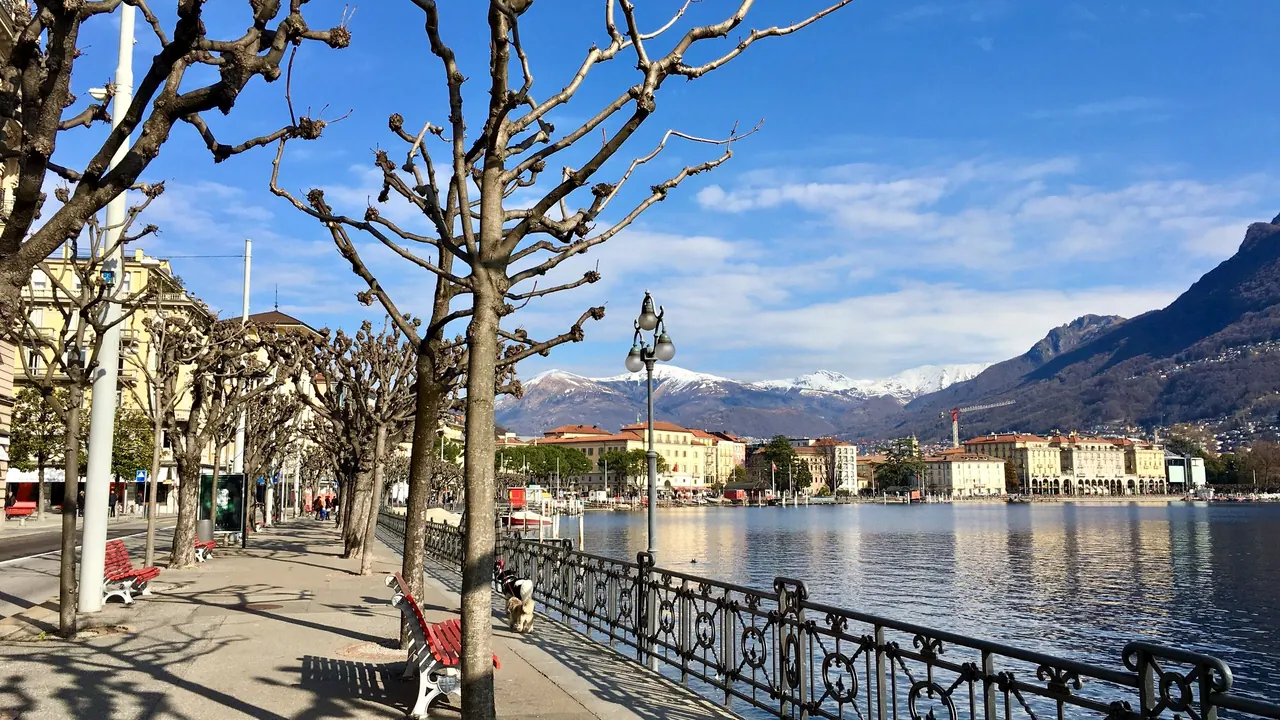
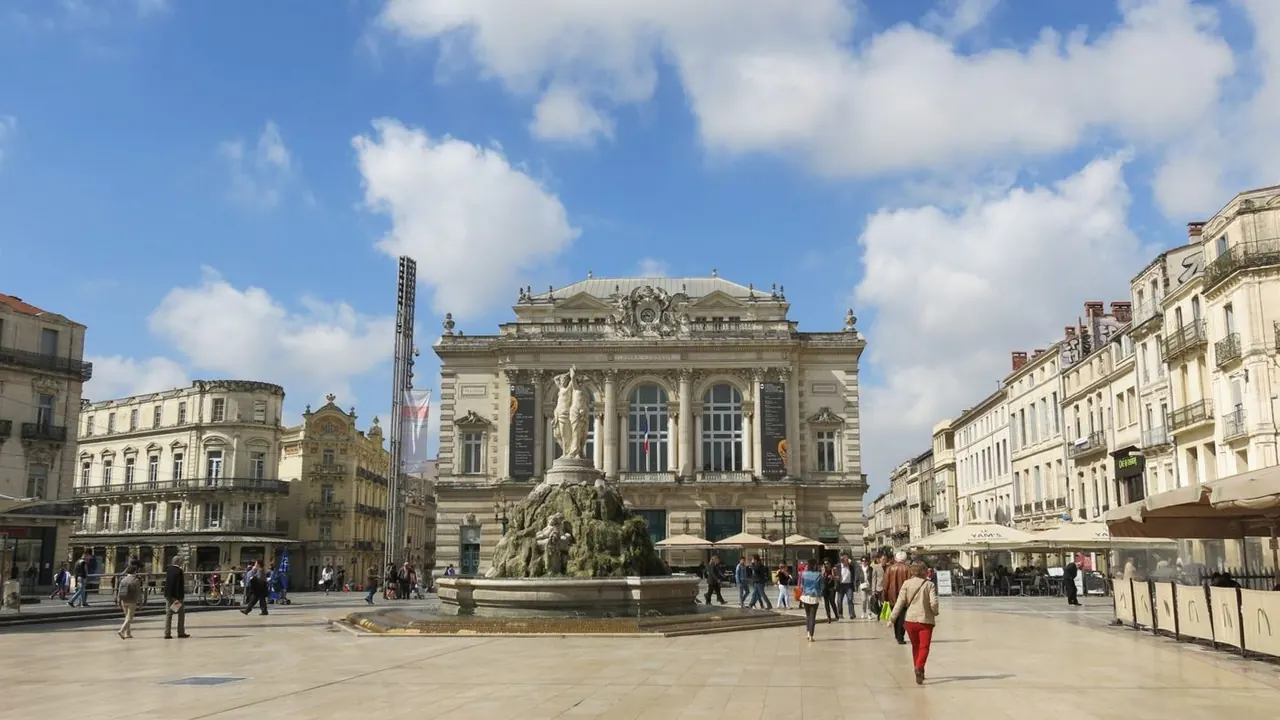
Photos: Lugano by Thomas Woodtli from Zürich, Switzerland, CC BY-SA 2.0, cropped; Montpellier by Peter, CC BY 2.0, cropped.
Lugano or Montpellier?
Our verdict in twelve categories, each scored against the same fixed benchmark cities, and the climate month by month, so you can choose for your trip.
Choose Lugano for
- nature and the outdoors
- getting around
- wellness
Lugano suits travellers who come for scenery and calm. Steep wooded mountains rise straight out of the lake, funiculars and boats do the sightseeing for you, and Milan, Como and the castles of Bellinzona are all within easy reach by train. It is a quiet, polished place for walking and long lunches in a grotto, but you pay Swiss prices for it.
Choose Montpellier for
- prices
- nightlife
- culture and sights
Montpellier is the better pick for a city trip with more going on. Its medieval Écusson, the Musée Fabre, a serious opera and dance scene and a large student population give it far more to do in the evening and far more to see than Lugano, and it costs a good deal less. Sandy beaches are a short ride away, and Nîmes, Arles and Avignon make easy day trips.
Scoreboard
Twelve categories on one fixed scale from 0 to 100. The shaded stretch is the gap between the two.
Your match
Pick a travel style or drag the sliders, and both match scores follow your weighting.
Wins on nature and the outdoors and getting around with your weighting.
Wins on prices and nightlife with your weighting.
What matters to you?
Category by category
What the scores mean for a trip.
Beaches & swimming
Montpellier has proper beaches and Lugano does not. About 11km from the centre, a long strip of fine, shallow sand runs from Palavas past La Grande-Motte to the open dunes of l'Espiguette, with Sète adding more to the west. In high summer the nearest stretches get crowded.
In Lugano you swim in the lake instead, from lidos with lawns, decks and ladders rather than sand. The main lido at the mouth of the Cassarate and the small lake baths in the villages are lovely on a hot afternoon, but the season is shorter and nobody comes for a beach.
Food & drink
Montpellier eats better and more cheaply. It has Pic Saint-Loup wines, Thau oysters and mussels, tielle from Sète, and markets such as the Halles Castellane and the Saturday market under the Arceaux aqueduct, with plenty of casual student places in between.
Lugano's strength is narrower: polenta, braised meats and Ticino Merlot at granite tables in a grotto under chestnut trees. Beyond that, the choice in town is thin and expensive, which is why many visitors cross into Italy for a big meal.
Culture & sights
Montpellier has much more to see. The car-free lanes and hidden courtyards of the Écusson, the Promenade du Peyrou with its aqueduct, France's oldest botanical garden and the Musée Fabre's European paintings easily fill two or three days, and Bofill's Antigone district adds modern architecture.
Lugano's sights take about a day: the arcaded old town around Piazza della Riforma, San Lorenzo above it, Luini's Passion fresco in Santa Maria degli Angioli and the art collection split between LAC and Palazzo Reali.
Nightlife
Montpellier is the clear winner for a night out. Its huge student population fills the terraces and small bars of the Écusson on weeknights too, and later the crowd takes taxis out to clubs towards Lattes and the coast. It gets quieter outside term time.
Lugano's evenings are an aperitivo by the lake and a long dinner among a smart, mostly local crowd. Apart from summer weekends on the promenade, the town is quiet well before midnight.
Nature & outdoors
Lugano has the more dramatic landscape. Mountains rise straight from the lake, and funiculars and a rack railway take you up Monte Brè, San Salvatore and Monte Generoso for views and paths down through chestnut woods. The lakeside walk to Gandria and the clear green rivers of the Verzasca and Maggia valleys are close by.
Montpellier's countryside is gentler and more spread out: lagoons with flamingos, the Camargue an hour away, the climb up Pic Saint-Loup and the Hérault gorges for canoeing. The windy coast suits kitesurfers better than anything on Lugano's lake.
Day trips
Both are excellent bases, and the difference is the kind of trip. From Lugano you go between two countries by rail: Milan's cathedral and The Last Supper, Lake Como, Bellinzona's castles and the Borromean Islands on Lake Maggiore.
From Montpellier, day trips mean Roman and medieval southern France: the arena in Nîmes, the Pont du Gard, Arles, Avignon and the walls of Carcassonne. Smaller places like Uzès and Saint-Guilhem-le-Désert are much easier with a car.
Good for families
Lugano keeps children busy outdoors. They can take boats to the lakeside villages, use the slides at the lidos, ride the funiculars up Monte Brè and San Salvatore and see the Swiss landmarks in miniature at Melide. Its steep streets are hard going with a pushchair, and there is no zoo or aquarium to fall back on.
Montpellier adds the Lunaret zoo in its wooded park, with an aquarium and a planetarium side by side in Odysseum, and nearby beaches that shelve gently for small swimmers. The pedestrian old town and the trams are easy with a pushchair. Midsummer heat in the stone streets makes beach mornings and indoor afternoons the best plan.
Getting around
Lugano's centre is all slope. A short funicular drops from the station to the old town, the lakefront promenade links most of the sights, and boats, funiculars and rack railways take over for the waterside villages and the summits. Swiss trains cover the rest of Ticino, so a car only helps in the remoter valleys.
Montpellier is flatter and runs on its trams, which tie together the station, the Écusson, Antigone and Odysseum, with bike lanes on the level parts. Reaching the beach by tram and bus is slow in summer, and the gorges, the hills and the Camargue are far easier by car.
Shopping & style
Neither is a shopping destination, and they appeal to different budgets. Lugano has Via Nassa, an arcaded street of Swiss watchmakers, jewellers and Italian fashion houses, plus a big designer outlet near Mendrisio.
Montpellier has no luxury street but more everyday choice, with boutiques and bookshops in the Écusson and the Polygone mall beside the Comédie. The best things to take home are wine, olive oil and honey.
Affordability
Montpellier costs far less. Moderate hotels, cheap student bars and counters and good lunch menus keep a stay affordable, and only restaurant dinners and summer rooms on the coast push the bill up.
Lugano is expensive across the board, from lakeside hotels to wine, boat trips and mountain railways. Grotti, set lunches and the free regional transport that comes with hotel stays help a little, but there is no cheap way to stay there.
Live music & performing arts
Montpellier has much the richer stage. It has two opera houses, the Opéra Comédie and the Opéra Berlioz, a national orchestra and a national choreographic centre. In summer, Montpellier Danse, the Radio France festival and outdoor theatre at the Domaine d'O fill the calendar.
Lugano's cultural life is centred on LAC, home of the Orchestra della Svizzera italiana and mostly classical. The free Estival Jazz concerts in Piazza della Riforma are the summer highlight, and opera lovers go to La Scala in Milan.
Wellness & relaxation
Neither city has a bathing culture of its own, so the difference is in the mood. Lugano is the quieter place to unwind, with lido afternoons, benches in Parco Ciani, hotel spas and a large pool and sauna complex near Rivera.
Montpellier has real thermal water half an hour away at Balaruc-les-Bains on the Thau lagoon, but the student crowd makes its centre livelier than restful.
When should you go?
Pick your month. The climate figures are measured averages, not a forecast.
Lugano in July
Montpellier in July
Daytime high, °C
Rainfall in the month, mm
Temperature and rainfall are climate normals, averaged over the years shown. Lugano: 1991-2020 normals, Lugano (1.2 km from centre). Montpellier: 1991-2020 normals, Montpellier (7.8 km from centre).
Montpellier is the warmer and drier of the two for most of the year. Its summer is hot and very dry, with July reaching 30°C and almost no rain, and the sea warms to about 22°C by August. That makes July and August the beach months, though the stone streets can be tiring at midday. The rain comes in autumn, with October the wettest month at about 93mm. Winters stay mild enough for walking and get a fair amount of sun.
Lugano is cooler and much wetter. From April to November heavy rain is common, often around 170mm a month in late spring, much of it in showers and storms rather than grey days. Summer highs of about 27°C are warm enough for the lake lidos from June to early September, and spring and autumn are better for hiking. Winter is cold for wandering the streets but drier, with less sun than Montpellier in every month.
Which traveller are you?
On an outdoors trip, Lugano is the stronger choice. The mountains start at the edge of town, funiculars climb Monte Brè and San Salvatore, and the Lema to Tamaro ridge and the Verzasca valley are close by and mostly reachable without a car.
For a food and nightlife trip, Montpellier wins easily. Languedoc wine, oysters from the Thau lagoon and lively market halls lead on to student bars around Place Jean-Jaurès that stay full on weeknights, while Lugano mostly goes to bed before midnight.
On a tight budget, choose Montpellier. Student-priced bars and counters, cheap lunch menus and moderate hotels keep costs down, whereas in Lugano everything from rooms to boat trips is expensive and there is no cheap way to stay.
Before you go
| Measure | Lugano | Montpellier |
|---|---|---|
| Official language | French, German, Italian, Romansh | French |
| Currency | Swiss Franc (CHF) | Euro (EUR) |
| Sockets | CJ230 V, 50 Hz | CE230 V, 50 Hz |
| Driving side | Right | Right |
| Time zone | UTC+1, UTC+2 in summer | UTC+1, UTC+2 in summer |
| Emergency number | 112 | 112 |
| Elevation | 283 m | 7 m |
| Main airport | Milan Malpensa International Airport (MXP)46 km from centre208 non-stop destinations | Montpellier-Méditerranée Airport (MPL)8 km from centre40 non-stop destinations |
| Public holidays this year | 15 days | 11 days |
By the numbers
| Measure | Lugano | Montpellier |
|---|---|---|
| City population | 63,495 | 310,240 |
| People per km² | 837 | 5,452 |
| Museums within 10 km | 17 | 14 |
| UNESCO World Heritage sites within 50 km | 5 | 2 |
| Swim season, months above 21 °C | - | 2 months |
Where else could you go?
Every comparison below shares a destination with this one, so you can follow Lugano or Montpellier somewhere new.