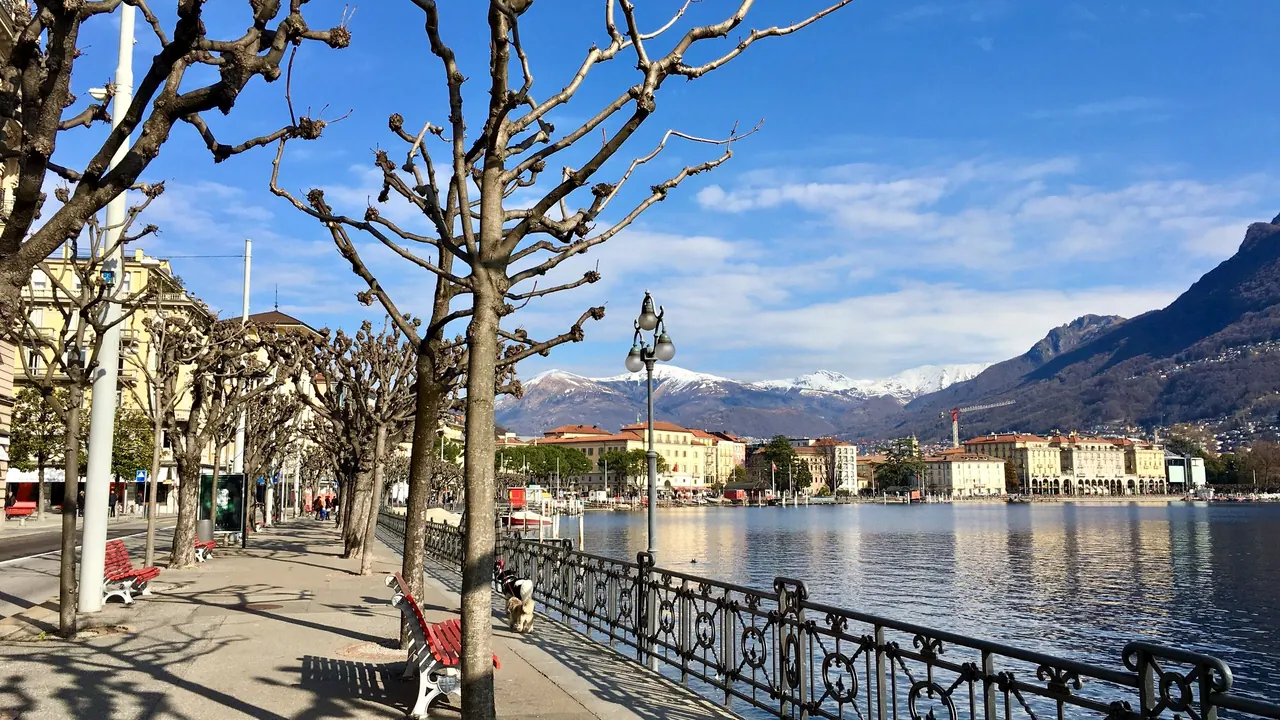
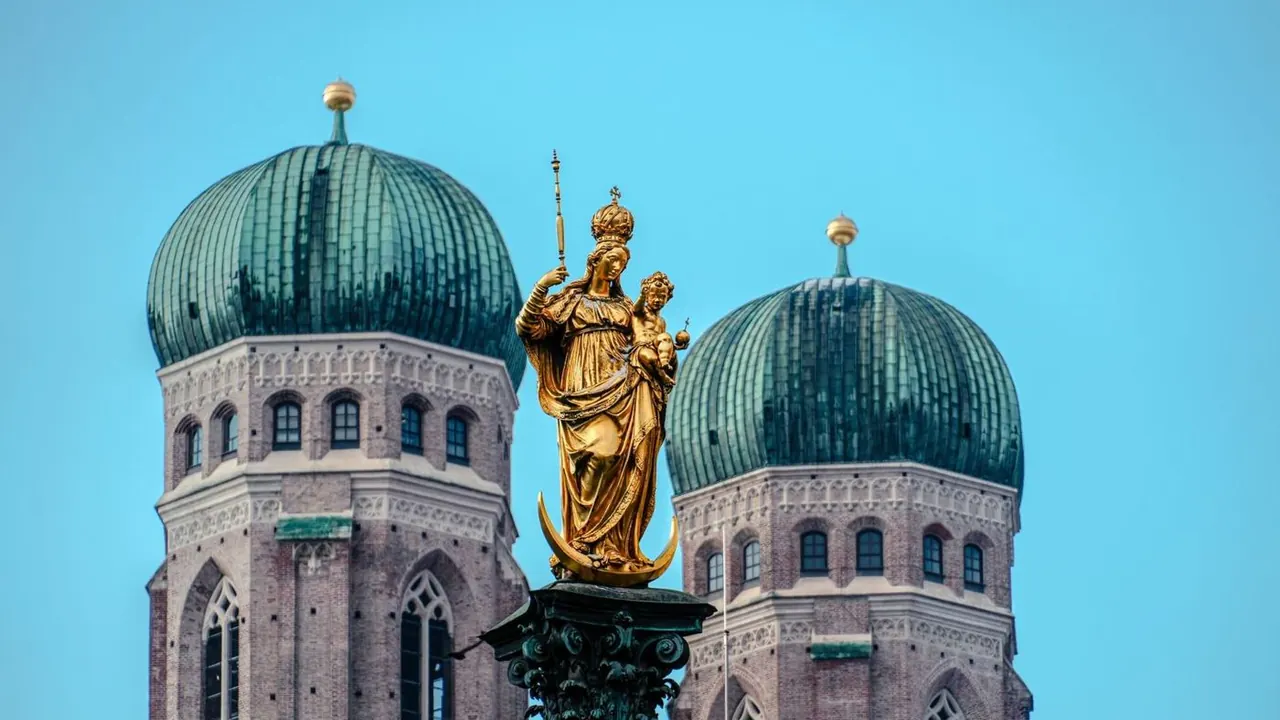
Photos: Lugano by Thomas Woodtli from Zürich, Switzerland, CC BY-SA 2.0, cropped; Munich by 0xd1ma, Pexels License.
Lugano or Munich?
Our verdict in twelve categories, each scored against the same fixed benchmark cities, and the climate month by month, so you can choose for your trip.
Choose Lugano for
- beaches
Lugano suits a slower, scenic stay. Mountains rise straight out of the lake at the edge of town, funiculars climb them, boats link the stone villages, and you can swim from a lido in the afternoon. Milan and Como are close enough to add Italy to the trip. It is best for couples and walkers who want views and calm, can live with quiet evenings and a modest list of sights, and do not mind paying Swiss prices for it.
Choose Munich for
- live music and the arts
- culture and sights
- nightlife
Munich is the richer city trip. It has great art collections, palaces, an opera house of world standing and a proper night out, and beer gardens, a zoo and hands-on museums make it easy for families too. The Alps and their lakes are a train ride away rather than outside the window, but the city gives you far more to do, and it is somewhat kinder to the budget.
Scoreboard
Twelve categories on one fixed scale from 0 to 100. The shaded stretch is the gap between the two.
Your match
Pick a travel style or drag the sliders, and both match scores follow your weighting.
Wins on beaches with your weighting.
Wins on live music and the arts and culture and sights with your weighting.
What matters to you?
Category by category
What the scores mean for a trip.
Beaches & swimming
Neither city has a coast, but in Lugano the swimming is part of town life. The lido at the mouth of the Cassarate and the bathing spots towards Castagnola and Paradiso are a short walk away, and boats reach small village baths around the lake.
Munich's locals sunbathe on the gravel banks of the Isar at the Flaucher, but to swim properly you take the S-Bahn out to the Starnberger See or the Ammersee. The water there is fed from the Alps and feels fresher, and you need to set aside half a day.
Food & drink
Munich gives you more choice and makes eating easier. Beer halls and chestnut-shaded beer gardens serve roast pork, white sausage and pretzels, and the Viktualienmarkt is good for grazing. There are starred restaurants for a special night, and decent Italian, Turkish and Balkan cooking when you want a change.
Lugano's strength is the grotto: polenta, risotto and salumi at granite tables, with a glass of Ticino Merlot. Beyond that the choice is thin and costly, with little street food, and many visitors cross into Italy for their serious meals.
Culture & sights
Munich is a major museum city. The Kunstareal alone holds old masters at the Alte Pinakothek, the Blue Rider painters at the Lenbachhaus and classical sculpture at the Glyptothek. Add the Residenz, Nymphenburg and the Deutsches Museum, and you have several days of sightseeing.
Lugano's sights are few and quick to see. They are the arcaded old town around Piazza della Riforma, San Lorenzo above it, Luini's Passion fresco and the art collection split between LAC and Palazzo Reali. The Hesse museum in Montagnola is worth the extra trip, but a single day covers the main sights.
Nightlife
Munich has a real night out. You can stay at a beer-hall table, move on to the cocktail and gay bars around Gärtnerplatz and the Glockenbachviertel, or head for the techno clubs that run until morning at weekends. During the Oktoberfest the whole city becomes a party.
In Lugano, an evening means an aperitivo under the arcades or by the lake and then a long dinner. The town is mostly asleep before midnight, and the young crowd goes to Milan.
Nature & outdoors
The two are level for the outdoors, but the scenery works differently. In Lugano the mountains start where the town ends. Funiculars climb Monte Brè and San Salvatore, the lakeside path runs to Gandria, and the ridge walk from Monte Lema to Monte Tamaro is a classic. The green waters of the Verzasca valley are about an hour away.
Munich itself is flat, and you need about an hour to reach the foothills. In return you get the high Alps around the Zugspitze and Garmisch, with skiing in winter. In town there is the English Garden, with the surfers on the Eisbach at its edge.
Day trips
Both cities make excellent bases, so the choice comes down to the kind of excursion you want. From Lugano your trips are mostly Italian and lakeside: Milan's Last Supper, Lake Como, Lake Maggiore and the Borromean Islands. The castles of Bellinzona are a short ride the other way.
From Munich you head for old German and Austrian towns: Augsburg, Nuremberg, Regensburg, Salzburg and Innsbruck. The royal castles of Neuschwanstein and Herrenchiemsee are also within reach, though several of these trips are longer train rides.
Good for families
Munich has much more to offer children. There is the big Hellabrunn zoo on the Isar meadows, hands-on halls at the Deutsches Museum, a Sea Life aquarium, and beer gardens with playgrounds. The city is flat and its public transport handles pushchairs easily, and teenagers find plenty to do.
Lugano keeps younger children happy with boat rides, lido slides, funiculars, the Monte Generoso rack railway and the miniature Swiss landmarks at Melide. Its steep streets are hard work with a pushchair, though, and it has none of the big attractions older children look for.
Getting around
Munich is the easier city to move around. The pedestrianised old town is compact, and one integrated network of U-Bahn, S-Bahn, trams and buses reaches the museums, Nymphenburg and the lakes. The city is flat enough to cycle almost anywhere.
Lugano is small enough to walk, but steep. A funicular links the high station with the old town, and buses climb to the hillside districts. Its lake boats and mountain railways double as sightseeing, so getting around is part of the fun.
Shopping & style
Munich has the depth: luxury houses on Maximilianstrasse, department stores along Kaufingerstrasse, independent boutiques in Glockenbach and Schwabing, and Dallmayr's historic food hall. The Tracht tailors give you a souvenir you can only really buy here, and in December the Christmas markets add craft stalls.
Lugano's shopping is mostly a single arcaded street, Via Nassa, lined with watchmakers and jewellers. The outlet village at Mendrisio is its other draw, and anyone shopping seriously goes to Milan.
Affordability
Neither is cheap, but Lugano is the harder place on the budget. Hotels, meals, wine, boats and mountain railways all carry Swiss prices, and there is no cheap way to stay. Grotti, set lunches and the regional transport that comes with most hotel stays are the only real savings.
Munich's hotels are expensive too, and they climb further during the Oktoberfest and trade fairs. Its everyday costs are easier to manage, though. You can bring a picnic to a beer garden, the parks and lakes are free, and several museums charge only a token fee on Sundays.
Live music & performing arts
Munich is one of Europe's great music cities. The Bavarian State Opera fills the National Theatre for most of the year, three orchestras of real standing play in halls such as the Herkulessaal, and the rococo Cuvilliés Theatre stages chamber opera. Add operetta at the Gärtnerplatztheater, jazz clubs and big concerts at the Olympic Park.
In Lugano, nearly everything happens at LAC, where the Orchestra della Svizzera italiana is based. In summer there is also free open-air music at Estival Jazz on Piazza della Riforma. For opera you go to La Scala in Milan.
Wellness & relaxation
Munich has a real bathing culture. There is the Art Nouveau Müller'sches Volksbad with its Roman-style steam bath, public saunas run on the German textile-free custom, the huge thermal complex at Erding, and the spa towns of Bad Tölz and Bad Reichenhall towards the mountains.
Lugano has no such tradition. Its spas are mostly in the lakeside hotels, plus the indoor pools near Rivera. Here relaxing is about the setting: palm-lined shores, a quiet afternoon at a lido, and a lunch in a grotto that runs on into the evening.
When should you go?
Pick your month. The climate figures are measured averages, not a forecast.
Lugano in July
Munich in July
Daytime high, °C
Rainfall in the month, mm
Temperature and rainfall are climate normals, averaged over the years shown. Lugano: 1991-2020 normals, Lugano (1.2 km from centre). Munich: 1991-2020 normals, München (1.9 km from centre).
Both cities are at their warmest from June to August. Lugano is a little hotter and sunnier, with July highs around 27°C, warm enough for its lidos from June to early September. It is also much the wetter of the two. Heavy rain sets in from April and lasts through November, peaking near 178mm in May, so even summer brings downpours and humid days. Munich has less rain overall, and most of it falls from May to August.
For walking and hiking, May and September suit both cities, and Lugano's mild October helps too. Winter is where the two differ most. Lugano gets more rain than Munich even in winter, but it is a few degrees warmer and clearly brighter, with about 124 hours of sun in January against Munich's 75. Munich's winter city days are grey and cold, with January highs near 4°C, though the same season brings snow to the nearby mountains.
Which traveller are you?
On a beach and sun trip, Lugano is the better pick. You can swim at lidos right in town, boats run to small village bathing spots, and it has the warmer, sunnier summer. In Munich, a swim means a train out to the lakes.
For a culture and arts trip, Munich wins easily. The Pinakotheken, the Residenz, Nymphenburg and the Deutsches Museum could fill a week, and evenings bring the Bavarian State Opera and three major orchestras. You can see Lugano's sights in a day.
On a food and nightlife trip, choose Munich. Beer halls, beer gardens and the Viktualienmarkt make eating easy, and Glockenbachviertel bars and weekend techno clubs keep going late. Lugano offers good grotti and a lakeside aperitivo, but it is quiet by midnight.
Before you go
| Measure | Lugano | Munich |
|---|---|---|
| Official language | French, German, Italian, Romansh | German |
| Currency | Swiss Franc (CHF) | Euro (EUR) |
| Sockets | CJ230 V, 50 Hz | CF230 V, 50 Hz |
| Driving side | Right | Right |
| Time zone | UTC+1, UTC+2 in summer | UTC+1, UTC+2 in summer |
| Emergency number | 112 | 112 |
| Elevation | 283 m | 519 m |
| Main airport | Milan Malpensa International Airport (MXP)46 km from centre208 non-stop destinations | Munich Airport (MUC)29 km from centre210 non-stop destinations |
| Public holidays this year | 15 days | 12 days |
By the numbers
| Measure | Lugano | Munich |
|---|---|---|
| City population | 63,495 | 1,505,036 |
| People per km² | 837 | 4,844 |
| Museums within 10 km | 17 | 75 |
| UNESCO World Heritage sites within 50 km | 5 | 1 |
Where else could you go?
Every comparison below shares a destination with this one, so you can follow Lugano or Munich somewhere new.