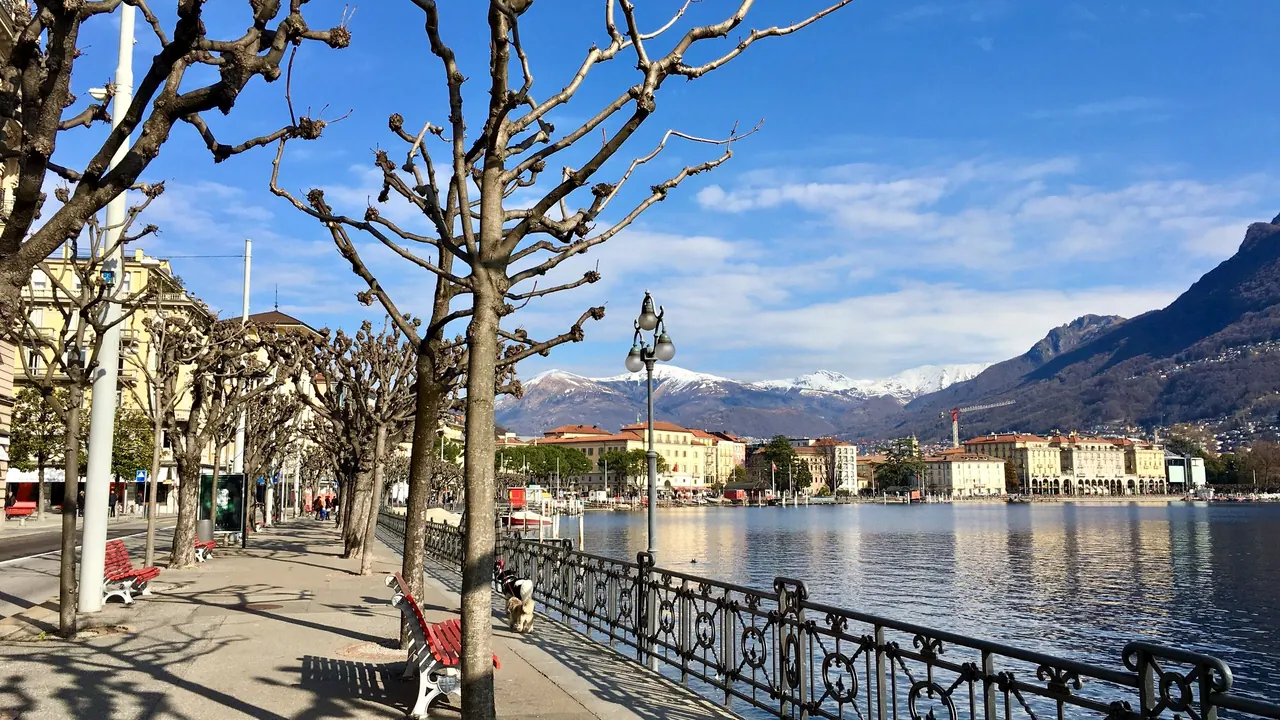
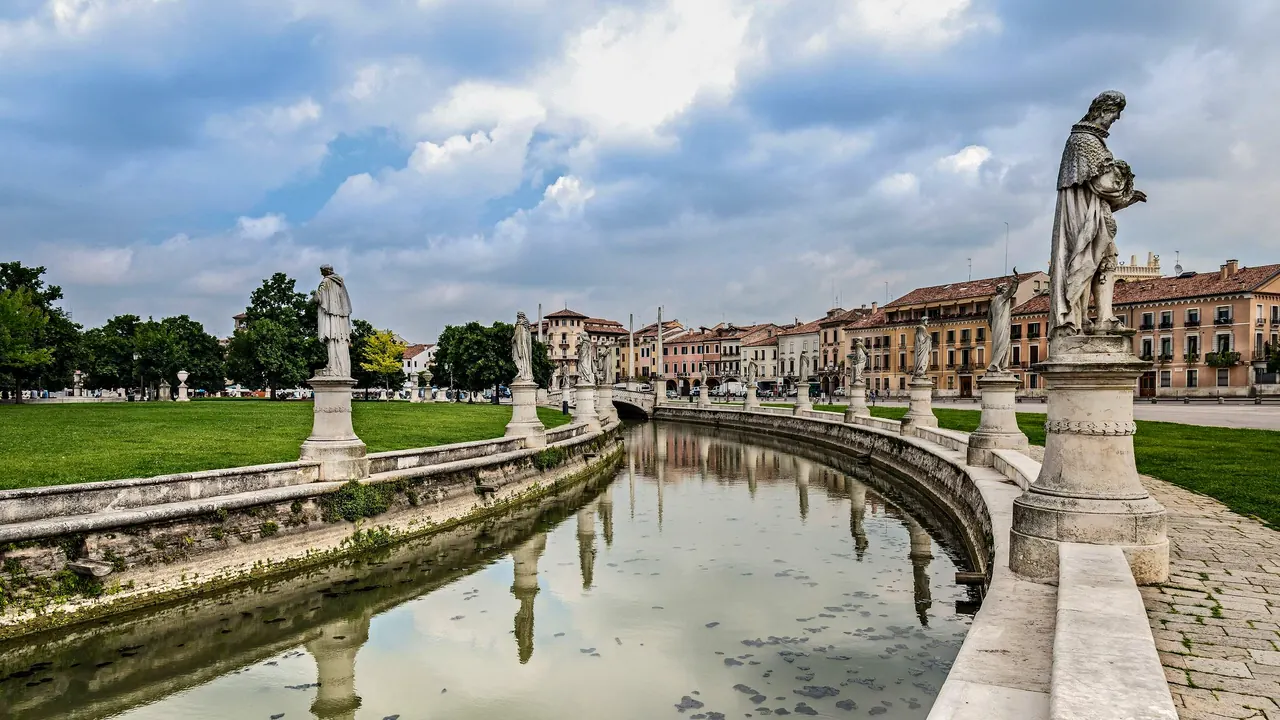
Photos: Lugano by Thomas Woodtli from Zürich, Switzerland, CC BY-SA 2.0, cropped; Padua by Didier Descouens, CC BY-SA 4.0, cropped.
Lugano or Padua?
Our verdict in twelve categories, each scored against the same fixed benchmark cities, and the climate month by month, so you can choose for your trip.
Choose Lugano for
- nature and the outdoors
- families
- beaches
Lugano is for travellers who come for the scenery and want it on the doorstep. Funiculars climb from the edge of town to Monte Brè and San Salvatore, the shore path runs to Gandria, and on a summer afternoon you can swim from a lido. It suits a calm, comfortable lake stay, couples and families with young children, and anyone who cares more about the setting than about Swiss prices.
Choose Padua for
- prices
- culture and sights
- wellness
Choose Padua if you want art, food and a lot of northern Italy for less money. Giotto's Scrovegni Chapel and the Basilica of Saint Anthony are in town, and Venice, Vicenza and Verona are short train rides away. Evenings revolve around a spritz in the market squares, and the thermal pools of Abano add a restful side, though there is far less landscape outside the door.
Scoreboard
Twelve categories on one fixed scale from 0 to 100. The shaded stretch is the gap between the two.
Your match
Pick a travel style or drag the sliders, and both match scores follow your weighting.
Wins on nature and the outdoors and families with your weighting.
Wins on prices and culture and sights with your weighting.
What matters to you?
Category by category
What the scores mean for a trip.
Beaches & swimming
Neither is a beach destination, but in Lugano swimming fits into an ordinary day. The lidos at the mouth of the Cassarate, in Castagnola and in Paradiso have lawns, decks and ladders into water that reaches about 23°C in high summer, and they are a short walk from town.
In Padua there is nowhere to swim in town. Sottomarina and the Lido of Venice are about an hour away. Their shallow, warmer Adriatic water suits small children, but the beaches are flat rows of umbrellas and the trip takes most of a day.
Food & drink
Lugano eats well in its grotti, rustic taverns in the hills that serve polenta, braised meats and Ticino Merlot under the chestnut trees. In town, though, the choice is narrow and costly, and many visitors save their best meals for Italy.
Padua is that Italy. Its morning markets in Piazza delle Erbe and Piazza della Frutta, Venetian dishes such as bigoli with duck and baccalà, Euganean wines and the early-evening spritz make for a fuller everyday food life. The grand Caffè Pedrocchi is its coffee house institution.
Culture & sights
On culture the two are far apart. Lugano has an attractive arcaded old town, Luini's Passion fresco in Santa Maria degli Angioli and an art collection split between LAC and Palazzo Reali, all easily seen in a day.
Padua holds one of the turning points of European painting in Giotto's Scrovegni Chapel. Add a UNESCO-listed group of fresco cycles, the Basilica of Saint Anthony with Donatello's bronzes, the anatomical theatre at Palazzo Bo and the oldest university botanical garden still on its original site. Book the chapel's timed visit ahead.
Nightlife
Neither city is for clubbing, but Padua has much more going on after dark. During term, students fill Piazza delle Erbe and Piazza dei Signori with spritz drinkers until late, and small wine bars line the lanes of the old ghetto.
In Lugano an evening means an aperitivo on the lakefront and a long dinner among a smart, mostly local crowd. On most nights the town is quiet before midnight.
Nature & outdoors
In Lugano the mountains start at the end of the street. There are funiculars to Monte Brè and San Salvatore, a rack railway up Monte Generoso, the shore path to Gandria, and boats and kayaks on the lake. The Verzasca and Maggia valleys are within an hour.
Padua sits on a flat plain, so its outdoors begins about 15km away in the Euganean Hills, with vineyards, chestnut woods and quiet roads for cycling. Closer in there are the level towpaths of the Brenta. For real mountain walking you have to drive to the pre-Alps.
Day trips
Both are superb bases. Lugano's position on the border gives it Milan, Como, the castles of Bellinzona, Lake Maggiore and boat trips to Morcote.
Padua edges ahead because so much lies so close. Venice is under half an hour by train and Vicenza a quarter of an hour, with Verona, Treviso, Bologna and Ferrara within about an hour. The Brenta villas and walled towns such as Montagnana are nearer still, so you can see a different city every day without changing hotel.
Good for families
Lugano is the easier choice with children, because the lake and mountains keep them busy: boat rides to the villages, slides at the lidos, the funiculars, the rack railway on Monte Generoso and the miniature Swiss landmarks at Melide. The steep streets are hard work with a pushchair.
Padua is flat and safe, children are welcome in its trattorias, and Prato della Valle is a good place for them to run about. Its sights, though, are frescoes and churches, so families rely on day trips to Gardaland, Lake Garda or the Adriatic.
Getting around
Both are easy to see on foot, but in different ways. Lugano is compact along the lakefront and steep behind it: a short funicular links the high station to the old town, and lake boats and mountain railways take you further.
Padua is flat, arcaded and largely closed to traffic, with a tram from the station to Prato della Valle and plenty of bicycles. Its station is the hub for a whole region, while Lugano's Swiss trains reach Bellinzona, Locarno, Como and Milan easily.
Shopping & style
Shopping is a modest part of either trip, and the style differs. Lugano's Via Nassa means luxury under the porticoes: Swiss watches, jewellery and Italian fashion houses, with a large designer outlet near Mendrisio.
Padua is more everyday, with shoe and fashion shops along the arcades, university bookshops, food markets for cheese and Euganean wine, and a monthly antiques market on Prato della Valle. Serious fashion shoppers from both cities go to Milan.
Affordability
The gap here is wide. Lugano charges Swiss prices for everything, from lakeside rooms to boat trips and mountain railways, and there is no cheap way to stay. Grotti, set lunches and the regional transport included with most hotel stays help only a little.
Padua is moderately priced for northern Italy, and many visitors use it for exactly that reason, as an affordable base for Venice and the Veneto. Rooms do cost more around the big trade fairs and graduation season.
Live music & performing arts
Lugano gathers its concert life under one modern roof at LAC on the lakefront. The Orchestra della Svizzera italiana plays in its hall, which has fine acoustics, and the theatre stages drama and dance, much of it in Italian. In summer the free Estival Jazz concerts fill Piazza della Riforma.
Padua spreads its music across historic buildings instead. Theatre and some opera are staged at the horseshoe-shaped Teatro Verdi, chamber concerts are held in the frescoed Sala dei Giganti and the Basilica of Saint Anthony, and students keep small live venues going. For major opera, Lugano looks to La Scala in Milan and Padua to the Fenice or the summer Arena in Verona.
Wellness & relaxation
Padua has a thermal district on its doorstep. Abano Terme and Montegrotto Terme, about 12km away, offer hot mineral water, mud treatments going back to Roman times and spa hotels that take day visitors, so a soak fits easily after a morning of sightseeing.
Lugano has no springs and no bathing tradition. Its calm comes from afternoons at the lido, benches in Parco Ciani and long lunches in a grotto, with hotel spas and an indoor pool complex near Rivera for the rest.
When should you go?
Pick your month. The climate figures are measured averages, not a forecast.
Lugano in July
Padua in July
Daytime high, °C
Rainfall in the month, mm
Where the figures come from
Padua's temperatures are measured 35 km from the centre, at Treviso / Istrana.
Padua has no rain gauge within 25 km of the centre, so its rainfall comes from a gridded climate dataset read at the city rather than from a gauge further away.
Padua's sunshine is measured 36 km from the centre, at Treviso / S. Angelo.
Temperature and rainfall are climate normals, averaged over the years shown. Lugano: 1991-2020 normals, Lugano (1.2 km from centre). Padua: 1991-2020 normals, Treviso / Istrana (35.4 km from centre).
Lugano is warmest in July and August, around 27°C. That is when Lake Lugano is best for swimming, and June and early September work too. From April to November it is a wet place, with monthly rainfall above 150mm through late spring and summer, so plan hikes for the drier spells of spring and autumn. Winter is cool and drier, fine for a quiet walk round town but too cold for the lake.
Padua runs hotter and reaches 31°C in July and August. That makes long sightseeing on foot hard going, but it is also when the Adriatic, an hour away, is warmest at around 25°C. Rain is lighter and spread more evenly through the year, and summer brings more sunshine than in Lugano. May, June, September and October are the best months for walking the centre. November is the wettest month, and the winters are grey and cool, as in Lugano.
Which traveller are you?
On a culture and arts trip, Padua is the clear choice. Giotto's frescoes in the Scrovegni Chapel, the Basilica of Saint Anthony and the anatomical theatre fill a day or two, and Vicenza, Verona and Venice extend that by train. Lugano's sights take a single day.
For an outdoors trip, Lugano wins comfortably. Funiculars climb straight from town to Monte Brè and San Salvatore, the ridge from Monte Lema to Monte Tamaro makes a fine day hike, and the Verzasca valley is about an hour away. Padua's hills and towpaths are gentler and further out.
On a tight budget, Padua is far easier. Hotels, trattoria meals and a standing spritz cost what northern Italy usually costs, and it makes a cheap base for Venice. Lugano has Swiss prices throughout, and grotti and set lunches are the only real savings.
Before you go
| Measure | Lugano | Padua |
|---|---|---|
| Official language | French, German, Italian, Romansh | Italian |
| Currency | Swiss Franc (CHF) | Euro (EUR) |
| Sockets | CJ230 V, 50 Hz | CFL230 V, 50 Hz |
| Driving side | Right | Right |
| Time zone | UTC+1, UTC+2 in summer | UTC+1, UTC+2 in summer |
| Emergency number | 112 | 112 |
| Elevation | 283 m | 12 m |
| Main airport | Milan Malpensa International Airport (MXP)46 km from centre208 non-stop destinations | Venice Marco Polo Airport (VCE)39 km from centre103 non-stop destinations |
| Public holidays this year | 15 days | 13 days |
By the numbers
| Measure | Lugano | Padua |
|---|---|---|
| City population | 63,495 | 206,496 |
| People per km² | 837 | 2,220 |
| Museums within 10 km | 17 | 29 |
| UNESCO World Heritage sites within 50 km | 5 | 5 |
| Swim season, months above 21 °C | - | 4 months |
Where else could you go?
Every comparison below shares a destination with this one, so you can follow Lugano or Padua somewhere new.