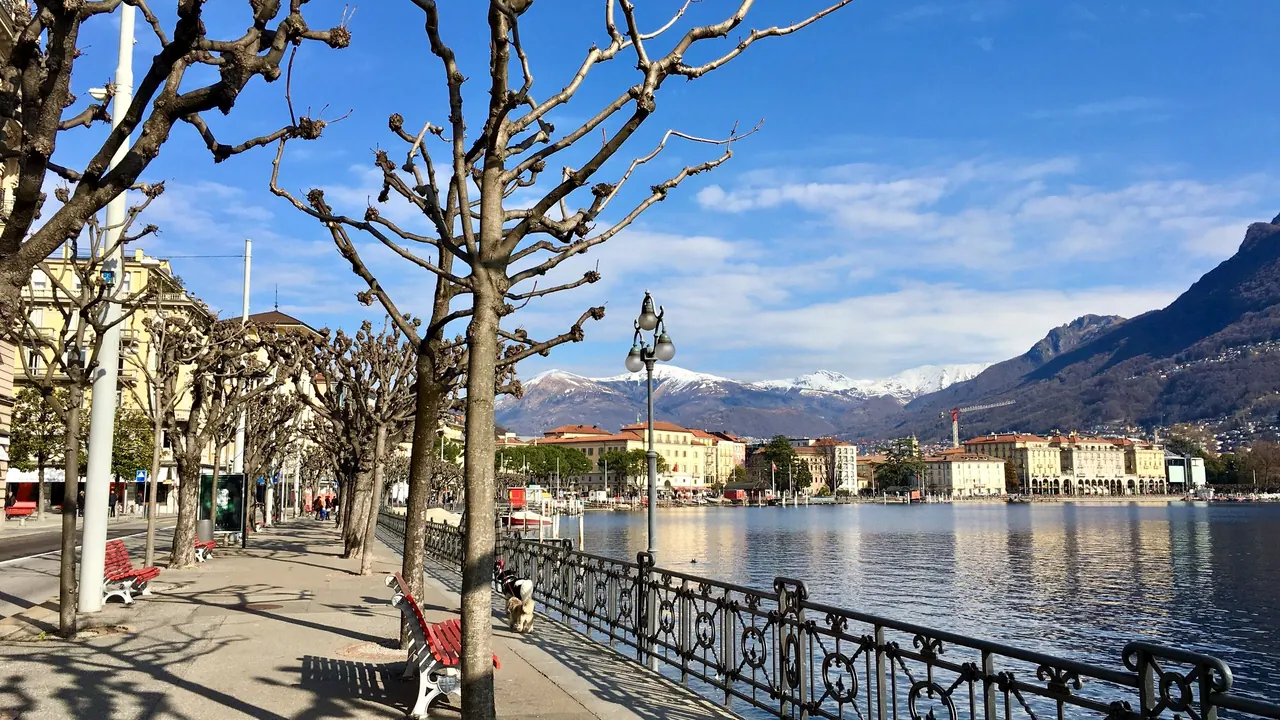
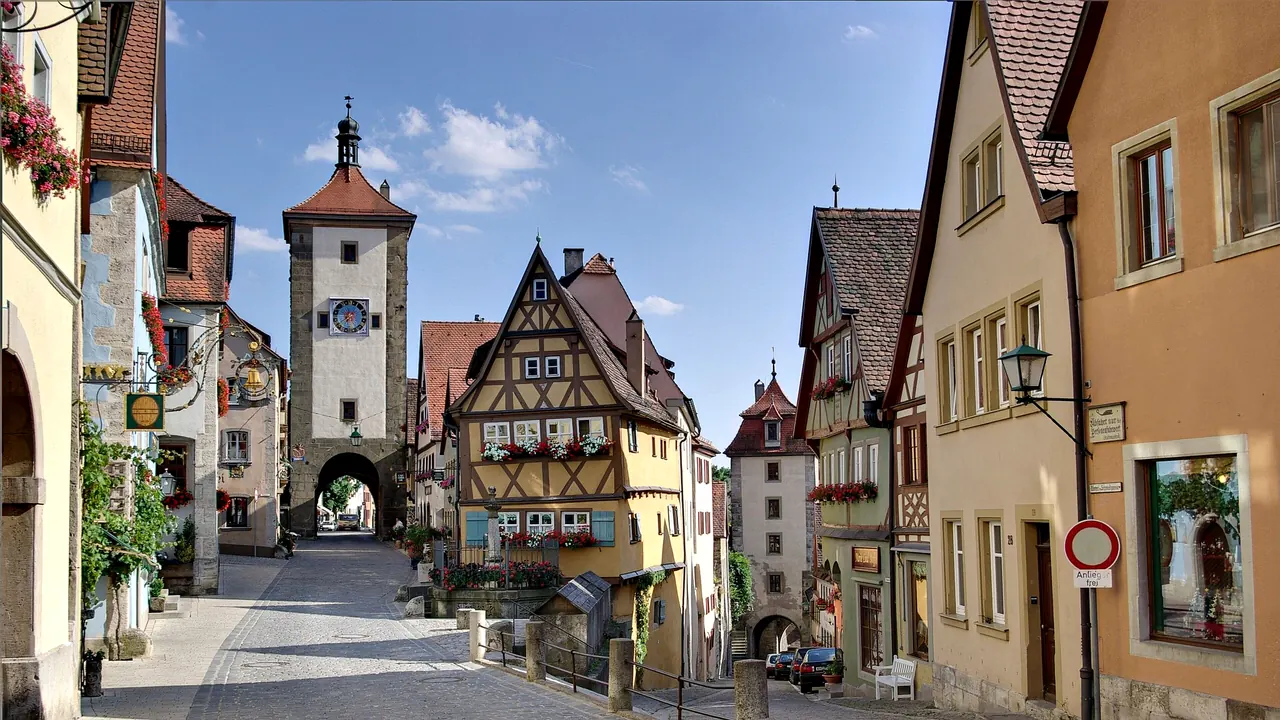
Photos: Lugano by Thomas Woodtli from Zürich, Switzerland, CC BY-SA 2.0, cropped; Rothenburg ob der Tauber by Berthold Werner, Public domain.
Lugano or Rothenburg ob der Tauber?
Our verdict in twelve categories, each scored against the same fixed benchmark cities, and the climate month by month, so you can choose for your trip.
Choose Lugano for
- nature and the outdoors
- beaches
- live music and the arts
Lugano suits travellers who come for landscape first and a town second. The lake, the funiculars up Monte Brè and San Salvatore, the ridge hikes and the afternoons at the lidos fill a week easily, and Milan, Como and the Ticino valleys are all close by train. It is expensive, so it suits a slow, comfortable stay with a generous budget.
Choose Rothenburg ob der Tauber for
- prices
- culture and sights
If what you want is the Middle Ages up close, Rothenburg ob der Tauber is the stronger pick. Its walls, gabled lanes and Riemenschneider altar make a far richer old town than Lugano's, and a stay there costs a good deal less. Evenings are very quiet and the countryside is gentle, so it works best as a short stop on a Romantic Road tour by car.
Scoreboard
Twelve categories on one fixed scale from 0 to 100. The shaded stretch is the gap between the two.
Your match
Pick a travel style or drag the sliders, and both match scores follow your weighting.
Wins on nature and the outdoors and beaches with your weighting.
Wins on prices and culture and sights with your weighting.
What matters to you?
Category by category
What the scores mean for a trip.
Beaches & swimming
Neither town has a coast, but only Lugano offers a real swimming day. Its lake lidos at the mouth of the Cassarate, at Castagnola and at Paradiso have decks, lawns and ladders into the water, and boats run to smaller bathing spots in the villages.
In Rothenburg you swim in the town's outdoor pool or drive about an hour to the Altmühlsee and the other Franconian lakes. Swimming there is an outing of its own, not part of the stay.
Food & drink
Lugano eats better, mostly thanks to its grotti. These rustic taverns in the hills and lakeside villages serve polenta, risotto, braised meats and Ticino Merlot under chestnut trees, and the town adds pastry shops and cafés under the arcades. The range is still narrow, and it is expensive.
Rothenburg's cooking is heavier and plainer: Schäufele, bratwurst and dumplings with Franconian Silvaner. Many tables around the Marktplatz cook for coach groups, so the better meals are in family guesthouses and wine taverns away from the square. The sugary Schneeball looks better than it tastes.
Culture & sights
Here Rothenburg is the clear winner. The whole walled town is the sight: the walkway along the ramparts, the Plönlein, the view from the Rathaus tower and Riemenschneider's carved altar in St Jakob, a late Gothic masterpiece. The Medieval Crime Museum gives the visit real substance.
Lugano's arcaded old town around Piazza della Riforma is attractive but modest by comparison. Its highlights are single works and collections: Luini's Passion fresco in Santa Maria degli Angioli, the art museum at LAC and Palazzo Reali, and the Hesse museum at Montagnola. Each town takes about a day, but Rothenburg's day is the more memorable one.
Nightlife
Neither town suits a big night out, but Lugano has a little more going on. You get an aperitivo on the lakefront, wine and cocktail bars, a few lounges by the water and the odd club, and the promenade stays lively on summer weekends. Prices are high and most nights end before midnight.
Rothenburg has essentially no clubs. Evenings mean a wine tavern, dinner at an inn or the night watchman's tour, and the lanes are silent by eleven. Würzburg and Nuremberg are where locals go out, much as young people in Lugano head for Milan.
Nature & outdoors
This is where the two differ most. Lugano sits on a winding lake between steep wooded mountains. Funiculars run up Monte Brè and San Salvatore, the lakeside path leads to Gandria and the ridge from Monte Lema to Monte Tamaro makes a fine day hike. The green rivers of the Verzasca and Maggia valleys are about an hour away, and kayaks and paddleboards are easy to hire.
Rothenburg's outdoors is softer. Paths drop from the walls into the Tauber valley, past mills and the Topplerschlösschen, and there is the family-friendly Tauber valley cycle path and the rolling Frankenhöhe. It is lovely in blossom time or autumn colour, but there are no mountains and no large lakes.
Day trips
Both are good bases, but Lugano reaches further and more easily. Milan and The Last Supper are just over an hour away by train, Como is half an hour and Bellinzona's castles are closer still. Lake Maggiore and the Borromean Islands lie beyond them, and boats run to Morcote.
Rothenburg's excursions are mostly variations on its own theme along the Romantic Road: walled Dinkelsbühl, crater-ringed Nördlingen, Schwäbisch Hall and Weikersheim. Würzburg's Residenz and Nuremberg are each about an hour away. The real difference is transport, because the branch-line train makes a car close to essential.
Good for families
Lugano gives families more to do over several days. Boat trips, the slides at the lidos, funicular and rack-railway rides and the Swiss miniature park at Melide keep younger children busy. The steep streets up from the shore are hard going with small ones in tow.
Rothenburg works like a storybook for a day or two: ramparts to walk, a tower to climb and the night watchman with his lantern, plus the torture devices in the Crime Museum for older children. After that it runs short, and the cobbles are hard on pushchairs, so most families add excursions or a day at the pool.
Getting around
Both centres are walkable, and both have hills. In Lugano a short funicular links the high station with the old town, buses cover the hillsides and lake boats serve the villages. The Swiss trains make Como, Locarno and Milan easy without a car.
Inside its walls Rothenburg is simpler still: about fifteen minutes on cobbles from end to end, with cars kept outside the gates. Leaving is the problem. Most train journeys mean a change at Steinach and rural buses are sparse, especially at weekends, so a car is worth having here in a way it rarely is in Lugano.
Shopping & style
Lugano has the more serious shopping, though it is aimed at deep pockets. Swiss watches, jewellery and Italian fashion line the arcades of Via Nassa, the old lanes add delicatessens and wine shops, and there is a large designer outlet near Mendrisio.
Rothenburg sells souvenirs, but specialised ones. Shops on the Herrngasse and Schmiedgasse sell Christmas goods all year, from glass baubles and nutcrackers to Erzgebirge carvings, along with teddy bears and cuckoo clocks, and the December market on the Marktplatz is one of Germany's most atmospheric. There is almost no fashion or everyday shopping.
Affordability
Rothenburg is much the cheaper stay. Guesthouses inside the walls and meals around the Marktplatz carry a tourist premium, but beer and wine in the inns are fairly priced, entry fees are modest and a room just outside the walls saves a good deal.
Lugano is expensive in almost every respect, from lakeside hotels to boat trips and mountain railways. Grotti, set lunches and the regional transport included with most hotel stays help a little, and many visitors eat across the Italian border to save money.
Live music & performing arts
Lugano has a proper concert hall in LAC, home to the Orchestra della Svizzera italiana. Its season brings visiting soloists, drama and dance, though much of the theatre is in Italian. In summer the free Estival Jazz concerts fill Piazza della Riforma.
In Rothenburg, performance is mostly about the town's history: the costumed Meistertrunk play recalling the Thirty Years' War, a small open-air theatre in summer, and organ and choral concerts in St Jakob. Beyond those, there is little to see in the evenings.
Wellness & relaxation
Lugano relaxes you by the water, while Rothenburg sends you out to the baths. Lugano's calm is warm and lakeside: an afternoon at the lido, a bench in Parco Ciani or a grotto lunch that runs into the evening. The large lakeside hotels have spas, and there is a big indoor pool and sauna complex near Rivera.
Like Lugano, Rothenburg has no bathing tradition of its own, but proper thermal water is within about an hour. You can float in the salt-water pool of Bad Windsheim's Franken-Therme or go to the old spa town of Bad Mergentheim. In town, the quiet comes early in the morning and after the coaches leave, when the lanes empty.
When should you go?
Pick your month. The climate figures are measured averages, not a forecast.
Lugano in July
Rothenburg ob der Tauber in July
Daytime high, °C
Rainfall in the month, mm
Where the figures come from
Rothenburg ob der Tauber's sunshine is measured 27 km from the centre, at Feuchtwangen-heilbronn.
Temperature and rainfall are climate normals, averaged over the years shown. Lugano: 1991-2020 normals, Lugano (1.2 km from centre). Rothenburg ob der Tauber: 1991-2020 normals, Rothenburg ob der Tauber (0.9 km from centre).
Lugano is the warmer of the two all year, with summer highs of about 27°C against Rothenburg's 25°C, and its lidos are open for lake swimming from June to early September. The catch is rain. From April to November Lugano gets a lot of it, often around 170mm a month in late spring and early summer. December to March is its drier stretch, and those winter months are noticeably sunnier than Rothenburg's. Spring and autumn are the best seasons for hiking, and the lakefront stays mild enough for strolling well into October.
Rothenburg's rain is lighter and spread evenly through the year, so no month is a washout. Its winters are cold and dark, though, with January highs near 3°C and very little sunshine. May to September is the comfortable time for walking the walls and the Tauber valley.
Which traveller are you?
On an outdoors trip, Lugano wins clearly. Funiculars and a rack railway climb Monte Brè, San Salvatore and Monte Generoso, the Lema to Tamaro ridge is a superb day hike, and the Verzasca valley is about an hour away. Rothenburg offers gentle valley walks.
For a culture and arts trip, Rothenburg has the richer sights: an almost untouched walled town, the covered walkway along the ramparts and Riemenschneider's Holy Blood Altar. Lugano answers with concerts at LAC, but its churches and museums take only about a day.
On a trip on a tight budget, Rothenburg is far kinder. Rooms just outside the walls, inn meals, local beer and walking the town cost much less than anything in Lugano, where boat rides, mountain railways and lakeside dinners add up quickly.
Before you go
| Measure | Lugano | Rothenburg ob der Tauber |
|---|---|---|
| Official language | French, German, Italian, Romansh | German |
| Currency | Swiss Franc (CHF) | Euro (EUR) |
| Sockets | CJ230 V, 50 Hz | CF230 V, 50 Hz |
| Driving side | Right | Right |
| Time zone | UTC+1, UTC+2 in summer | UTC+1, UTC+2 in summer |
| Emergency number | 112 | 112 |
| Elevation | 283 m | 430 m |
| Main airport | Milan Malpensa International Airport (MXP)46 km from centre208 non-stop destinations | Nuremberg Airport (NUE)66 km from centre56 non-stop destinations |
| Public holidays this year | 15 days | 12 days |
By the numbers
| Measure | Lugano | Rothenburg ob der Tauber |
|---|---|---|
| City population | 63,495 | 11,331 |
| People per km² | 837 | 272 |
| Museums within 10 km | 17 | 6 |
| UNESCO World Heritage sites within 50 km | 5 | 2 |
Where else could you go?
Every comparison below shares a destination with this one, so you can follow Lugano or Rothenburg ob der Tauber somewhere new.
- Comovs Lugano
- Milanvs Lugano
- Bergamovs Lugano
- Nurembergvs Rothenburg ob der Tauber
- Bambergvs Rothenburg ob der Tauber
- Zermattvs Lugano