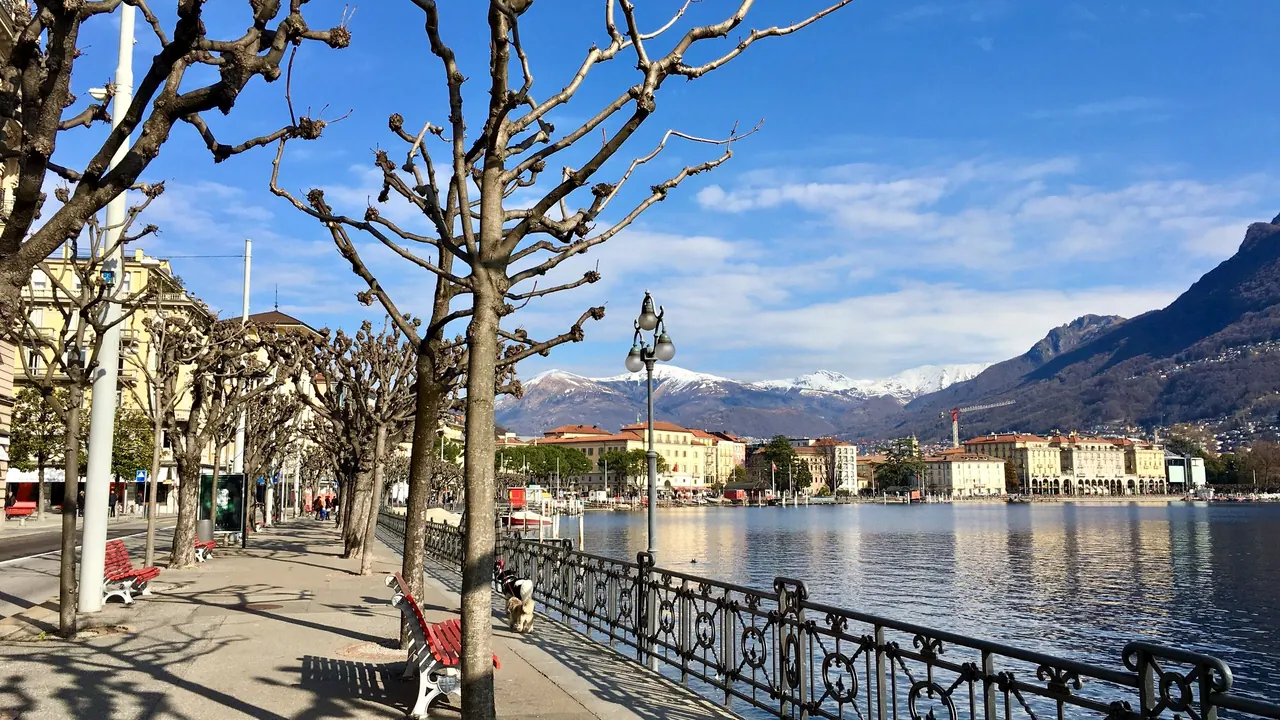
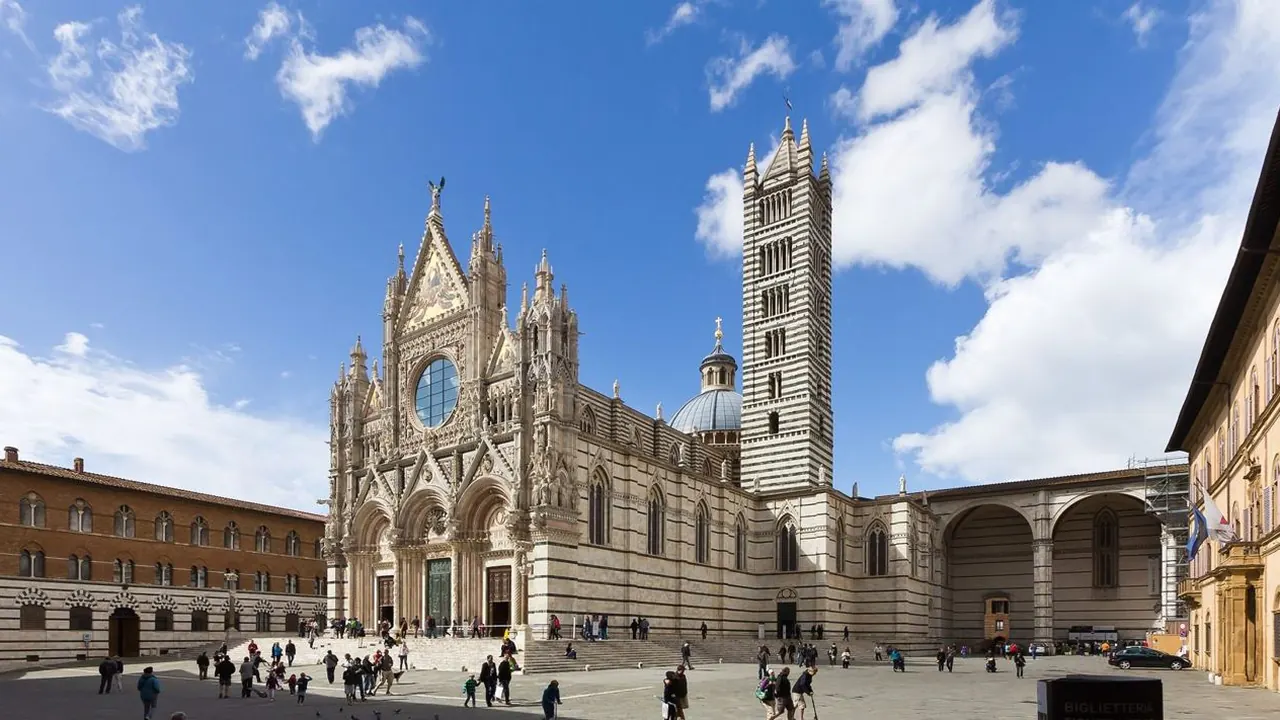
Photos: Lugano by Thomas Woodtli from Zürich, Switzerland, CC BY-SA 2.0, cropped; Siena by Raimond Spekking, CC BY-SA 4.0, cropped.
Lugano or Siena?
Our verdict in twelve categories, each scored against the same fixed benchmark cities, and the climate month by month, so you can choose for your trip.
Choose Lugano for
- beaches
- families
- getting around
Lugano suits travellers who want mountains and water more than monuments: funiculars to the summits, boats to lakeside villages, afternoons at the lido and easy trains to Milan and Como. It is also the easier choice with children and the simpler place to manage without a car. You just need a budget that can take Swiss prices.
Choose Siena for
- culture and sights
- prices
- food and drink
Choose Siena if the trip is about art, history and eating well. Its medieval centre holds far more than Lugano's old town, the Tuscan cooking and wine are worth travelling for, and the hill towns, abbeys and hot springs around it give you more day trips to choose from. It also costs noticeably less. The trade-offs are that there is nowhere nearby to swim and a hired car helps a great deal.
Scoreboard
Twelve categories on one fixed scale from 0 to 100. The shaded stretch is the gap between the two.
Your match
Pick a travel style or drag the sliders, and both match scores follow your weighting.
Too close to call, 1 point apart
Wins on beaches and families with your weighting.
Wins on culture and sights and prices with your weighting.
What matters to you?
Category by category
What the scores mean for a trip.
Beaches & swimming
Neither city is on the sea, but Lugano at least has a lake you can swim in. From June to early September the lidos have decks, lawns and ladders into the water, with the main one at the mouth of the Cassarate, and boats run to village lake baths.
Siena has nothing like it. Swimming there means a hotel or agriturismo pool, and the Maremma beaches are well over an hour away by car, so a day at the coast takes the whole day.
Food & drink
Siena is the better place to eat. Look for hand-rolled pici with duck ragù, cinta senese pork, a baking tradition of panforte and ricciarelli, and Chianti Classico, Brunello and Vino Nobile by the glass. The best meals are in family osterie on the contrada side streets.
Lugano's great strength is the grotto, where polenta, braised meats and Ticino Merlot are served at granite tables under chestnut trees. Beyond that the range is narrow and the prices are Swiss, and many visitors save their serious meals for trips into Italy.
Culture & sights
The gap is wide here. Siena's whole centre is a UNESCO-listed medieval city. It has the Campo, the Palazzo Pubblico with Lorenzetti's Good and Bad Government, the Duomo with its inlaid floor and Piccolomini Library, Duccio's Maestà, Santa Maria della Scala and the Pinacoteca.
Lugano's arcaded old town around Piazza della Riforma is pleasant rather than remarkable. Luini's Passion fresco, San Lorenzo and the art museum, split between LAC and Palazzo Reali, fill a day. The Hermann Hesse museum in Montagnola is the best thing to add.
Nightlife
In both towns the evening is built around dinner, and both are quiet before midnight. The difference is the crowd. Lugano does a well-dressed aperitivo on the lakefront and a few lounge bars by the water, at high prices.
Siena's university brings students to a handful of pubs and wine bars, and the nights around the Palio fill the streets with contrada dinners until late. For a real night out, Lugano's young people go to Milan and Siena's go to Florence.
Nature & outdoors
Lugano is the stronger choice for time outdoors. Funiculars climb Monte Brè and San Salvatore and a rack railway climbs Monte Generoso. You can walk the lakeside path to Gandria or the ridge from Monte Lema to Monte Tamaro, and the green rivers of the Verzasca and Maggia valleys are about an hour away. There are also kayaks and paddleboards on the lake.
Siena's countryside is gentler and more pastoral: the bare clay hills of the Crete Senesi and the rolling fields of the Val d'Orcia. It is best seen by bike on the white gravel strade bianche, or on foot along the Via Francigena, but it has no mountains or lake to match Lugano's.
Day trips
Both make excellent bases, but Siena has more within reach. Around it are San Gimignano, Monteriggioni, the Chianti villages, Volterra, Pienza, Montalcino and Montepulciano, the abbeys of Monte Oliveto Maggiore, Sant'Antimo and San Galgano, and Florence. The catch is that most of these are much easier with a car.
Lugano's trips cross a border: Milan and The Last Supper, Como, Bellinzona's castles, Lake Maggiore and the Borromean Islands, and Morcote by boat. There are fewer places, but almost all of them are easy to reach by train or boat.
Good for families
Lugano works better with children, and the lake is the reason. There are boat rides, lido slides, funiculars, the Monte Generoso rack railway, playgrounds in Parco Ciani and the miniature park of Swiss landmarks at Melide.
Siena has little made for children. Older children often enjoy climbing the Torre del Mangia and watching the contrada drummers. Both towns are steep work with a pushchair, and in Siena many families stay at a farmhouse with a pool and come into town for half days.
Getting around
Both centres are small enough to walk, and both are steep. In Lugano a short funicular links the station high above town to the old streets, and in Siena a chain of escalators climbs from the station in the valley to the ridges inside the walls.
Lugano is much easier once you leave the centre. Swiss trains run to Bellinzona, Locarno, Como and Milan, lake boats reach the waterside villages, and funiculars and rack railways go up the mountains, so you can do without a car. Siena's regional trains are slow and infrequent, and buses are the better link to Florence. For the hill towns and wine country, you will want a hired car.
Shopping & style
Lugano has more for shoppers with money to spend. Via Nassa's arcades are lined with Swiss watchmakers, jewellers and Italian fashion houses, and there is a large designer outlet towards Mendrisio.
Siena is smaller and more local. Expect clothing and leather on Banchi di Sopra, hand-painted majolica and contrada scarves, and panforte and pecorino to take home. Serious shoppers in Lugano make the trip to Milan.
Affordability
Siena is much the cheaper stay. Rooms inside the walls are scarce, especially around the Palio and in summer, but an osteria lunch with house wine is good value and the centre costs nothing to walk. The ticketed cathedral and civic museums do add up.
In Lugano almost everything, from lakeside hotels to boat trips and mountain railways, comes at Swiss prices. Grotti, set lunches and the regional transport included with hotel stays help only a little.
Live music & performing arts
Lugano has a slightly stronger programme. LAC's concert hall is home to the Orchestra della Svizzera italiana and its theatre stages drama and dance, while Estival Jazz fills Piazza della Riforma with free concerts in summer.
Siena's programme is provincial but has a character of its own. The Accademia Chigiana holds summer concerts in palaces and churches, Siena Jazz adds concerts by its teachers and students, and the Rinnovati and Rozzi theatres run winter seasons. For opera, Lugano looks to La Scala and Siena to Florence.
Wellness & relaxation
Siena has the hot springs that Lugano lacks. Nearby are the travertine pools of Rapolano Terme, the steaming medieval bath at Bagno Vignoni, the free limestone pools of Bagni San Filippo and Petriolo's sulphur river, and many visitors pair them with a rural spa stay.
Lugano's calm comes from the slow pace of a lake town: afternoons at the lido, benches in Parco Ciani and long grotto lunches. Its spas are mostly in the big hotels, plus an indoor pool and sauna complex near Rivera.
When should you go?
Pick your month. The climate figures are measured averages, not a forecast.
Lugano in July
Siena in July
Daytime high, °C
Rainfall in the month, mm
Where the figures come from
Siena's temperatures are measured 45 km from the centre, at Arezzo.
Siena has no rain gauge within 25 km of the centre, so its rainfall comes from a gridded climate dataset read at the city rather than from a gauge further away.
Temperature and rainfall are climate normals, averaged over the years shown. Lugano: 1991-2020 normals, Lugano (1.2 km from centre). Siena: 2006-2017 (rainfall 1991-2020) normals, Arezzo (45 km from centre).
Lugano is warm from June to August, with highs of about 27°C and the most sunshine of the year, and that is the time to swim in the lake. It is also a wet place. Rain is heavy from April to November and peaks at about 178mm in May, so expect showers on spring and autumn walks. Winter is drier but cold and has little sun, so it suits a quiet stay rather than lido days.
Siena is hotter and drier. July and August reach 31°C with very little rain, about 27mm in July, which makes the midday streets and hill climbs hard going. May, June and September are the best months for sightseeing and the countryside. The rain builds from October to a wet November of about 127mm, and winter is a little milder than in Lugano.
Which traveller are you?
On a culture and arts trip, Siena is the clear choice. You can spend two or three days on its UNESCO-listed medieval centre, the Duomo and Lorenzetti's frescoes, then add nearby hill towns and abbeys. Lugano's sights take a single day.
On a family trip with children, Lugano is the easier base. Boat rides, lido slides, the funiculars, the Monte Generoso rack railway and the miniature park at Melide keep children busy, and good public transport means you don't need a car. Siena has much less for children.
On a tight budget, Siena is the realistic option. Osteria lunches with house wine and a centre you can walk keep costs reasonable, and an agriturismo outside town is cheaper again. Lugano charges Swiss prices for almost everything, and there is no cheap way to stay.
Before you go
| Measure | Lugano | Siena |
|---|---|---|
| Official language | French, German, Italian, Romansh | Italian |
| Currency | Swiss Franc (CHF) | Euro (EUR) |
| Sockets | CJ230 V, 50 Hz | CFL230 V, 50 Hz |
| Driving side | Right | Right |
| Time zone | UTC+1, UTC+2 in summer | UTC+1, UTC+2 in summer |
| Emergency number | 112 | 112 |
| Elevation | 283 m | 322 m |
| Main airport | Milan Malpensa International Airport (MXP)46 km from centre208 non-stop destinations | Florence Airport, Peretola (FLR)55 km from centre46 non-stop destinations |
| Public holidays this year | 15 days | 13 days |
By the numbers
| Measure | Lugano | Siena |
|---|---|---|
| City population | 63,495 | 52,812 |
| People per km² | 837 | 446 |
| Museums within 10 km | 17 | 30 |
| UNESCO World Heritage sites within 50 km | 5 | 5 |
Where else could you go?
Every comparison below shares a destination with this one, so you can follow Lugano or Siena somewhere new.